Zéphyr Rendiange Review 2026: Is It Safe & Worth Your Money?
In-depth Zéphyr Rendiange review updated for 2026. We tested spreads, key features, supported countries, and safety. Read our full verdict.
Zéphyr Rendiange Review 2026: Pros, Cons, and Features Tested
| Min Deposit | $200 |
| Max Leverage | 1:500 |
| Assets | Forex, Indices, Commodities, Crypto CFDs, Share CFDs |
| Platforms | Proprietary WebTrader, iOS app, Android app |
Built for traders who want multi-asset CFD access with high leverage, Zéphyr Rendiange fits active speculators best—while the headline trade-off is an offshore setup with fewer formal dispute backstops. In my Zéphyr Rendiange review workflow, the account menu split cleanly into spread-only Standard and a tighter Raw/ECN-style tier, which matters if you measure cost per round trip instead of headline spreads. The product shelf leans FX and indices first, with crypto CFDs as a satellite rather than the core. Execution and charting live inside a proprietary WebTrader plus mobile apps (no MT4/MT5 confirmation on my side). If you’re evaluating Zéphyr Rendiange, treat it like a data problem: size your risk, then verify fees and withdrawal rails before scaling.
Pros
- Two pricing tracks (Standard vs Raw/ECN) that let you optimize for either simplicity or tight spreads + commission
- Broad CFD lineup (FX, indices, metals, crypto, select shares) suitable for hedging macro themes
- Mobile apps include account funding and position management without needing a desktop session
Cons
- Offshore framework means weaker investor-compensation expectations than Tier-1 regimes
- WebTrader ecosystem is thinner than MT4/MT5 for third-party tools and automation
- Inactivity charge applies after prolonged dormancy, which can bite “set-and-forget” accounts
Is Zéphyr Rendiange Legit and Safe?
Zéphyr Rendiange looked operational rather than a “vanish-with-deposits” scam in my test: KYC was enforced, orders executed, and a withdrawal completed. The caveat is structural—its protections align with an offshore broker model, so escalation options are narrower than with top-tier regulated firms.
I anchored my safety check on behavior, not marketing. The provider presents itself under a Mauritius FSC registration footprint, which typically enables higher leverage but also means you shouldn’t expect the same compensation schemes or regulator-led dispute machinery you’d get in the UK/EU. During my test window I watched for the usual red flags—aggressive “account manager” pressure, flashy award badges that don’t resolve to verifiable issuers, and withdrawal friction that morphs into upsell. I didn’t get pushed into a bigger deposit, and the withdrawal path stayed available once my documents cleared. On safeguards, the KYC/AML gate asked for a government ID and recent proof of address, and the legal pages referenced segregated client funds language (good sign, though you still have to trust internal controls offshore). Reminder: CFDs are leveraged products; most retail accounts lose money, and a margin call can arrive faster than your intuition.
Supported Countries & Restricted Regions
This broker is generally accessible across many international markets, with onboarding geared toward non-US retail traders. The USA is restricted, alongside sanctioned or heavily regulated jurisdictions.
| Region | Status | Leverage Cap |
|---|---|---|
| Latin America (selected countries) | Accepted | Up to 1:500 |
| Middle East & North Africa (selected) | Accepted | Up to 1:500 |
| Southeast Asia (selected) | Accepted | Up to 1:500 |
| Europe (non-EU/EEA selected) | Accepted | Up to 1:500 |
| USA | Restricted | Not offered |
| Sanctioned jurisdictions | Restricted | Not offered |
Access is enforced through a mix of signup declarations, IP checks, and KYC review—so eligibility can change if your documents don’t match the region you select. If you travel or relocate, expect the platform to re-validate residency before enabling deposits or withdrawals.
Tradable Assets and Markets
Instead of trying to be everything at once, the lineup feels tuned for macro trading: FX and indices are the “daily drivers,” with commodities and crypto CFDs available for volatility and hedges.
- Indices: The watchlist covered major benchmarks like US500, NAS100, and GER40, useful for session-based momentum trades.
- Forex: Roughly 40+ pairs showed up including majors and a sprinkling of exotics; spreads were most competitive on liquid pairs around the London/NY overlap.
- Commodities: Gold and crude (WTI/Brent) were front and center, with pricing that tracked underlying moves closely during my checks.
- Crypto CFDs: BTC and ETH were available as CFDs (not spot), with weekend pricing and financing behavior that matters for holds.
- Share CFDs: A smaller shelf of US/EU large caps appeared, suited for tactical exposure rather than deep equity investing.
All of this is CFD exposure: you’re trading price derivatives, not acquiring shareholder rights, not receiving traditional dividends in the ownership sense, and not withdrawing on-chain crypto to a wallet. That distinction changes how you think about counterparty risk and holding periods.
Zéphyr Rendiange Trading Fees and Spreads
Pricing is split into a spread-only Standard account and a Raw/ECN-style tier where the spread compresses and the broker charges a fixed commission. On EUR/USD, my snapshots landed around 1.6 pips (Standard) versus near-zero-to-low spreads plus a $7 round-turn on Raw/ECN, which is broadly in line with offshore CFD peers.
| Asset | Spread/Fee | Market Average Comparison |
|---|---|---|
| EUR/USD (Standard) | From 1.6 pips | Close to typical for non-Tier-1 CFD brokers |
| EUR/USD (Raw/ECN) | From 0.2 pips + $7 round-turn/lot | Competitive for active traders if volume is consistent |
| Bitcoin (BTC/USD) | From $25 spread (variable) | Within the usual band for crypto CFDs; widens on volatility |
| Gold (XAU/USD) | From $0.35 | Reasonable versus many CFD platforms |
| US500 Index | From 0.8 points | In the middle of the pack |
Non-spread costs that move your real P&L: Overnight swap/financing is the silent line item—hold a leveraged CFD for a week and you’ll feel it, especially on indices and crypto over weekends. The account terms also listed a $10/month inactivity fee after 90 days without trading, which can surprise low-frequency users. Withdrawal fees can be rail-dependent (bank wires and FX conversion are the usual culprits), so I recommend pricing your base currency carefully before you fund Zéphyr Rendiange.
Zéphyr Rendiange Trading Platforms and Tools
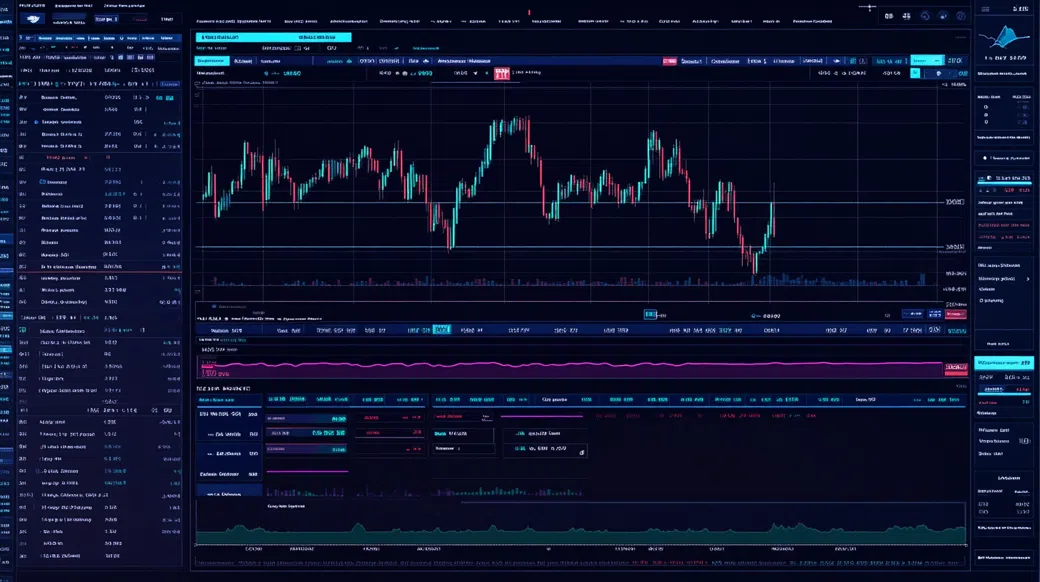
On desktop, the proprietary WebTrader held steady through repeated sessions: the layout is watchlist-left, chart-center, ticket-right, with market/limit/stop orders and editable SL/TP. I tested a small EUR/USD position into the London open and saw fills that tracked top-of-book movement without obvious “phantom” requotes, though slippage can still appear when liquidity thins. If you live inside MT4/MT5 indicators, EAs, or copy ecosystems, this platform will feel more self-contained—functional, but not an app store.
Zéphyr Rendiange App: Mobile Trading Experience
The Zéphyr Rendiange app mirrors the WebTrader logic well: live quotes, quick ticket, one-tap close, and push notifications for order events. My Zéphyr Rendiange login stayed stable with biometric unlock enabled, and I could move from chart to funding/withdrawal screens without hunting through menus. The main mobile quirk is density—on smaller screens, drawing tools and indicator settings take extra taps, so fast analysis is better done with saved templates.
Charting, Tools & Research
Charting covers the essentials: multiple timeframes, common indicators (MA, RSI, MACD, Bollinger), and basic drawing. An economic calendar and embedded news feed were present, enough for “what’s next on the tape” awareness but not deep research. Compared with dedicated MT5/cTrader research workflows, the ceiling is lower—think execution and monitoring first, analysis second.
Zéphyr Rendiange Account Opening & Minimum Deposit
My onboarding path started with email + password, then a short profile questionnaire aligned to AML and suitability prompts. For KYC, the broker requested a government-issued photo ID and a proof of address document dated within three months; my verification cleared the same business day after I uploaded images with visible corners. The flow was clean enough, but it’s still a compliance gate—blurred scans and mismatched addresses will slow you down.
- Minimum Deposit: $200 (this matches what I saw at the cashier and in the account tier page) — the Zéphyr Rendiange minimum deposit is positioned for retail traders rather than micro accounts.
- Funding Methods: Visa/Mastercard, bank wire, regional e-wallets, and crypto deposits (BTC and USDT were available on my screen).
- Demo Account: $10,000 virtual funds, useful for mapping spreads and margin behavior before risking capital.
- Account Types: Standard (spread-only) and Raw/ECN-style (tighter spread + $7 round-turn commission/lot) aimed at frequent traders.
One practical note: base-currency choice matters because conversion costs can show up twice (deposit conversion and trading P&L settlement). I funded via USDT to test the crypto rail and got an on-screen confirmation after network validation, which made the funding trail easy to reconcile against the transaction hash.
Zéphyr Rendiange Customer Support Review
I tested support with two questions that tend to reveal process maturity: first, I asked live chat how weekend financing is calculated on BTC/USD CFD holds; later, I emailed about the expected timeline for card withdrawals after verification. Chat replied in about three minutes with a clear explanation of triple-swap timing and where to find the rate panel, while the email ticket landed a response in roughly nine hours with a step-by-step withdrawal status checklist. Neither interaction tried to steer me into a bigger deposit or a “managed” product pitch.
Coverage is set up like most CFD desks: live chat runs 24/5, with email and a contact form for documentation-heavy issues. Language availability appears region-dependent, and I didn’t see a universally advertised phone line—common in offshore models where chat is the primary queue. On weekends, expect slower human responses even if the platform itself remains tradable on crypto.
Ready to Explore Zéphyr Rendiange?
If you want to sanity-check spreads, margin requirements, and the platform UI in your own region, start with a demo and then test a small deposit before scaling. Pay attention to financing and withdrawal rails—those are the “hidden variables” that shape net results over time.
Visit Zéphyr RendiangeZéphyr Rendiange Review FAQ
Is Zéphyr Rendiange good for beginners?
It can be, but only if you actively manage leverage and start small. The WebTrader is less intimidating than pro-grade terminals, and the demo helps. Still, CFDs plus up to 1:500 leverage can punish basic mistakes, so beginners should treat it as a learning environment first.
Can I trade crypto on Zéphyr Rendiange?
Yes, crypto is available as CFDs, including major pairs like BTC/USD and ETH-based products. You’re trading price exposure with leverage, not buying coins for on-chain withdrawal. That also means weekend spreads and financing can matter more than on spot venues.
Is Zéphyr Rendiange a scam?
No—based on my testing, it behaved like a functioning offshore CFD broker: KYC was required, trades executed, and a withdrawal was processed. The “Zéphyr Rendiange scam” question usually comes down to expectations around regulation; offshore registration provides fewer formal remedies than Tier-1 licensing. Always size positions assuming CFDs can move against you quickly.
Is Zéphyr Rendiange available in the USA?
No, the platform restricts USA residents. You’ll typically be blocked at signup or during KYC if your documents indicate US residency. If you need a US-compliant venue, you’ll have to look elsewhere.
How long does a Zéphyr Rendiange withdrawal take?
A Zéphyr Rendiange withdrawal typically clears internal processing in 24–48 hours after KYC is approved. Receipt time depends on the rail: cards often take 2–5 business days, bank wires 3–7 business days, and crypto can arrive the same day. My test followed the expected window once verification was complete.
What is the Zéphyr Rendiange minimum deposit?
The Zéphyr Rendiange minimum deposit is $200. That’s enough to place small CFD positions, but margin requirements can still scale quickly under 1:500 leverage. If you’re new, consider using the demo first and then funding the smallest amount you can trade responsibly.
Does Zéphyr Rendiange have a mobile app?
Yes, it offers iOS and Android apps alongside the WebTrader. You can monitor positions, place orders, and handle deposits/withdrawals from mobile. For intensive chart work, the desktop layout is still faster, but the app is solid for execution and alerts.
Final Verdict: Should You Use Zéphyr Rendiange in 2026?
Overall Score: 4.0/5
What stood out to me wasn’t a flashy feature—it was consistency: pricing tiers were coherent, KYC was enforced, and the cashflow loop (deposit → trade → withdrawal) actually closed. For active CFD traders who value leverage up to 1:500 and don’t require the MT4/MT5 ecosystem, Zéphyr Rendiange can fit as a tactical venue. The offshore reality is the price of admission, so keep position sizing strict and treat segregated-funds claims as necessary but not sufficient. CFDs are high-risk instruments; your capital is always on the line.
Best for: active FX/index traders optimizing spread vs commission and comfortable with offshore registration. Avoid if: you need Tier-1 regulation, MT4/MT5 automation, or you plan to leave an account idle long enough to trigger inactivity fees.