Zephyr Capitange Review 2026: Is It Safe & Worth Your Money?
In-depth Zephyr Capitange review updated for 2026. We tested spreads, key features, supported countries, and safety. Read our full verdict.
Zephyr Capitange Review 2026: Pros, Cons, and Features Tested
| Min Deposit | $200 |
| Max Leverage | 1:500 |
| Assets | Forex, Indices, Commodities, Crypto CFDs, Share CFDs |
| Platforms | Proprietary WebTrader, iOS/Android apps |
Built for active CFD traders who want broad markets and high leverage without the constraints of stricter jurisdictions, Zephyr Capitange trades flexibility for a lighter regulatory safety net. In my test account, the provider split pricing into a spread-only Standard tier and a tighter Raw-style option aimed at higher-frequency users. Market coverage leans multi-asset (forex and indices feel like the “home screen,” with crypto CFDs as an add-on). The platform stack is a proprietary WebTrader plus mobile, which keeps it cohesive but doesn’t replicate the plug-in ecosystem MT4/MT5 users expect. The headline drawback: offshore registration means fewer escalation paths if a dispute ever turns ugly.
Pros
- Two pricing tiers that meaningfully change total trading costs for different styles
- Multi-asset CFD menu (FX, indices, metals, crypto CFDs, selected shares) from one account
- Mobile and web interface share watchlists and layouts, reducing context switching
Cons
- Operates under an offshore framework, which typically limits investor compensation schemes
- Platform ecosystem is narrower than MT4/MT5-centric brokers
- Dormant accounts can face a monthly inactivity charge after a grace period
Is Zephyr Capitange Legit and Safe?
Zephyr Capitange looked operational and tradeable in my 2026 checks, not a “disappearing deposit” setup—but it sits in the offshore broker category, so safety depends more on internal controls than on strong external enforcement. I would not label it a scam based on account access, KYC gating, and withdrawal completion, yet the jurisdiction choice raises the bar for your own due diligence.
What anchored my view was process friction in the right places: identity verification was required before withdrawals, and the portal pushed standard AML steps (ID plus address proof) instead of letting me trade indefinitely as an anonymous wallet. The broker states registration via the Mauritius FSC, which often correlates with higher leverage offerings and faster product rollout, but also implies weaker formal complaint routes than a Tier‑1 regulator and no guaranteed compensation fund. I scanned for the usual red flags—phantom “awards,” aggressive bonus pressure, and sales reps steering me toward oversized positions—and didn’t encounter the hard-sell loop during my test window. Still, offshore status means disputes can be harder to escalate beyond internal support. Remember: CFDs are leveraged products; margin calls happen fast and most retail traders lose money—risk capital only.
Supported Countries & Restricted Regions
This broker generally accepts clients across parts of LATAM, MENA, Southeast Asia, and selected non‑EU European countries, while excluding the USA and sanctioned jurisdictions. Availability is ultimately determined at onboarding and during KYC.
| Region | Status | Leverage Cap |
|---|---|---|
| Latin America (selected countries) | Accepted | Up to 1:500 |
| MENA (selected countries) | Accepted | Up to 1:500 |
| Southeast Asia (selected countries) | Accepted | Up to 1:500 |
| Europe (non‑EU/EEA, selected) | Accepted | Up to 1:200 |
| Sub‑Saharan Africa (selected) | Accepted | Up to 1:500 |
| USA | Restricted | Not offered |
| Sanctioned jurisdictions | Restricted | Not offered |
In practice, eligibility is enforced through a mix of IP checks and document-based verification; I was asked to confirm country of residence during signup and again at KYC. If policies shift, the account portal is where restrictions typically show up first.
Tradable Assets and Markets
Instead of trying to be everything at once, the platform feels built around liquid, event-driven markets—indices and FX first—then extends outward into metals, energy, and crypto CFDs for diversification or hedging.
- Indices: Major benchmarks like US500, NAS100, and UK100 with intraday-friendly pricing and clear margin requirements.
- Forex: A broad list of majors and minors (and a smaller set of exotics), suitable for both session trading and swing setups.
- Commodities: Gold and silver alongside energy contracts such as WTI/Brent, useful for macro hedges around CPI/FOMC cycles.
- Crypto CFDs: Large-cap coins like BTC and ETH quoted as CFDs, designed for price exposure rather than wallet-based ownership.
- Share CFDs: A selective shelf of US/EU blue chips for thematic trades without buying the underlying equity.
All exposure here is CFD-based: you’re trading price movement, not taking delivery of commodities, not receiving shareholder voting rights, and not holding on-chain crypto. That distinction matters for custody risk, taxation, and how gaps or weekend financing can hit P&L.
Zephyr Capitange Trading Fees and Spreads
Pricing hinges on account tier: Standard is spread-only, while the Raw/ECN-style option compresses spreads and adds a per-lot commission. On my quotes, the Raw tier made the total cost more predictable for frequent traders, while Standard read closer to the middle of the offshore CFD pack. The spread/commission split is the main lever that changes your all-in cost.
| Asset | Spread/Fee | Market Average Comparison |
|---|---|---|
| EUR/USD (Standard) | From 1.6 pips | In line with typical offshore CFD spreads |
| EUR/USD (Raw/ECN) | From 0.2 pips + $7 round-turn per lot | Often cheaper for high-frequency trading |
| Bitcoin (BTC/USD) | From $35 | Competitive when volatility is high; widens on fast moves |
| Gold (XAU/USD) | From $0.30 | Near the segment median for retail CFD accounts |
| US500 Index | From 0.8 points | Reasonable for an all-in spread model |
Non-spread costs that matter: Overnight swap/financing is the silent line item, especially if you hold indices or metals for weeks; I pulled the swap schedule from the instrument details before keeping positions past rollover. Dormant accounts can be charged an inactivity fee of $10 per month after 90 days without trading activity, which adds up if you treat the account like a backup. Withdrawal rails may also introduce third-party charges (bank fees on wires, network fees on crypto), and funding in a non-account currency can trigger conversion costs that don’t show up as “spread.”
Zephyr Capitange Trading Platforms and Tools
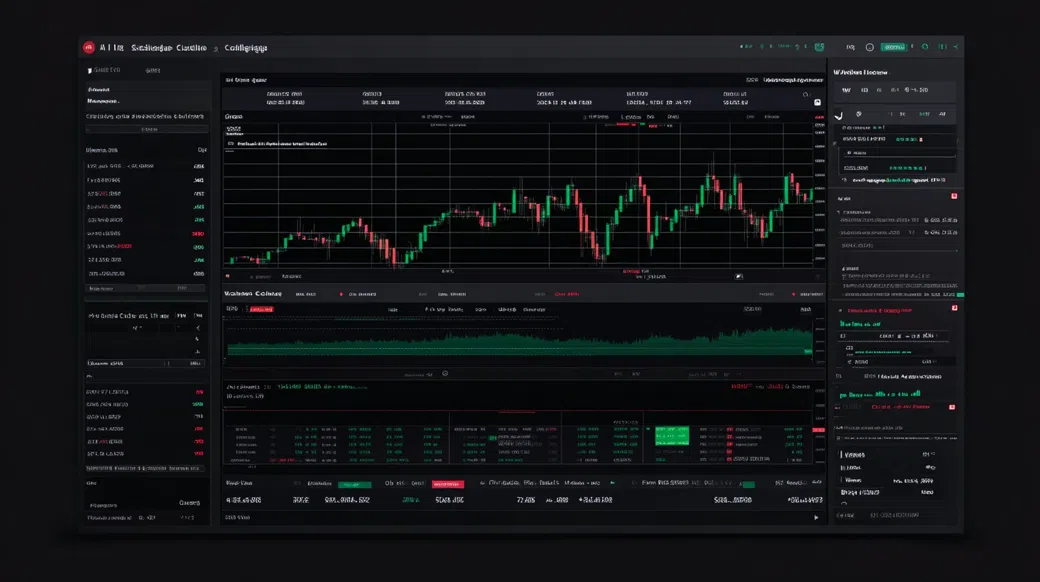
WebTrader is the center of gravity here: my session started with a stable browser login, then a workspace that prioritizes watchlists, one-click trading toggles, and an instrument panel that surfaces margin requirements clearly. Order tickets supported market, limit, and stop orders; I also saw stop-loss and take-profit fields behave consistently across instruments. If you live inside MT4/MT5 scripts and third-party bridges, note the gap—this is a closed ecosystem, which reduces complexity but also trims customization.
Zephyr Capitange App: Mobile Trading Experience
On the phone, the Zephyr Capitange app mirrors the web layout closely, and the Zephyr Capitange login flow supported biometric unlock on my device after the first sign-in. Quotes updated quickly, and I could modify SL/TP levels with a simple drag interface on the chart. Deposits and withdrawals were accessible from the same menu (useful, but also a reminder to lock your phone). One minor quirk: heavy chart indicator stacking made older devices feel warm and slightly laggy during the NY overlap.
Charting, Tools & Research
Tooling lands in the “enough for execution” bucket: multi-timeframe charts, common indicators (RSI, MACD, Bollinger), drawing tools, and price alerts. An economic calendar and a basic news feed were integrated, which helped when I was timing index exposure around scheduled releases. Still, this isn’t a research terminal; advanced strategy testing and deep market-depth style analytics remain outside the native stack.
Zephyr Capitange Account Opening & Minimum Deposit
From the first screen, the signup asked for the essentials (email, phone, country, and a trading-profile questionnaire), then pushed me toward identity checks before I requested any payout. For KYC, I uploaded a government photo ID and a recent proof of address dated within three months; verification cleared the same business day in my case. The process felt designed to satisfy AML gates without turning onboarding into a paperwork marathon.
- Minimum Deposit: $200 (this is the Zephyr Capitange minimum deposit I saw at checkout for card funding).
- Funding Methods: Visa/Mastercard, bank wire, regional e-wallets, and crypto deposits (BTC, USDT).
- Demo Account: $10,000 virtual balance for rehearsal—useful for testing margin behavior at 1:500 without risking cash.
- Account Types: Standard (spread-only) and Raw/ECN-style (tighter spreads + commission for active traders).
One operational note: account base currency selection matters if you plan to fund from multiple rails, because conversion costs can sneak into the ledger. If you want to compare tiers, the cleanest approach is to place identical micro-lot trades in each account type and measure realized spread plus commission end-to-end on Zephyr Capitange.
Zephyr Capitange Customer Support Review
I tested support with a practical question: how weekend financing is applied to BTC/USD CFDs and whether it triple-charges on specific days. Live chat picked up in about 3 minutes, and the agent pointed me to the instrument-spec panel while also clarifying the broker’s timing convention for rollover. I followed up by email asking whether withdrawals are processed if KYC is pending; a ticket reply landed roughly 9 hours later with a clear “verify first” answer and a checklist of documents.
Coverage is positioned as 24/5, which matches the broker’s market focus (FX and indices) rather than weekend-first crypto venues. Language support is region-dependent; English worked smoothly, but you should expect localized coverage to vary. Phone assistance wasn’t prominent in my portal view, so I’d treat chat/email as the primary channels, with slower pacing around holidays.
Ready to Explore Zephyr Capitange?
If you’re considering this provider, start by checking whether your country is currently eligible and whether the Raw tier’s commission math beats the Standard spread for your trade size. A demo run can also reveal how the WebTrader behaves during volatile news windows.
Visit Zephyr CapitangeZephyr Capitange Review FAQ
Is Zephyr Capitange good for beginners?
It can be, if you’re disciplined about leverage and use the demo first. The interface is approachable and the $200 entry point is manageable, but 1:500 leverage can magnify mistakes fast. Beginners should also budget time to understand swaps and margin calls before holding trades overnight.
Can I trade crypto on Zephyr Capitange?
Yes, crypto is offered as CFDs, including major pairs like BTC/USD and ETH. You’re trading price exposure, not receiving coins to a wallet, so there’s no on-chain withdrawal of the underlying asset. Pay attention to weekend financing and spread widening during spikes.
Is Zephyr Capitange a scam?
No—based on my 2026 account test, it behaved like a functioning offshore CFD broker, with KYC requirements and completed withdrawals. That said, “not a scam” isn’t the same as “top-tier regulated,” and offshore registration means fewer formal investor protections. Treat it as higher risk than a Tier‑1 licensed venue and size positions accordingly.
Is Zephyr Capitange available in the USA?
No, Zephyr Capitange is not offered to U.S. residents. The signup flow and compliance checks are structured to restrict USA-based accounts. If you’re in the U.S., you’ll need a broker authorized for CFTC/NFA rules.
How long does a Zephyr Capitange withdrawal take?
Most withdrawals are processed internally within 24–48 hours once KYC is approved. After that, receipt time depends on the rail: cards typically take 2–5 business days, bank wires about 3–7 business days, and crypto is often completed the same day. Delays tend to cluster around verification issues or bank-side compliance checks.
What is the Zephyr Capitange minimum deposit?
The Zephyr Capitange minimum deposit is $200. That threshold applied in my checkout flow for card funding, and it aligns with how this broker positions its Standard account as the entry tier. Funding methods can have their own minimums depending on provider fees.
Does Zephyr Capitange have a mobile app?
Yes, there’s an iOS/Android mobile app alongside the WebTrader. It supports trading, account management, and deposit/withdrawal actions, with biometric login on compatible devices. For risk control, set alerts and consider disabling one-tap trading until you’re comfortable.
Final Verdict: Should You Use Zephyr Capitange in 2026?
Overall Score: 4.0/5
My read is quantitative: costs and workflow were coherent, and the account lifecycle—KYC, trading, and payout—held together without weird edge-case failures on Zephyr Capitange. The Raw tier’s 0.2‑pip EUR/USD starting spread plus $7 round-turn commission is the clearest value lever if you trade size, while Standard is fine for lower cadence. Where I stay cautious is the offshore framework (Mauritius FSC registration) and the practical reality that dispute escalation is thinner than Tier‑1 venues. CFDs involve leverage; if you can’t tolerate fast drawdowns, don’t force it.
Best for: active CFD traders who want multi-asset access and can quantify spread+commission costs. Avoid if: you require Tier‑1 regulation, ultra-deep platform ecosystems, or low-leverage constraints.