
Valorwyck Finance Trading Platform Alternatives 2026
Compare Valorwyck Finance alternatives for 2026: regulated brokers, trading costs, platforms, execution quality, and safety steps for switching (US/EU focus).
Valorwyck Finance Trading Platform Alternatives 2026: Reliable Options for Online Traders
Watch enough flows on-chain and you develop a healthy allergy to marketing. Spreads can be “from zero,” execution can be “institutional,” and leverage can be “flexible”—yet the footprint that matters is always the same: where funds sit, how trades are filled, and whether a regulator can force a bad actor to make clients whole. That’s the lens I bring to evaluating Valorwyck Finance and its peers in 2026.
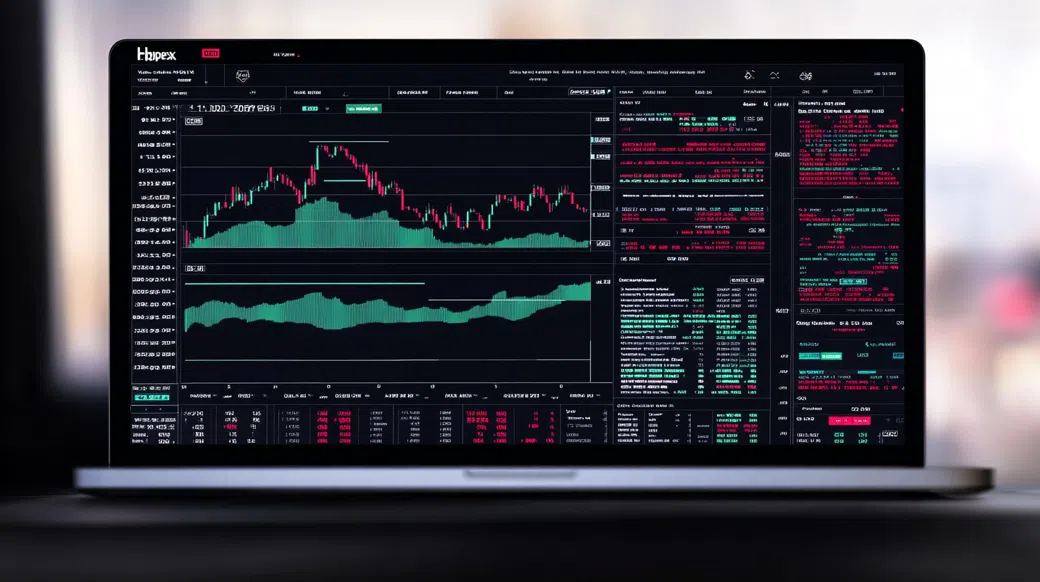
Valorwyck Finance fits the familiar profile of an offshore, CFD-first venue: a proprietary WebTrader with a companion mobile app, a focus on forex and CFDs (often including crypto CFDs), and conditions that can look attractive at first glance. In this segment, it’s common to see high leverage (here, up to roughly 1:500), a minimum deposit around $250, and EUR/USD spreads around ~2.0 pips on a standard-style account—numbers that can be workable for casual trading but become expensive for frequent strategies. For traders prioritizing verifiable oversight, deeper platform tooling, or access to real equities instead of CFDs, that’s when the search for Valorwyck Finance alternatives usually begins.
Disclaimer: This article is for informational purposes only and does not constitute investment advice. CFDs and other leveraged products carry a high risk of loss and are not suitable for all investors.
Key Takeaways (TL;DR)
- Offshore CFD platforms can quote appealing leverage, but regulated brokers typically offer clearer client-money safeguards (segregated funds, negative balance protection, and—depending on jurisdiction—compensation schemes).
- For active FX traders, comparing round-turn trading cost (spread + commission) is more useful than headline “from” spreads; ~2.0 pips on EUR/USD can add up fast.
- If you want real stocks/ETFs (not CFDs), multi-asset firms like IBKR or Saxo are structurally different from CFD-only venues.
What Is Valorwyck Finance and How Does Its Trading Platform Work?
In practice, Valorwyck Finance looks like an offshore CFD broker built for retail traders who want straightforward access to forex pairs, major indices, commodities, and a smaller menu of crypto CFDs. Public-facing offerings in this category often run a market-maker or hybrid model: you place orders inside a proprietary environment, and the broker controls the trading conditions and execution rules. The appeal is simplicity—one dashboard, quick onboarding, and high leverage—but the trade-off is that “trust” becomes a platform feature you can’t backtest. For traders comparing platforms like Valorwyck Finance, the key question is not only what you can trade, but what protections exist when something goes wrong.
Valorwyck Finance Web Trading Platform: Core Features and Tools
Most users will encounter a browser-based WebTrader designed to cover the essentials: price charts, basic technical indicators, and one-click order tickets for common order types (market, limit, stop). Charting is usually serviceable rather than deep—enough drawing tools for trendlines and support/resistance, but not the kind of multi-timeframe workspace power users expect from MT4/MT5 or cTrader. Execution “feels” fast under normal conditions, yet traders should still assume slippage can appear around news releases or thin liquidity. The mobile app typically mirrors the core workflow: watchlists, position monitoring, and account management, though screen space constraints often reduce charting precision.
Trading Fees, Spreads, and Account Types at Valorwyck Finance
Fee disclosure in offshore CFD setups tends to be spread-led, with optional tiers that resemble Standard vs. Raw/ECN-style pricing. A reasonable working expectation for this venue is a EUR/USD typical spread around ~2.0 pips on a standard account, with a higher-probability “raw” tier marketed as ~0.0–0.4 pips plus roughly $5–$8 round-turn commission per lot. Overnight financing (swap) is a real cost driver for swing traders; it’s effectively the carry you pay or receive for holding leveraged positions past rollover. Traders should also watch for non-trading charges—withdrawal fees, inactivity charges, and currency conversion costs can matter more than a single pip headline.
When Do Traders Start Looking for Valorwyck Finance Alternatives?
The first crack in the story usually shows up in operational friction, not in the spread box. When withdrawals take longer than expected, when KYC/AML checks appear late in the process, or when a support ticket loops without resolution, traders start mapping exit routes. From a risk perspective, the combination of offshore status and 1:500 leverage can turn small execution differences into large P&L swings—especially during volatility spikes. That’s why the best Valorwyck Finance alternatives 2026 tend to be regulated venues where the rules are written down, enforced, and auditable.
- Needing MT4/MT5 or cTrader for an automated strategy (EAs, custom indicators, or advanced order management) that a proprietary WebTrader can’t replicate.
- Seeing total cost drift: a “~2.0 pip” EUR/USD environment makes high-frequency trading structurally harder than a raw-spread + commission model.
- Wanting real share ownership or exchange-traded access (stocks/ETFs/futures) rather than stock-index exposure only via CFDs.
- Running into region blocks—US residents are commonly restricted, and additional jurisdictions may be excluded due to sanctions or local rules.
How to Choose a Reliable Alternative to the Valorwyck Finance Trading Platform
Think of the selection process as a strategy-fit audit: you’re not shopping for features, you’re reducing failure modes. Start with what must be true (regulatory standing, client-funds handling, execution policies), then score what improves expectancy (costs, instruments, tools). That framing produces cleaner decisions than chasing leverage or signup bonuses, particularly when comparing alternatives to the Valorwyck Finance trading platform for long-term use.
Regulation, Safety, and Investor Protection
For US/EU traders, the regulator name is not a logo—it’s a legal lever. FCA (UK), ASIC (Australia), CySEC (Cyprus/EU), and NFA/CFTC (US) regimes typically require stronger controls such as segregated client funds and periodic reporting. In the UK, FSCS coverage can protect eligible clients up to £85,000 if a firm fails; in Cyprus, ICF coverage can reach up to €20,000 for eligible retail clients. Those numbers don’t eliminate trading losses, but they can matter in insolvency scenarios.
Available Markets and Instruments
Match the broker to the instrument you truly intend to trade. FX/CFDs may be enough for macro-driven traders; equity investors often want real stocks/ETFs with corporate-action handling and no CFD financing drag. Derivatives traders may require listed futures/options access, not just “index CFDs.” Crypto is its own fork in the road: CFD exposure tracks price, while on-chain ownership changes custody and transferability. Competitors to Valorwyck Finance that are multi-asset tend to be better when your roadmap includes more than spot FX and index CFDs.
Trading Costs: Spreads, Commissions, and Other Fees
Costs are easiest to compare using round-turn math. A 2.0 pip EUR/USD spread is roughly $20 per standard lot per round trip; at 50 lots a month, that’s about $1,000 before slippage, swaps, or commissions. Raw accounts invert the structure: near-zero spread plus a known commission, which can be better for tight-stop strategies. Don’t ignore swaps/overnight fees, inactivity policies, and withdrawal/currency conversion charges—those are the “quiet” line items.
Platforms, Tools, and Execution Quality
Platform choice shapes what you can measure. MT4/MT5 and cTrader support algorithmic workflows, advanced backtesting, and third-party tooling; proprietary WebTrader stacks can be fine for discretionary trading but may limit instrumentation. Execution model matters: market-maker setups can internalize flow, while STP/ECN/DMA routing aims to pass orders through to liquidity providers or venues (with different slippage dynamics). If you are evaluating Valorwyck Finance against regulated options, ask for clarity on order handling, requotes, and how negative balance protection is implemented.
Support, Education, and Overall User Experience
Operational reliability is a trading edge when things break at 2 a.m. Look for multilingual support coverage, documented hours, and a ticket system that leaves an audit trail. Education should be more than PDFs—webinars, platform walkthroughs, and risk modules are practical signals. Finally, check mobile parity: can you adjust stops, monitor margin, and view swap impact from a phone without losing critical context?
Valorwyck Finance and Different Asset Classes: When Alternatives May Be Better
Valorwyck Finance Forex and CFD Trading
Forex and index/commodity CFDs are the natural habitat for Valorwyck Finance, and the instrument menu in this broker category often lands around 30–50 FX pairs plus a handful of indices, metals, energies, and 10–30 crypto CFDs. The comparison pivot is cost and execution. A typical ~2.0 pip EUR/USD spread is workable for low-frequency trading, but it’s a headwind for scalpers or systematic traders where edge is measured in fractions of a pip. Regulated FX specialists such as Pepperstone or IC Markets are often chosen for tighter pricing structures (standard vs. raw/commission), and for platform ecosystems (MT4/MT5/cTrader) that let you test slippage, latency, and order handling more rigorously. Leverage cuts both ways: 1:500 magnifies returns and errors, so margin-call mechanics and negative balance protection deserve as much attention as the chart.
Valorwyck Finance Stock and ETF Trading
If your goal is to own equities, dividends, and corporate actions, a CFD-first venue is usually the wrong instrument wrapper. In offshore CFD setups, “stocks” are commonly offered as CFDs (no shareholder rights, financing costs on leveraged exposure, and broker-defined trading hours). That can be fine for short-term speculation, but it doesn’t behave like a brokerage account. Interactive Brokers and Saxo Bank are structurally different: they provide access to real stocks and ETFs (alongside FX and other instruments), often with broader market access and clearer disclosures around routing and custody. For EU traders, that difference also intersects with investor-protection frameworks and reporting. In other words, the gap is not a feature checkbox—it’s whether your position is a contract with the broker or ownership in the market.
Valorwyck Finance Crypto Trading
Crypto exposure at Valorwyck Finance is best understood as price exposure, not coin ownership. Crypto CFDs can track BTC/ETH and other majors, but they don’t give you on-chain transfer, self-custody, or the ability to verify reserves—features that matter if you view markets through blockchain data. For traders who only want directional bets with leverage, regulated CFD providers like IG or Plus500 can offer crypto CFDs in certain jurisdictions, with more explicit risk controls and disclosures. For those who want “real” crypto, the conversation shifts to regulated exchanges and custody—outside the scope of a broker-CFD comparison. Either way, be precise: you’re buying a derivative contract, and gaps, weekend pricing, and funding rates can dominate your P&L more than a pretty chart.
Best Valorwyck Finance Alternatives for 2026: Comparison of Top Trading Platforms
Interactive Brokers (IBKR): Key Facts and How It Compares to Valorwyck Finance
Regulation: SEC/FINRA (US), FCA (UK), IIROC (Canada)
Markets: stocks, ETFs, options, futures, bonds, FX
Fees: FX pricing varies by account/venue; equity commissions are product- and region-dependent (generally low for active traders), with transparent fee schedules
Platform: Trader Workstation (TWS), IBKR Desktop/Mobile, Client Portal; API access
Best For: Data-driven multi-asset traders who want real market access
Pepperstone: Key Facts and How It Compares to Valorwyck Finance
Regulation: FCA (UK), ASIC (Australia), CySEC (Cyprus), DFSA (Dubai)
Markets: FX, CFDs (indices, commodities; availability varies by entity)
Fees: EUR/USD spreads often ~0.0–0.3 pips on Razor/Raw-style accounts + commission; ~0.8–1.2 pips typical on Standard-style pricing
Platform: MT4, MT5, cTrader (plus broker integrations/tools)
Best For: Execution-focused FX traders running MT4/MT5/cTrader workflows
Saxo Bank: Key Facts and How It Compares to Valorwyck Finance
Regulation: FCA (UK), MAS (Singapore), DFSA (Dubai)
Markets: stocks, ETFs, bonds, FX, options, futures, CFDs
Fees: FX spreads vary by tier (often tighter at higher service levels); commissions apply on exchange-traded products with published schedules
Platform: SaxoTraderGO, SaxoTraderPRO
Best For: Portfolio builders who want stocks/ETFs plus FX in one account
IG: Key Facts and How It Compares to Valorwyck Finance
Regulation: FCA (UK), ASIC (Australia), MAS (Singapore)
Markets: CFDs (FX, indices, commodities, shares), spread betting (UK/IE)
Fees: Costs depend on product; FX spreads can be competitive on major pairs (often around ~0.6–1.2 pips in typical conditions), with clear product-specific charges
Platform: IG web platform and mobile app; MT4 supported in many regions
Best For: Broad CFD coverage with strong regulatory footprint
IC Markets: Key Facts and How It Compares to Valorwyck Finance
Regulation: ASIC (Australia), CySEC (Cyprus), FSA Seychelles (group-level)
Markets: FX, CFDs (indices, commodities; product list varies by entity)
Fees: Raw pricing often ~0.0–0.3 pips on EUR/USD + commission (commonly in the ~$6–$8 round-turn range depending on platform); Standard pricing typically wider
Platform: MT4, MT5, cTrader
Best For: High-frequency and algo traders optimizing spread + commission
Plus500: Key Facts and How It Compares to Valorwyck Finance
Regulation: FCA (UK), CySEC (Cyprus), ASIC (Australia), MAS (Singapore)
Markets: CFDs (FX, indices, commodities, shares; crypto CFDs where permitted)
Fees: Spread-only model on many products; typical FX spreads vary by pair and volatility, with overnight funding and other charges disclosed per instrument
Platform: proprietary web platform and mobile app
Best For: Simple CFD execution for beginners who don’t need MT4/MT5
Comparison Summary
| Platform | Regulation | Main Markets | Typical Costs | Best For |
|---|---|---|---|---|
| Interactive Brokers (IBKR) | SEC/FINRA, FCA, IIROC | Real stocks/ETFs, options, futures, FX, bonds | Product- and venue-based pricing; published schedules; FX pricing varies by structure | Data-driven multi-asset traders who want real market access |
| Pepperstone | FCA, ASIC, CySEC, DFSA | FX + CFDs | Raw ~0.0–0.3 pips + commission; Standard often ~0.8–1.2 pips (market-dependent) | Execution-focused FX traders running MT4/MT5/cTrader workflows |
| Saxo Bank | FCA, MAS, DFSA | Stocks/ETFs + FX; options/futures; CFDs | Tiered spreads/commissions; strong disclosure for exchange-traded products | Portfolio builders who want stocks/ETFs plus FX in one account |
| IG | FCA, ASIC, MAS | CFDs across FX/indices/commodities/shares; spread betting (UK/IE) | FX often ~0.6–1.2 pips typical on majors; costs vary by product | Broad CFD coverage with strong regulatory footprint |
| IC Markets | ASIC, CySEC (plus FSA Seychelles group-level) | FX + CFDs | Raw ~0.0–0.3 pips + ~$6–$8 round-turn commission; Standard wider | High-frequency and algo traders optimizing spread + commission |
| Plus500 | FCA, CySEC, ASIC, MAS | CFDs (FX/indices/commodities/shares; crypto CFDs where allowed) | Spread-only on many instruments; overnight funding applies | Simple CFD execution for beginners who don’t need MT4/MT5 |
How to Safely Move from Valorwyck Finance to Another Broker
Switching brokers is less “sign up and trade” and more “minimize operational risk.” Treat it like a controlled migration: verify the destination, secure your records, then move funds in a way that doesn’t trigger preventable compliance delays. If you’re exiting Valorwyck Finance, remember that leveraged positions can move against you while you’re mid-transfer—reduce exposure before you start clicking withdrawal buttons.
- Confirm the new broker’s authorization on the regulator’s public register (FCA Register, ASIC Connect, CySEC directory, or NFA BASIC) and match the legal entity name on your account application.
- Open the new account and complete KYC early (government ID plus proof of address). Doing this first prevents a “funds arrived but trading locked” scenario.
- Export your trade history, statements, and funding ledger before making changes. Tax reporting and dispute resolution both depend on clean records.
- Flatten or reduce open positions on the old account rather than assuming portability. Most retail brokers do not support position transfers; you typically re-enter trades on the new venue.
- Withdraw using the same payment rail you used to deposit whenever possible. AML rules often force “return-to-source,” and mismatches can slow processing.
Ready to Explore Valorwyck Finance?
If you’re still considering it, use the onboarding process as a diagnostic: read the legal entity details, check region eligibility, and compare the platform stack against the alternatives listed above. Small print beats sales copy, every time.
Visit Valorwyck FinanceFAQ: Valorwyck Finance Alternatives and Trading Platforms
What is the best alternative to Valorwyck Finance in 2026?
The best option depends on whether you need real multi-asset access or primarily FX/CFDs. For real stocks/ETFs and a deep toolset, Interactive Brokers (IBKR) is a strong benchmark; for FX execution and MT4/MT5/cTrader ecosystems, Pepperstone or IC Markets are commonly chosen. If your priority is broad CFD coverage under top-tier regulation, IG is a frequent shortlist candidate. These are the best Valorwyck Finance alternatives 2026 for many US/EU-focused traders because the oversight and disclosures are easier to verify.
Is Valorwyck Finance a safe broker/platform?
Valorwyck Finance appears to operate under an offshore framework (commonly associated with Seychelles FSA-style registrations in this segment), which generally provides fewer investor protections than FCA/ASIC/CySEC/NFA-supervised brokers. That doesn’t automatically mean fraud, but it changes your risk model: dispute channels, compensation schemes, and enforcement power can be limited. If safety is your main constraint, prioritize regulated options vs Valorwyck Finance and verify the legal entity on a regulator register before depositing.
Can I trade stocks, futures, or crypto with Valorwyck Finance?
With brokers similar to Valorwyck Finance, forex and CFDs are typically the core offering, and any “stocks” are often provided as stock CFDs rather than real shares. Listed futures are usually not part of the product stack for offshore CFD venues, while crypto exposure is commonly offered as crypto CFDs (price exposure without on-chain ownership). If you need real stocks/ETFs or listed futures, platforms like IBKR or Saxo are better aligned with that requirement.
What should I check before switching from Valorwyck Finance to another platform?
Before moving, verify regulation, client-money handling (segregated funds), and whether negative balance protection applies for your jurisdiction. Then compare round-turn trading cost (spread + commission) and read the swap/overnight fee schedule for instruments you actually trade. Finally, test execution on the new venue with small size to observe slippage and order behavior during volatility—those micro-details often separate solid Valorwyck Finance alternatives from merely shiny dashboards.
About the Author: Alice Wu is a data scientist and market analyst who reads trading risk through the lens of verifiable records—transaction trails, auditability, and incentives. She covers brokers and market structure with a trader’s skepticism: if a claim can’t be checked, it doesn’t count. The market lies; data does not.





