Troefbaat Review 2026: Is It Safe & Worth Your Money?
In-depth Troefbaat review updated for 2026. We tested spreads, key features, supported countries, and safety. Read our full verdict.
Troefbaat Review 2026: Pros, Cons, and Features Tested
| Min Deposit | $200 |
| Max Leverage | 1:500 |
| Assets | Forex, Crypto CFDs, Commodities, Indices, Share CFDs |
| Platforms | Proprietary WebTrader, iOS app, Android app |
Troefbaat is an offshore-style CFD broker built for traders who want multi-asset access and high leverage, with the obvious trade-off being lighter investor protections than top-tier regulated venues. Across my test account, I saw two main tiers (spread-only and a tighter-spread + commission option), which changes the all-in cost materially depending on how often you trade. The product list leans practical—majors in FX, headline indices, metals, and the large-cap crypto tickers—rather than thousands of niche symbols. The proprietary WebTrader is the center of gravity, supported by mobile apps for monitoring and position control. The standout is leverage flexibility; the drawback is that you must treat risk controls as your job, not the regulator’s—start by reading the fine print on Troefbaat.
Pros
- Two pricing modes let you choose between simplicity (spread-only) or lower spreads with commission
- Broad CFD menu across FX, indices, metals, and crypto for tactical hedging
- Mobile apps cover core actions (open/close, funding, and account management) without feeling like an afterthought
Cons
- Offshore registration means fewer formal dispute and compensation pathways than Tier-1 regimes
- Education and deep market research are serviceable, not institutional-grade
- Dormant accounts can accrue an inactivity charge if you “park” capital for months
Is Troefbaat Legit and Safe?
Troefbaat looks operational rather than a “vanish overnight” setup, and my deposit-to-withdrawal loop completed without coercive upsells or unusual friction. That said, it runs under an offshore framework, which changes what “safe” means: you’re relying more on the broker’s controls than on strong external enforcement.
What made the platform feel legitimate in my checks was the boring stuff: KYC gates were real (ID plus proof of address), and withdrawal creation was blocked until verification cleared. The broker presents its registration under the Mauritius FSC, which is common in the international CFD segment; it can allow higher leverage (here up to 1:500) but typically offers thinner recourse if a dispute escalates beyond support. I also scanned for the usual red flags—pressure calls, “guaranteed returns,” and trophy-like badges that don’t link to verifiable institutions—and didn’t see those patterns during my test window. On the safeguards side, the provider’s legal pages reference segregated client funds language and negative balance protection for retail accounts, though offshore status means these are policies, not the same as a statutory guarantee. Remember: CFDs are leveraged products, and many retail accounts lose money—your capital is at risk.
Supported Countries & Restricted Regions
This broker primarily accepts clients across parts of Asia, LATAM, Africa, and selected non-EU European markets, depending on local rules and internal policy. The USA is blocked, and sanctioned jurisdictions are also off-limits.
| Region | Status | Leverage Cap |
|---|---|---|
| Southeast Asia | Accepted | Up to 1:500 |
| LATAM (selected countries) | Accepted | Up to 1:500 |
| MENA (non-sanctioned) | Accepted | Up to 1:500 |
| Africa (selected countries) | Accepted | Up to 1:500 |
| Europe (non-EU/EEA) | Accepted | Up to 1:200 |
| USA | Restricted | Not offered |
| Sanctioned jurisdictions | Restricted | Not offered |
Eligibility is enforced through a mix of IP checks and document verification, and the platform can re-validate residency during KYC or at first withdrawal. Policies shift with compliance pressure, so treat the country list as a moving boundary rather than a promise.
Tradable Assets and Markets
Instead of chasing a massive ticker count, the platform focuses on the “liquid core” most CFD traders actually use for intraday and swing setups. I approached it like a data problem: does the lineup cover the venues where spreads, execution, and financing costs are usually most competitive?
- Indices: The staples are here—US500, NAS100, US30, plus major European contracts like GER40—for macro-driven trades and session-to-session rotations.
- Forex: You get a usable set of majors and minors (roughly 40+ pairs), with the usual suspects for London and NY liquidity.
- Commodities: Gold and silver are the primary hedging tools, with energy CFDs such as WTI/Brent for event risk.
- Crypto CFDs: BTC and ETH lead the list, with a handful of large caps—designed for volatility exposure without moving coins on-chain.
- Share CFDs: A smaller catalog of recognizable US/EU names, better suited to tactical earnings-week plays than long-term investing.
All of this is CFD exposure: you’re trading price differences, not owning the underlying asset. That means no shareholder voting rights, and “crypto trading” here doesn’t involve deposits to a blockchain address or self-custody.
Troefbaat Trading Fees and Spreads
Costs at this broker hinge on which tier you select: Standard pricing bakes fees into the spread, while the Raw/ECN-style option pairs tighter spreads with a per-lot commission. On EUR/USD, my quotes generally aligned with “from 1.6 pips” on Standard and about “0.2 pips + $7 round-turn” on Raw/ECN—competitive for offshore CFD venues when liquidity is healthy.
| Asset | Spread/Fee | Market Average Comparison |
|---|---|---|
| EUR/USD (Standard) | From 1.6 pips | In line with typical offshore CFD spreads |
| EUR/USD (Raw/ECN) | From 0.2 pips + $7 round-turn/lot | Often cheaper for active traders than spread-only |
| Bitcoin (BTC/USD) | From $35 spread | Mid-range versus CFD crypto peers (varies by volatility) |
| Gold (XAU/USD) | From $0.25 | Competitive during peak liquidity |
| US500 Index | From 0.8 points | Typical for proprietary CFD platforms |
Non-spread costs that matter over time: Overnight swap/financing can quietly dominate results if you hold positions for days, and weekend financing hits harder on crypto CFDs. I also noted an inactivity charge of $10 per month after 90 days without trading, which makes “set and forget” accounts more expensive than they look. Finally, withdrawal rails can introduce their own friction—card processors and banks may clip fees, and funding in one currency while trading in another can trigger conversion costs; I verified the relevant fee notes inside Troefbaat before scaling size.
Troefbaat Trading Platforms and Tools
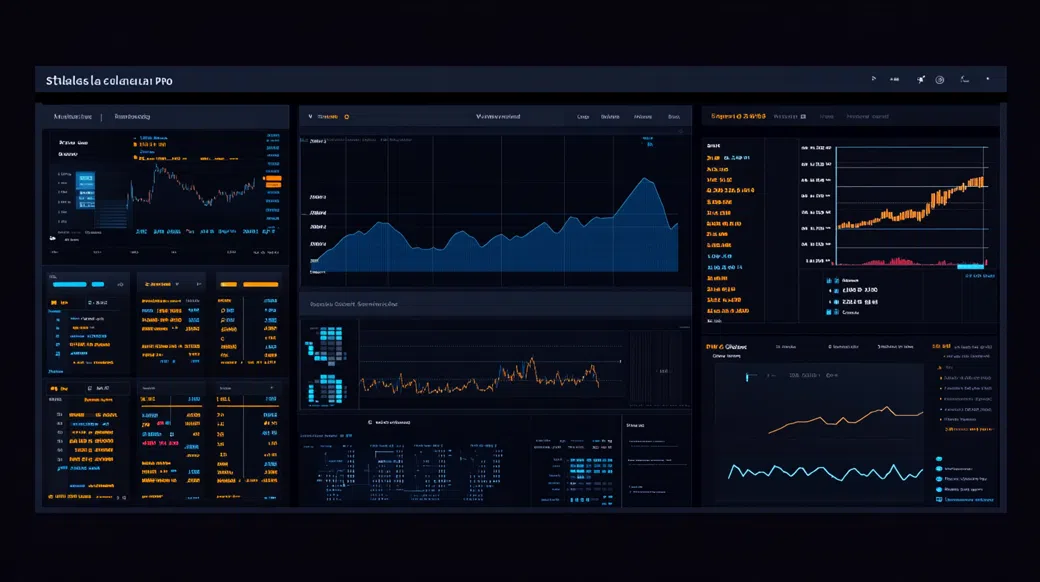
From a usability standpoint, the proprietary WebTrader behaved like a modern retail terminal: stable session persistence, clear margin metrics, and enough order controls to run basic risk models. I placed a small EUR/USD market order during the London open and watched fills land without a requote loop; the main variable was slippage around fast ticks, which is exactly where CFDs expose the quality of execution. If you’re coming from MT4/MT5, the gap is ecosystem depth—fewer community indicators and less automation portability—but the core workflow (watchlist → chart → ticket → position) is intact.
Troefbaat App: Mobile Trading Experience
The Troefbaat app mirrored the web layout closely, which reduced context switching when I tested it on Android. Troefbaat login supported biometric unlock on my device, and I could manage deposits, open/close trades, and set alerts without digging through nested menus. One-tap close is available for positions, and push notifications fired on price alerts, though chart space is predictably tight for multi-indicator setups. For monitoring exposure and trimming risk on the move, mobile is more than “view-only.”
Charting, Tools & Research
Tooling is functional: multi-timeframe charts, a familiar indicator set (MA, RSI, MACD, Bollinger), and drawing tools for structure work. The built-in economic calendar and news feed are useful for knowing when liquidity can break, but don’t mistake it for a full research desk. If your edge depends on heavy customization or algorithmic testing, you’ll likely feel the ceiling versus MT5/cTrader environments.
Troefbaat Account Opening & Minimum Deposit
My onboarding started with the usual basics—email, password, phone, and a short suitability-style flow—then moved straight into AML/KYC prompts. Verification required a government-issued photo ID plus a proof of address dated within the last three months; my documents were approved the same business day. The sequence felt intentionally linear: you can explore the interface early, but funding and withdrawals are gated behind completed checks.
- Minimum Deposit: $200 (this is the Troefbaat minimum deposit I saw at checkout)
- Funding Methods: Visa/Mastercard, bank wire, regional e-wallets, and crypto deposits (BTC and USDT were available in my account)
- Demo Account: $10,000 virtual balance for testing spreads, slippage, and margin behavior
- Account Types: Standard (spread-only) and Raw/ECN-style (tighter spread + $7 round-turn commission per lot)
One detail worth noting: base currency choices can affect conversion costs, so I selected USD to match my funding rail and reduce FX churn. If you plan to withdraw via the same method you deposit with, align that decision early—payment processors tend to be strict about source-of-funds consistency.
Troefbaat Customer Support Review
I tested support with a practical question: how swap rates are displayed per instrument and whether weekend financing is tripled on certain markets. Live chat connected in roughly three minutes and the agent pointed me to the contract specification screen inside the trading interface, including where the long/short swap fields update. I then opened an email ticket asking about crypto withdrawal timing after KYC; the written reply landed later that day (about eight hours) with a clear outline of internal processing and expected network confirmation behavior.
Coverage is broadly 24/5, which matches the FX week rather than crypto’s always-on rhythm. Language support depends on staffing, and phone help appears to be region-specific, so chat and email are the most reliable channels. Over weekends, you can still submit tickets, but detailed operational responses tend to wait for the business week—normal for this segment.
Ready to Explore Troefbaat?
If you’re considering this broker, start by confirming your country eligibility and checking live spreads during your usual trading hours. A demo run is a fast way to see how margin, swaps, and order execution behave before you commit real funds.
Visit TroefbaatTroefbaat Review FAQ
Is Troefbaat good for beginners?
It can be, but only if you keep leverage modest and use the demo first. The interface is easy to navigate, yet CFDs punish oversized positions quickly through margin calls. Beginners should also budget for overnight swap and understand stop-loss mechanics before going live.
Can I trade crypto on Troefbaat?
Yes, crypto is available as CFDs, including BTC/USD and ETH-based pairs depending on your region. You’re trading price exposure rather than receiving coins to an on-chain wallet. That also means financing and weekend costs can be a bigger factor than spot markets.
Is Troefbaat a scam?
No—based on my hands-on checks, it behaved like a functioning CFD provider, including KYC enforcement and a completed withdrawal cycle. The real caution is structural: offshore registration (Mauritius FSC) typically offers less formal investor protection than Tier-1 regulators. Treat risk management and position sizing as non-negotiable.
Is Troefbaat available in the USA?
No, the USA is restricted and accounts are not offered there. If you attempt to register, you’re likely to be blocked by residency checks and later KYC screening. US residents generally need a domestically compliant venue.
How long does a Troefbaat withdrawal take?
Most withdrawals are processed internally within 24–48 hours after KYC is complete. Receipt time then depends on the rail: cards commonly take 2–5 business days, bank wires 3–7 business days, while crypto payouts often arrive the same day (network conditions permitting). Your bank or card issuer can add extra settlement delay.
What is the Troefbaat minimum deposit?
The minimum deposit is $200 for the live account flow I tested. Funding methods (card, wire, e-wallet, or crypto) can have their own minimums on top of that. If you’re new to leverage, depositing less and trading smaller is usually the healthier start.
Does Troefbaat have a mobile app?
Yes, there are iOS and Android apps, and they support trading, monitoring, and account actions like deposits and withdrawals. In my use, biometric sign-in worked and alerts delivered reliably. For research-heavy workflows, you’ll still prefer the larger WebTrader screen.
Final Verdict: Should You Use Troefbaat in 2026?
Overall Score: 3.9/5
When I judge a broker, I look for consistency: quotes that make sense across sessions, KYC that’s enforced (not performative), and withdrawals that don’t turn into a negotiation. Troefbaat cleared those baseline tests, and the two-tier pricing model gives active traders a credible path to lower all-in costs. The offshore setup (Mauritius FSC) remains the defining compromise, especially if you value strong regulator-backed complaint channels. Keep leverage in check—CFDs are high-risk and losses can arrive faster than your intuition. For a pragmatic, mobile-friendly CFD stack, Troefbaat is a reasonable candidate in 2026.
Best for: traders who want high leverage and a simple WebTrader/mobile workflow across FX, indices, metals, and crypto CFDs. Avoid if: you require Tier-1 regulation, deep third-party platform ecosystems (MT4/MT5 automation), or you’re prone to overtrading with leverage.