Tréfonange Trading Platform Alternatives 2026 (US/EU)
Tréfonange alternatives for 2026: compare regulated brokers, platforms, costs, and safety steps. A risk-aware guide for US/EU-focused traders.
Tréfonange Trading Platform Alternatives 2026: Reliable Options for Online Traders
On a clean blockchain explorer, flows either settle or they don’t. Trading platforms are messier: pricing can be opaque, execution can be hard to verify, and “high leverage” can mask high friction. That’s why many traders end up mapping their next move using hard constraints—regulation, withdrawals, tools—rather than marketing. In that lens, Tréfonange sits in a familiar offshore pattern: a CFD-first venue built around a proprietary WebTrader and mobile app, typically paired with higher leverage and a simpler product shelf (think FX and index/commodity CFDs, plus crypto CFDs). Publicly observable characteristics in this segment often include a minimum deposit around $250, leverage reaching 1:500, and EUR/USD spreads commonly quoted from roughly 2.0 pips on a standard-style account.
Those numbers are not automatically “bad,” but they change the math. If you scalp, spreads become a recurring tax. If you hold, swaps/overnight fees matter. If you’re building a rules-based strategy, you’ll care about order types, execution model, and whether you can export your trade history cleanly for analysis. This guide to Tréfonange alternatives focuses on regulated brokers that publish clearer governance signals (registrations, client-money rules, complaints processes) and—crucially—tend to offer deeper platform stacks or broader markets for US/EU traders.
Disclaimer: This article is for informational purposes only and does not constitute investment advice. CFDs and other leveraged products can move against you quickly and may result in losses greater than your initial margin.
Key Takeaways (TL;DR)
- Offshore CFD venues often emphasize 1:500 leverage; regulated substitutes typically emphasize client-money safeguards and tighter governance over headline leverage.
- For cost comparisons, focus on total round-turn cost (spread + commission) and swaps—“from 0.0 pips” is meaningless without the commission line.
- If you want real stocks/ETFs (not CFDs), multi-asset brokers like Interactive Brokers and Saxo are usually a cleaner fit than CFD-only platforms.
- Safer migration means opening and KYC-verifying the new account first, then withdrawing using the original funding rail to reduce AML friction.
What Is Tréfonange and How Does Its Trading Platform Work?
From a market-structure perspective, Tréfonange looks like an offshore CFD broker that primarily offers synthetic exposure rather than direct market access. It is commonly presented as Forex/CFDs-first (currencies, indices, commodities, and often crypto CFDs), with the United States typically excluded alongside sanctioned jurisdictions. In this category, the broker is frequently positioned as a self-contained venue: you trade inside its own ecosystem, with pricing and execution quality harder to benchmark than at a DMA/STP-heavy setup. Traders drawn to “platforms like Tréfonange” are often optimizing for fast onboarding, higher leverage, and a single web interface—until strategy complexity forces a higher standard of tooling and oversight.
Tréfonange Web Trading Platform: Core Features and Tools
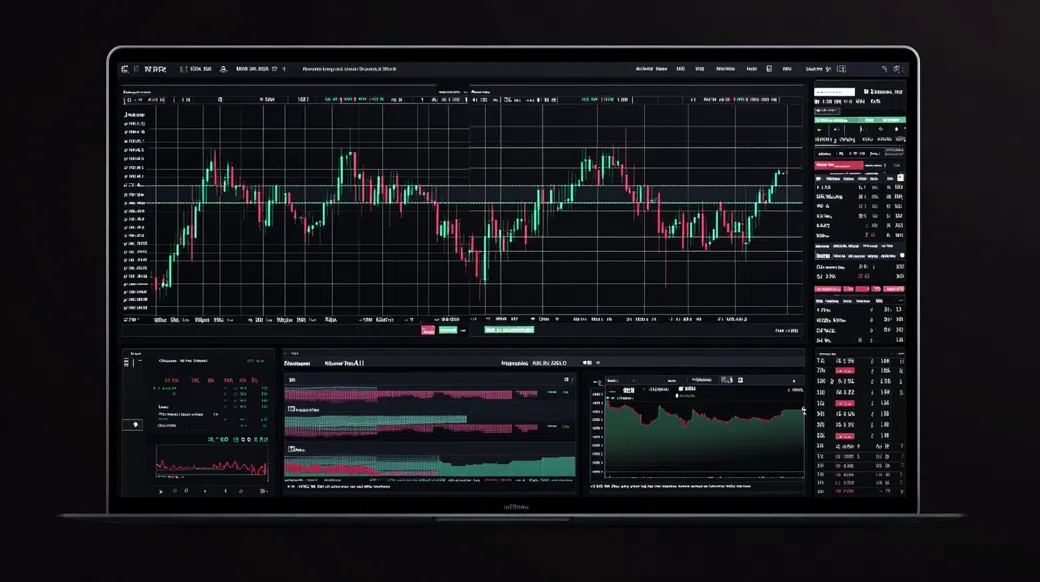
The platform stack in this segment is usually a proprietary WebTrader supported by iOS/Android apps. Expect functional charting (multiple timeframes, standard indicators, drawing tools) rather than research-grade analytics. Order placement tends to cover the essentials—market and limit orders, stop-loss and take-profit—with a dashboard that tracks margin, equity, and open P&L. Where traders notice the ceiling is in workflow: exporting data for analysis can be limited, mobile and web features may not match perfectly, and advanced tooling (custom scripts, rich alerts, API connectivity) is often thinner than MT4/MT5 or cTrader ecosystems.
Trading Fees, Spreads, and Account Types at Tréfonange
Cost is typically packaged as a spread-first model. A common reference point for EUR/USD on a standard-style account is around 2.0 pips, while some brokers in this lane advertise a “raw/ECN-style” tier with spreads nearer 0.0–0.4 pips plus a commission in the neighborhood of $6–$8 round-turn. Overnight financing (swap) usually applies to CFD positions held past the rollover, which becomes material for swing traders. Depending on funding rails, traders may also run into withdrawal processing fees or bank/intermediary charges—details that matter more than the headline leverage when you’re reconciling net returns.
When Do Traders Start Looking for Tréfonange Alternatives?
Data-driven traders don’t switch because a UI feels “nice.” They switch when the constraints start distorting their results: higher spreads erode expectancy, limited platform telemetry blocks proper attribution, or withdrawal rules introduce timing risk. For many, the first serious search for Tréfonange alternatives begins when they attempt to operationalize a strategy—automation, hedging, multi-asset exposure—and discover the platform’s edges are closer than expected. Regulation is also a practical factor: not as a slogan, but as a set of enforceable rules around client funds, complaints, and disclosure.
- You need MT4/MT5 or cTrader for Expert Advisors, custom indicators, or a repeatable execution workflow that a basic WebTrader can’t replicate.
- Spreads around ~2.0 pips on EUR/USD make high-frequency or short-hold strategies statistically fragile after costs.
- You want real equities/ETFs (ownership) rather than stock CFDs that carry financing costs and no shareholder rights.
- Withdrawal timelines or payment-method restrictions create cash-management risk, especially during volatile weeks.
How to Choose a Reliable Alternative to the Tréfonange Trading Platform
Think of the selection process as building a “risk budget” for your brokerage layer. Your strategy already has variance; your broker shouldn’t add hidden variance through weak oversight, unclear execution, or unpredictable fees. The best alternatives to the Tréfonange trading platform are the ones that fit your instruments, tools, and jurisdiction—while making the rules around custody, leverage, and disputes explicit.
Regulation, Safety, and Investor Protection
Start with the regulator and verify it on the public register: FCA (UK), ASIC (Australia), CySEC (Cyprus/EU), or NFA/CFTC (US, for eligible products). Under FCA oversight, retail clients may have FSCS coverage up to £85,000 if a firm fails; under CySEC, the ICF can cover up to €20,000 (eligibility rules apply). Also look for segregated client funds, negative balance protection where required, and clear disclosures on how orders are handled.
Available Markets and Instruments
Map what you trade to what the broker actually offers. If your plan includes real stocks/ETFs, you’ll usually need a multi-asset broker with exchange access, not a CFD-only catalog. If you’re FX/CFD-focused, depth in majors/minors, indices, and commodities matters more than a long list of illiquid exotica. For “brokers similar to Tréfonange,” confirm whether instruments are CFDs or physical/spot—because taxation, financing, and rights differ.
Trading Costs: Spreads, Commissions, and Other Fees
Compare the round-turn cost of a typical trade size: spread plus commission, not just “spreads from.” A raw account at 0.1–0.3 pips plus $6–$8 round-turn may beat a 2.0-pip spread account for active traders, even before slippage. Then audit the non-obvious lines: swap/overnight fees for holds, inactivity charges if you trade seasonally, and deposit/withdrawal costs tied to payment rails.
Platforms, Tools, and Execution Quality
Your platform is your instrumentation layer. MT4/MT5 and cTrader support automation, detailed logs, and a broader third-party tooling ecosystem; proprietary platforms vary widely in what they expose. Execution model matters: market maker vs STP/ECN/DMA changes how your orders are internalized or routed, and it affects slippage during news. If you’re coming from Tréfonange, test the new venue by measuring fill quality on the same setup—same session, similar volatility, comparable order types.
Support, Education, and Overall User Experience
Support becomes critical when something breaks: margin calls, KYC holds, corporate actions, platform outages. Check support hours in your timezone, language coverage, and whether you can reach a human quickly. For learners, the quality of education is less about “webinars” and more about practical content: margin mechanics, swap calculations, and risk controls. Mobile parity also matters if you manage risk on the go.
Tréfonange and Different Asset Classes: When Alternatives May Be Better
Tréfonange Forex and CFD Trading
The core offering is typically FX and CFDs with leverage up to about 1:500, a minimum deposit around $250, and a spread-first cost profile (EUR/USD often quoted near 2.0 pips on standard-style pricing). That can work for casual, low-frequency trading, but it’s a tough environment for tight-stop strategies where a couple of pips decide the trade. Regulated FX/CFD specialists like Pepperstone and OANDA tend to provide clearer fee schedules, stronger regulatory oversight, and platform breadth (MT4/MT5/cTrader or robust proprietary tooling). Just as importantly, they often offer execution reporting and environments that make it easier to diagnose slippage versus strategy error—an edge when you’re evaluating performance honestly.
Tréfonange Stock and ETF Trading
Stock/ETF access is where offshore CFD venues often diverge from what US/EU investors mean by “investing.” If stocks are offered, they’re frequently CFDs on equities, which means you’re not buying shares on an exchange, you don’t get shareholder voting rights, and holding costs can include financing. Multi-asset brokers such as Interactive Brokers (IBKR) and Saxo Bank are designed for real-market participation: exchange-traded equities and ETFs, options and futures (depending on region), plus FX in a unified account. For anyone running a portfolio with cash equities alongside hedges, these are stronger “alternatives to the Tréfonange trading platform” because the product set matches the portfolio reality rather than simulating it via CFDs.
Tréfonange Crypto Trading
Crypto on CFD-centric platforms is usually price exposure, not on-chain ownership. That matters: you cannot withdraw coins to a wallet, you’re exposed to overnight financing rules, and your risk is tied to the broker’s solvency and execution—separate from blockchain settlement. If you want regulated crypto CFDs, brokers like IG (where available by region) and Plus500 commonly include crypto CFDs alongside indices and FX, with a more formal compliance perimeter than offshore providers. If your goal is on-chain custody, that’s a different product category entirely; for this article’s scope—trading—stick to regulated venues and read the product disclosures carefully, because crypto volatility plus leverage can compress risk timelines to minutes.
Best Tréfonange Alternatives for 2026: Comparison of Top Trading Platforms
Interactive Brokers (IBKR): Key Facts and How It Compares to Tréfonange
Regulation: SEC/FINRA (US), FCA (UK), IIROC (Canada) (entity depends on your residence)
Markets: Stocks, ETFs, options, futures, bonds, FX (availability varies by region)
Fees: FX pricing is typically tight on major pairs; commissions and exchange fees apply for many instruments (varies by product and venue)
Platform: Trader Workstation (TWS), IBKR mobile, Client Portal; API access for advanced users
Best For: Quant-style multi-asset portfolios needing deep data and APIs
Pepperstone: Key Facts and How It Compares to Tréfonange
Regulation: FCA (UK), ASIC (Australia), CySEC (EU), DFSA (UAE)
Markets: FX and CFDs (indices, commodities, some crypto CFDs depending on region)
Fees: EUR/USD often ~0.0–0.3 pips on Razor/Raw-style pricing plus commission; ~1.0+ pip equivalent on Standard-style pricing (varies)
Platform: MT4, MT5, cTrader, TradingView integration (region-dependent)
Best For: Active FX traders optimizing for tight spreads and platform choice
Saxo Bank: Key Facts and How It Compares to Tréfonange
Regulation: FCA (UK), MAS (Singapore), DFSA (UAE) (entity varies by region)
Markets: Stocks, ETFs, bonds, options, futures, FX, CFDs
Fees: Tiered pricing by product; FX spreads are typically competitive on majors, with commissions/financing depending on instrument
Platform: SaxoTraderGO, SaxoTraderPRO
Best For: Investors who want research plus broad global market access
OANDA: Key Facts and How It Compares to Tréfonange
Regulation: CFTC/NFA (US), FCA (UK), ASIC (Australia), IIROC (Canada)
Markets: FX (and CFDs in certain jurisdictions, subject to local rules)
Fees: Pricing is typically spread-based on standard accounts; costs vary by pair and volatility regime
Platform: OANDA web/mobile, MT4 (availability varies)
Best For: Risk-first FX trading with strong regulatory perimeter
IG: Key Facts and How It Compares to Tréfonange
Regulation: FCA (UK), ASIC (Australia), MAS (Singapore)
Markets: CFDs (indices, FX, commodities, shares), spread betting (UK/IE), crypto CFDs where permitted
Fees: Typically competitive spreads on major indices/FX; financing applies on leveraged positions (details vary by product)
Platform: IG web platform, mobile apps; MT4 support in some regions
Best For: Macro-style CFD traders who want broad index coverage
CMC Markets: Key Facts and How It Compares to Tréfonange
Regulation: FCA (UK), ASIC (Australia), BaFin (Germany)
Markets: CFDs (FX, indices, commodities, shares); spot FX where available
Fees: Spreads are generally competitive on major pairs; costs depend on instrument and account structure
Platform: Next Generation platform, mobile; MT4 support in some regions
Best For: Chart-heavy discretionary traders who live in one platform
Comparison Summary
| Platform | Regulation | Main Markets | Typical Costs | Best For |
|---|---|---|---|---|
| Interactive Brokers (IBKR) | SEC/FINRA, FCA, IIROC (entity-dependent) | Stocks/ETFs, options, futures, bonds, FX | Product-based commissions; generally tight FX pricing on majors | Quant-style multi-asset portfolios needing deep data and APIs |
| Pepperstone | FCA, ASIC, CySEC, DFSA | FX + CFDs (indices/commodities; crypto CFDs where allowed) | Raw ~0.0–0.3 pips + commission; Standard ~1.0+ pip equivalent | Active FX traders optimizing for tight spreads and platform choice |
| Saxo Bank | FCA, MAS, DFSA (entity-dependent) | Stocks/ETFs, options, futures, FX, CFDs, bonds | Tiered by product; spreads/commissions vary by market | Investors who want research plus broad global market access |
| OANDA | CFTC/NFA, FCA, ASIC, IIROC | FX (CFDs in eligible jurisdictions) | Mostly spread-based; costs vary by pair/volatility | Risk-first FX trading with strong regulatory perimeter |
| IG | FCA, ASIC, MAS | CFDs, spread betting (UK/IE), crypto CFDs where permitted | Competitive spreads on majors; financing on leveraged holds | Macro-style CFD traders who want broad index coverage |
| CMC Markets | FCA, ASIC, BaFin | CFDs across FX/indices/commodities/shares | Competitive spreads; instrument/account structure dependent | Chart-heavy discretionary traders who live in one platform |
How to Safely Move from Tréfonange to Another Broker
A platform switch is easiest to treat like a controlled migration, not a leap. Your main risks are operational: KYC delays, withdrawal holds, and being forced to manage open leverage during a transfer window. Reduce the surface area first, then move capital. If you’re currently using Tréfonange, assume positions won’t transfer broker-to-broker and plan for re-entry rather than hoping for a handoff.
- Confirm the new broker’s license on the regulator’s own site (FCA Register, ASIC Connect, CySEC register, or NFA BASIC) and match the legal entity name on your account agreement.
- Open the new account and complete KYC/AML early (ID + proof of address). Most verification clears quickly, but you don’t want it blocking a time-sensitive withdrawal.
- Reduce complexity on the old account: close or de-risk positions so you aren’t exposed to margin calls while funds are in transit.
- Export statements, trade confirmations, and funding history for bookkeeping and tax reconciliation before you initiate closure.
- Withdraw using the same payment method you used to deposit when possible; many compliance teams reject third-party routes or mismatched rails.
Ready to Explore Tréfonange?
If you’re comparing competitors to Tréfonange, it helps to re-check the current onboarding flow, product list, and regional restrictions before you commit. Capture screenshots of fees, margin rules, and withdrawal methods so you can compare like-for-like against regulated substitutes and avoid surprises later.
Visit TréfonangeFAQ: Tréfonange Alternatives and Trading Platforms
What is the best alternative to Tréfonange in 2026?
The best choice depends on whether you need real multi-asset access or mainly FX/CFDs. For broad, data-rich portfolios, Interactive Brokers (IBKR) is hard to beat; for FX execution with MT4/MT5/cTrader, Pepperstone is a frequent pick. Traders who want a strong index/CFD catalog under tight oversight often shortlist IG or CMC Markets as best Tréfonange alternatives 2026 candidates.
Is Tréfonange a safe broker/platform?
Tréfonange appears to operate in an offshore/unregulated framework commonly associated with the Seychelles FSA category, which typically provides fewer investor-protection mechanisms than FCA/ASIC/CySEC/NFA regimes. That doesn’t prove wrongdoing, but it does change your recourse options if disputes arise. For many traders, regulated options vs Tréfonange are preferable because client-money rules, disclosures, and complaint paths are more enforceable.
Can I trade stocks, futures, or crypto with Tréfonange?
Tréfonange is generally positioned around FX and CFDs, with crypto commonly offered as crypto CFDs (price exposure) rather than on-chain ownership. Real stocks/ETFs and exchange-traded futures are often not the core product in this segment, and if equities exist they may be CFDs. If you need real stocks and futures, top substitutes for Tréfonange include Interactive Brokers and Saxo Bank, which are built for exchange access.
What should I check before switching from Tréfonange to another platform?
Verify regulation on the official register, then confirm the exact legal entity you’ll contract with (not just the brand name). Next, compare total trading costs (spread + commission + swap) and test execution with small size to observe slippage during active sessions. Finally, make sure deposits/withdrawals match your funding rails and that you can export statements cleanly—those operational details matter as much as the headline spreads when evaluating Tréfonange alternatives.
About the Author: Alice Wu is a data scientist and market analyst who treats trading as a measurement problem: execution, fees, and settlement trails matter more than stories. She focuses on verifiable signals—platform telemetry, transaction rails, and regulatory disclosures—because the market can narrate anything, but the data has to clear.