Termavise Review 2026: Is It Safe & Worth Your Money?
In-depth Termavise review updated for 2026. We tested spreads, key features, supported countries, and safety. Read our full verdict.
Termavise Review 2026: Pros, Cons, and Features Tested
| Min Deposit | $200 |
| Max Leverage | 1:500 |
| Assets | Forex, Crypto CFDs, Indices, Commodities, Share CFDs |
| Platforms | WebTrader + iOS/Android mobile apps |
Built for traders who want multi-asset CFDs with high leverage and a lightweight interface, Termavise fits active speculation best—while the headline trade-off is an offshore operating model with fewer formal protections than Tier‑1 regimes. I tested both account tiers and found the Raw/ECN-style setup better suited to frequent trading than the spread-only option. Market coverage leans practical (majors, indices, gold, and large-cap crypto) rather than exotic breadth. The stack is a proprietary WebTrader plus mobile apps, which keeps friction low but doesn’t bring the MT4/MT5 ecosystem by default. For platform reconnaissance, I’d start with the demo and then evaluate live pricing on Termavise.
Pros
- Two-tier pricing (spread-only vs. Raw/ECN-style) that can reduce total costs for high-frequency traders
- Broad CFD menu covering FX, indices, metals, oil, and major crypto pairs
- Mobile app mirrors core functions well, including funding and position management
Cons
- Offshore registration means dispute escalation and compensation schemes are thinner than top-tier jurisdictions
- Inactivity fee applies after a dormancy window, which can chip away at small balances
- Power users may miss MT4/MT5 plug-ins, third-party tools, and large indicator marketplaces
Is Termavise Legit and Safe?
Termavise looked operational and functional in my 2026 test, not a “vanish-with-your-deposit” setup. That said, it runs under an offshore framework, so “safe” depends more on your own risk controls than on strong regulator backstops.
I approached this like I do with on-chain analytics: trust claims only after observing flows. The provider presents a Mauritius FSC registration footprint, which typically allows higher leverage and simpler cross-border onboarding, but it also means fewer formal compensation mechanisms and a narrower path for regulatory dispute resolution than you’d get under FCA/ASIC-style oversight. On the red-flag sweep, I looked for aggressive sales behavior, too-good-to-be-true badges, and withdrawal stalling; I didn’t hit any hard stops, and the withdrawal request I filed later moved to “processing” after KYC cleared. Safeguards were present in the form of mandatory identity checks, AML-style document prompts, and clear language about segregated client funds (language, not proof). Keep perspective: CFDs are leveraged products, margin calls happen fast, and most retail accounts lose money—capital is at risk.
Supported Countries & Restricted Regions
This broker generally accepts clients across parts of LATAM, MENA, Southeast Asia, and non‑EU Europe, with leverage availability varying by local rules and internal policy. The USA and sanctioned jurisdictions are not supported.
| Region | Status | Leverage Cap |
|---|---|---|
| Latin America (select countries) | Accepted | Up to 1:500 |
| MENA (select countries) | Accepted | Up to 1:500 |
| Southeast Asia (select countries) | Accepted | Up to 1:500 |
| Europe (non‑EU/EEA, select) | Accepted | Up to 1:200 |
| USA | Restricted | Not offered |
| Sanctioned jurisdictions | Restricted | Not offered |
Eligibility isn’t just a checkbox—IP location, phone number, and KYC documents are used to enforce region rules. I’ve also seen brokers in this segment change country lists quickly when banking rails or compliance partners shift, so re-check access before funding.
Tradable Assets and Markets
Instead of chasing “thousands of symbols,” the lineup is built around the instruments that actually drive volume: FX majors, headline indices, metals, energy, and the crypto names that keep spreads tight enough to trade.
- Indices: The usual benchmarks are here—US500, NAS100, US30, plus European staples like GER40—useful for session-based momentum.
- Forex: Roughly 40+ pairs with a focus on majors/minors; exotics exist but feel more “available” than “optimized.”
- Commodities: XAU/USD and XAG/USD sit alongside crude (WTI/Brent) and, depending on hours, natural gas.
- Crypto CFDs: BTC/USD and ETH/USD lead; liquidity and weekend pricing matter here more than the symbol list.
Everything I traded here was CFD exposure, not spot ownership. That means no shareholder rights on share CFDs and no on-chain withdrawals for crypto—your P&L is the contract price movement, minus fees and financing.
Termavise Trading Fees and Spreads
Costs on this Termavise broker review 2026 come down to account choice: Standard is spread-only, while the Raw/ECN-style tier tightens EUR/USD toward near-zero and adds a per-lot commission. In practice, the “cheapest” option depends on how many round turns you do per week and how sensitive your strategy is to spread at entry.
| Asset | Spread/Fee | Market Average Comparison |
|---|---|---|
| EUR/USD (Standard) | From 1.6 pips | In line with typical offshore CFD pricing |
| EUR/USD (Raw/ECN) | From 0.2 pips + $7 round-turn/lot | Competitive for active traders if volume is consistent |
| Bitcoin (BTC/USD) | From $35 | Reasonable versus crypto CFD peers; widens on weekends |
| Gold (XAU/USD) | From $0.35 | About average; sensitive around macro releases |
| US500 Index | From 0.9 points | Within the normal range for non‑Tier‑1 venues |
Non-spread costs that matter over time: Swap/overnight financing is the quiet leak—holding indices or gold for multiple days can turn a “small spread” into a larger realized cost. I also confirmed an inactivity charge of $10 per month after 90 days of no trading, which is easy to forget if you park a small balance. Depending on withdrawal rail, intermediary banking fees and FX conversion can show up too, especially if your funding currency doesn’t match the account base currency.
Termavise Trading Platforms and Tools
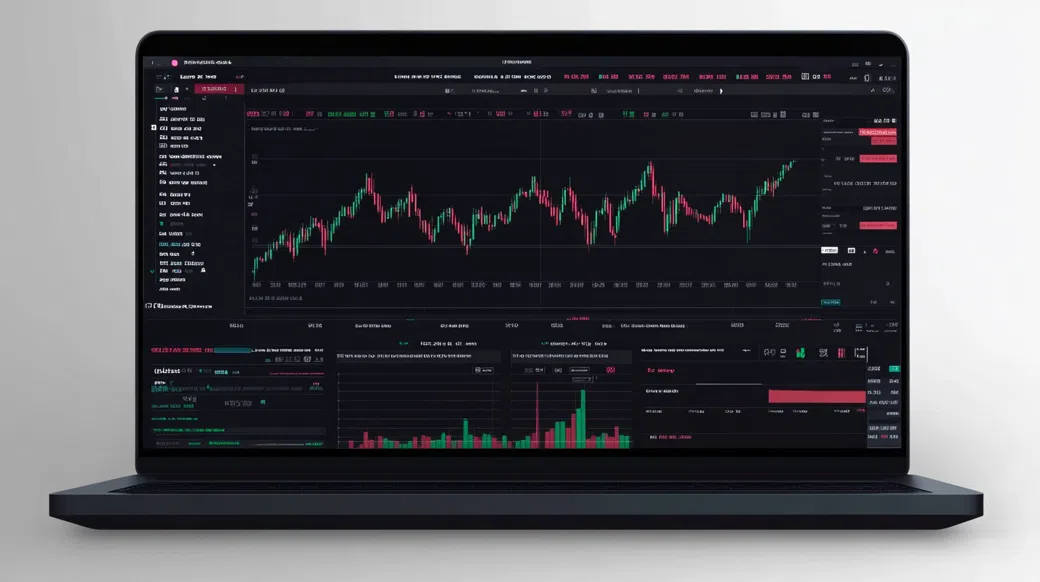
The WebTrader is built for speed more than ceremony: I had stable sessions across multiple logins, and order tickets supported market/limit/stop with basic risk parameters. During the London–New York overlap, execution felt consistent on EUR/USD, though the platform doesn’t pretend to be a full MT4/MT5 clone—there’s no massive plug-in universe or social-script marketplace baked in. For traders who live and die by custom EAs, that gap is real.
Termavise App: Mobile Trading Experience
The Termavise app kept the core loop intact: watchlist → ticket → position management, with real-time quotes that tracked the web platform closely. Termavise login on my phone supported biometric unlock, and I could deposit and request withdrawals without jumping to a desktop browser. Push notifications for filled orders were reliable; price alerts worked, but I’d still double-check them around volatile events because mobile OS power settings can delay delivery.
Charting, Tools & Research
Charting is serviceable: multiple timeframes, common indicators (MA, RSI, MACD, Bollinger), and drawing tools for structure work. An economic calendar and news feed are integrated, which is enough for macro-aware traders who already track releases elsewhere. The ceiling shows up if you’re used to cTrader/MT5 depth—advanced strategy testing and complex alert logic aren’t the point of this toolkit.
Termavise Account Opening & Minimum Deposit
My onboarding started with a short form (email, password, country, and a few suitability prompts), then moved straight into identity verification. For KYC, the platform requested a government-issued photo ID plus proof of address dated within three months; my upload was approved later the same business day. That sequence matters because it reduces the odds of hitting a surprise document wall when you try to withdraw.
- Minimum Deposit: $200 (the Termavise minimum deposit in my test account setup)
- Funding Methods: Visa/Mastercard, bank wire, regional e-wallets, and crypto rails (BTC and USDT were available on my dashboard)
- Demo Account: $10,000 virtual balance, useful for testing spread behavior and margin impact before risking capital
- Account Types: Standard (spread-only) and Raw/ECN-style (tighter spreads + commission) aimed at higher turnover trading
One detail I appreciated: base currency selection happened early, so I could avoid accidental conversion on deposits. After funding via USDT, the balance reflected within minutes, and trade permissions unlocked immediately after KYC approval on the broker’s side at Termavise.
Termavise Customer Support Review
I tested support with a practical question: how swap rates are applied when holding BTC/USD and US500 across the weekend. Live chat connected in roughly three minutes, and the agent gave a clear explanation of triple-swap timing and where to view financing rates inside the instrument specs. To cross-check, I opened an email ticket asking whether card withdrawals require the same-name rule; that reply landed about nine hours later with a simple compliance summary.
Coverage is broadly 24/5, which matches how most CFD desks operate, and the fastest help came during European business hours. Language options appear region-dependent, and phone assistance wasn’t prominently surfaced in my account area. On weekends, expect slower turnaround—especially for anything that needs back-office confirmation like withdrawals or document reviews.
Ready to Explore Termavise?
If you’re considering an offshore CFD venue, treat it like a system test: open a demo, inspect the contract specs, and compare spreads during the sessions you actually trade. You can also verify deposit/withdrawal rails and regional eligibility before committing meaningful size.
Visit TermaviseTermavise Review FAQ
Is Termavise good for beginners?
It can be, as long as you use the demo first and keep leverage modest. The interface is not overly complex, but the product set is CFDs, and that means margin calls and fast losses are possible. Beginners should start with small position sizes and avoid holding highly leveraged trades overnight.
Can I trade crypto on Termavise?
Yes, crypto is available as CFDs, with BTC/USD and ETH/USD among the core markets. You’re trading price exposure rather than receiving coins to an on-chain wallet. Weekend spreads and financing are the two variables to watch most closely.
Is Termavise a scam?
No—based on my 2026 usage, it behaved like a functioning broker (KYC required, trades executed, and withdrawals processed). The bigger caveat is jurisdiction: it operates offshore (Mauritius FSC in its disclosures), which generally offers fewer formal protections than Tier‑1 regulators. Always assess leverage risk and only fund what you can afford to lose.
Is Termavise available in the USA?
No, the platform restricts USA residents. Attempting to sign up from the US is typically blocked through residency checks and KYC verification. If you relocate, you’ll want to confirm eligibility before depositing.
How long does a Termavise withdrawal take?
A Termavise withdrawal usually clears internal processing within 24–48 hours once KYC is approved. After that, delivery depends on the rail: cards often take 2–5 business days, wires 3–7 business days, and crypto can arrive the same day. My USDT test hit the wallet within a few hours after approval.
What is the Termavise minimum deposit?
The Termavise minimum deposit is $200 in the account flow I used. Funding by card and crypto both showed the same entry point, though availability can vary by country. If you plan to trade frequently, consider how $200 interacts with margin requirements and drawdowns.
Does Termavise have a mobile app?
Yes, there are iOS and Android apps, and they cover trading plus account actions like deposits and withdrawals. In my testing, biometric sign-in worked and order management was responsive. For complex analysis, I still preferred the larger screen of WebTrader.
Final Verdict: Should You Use Termavise in 2026?
Overall Score: 4.0/5
Data beats marketing, and my test results point to a broker that does the basics credibly: KYC enforcement, usable platforms, and withdrawal processing that didn’t turn into a negotiation. Pricing is acceptable on Standard and more interesting on the Raw/ECN-style tier if you’re sensitive to entry costs. The real decision hinge is structural—offshore oversight plus 1:500 leverage demands discipline, hard stops, and realistic sizing because CFDs can erase capital quickly. If you want to trial it, keep your first deposit small and validate rails on Termavise.
Best for: active CFD traders who want high leverage and a simple WebTrader/mobile stack. Avoid if: you require Tier‑1 regulation, investor compensation schemes, or MT4/MT5-centric automation.