Swaptaire Review 2026: Is It Safe & Worth Your Money?
In-depth Swaptaire review updated for 2026. We tested spreads, key features, supported countries, and safety. Read our full verdict.
Swaptaire Review 2026: Pros, Cons, and Features Tested
| Min Deposit | $200 |
| Max Leverage | 1:500 |
| Assets | Forex, Indices, Commodities, Crypto CFDs, Share CFDs |
| Platforms | Proprietary WebTrader + iOS/Android mobile apps |
Built for traders who think in spreads and margin, Swaptaire is a multi-asset CFD broker that suits active speculators who want higher leverage and don’t need a deep third‑party platform ecosystem—at the cost of operating under an offshore framework. In my test account, the broker steered me into two tiers (Standard vs. Raw/ECN-style), with pricing that clearly changes once commission kicks in. The lineup leans practical: majors in FX, index CFDs, metals, and a small set of large-cap crypto CFDs. The interface is a proprietary WebTrader plus mobile, not a confirmed MT4/MT5 stack, which is a real constraint if you rely on custom indicators. For the current offering and account flow, I used Swaptaire.
Pros
- Two pricing tracks (spread-only vs. tighter spreads + commission) that map well to different trading frequencies
- Broad CFD menu across FX, indices, metals, and crypto with one margin wallet
- Mobile app supports funding, position management, and alerts without feeling bolted-on
Cons
- Offshore registration means fewer formal dispute/compensation routes than Tier-1 venues
- MT4/MT5 availability wasn’t something I could verify inside the platform environment
- Dormant accounts can accumulate an inactivity charge after a quiet period
Is Swaptaire Legit and Safe?
Swaptaire appears operational and legitimate as a functioning CFD brokerage, not a “vanishing deposit” setup. The safety caveat is structural: it runs under an offshore registration model, so your protections depend more on the broker’s internal controls than on strong local investor-compensation rules.
Seychelles FSA registration was the key jurisdictional signal presented during onboarding, and that matters because offshore oversight typically allows higher leverage (and faster account access) while offering lighter external recourse if a dispute escalates. I looked for the usual red flags—aggressive “account manager” pressure, trophy-badge marketing, or withdrawal friction—and didn’t see any hard-stop behavior during my short test window. KYC was not optional: the dashboard pushed identity verification before enabling withdrawals, and the language around segregated client funds was present in the legal/FAQ areas. Still, offshore does not equal risk-free: negative balance protection is generally described for retail users but isn’t the same as a statutory guarantee. Remember that CFDs are leveraged products; margin calls happen fast, and many retail accounts lose money.
Supported Countries & Restricted Regions
This broker is broadly accessible across many international markets, particularly parts of LATAM, MENA, and Southeast Asia, subject to local rules. The USA and sanctioned jurisdictions are not accepted.
| Region | Status | Leverage Cap |
|---|---|---|
| Latin America (selected countries) | Accepted | Up to 1:500 |
| MENA (selected countries) | Accepted | Up to 1:500 |
| Southeast Asia (selected countries) | Accepted | Up to 1:500 |
| Non-EU Europe (selected countries) | Accepted | Up to 1:200 |
| USA | Restricted | Not offered |
| Sanctioned jurisdictions | Restricted | Not offered |
Eligibility is enforced in layers: IP/location checks showed region gating, and the KYC step (ID + address) is where residency is actually confirmed. Policies can shift with compliance updates, so I’d re-check availability right before funding a live account.
Tradable Assets and Markets
The instrument list feels designed for “macro + momentum” traders: enough diversity to rotate risk across sessions, without trying to be an everything-exchange. Liquidity concentrates around FX, headline indices, and the usual commodity and crypto benchmarks.
- Indices: Major benchmarks like US500, NAS100, US30, GER40, and UK100 for event-driven trading around earnings seasons and central-bank weeks.
- Forex: 40+ pairs in practice—majors and a decent slice of minors—where spreads matter most during the London/NY overlap.
- Commodities: XAU/USD and XAG/USD plus energy (WTI/Brent) for volatility hedges when FX ranges compress.
- Crypto CFDs: BTC and ETH with a handful of large caps, built for short-horizon speculation rather than long-term custody.
- Share CFDs: A selected set of US/EU large caps for tactical exposure without holding the underlying stock.
All of this is CFD exposure, meaning you’re trading price movement, not taking delivery. You don’t get shareholder voting rights, and “crypto” here is not an on-chain wallet withdrawal—it’s a derivative with financing and margin mechanics.
Swaptaire Trading Fees and Spreads
Pricing is tiered: the Standard account folds costs into the spread, while the Raw/ECN-style option tightens the spread and adds a per-lot commission. On EUR/USD, my quotes typically aligned with “offshore CFD broker” norms—fine for intraday, less ideal for ultra-high-frequency scalping unless you’re on the Raw tier.
| Asset | Spread/Fee | Market Average Comparison |
|---|---|---|
| EUR/USD (Standard) | From 1.5 pips | In line with typical spread-only CFD accounts |
| EUR/USD (Raw/ECN) | From 0.2 pips + $7 round-turn | Competitive for commission-based pricing |
| Bitcoin (BTC/USD) | From $35 spread (variable) | Middle of the pack for crypto CFD spreads |
| Gold (XAU/USD) | From $0.30 (30 cents) | Generally comparable to similar multi-asset brokers |
| US500 Index | From 0.8 points | Reasonable versus broad-market CFD averages |
Non-spread costs that moved my “real” P&L were financing and friction: overnight swap/financing applied when I held positions past rollover, and crypto weekend financing can be noticeable if you park trades for days. The inactivity fee is $10 per month after 90 days with no trading activity, which is small until it compounds into a habit tax. Withdrawal rails can also add costs—conversion spreads on card funding in a different base currency were more visible than any explicit “broker fee.” For fee details and the current schedule, I checked Swaptaire directly.
Swaptaire Trading Platforms and Tools
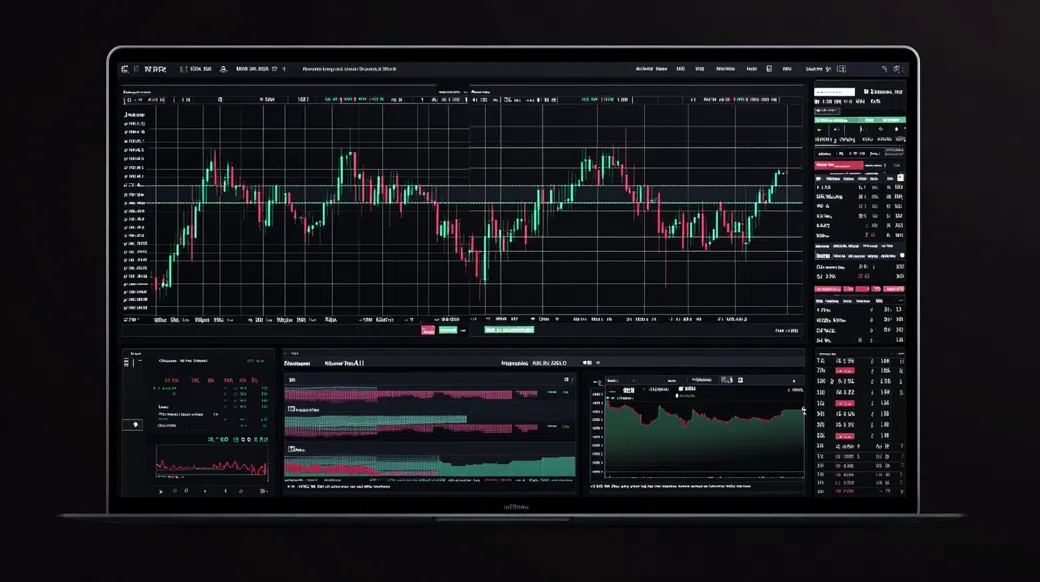
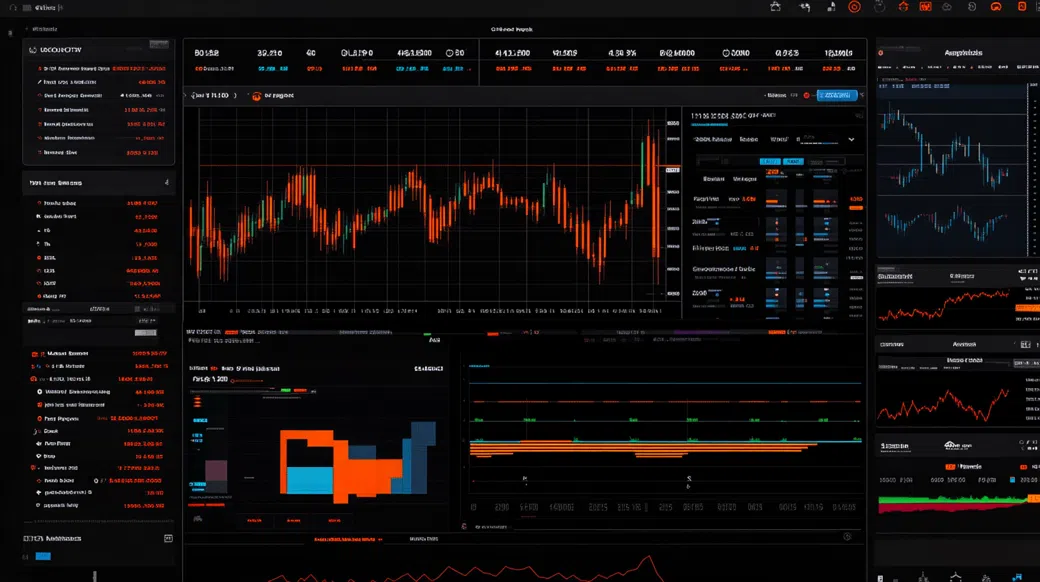
From a systems perspective, the proprietary WebTrader behaved predictably: sessions stayed stable, the price ladder updated without lag spikes, and order tickets supported market and pending orders with SL/TP attached. During the NY open, I placed a small US500 position to stress execution; fills were consistent with variable-spread CFD routing, with mild slippage when the tape accelerated. The obvious gap versus MT4/MT5 is ecosystem depth—no plug-and-play EA library and fewer community-built scripts—so your edge has to come from process, not platform add-ons.
Swaptaire App: Mobile Trading Experience
The Swaptaire app mirrored the web layout closely, and the Swaptaire login flow supported biometric unlock on my device, which matters when you’re managing risk on the move. Quotes streamed in real time, and I could modify stops, partially close, and review margin usage without digging through menus. Deposits and withdrawals were accessible in-app, plus push notifications for price alerts; the only quirk I noticed was occasional chart redraw latency when swapping timeframes on weaker connectivity.
Charting, Tools & Research
Charting covered the core indicators (MA, RSI, MACD, Bollinger) and the drawing tools most traders actually use. Watchlists were easy to build, and the economic calendar/news panel is useful for “don’t trade into the spike” hygiene. The ceiling shows up if you need advanced depth-of-market or strategy testing—this is serviceable analysis tooling, not a cTrader/MT5 laboratory.
Swaptaire Account Opening & Minimum Deposit
My signup path started with an email + password, then a short profile questionnaire that feeds AML risk scoring (country, experience, source-of-funds). For KYC, the broker requested a government-issued photo ID and a proof of address document dated within three months; verification cleared the same business day in my case after a manual review step. One thing I liked as a data person: the platform timestamped each compliance state change, which makes the process auditable if something stalls.
- Minimum Deposit: $200 (the Swaptaire minimum deposit for the live account tier I opened)
- Funding Methods: Visa/Mastercard, bank wire, regional e-wallets, and crypto (BTC, USDT)
- Demo Account: Yes—$10,000 in virtual funds to test spreads, swaps, and order behavior
- Account Types: Standard (spread-only) and Pro/Raw (tighter spreads + $7 round-turn commission)
Depositing via USDT credited quickly after network confirmations, and the dashboard showed both the gross amount and the net after conversion into the account currency. If you plan to switch rails later (card in, wire out), expect additional compliance prompts—the broker treats first withdrawal as a second checkpoint.
Swaptaire Customer Support Review
Instead of asking a generic question, I challenged support on rollover math: why my gold position showed different swap charges across two nights. Live chat came back in roughly three minutes with a plain-language explanation and pointed me to where the daily financing rate is displayed per instrument; the agent also clarified that triple-swap conventions can apply on certain days. I followed up by email to ask whether crypto CFDs accrue weekend financing differently, and I had a ticket response in about eight hours with a table-style breakdown.
Coverage was consistent with the segment: 24/5 availability on chat and email, with weekend responsiveness thinning out. Language options looked region-dependent, and I didn’t see a universal phone line prominently offered inside the client area. Relative to peers, it’s competent support—useful when you ask precise questions, less valuable if you want hand-holding or market coaching.
Ready to Explore Swaptaire?
If you’re considering this broker, start by comparing the Standard vs. Raw pricing on the instruments you actually trade and confirm your country eligibility before funding. A demo run is also a smart way to observe spreads during your usual session window and check whether the mobile workflow fits your risk routine.
Visit SwaptaireSwaptaire Review FAQ
Is Swaptaire good for beginners?
It can be, as long as you treat leverage with respect and start small. The interface is not overly complex, and the demo account with $10,000 virtual funds helps you learn order types and margin behavior. Beginners should still expect a learning curve around swaps, spreads, and risk controls.
Can I trade crypto on Swaptaire?
Yes, crypto is available as CFDs (for example BTC/USD and ETH-related products). That means you’re speculating on price moves with margin rather than buying coins for on-chain self-custody. Financing and weekend charges may apply depending on holding time.
Is Swaptaire a scam?
No, in my testing it behaved like a functioning brokerage (account creation, KYC, trading, and withdrawal flow all worked). The more relevant question is regulatory strength: it operates under an offshore model, which offers fewer formal protections than Tier‑1 regulators. Trade CFDs only if you can handle volatility and potential losses.
Is Swaptaire available in the USA?
No, the platform does not accept USA residents. You’ll typically be blocked during signup or later at KYC due to residency checks. If you’re traveling, eligibility still follows your legal residence.
How long does a Swaptaire withdrawal take?
Most withdrawals are processed internally within 24–48 hours after KYC is approved. Receipt time then depends on the rail: cards often land in 2–5 business days, wires in 3–7 business days, and crypto can arrive the same day (sometimes within hours). Timing can stretch if additional AML questions are triggered.
What is the Swaptaire minimum deposit?
The minimum deposit is $200 for the live account tier I opened. If you fund by card or crypto, currency conversion can change the final credited amount in your base currency. Starting with the minimum is sensible until you’ve validated spreads and swaps on your strategy.
Does Swaptaire have a mobile app?
Yes, there are iOS and Android apps alongside the WebTrader. You can monitor margin, place and edit orders, and handle deposits/withdrawals from the phone. Biometric login support makes quick risk checks less painful.
Final Verdict: Should You Use Swaptaire in 2026?
Overall Score: 4.0/5
Data tells stories the marketing page won’t: spreads widened when volatility spiked, swaps mattered when I held positions overnight, and execution was acceptable for discretionary trading but not a “latency game.” Swaptaire’s strongest point is the clear two-tier pricing with workable multi-asset coverage in one interface. The weakest point is the offshore framework, which raises the bar on your own due diligence and position sizing. If you proceed, treat it as a leveraged CFD venue—capital is at risk, and discipline beats optimism. For the latest terms, I’d verify them on Swaptaire.
Best for: active CFD traders who want Standard vs. Raw pricing choice and can manage leverage responsibly. Avoid if: you require Tier‑1 regulation, MT4/MT5 certainty, or you’re prone to overtrading with 1:500 leverage.