SQM Financerra Review 2026: Is It Safe & Worth Your Money?
In-depth SQM Financerra review updated for 2026. We tested spreads, key features, supported countries, and safety. Read our full verdict.
SQM Financerra Review 2026: Pros, Cons, and Features Tested
| Min Deposit | $200 |
| Max Leverage | 1:500 |
| Assets | Forex, Indices, Commodities, Crypto CFDs, Share CFDs |
| Platforms | Proprietary WebTrader + iOS/Android apps |
Built like a multi-asset CFD venue, SQM Financerra suits traders who want broad market coverage and high leverage, but can live with an offshore registration framework as the price of that flexibility. In my test account, the lineup split cleanly into a spread-only Standard tier and a tighter-spread Raw/ECN-style tier aimed at higher-frequency execution. The platform stack is WebTrader-first with mobile apps that mirror most core functions. The standout is the speed of moving from chart to order ticket without leaving the browser; the main drawback is that investor-style protections are thinner than at top-tier regulated firms. I used SQM Financerra with small sizing specifically to map real spreads, swap behavior, and withdrawal timing.
Pros
- Two pricing tiers (spread-only vs. commission-based) make costs easier to tailor to style
- Good market mix for a single login: FX, indices, metals, oil, and major crypto CFDs
- WebTrader and mobile apps cover the essentials without forcing extra installs
Cons
- Operates under an offshore model, so dispute escalation and compensation schemes are limited
- Education and research are functional, not institutional-grade
- Dormant accounts can face an inactivity charge after a period of no trading
Is SQM Financerra Legit and Safe?
SQM Financerra came across as an operational broker rather than a “disappearing act,” and my withdrawal request was processed without a runaround. That said, it’s structured around offshore registration, which typically means fewer formal investor protections than Tier‑1 regulated brokers.
My first trust check was procedural: the provider pushed KYC before I could request a payout, asking for a government photo ID and a proof-of-address document dated within three months—more consistent with AML practice than with a quick-cash scheme. The account documentation and footer disclosures pointed to a Mauritius FSC registration model, a common setup for international CFD brokers that want to offer higher leverage (here up to 1:500) and broader product access. The trade-off is real: there’s usually no strong statutory compensation fund, and complaints don’t have the same escalation path you’d have under FCA/ASIC-style regimes. During the test window I looked for classic red flags—manufactured “award” badges, pressure calls after deposit, or odd withdrawal hurdles—and didn’t see those patterns. Still, CFDs are leveraged products; margin calls happen fast, and most retail accounts lose money. Trade like you’re handling live voltage.
Supported Countries & Restricted Regions
This broker is positioned for international clients across parts of Europe (non‑EU), LATAM, MENA, and segments of Asia, while the USA and sanctioned jurisdictions are blocked. Availability is ultimately determined at signup and during verification.
| Region | Status | Leverage Cap |
|---|---|---|
| Latin America | Accepted | Up to 1:500 |
| MENA (select countries) | Accepted | Up to 1:500 |
| Southeast Asia (select countries) | Accepted | Up to 1:500 |
| Europe (non‑EU/EEA) | Accepted | Up to 1:500 |
| Sub‑Saharan Africa (select countries) | Accepted | Up to 1:500 |
| USA | Restricted | Not offered |
| Sanctioned jurisdictions | Restricted | Not offered |
In practice, eligibility is enforced through a mix of IP/location screening and KYC checks, not just a checkbox on the registration form. Policies can change with local rules, so I treat “can register today” as something to verify again before funding.
Tradable Assets and Markets
The product shelf leans FX-first, then expands into the usual CFD staples—indices, metals/energy, and a crypto menu designed for directional trading rather than custody. If you’re building a macro watchlist, it’s easy to keep the big risk drivers in one place.
- Indices: Major benchmarks like US500, NAS100, and GER40 for broad beta exposure with intraday leverage.
- Forex: A deep set of majors and minors (roughly 40+ pairs), with exotics available depending on session liquidity.
- Commodities: XAU/USD and XAG/USD plus energy contracts such as WTI/Brent that react sharply around inventory headlines.
- Crypto CFDs: BTC and ETH lead the list, with large-cap coins offered as CFDs (price exposure, not on-chain transfers).
Everything here is CFD exposure: you’re trading price movement, not taking ownership or shareholder rights. For crypto specifically, there’s no on-chain wallet functionality—no deposits to a personal address, no staking, no withdrawals to self-custody.
SQM Financerra Trading Fees and Spreads
Costs at SQM Financerra are split by account tier: Standard is spread-only, while Raw/ECN-style pricing tightens spreads and adds a per-lot commission. On my EUR/USD checks, the spread profile landed in the same neighborhood as many offshore CFD peers, with the Raw tier meaningfully cheaper for active turnover.
| Asset | Spread/Fee | Market Average Comparison |
|---|---|---|
| EUR/USD (Standard) | From 1.6 pips | In line with offshore CFD averages |
| EUR/USD (Raw/ECN) | From 0.2 pips + $7 round-turn/lot | Competitive for commission pricing |
| Bitcoin (BTC/USD) | From $35 (variable) | Typical for CFD crypto spreads |
| Gold (XAU/USD) | From $0.30 | Slightly better than average at liquid hours |
| US500 Index | From 0.9 points | Broadly comparable to peers |
Non-spread costs that matter: Overnight swap/financing is the quiet line item that compounds on multi-day holds, and weekend financing can be noticeable on crypto CFDs. The broker also applies an inactivity fee of $10 per month after 90 days without trading, which can turn a “parked” account into a slow leak. Finally, if you fund in a currency that doesn’t match your account denomination, conversion costs show up indirectly—so I kept my test deposit aligned to avoid hidden basis points.
SQM Financerra Trading Platforms and Tools
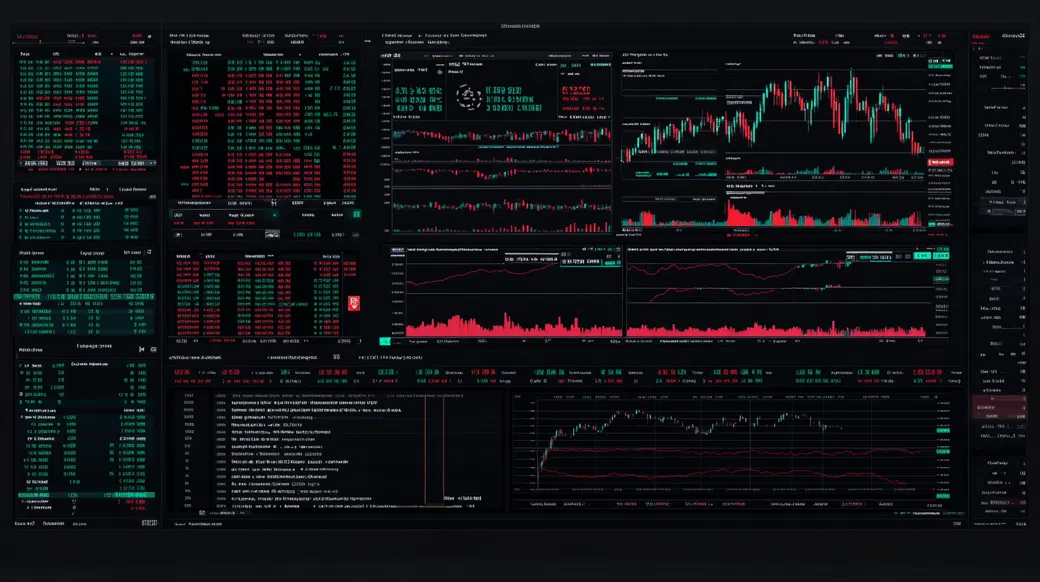
WebTrader is the center of gravity here, and the first thing I stress-tested was session stability: logging in and staying connected through the London open mattered more to me than cosmetic UI. The order ticket supported market and pending orders with visible margin impact, and execution on liquid FX pairs felt consistent with a retail CFD setup—no exotic routing claims, just workable fills. MT4/MT5 weren’t presented as confirmed options in my account area, which means you’re buying into the broker’s own ecosystem rather than the plug-in universe traders often expect.
SQM Financerra App: Mobile Trading Experience
The SQM Financerra app mirrored the WebTrader layout closely, which reduced the “where did that menu go?” problem. SQM Financerra login accepted biometric unlock on my device, and I could place, modify, and close positions without bouncing to a browser. Push notifications for price alerts were reliable, though I did notice charts can feel cramped when multiple indicators are stacked. Deposits and withdrawals were accessible in-app, which is convenient—but it also means you should lock down device security like it’s a trading terminal.
Charting, Tools & Research
Charting covered the core toolkit: multi-timeframe views, the usual indicators (MA, RSI, MACD, Bollinger), and drawing tools for levels and trendlines. An economic calendar and news feed were integrated, good enough for “what’s next on the tape” awareness, but not a substitute for deeper research terminals. If you’re used to MT5/cTrader analytics depth, treat this as efficient execution + basic context rather than a full research workstation.
SQM Financerra Account Opening & Minimum Deposit
After creating credentials, the onboarding flow immediately nudged me to complete identity checks before unlocking all cashier functions. The KYC upload asked for a government-issued ID plus a recent utility bill/bank statement (under three months), and my verification flipped to approved later the same business day. Form fields were typical—name, residence, and trading experience—more “compliance checklist” than invasive questionnaire, which matches the offshore posture.
- Minimum Deposit: $200 (this is the SQM Financerra minimum deposit I saw at funding)
- Funding Methods: Visa/Mastercard, bank wire, regional e-wallets, and crypto deposits (BTC/USDT)
- Demo Account: $10,000 virtual balance for testing spreads, swaps, and platform flow without funding risk
- Account Types: Standard (spread-only) and Raw/ECN-style (tighter spread + commission) for active trading
One detail I appreciated: the cashier screens showed the selected rail and expected processing windows before I confirmed. For my test, I funded via USDT to see the confirmation cadence on-chain-to-ledger, then used the same path later to simplify reconciliation on my end with SQM Financerra.
SQM Financerra Customer Support Review
Support quality is easiest to judge when money is in motion, so I asked live chat a narrow question: whether withdrawals are queued only after KYC or also after a trading-volume threshold. The agent replied in about three minutes with a clear “KYC first” explanation and pointed me to the withdrawal page notes; no attempt to upsell an account tier. I then followed up by email requesting swap-rate clarification on XAU/USD holds, and the ticket came back in roughly nine hours with the rate logic and where it appears inside the platform.
Coverage felt built around market weekdays: live chat ran 24/5 during my checks, with email and a contact form as backups. Language support appeared region-dependent, and I didn’t see a consistently advertised phone desk for every country. Weekend staffing was thinner, which is common in this segment—fine for planning, less ideal if you expect real-time help on Saturday crypto volatility.
Ready to Explore SQM Financerra?
If you’re considering this broker, start by validating your country eligibility, then use a demo to map spreads during your usual trading hours. Once that checks out, a small deposit test can reveal how fast the cashier and withdrawals behave in real conditions.
Visit SQM FinancerraSQM Financerra Review FAQ
Is SQM Financerra good for beginners?
It can be, as long as you treat it as a leveraged CFD platform and keep position sizes small. The WebTrader layout is readable and the demo account helps you practice without funding pressure. Beginners should still expect a learning curve around margin, swaps, and stop-loss discipline.
Can I trade crypto on SQM Financerra?
Yes, you can trade major crypto CFDs like BTC/USD and ETH-related pairs depending on what’s listed in your region. It’s price exposure via CFD, not on-chain ownership, so there’s no wallet transfer to self-custody. Financing over weekends can be a real cost factor for longer holds.
Is SQM Financerra a scam?
No, based on my hands-on checks it behaved like a functioning broker, including processing a withdrawal after KYC. The bigger issue isn’t a “scam vs. not” binary; it’s that offshore registration offers weaker formal protections than Tier‑1 regulation. Always assume CFDs can move against you quickly under leverage.
Is SQM Financerra available in the USA?
No, SQM Financerra is not available to U.S. residents. The signup flow and policy notes indicate the USA is a restricted region. If you’re in the U.S., you’ll need a broker regulated to operate there.
How long does a SQM Financerra withdrawal take?
Most withdrawals are queued for internal handling within 24–48 hours after your KYC is approved. After that, delivery time depends on the rail: cards often take 2–5 business days, wires 3–7 business days, and crypto can land the same day. In my test, the crypto payout hit within a few hours once released.
What is the SQM Financerra minimum deposit?
The SQM Financerra minimum deposit is $200 on the funding screen I used. That level is enough to test execution and withdrawals, but it’s not enough to safely absorb big drawdowns at 1:500 leverage. Match deposit size to risk controls, not to the maximum leverage headline.
Does SQM Financerra have a mobile app?
Yes, there are iOS and Android apps that replicate most WebTrader functions. You can monitor live quotes, manage orders, and access deposit/withdrawal menus from mobile. For security, enable biometrics and avoid trading on unsecured Wi‑Fi.
Final Verdict: Should You Use SQM Financerra in 2026?
Overall Score: 4.0/5
What stood out wasn’t marketing—it was operational plumbing: KYC gating before payout, predictable tiered pricing, and a WebTrader that stayed steady through busy sessions. SQM Financerra won’t satisfy traders who insist on Tier‑1 regulation or an MT4/MT5 plug-in universe, but it does offer a coherent CFD package for FX and macro-style watchlists. My deposit-to-withdrawal loop (USDT in, USDT out) completed without strange detours, which is the minimum bar for trust in this segment. Still, leverage cuts both ways; CFDs can liquidate accounts quickly when volatility spikes. If you proceed, start small and measure everything—including your own behavior—on SQM Financerra.
Best for: active CFD traders who value FX/indices access and want Standard vs. Raw pricing choice. Avoid if: you need Tier‑1 regulatory protections, U.S. access, or a platform ecosystem built around MT4/MT5 add-ons.