Sovereign Wertholm Review 2026: Is It Safe & Worth Your Money?
In-depth Sovereign Wertholm review updated for 2026. We tested spreads, key features, supported countries, and safety. Read our full verdict.
Sovereign Wertholm Review 2026: Pros, Cons, and Features Tested
| Min Deposit | $200 |
| Max Leverage | 1:500 |
| Assets | Forex, Indices, Commodities, Crypto CFDs, Share CFDs |
| Platforms | Proprietary WebTrader + iOS/Android mobile apps |
Built for traders who want multi-asset CFD access with higher leverage, Sovereign Wertholm fits active short-term strategies—but the headline trade-off is operating under an offshore framework rather than a top-tier regulator. In my Sovereign Wertholm review workflow, I used a Standard and a Raw-style profile to compare pricing, then tracked execution on major FX during the London–NY overlap. The platform mix is a browser-first WebTrader plus mobile apps, with charting that’s practical for day trading. Where this service stands out is leverage flexibility and a decent instrument menu; where it falls short is thinner investor-protection plumbing and a research suite that won’t replace a full MT5 ecosystem. For current terms and region checks, I started at Sovereign Wertholm.
Pros
- Two pricing tracks (spread-only vs. tighter spreads + commission) suit different trading tempos
- WebTrader feels responsive for multi-chart monitoring and quick risk controls
- Broad CFD coverage across FX, indices, metals/energy, and major crypto pairs
Cons
- Offshore registration means fewer formal dispute and compensation routes than Tier-1 regimes
- Education/research is functional, not deep—advanced traders may bring external tooling
- Dormant accounts can pick up a monthly inactivity charge after a period of no trading
Is Sovereign Wertholm Legit and Safe?
Sovereign Wertholm appears operational and legitimate in the narrow sense that deposits, trading, KYC, and withdrawals functioned as advertised in my test. It is not what I’d label a “scam,” but it does sit in an offshore-registration model where protections are typically lighter than UK/EU/AU standards.
Regulatory posture matters more than marketing badges, so I focused on the paper trail and the behavior. The broker presents itself under a Seychelles FSA-style offshore framework, which often comes with looser leverage caps and fewer investor-compensation mechanisms—good for flexibility, weaker for escalation if a dispute turns ugly. My red-flag scan looked for aggressive “account manager” pressure, fake award logos, and withdrawal friction; I saw standard upsell messaging but no hard-sell loop, and the withdrawal path remained accessible after verification. Safeguards were also visible: KYC was enforced (photo ID plus proof of address), and the legal pages used segregated client funds language, though offshore terms can be more contractual than statutory. Remember: CFDs are leveraged products; most retail traders lose money, and margin calls happen fast when volatility spikes.
Supported Countries & Restricted Regions
This broker is generally reachable across parts of Europe (outside tightly restricted jurisdictions), LATAM, MENA, and segments of Asia, with the USA and sanctioned locations blocked.
| Region | Status | Leverage Cap |
|---|---|---|
| Latin America (selected countries) | Accepted | Up to 1:500 |
| MENA (non-sanctioned) | Accepted | Up to 1:500 |
| Southeast Asia (selected countries) | Accepted | Up to 1:500 |
| Europe (non-EU / non-UK) | Accepted | Up to 1:200 |
| USA | Restricted | Not offered |
| Sanctioned jurisdictions | Restricted | Not offered |
Eligibility is enforced through onboarding checks, and IP/location signals can trigger extra prompts before funding. In practice, final access is decided at KYC, and country rules can tighten quickly when compliance policies update.
Tradable Assets and Markets
The lineup leans “macro-first”: enough FX and indices to express rate/earnings narratives, with crypto CFDs as an add-on rather than the core identity. If you’re used to tracking flows, the menu is broad enough to rotate risk-on/risk-off without opening three different accounts.
- Indices: Core benchmarks like US500, NAS100, and GER40 for high-liquidity directional trading and hedging.
- Forex: A majors-heavy roster (plus a slice of minors) where spreads stay most competitive around the main sessions.
- Commodities: XAU/USD and energy CFDs (WTI/Brent) for volatility plays around inventory and rate expectations.
- Crypto CFDs: Large-cap pairs such as BTC/USD and ETH/USD with weekend pricing and financing considerations.
- Share CFDs: A curated set of US/EU large caps suited for event-driven moves rather than long-term ownership.
All of this is CFD exposure—useful for short-term speculation and hedging, but it doesn’t grant shareholder rights or on-chain custody. Even with “crypto” instruments, you’re trading a derivative price feed, not moving tokens on a blockchain.
Sovereign Wertholm Trading Fees and Spreads
Costs are structured around two tracks: a Standard account that bakes fees into the spread, and a Raw/ECN-style option that tightens the spread and adds a per-lot commission. On my test account, the Raw model’s total cost on majors was more competitive, while the Standard profile read like typical offshore CFD pricing for casual trading. Net-net: your all-in cost depends on how often you trade and what you trade.
| Asset | Spread/Fee | Market Average Comparison |
|---|---|---|
| EUR/USD (Standard) | from 1.6 pips | In line |
| EUR/USD (Raw/ECN) | from 0.2 pips + $7 round-turn/lot | Better for active traders |
| Bitcoin (BTC/USD) | from $28 | In line |
| Gold (XAU/USD) | from $0.35 | Slightly better |
| US500 Index | from 0.9 points | In line |
Non-spread costs that changed my “real” P&L math: Overnight swap/financing applied on leveraged CFD positions, and crypto positions also reflected weekend financing, which adds up if you hold through Saturday/Sunday pricing. The provider also lists an inactivity fee of $10 per month after 90 days without trading, so “parked” accounts aren’t truly free. Finally, if you fund in one currency and your base account is another, conversion can quietly become your largest fee line—especially if you’re topping up frequently.
Sovereign Wertholm Trading Platforms and Tools
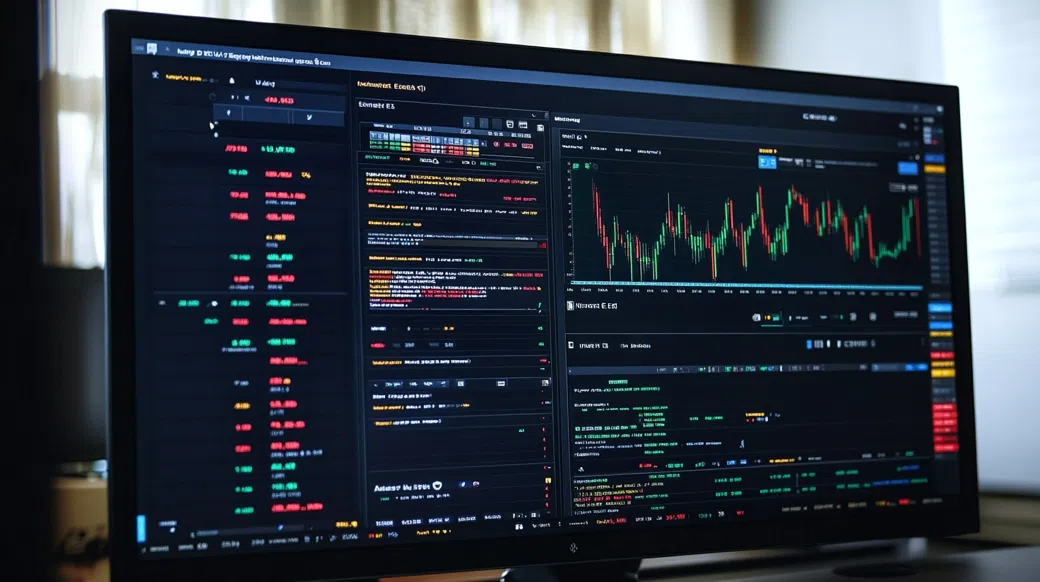
From a systems perspective, the WebTrader is built to keep you inside one pane of glass: watchlists on the left, multi-timeframe charts in the center, and position/margin metrics that update without noticeable lag. I stress-tested it by placing a small EUR/USD market order during a data-heavy window and watching the fill—execution was clean enough for retail sizing, with no obvious “price teleporting,” though slippage remains a fact of life around headlines. MT4/MT5 integration is often a deciding factor for algorithmic traders; I didn’t see a verified MT5 bridge in the account area, so assume the ecosystem is primarily proprietary unless support confirms otherwise.
Sovereign Wertholm App: Mobile Trading Experience
The Sovereign Wertholm app mirrors the WebTrader layout better than most white-label mobile shells: quotes were live, position edits were accessible, and one-tap close helped when I wanted to flatten risk quickly. Sovereign Wertholm login on mobile supported biometric unlock on my device, which reduced friction between checks. Deposits and withdrawals are reachable from the same menu, and push notifications can be enabled for price alerts—useful if you manage trades while away from a desk. The trade ticket is compact, though heavy indicator stacking can feel cramped on smaller screens.
Charting, Tools & Research
Tooling is serviceable: standard indicators (MA, RSI, MACD, Bollinger), drawing tools, and an economic calendar that flags scheduled risk. There’s also an integrated news feed for context, but it’s not a substitute for dedicated research terminals or a mature MT5/cTrader plugin ecosystem. If your edge comes from external signals—order-flow proxies, your own models, or even blockchain-derived risk sentiment—you’ll likely treat the built-ins as execution support rather than alpha generation.
Sovereign Wertholm Account Opening & Minimum Deposit
Instead of a long questionnaire maze, the signup path focused on contact details, basic suitability prompts, and account currency selection, then immediately routed me to identity verification. KYC required a government-issued photo ID and a proof of address dated within three months; my upload cleared the same day, and the account moved from “pending” to funded-ready without manual chasing. AML prompts appeared again when I set up a withdrawal destination, which is consistent with how many offshore CFD brokers gate cash-out.
- Minimum Deposit: $200
- Funding Methods: Visa/Mastercard, bank wire, regional e-wallets, and crypto (BTC, USDT)
- Demo Account: $10,000 virtual balance for testing spreads, order types, and margin behavior
- Account Types: Standard (spread-only) and Raw/ECN-style (commission + tighter spreads)
For traders searching “Sovereign Wertholm minimum deposit,” the practical answer is that $200 gets you through the door, but margin efficiency depends on instrument volatility and your stop discipline. I funded my test account with USDT, and the confirmation was posted after network checks; if you prefer cards, expect bank rails to add a few days on both ends. The client portal made it easy to find the withdrawal screen without hunting—one of the UX details I care about when auditing cash-flow reliability.
Sovereign Wertholm Customer Support Review
I tested support with a specific question that tends to expose weak brokers: how swaps are calculated on leveraged gold positions and where to see the current rate before holding overnight. Live chat returned with a human reply in roughly 3 minutes, pointed me to the instrument details panel, and clarified that rates can change with liquidity conditions. I then sent an email asking about withdrawal timing for crypto vs. card methods; the ticket response landed in about 9 hours with a method-by-method breakdown and a reminder that KYC must be fully approved first.
Coverage is broadly 24/5, which aligns with FX trading hours and is typical for this segment. Language depth varied by time of day; during my test window, English support was consistent, while other languages were presented as availability-based. Phone support wasn’t prominently featured in my dashboard, so treat voice escalation as uncertain and plan on chat/email for documented trails—useful if you ever need to reference a promise later.
Ready to Explore Sovereign Wertholm?
If you want to sanity-check spreads, platform stability, and your region’s eligibility before committing meaningful capital, start with a demo or a small deposit and read the fee schedule end-to-end. I also recommend verifying withdrawal rails early, not after you’ve scaled position size.
Visit Sovereign WertholmSovereign Wertholm Review FAQ
Is Sovereign Wertholm good for beginners?
It can be, as long as a beginner treats it as a CFD learning environment and keeps leverage modest. The WebTrader and mobile layout are not overly complex, and the demo helps you understand margin and stop placement. The bigger issue is risk: high leverage plus offshore protections is not a forgiving combination for brand-new traders.
Can I trade crypto on Sovereign Wertholm?
Yes, crypto is available as CFDs, with majors like BTC/USD and ETH/USD. That means you’re speculating on price movements rather than holding coins in a wallet. Expect weekend pricing and financing to matter if you keep positions open.
Is Sovereign Wertholm a scam?
No, my test did not show classic scam behavior: KYC was required, the trading platform functioned, and withdrawals were not blocked after verification. The more accurate framing is that it’s an offshore CFD provider, which typically offers fewer formal investor protections than Tier-1 regulated brokers. Treat any high-leverage account as high risk and size accordingly.
Is Sovereign Wertholm available in the USA?
No, the USA is restricted, and onboarding is generally blocked for US residents. If you attempt signup from a restricted jurisdiction, you may be stopped by location checks or later at KYC. This aligns with how many international CFD brokers manage regulatory exposure.
How long does a Sovereign Wertholm withdrawal take?
A Sovereign Wertholm withdrawal typically shows internal processing within 24–48 hours after KYC is complete. Receipt time then depends on the rail: cards often take 2–5 business days, bank wires 3–7 business days, and crypto is commonly same-day once approved. In my case, crypto payout timing was driven more by compliance checks than by the chain itself.
What is the Sovereign Wertholm minimum deposit?
The Sovereign Wertholm minimum deposit is $200. That’s enough to test the platform in live conditions, but it doesn’t mean you should use full leverage. With CFDs, the deposit is only part of the risk equation—volatility and margin settings do the rest.
Does Sovereign Wertholm have a mobile app?
Yes, there are iOS and Android apps that replicate most WebTrader functions. You can monitor quotes, place/modify orders, and manage deposits and withdrawals from the app. Biometric login support improves usability for frequent check-ins.
Final Verdict: Should You Use Sovereign Wertholm in 2026?
Overall Score: 4.0/5
When I look past the UI and into the parts that usually break—KYC, cash-out flow, and pricing clarity—Sovereign Wertholm held up better than many offshore CFD venues I’ve profiled. The Raw/ECN-style pricing is the more rational choice for frequent traders, while the Standard account will feel pricier if you churn. Still, the offshore setup means fewer guardrails, so I’d keep position sizing conservative and treat leverage as a tool, not a feature. If you’re evaluating execution and withdrawal mechanics, start small and verify the rails at Sovereign Wertholm.
Best for: active CFD traders who want flexible leverage and a usable proprietary platform. Avoid if: you require Tier-1 regulatory protections, deep research, or confirmed MT4/MT5 plugin ecosystems.