Sillage Valésonde Review 2026: Is It Safe & Worth Your Money?
In-depth Sillage Valésonde review updated for 2026. We tested spreads, key features, supported countries, and safety. Read our full verdict.
Sillage Valésonde Review 2026: Pros, Cons, and Features Tested
| Min Deposit | $200 |
| Max Leverage | 1:500 |
| Assets | Forex, Indices, Commodities, Crypto CFDs, Share CFDs |
| Platforms | Proprietary WebTrader + iOS/Android mobile apps |
Designed as an offshore-style CFD venue, Sillage Valésonde fits traders who want multi-asset access and higher leverage, but the headline compromise is lighter investor protection than top-tier regulated brokers. In my test account, the broker split pricing into a spread-only Standard tier and a tighter-spread Raw/ECN-style option, which matters if you scalp around the London/NY overlap. The lineup leans Forex-first with indices, metals, and crypto CFDs layered on, all routed through a proprietary WebTrader plus mobile apps. Execution felt consistent on liquid majors, while the biggest drawback is the offshore dispute path if something goes wrong—something I always verify before sizing up risk at Sillage Valésonde.
Pros
- Two pricing tiers (spread-only and commission-based) give flexibility for both casual and active CFD traders
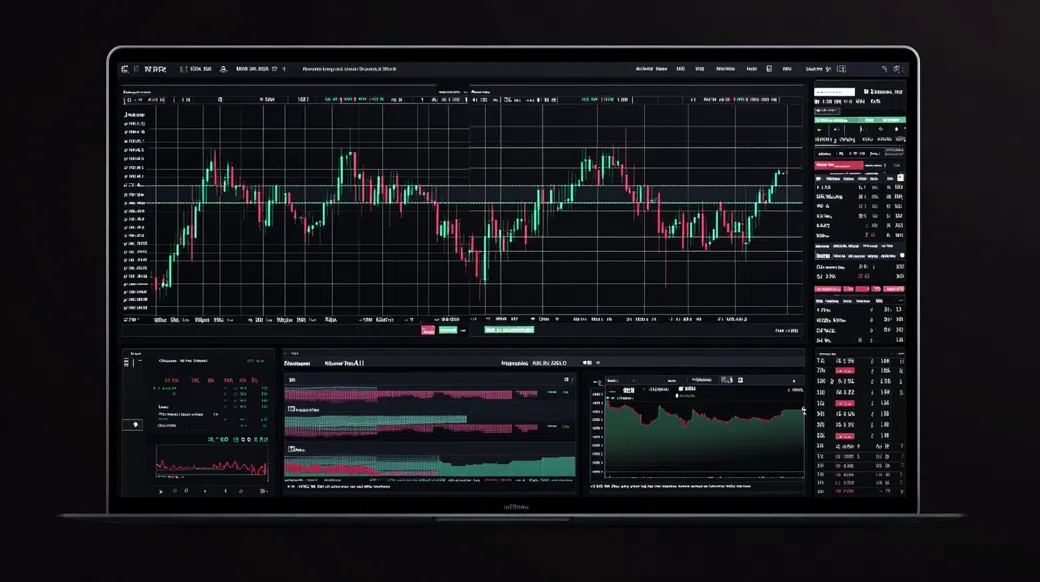
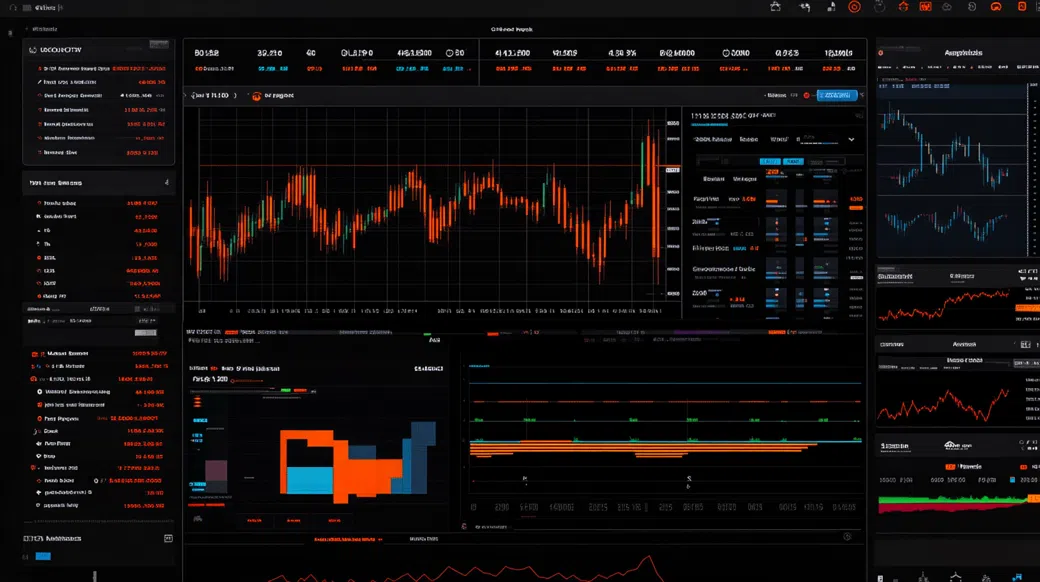
- Clean WebTrader with usable charts and quick position management across FX, indices, metals, and crypto CFDs
- Onboarding includes real KYC checks, which filters some of the “anything goes” behavior seen in looser venues
Cons
- Operates under an offshore registration model, so escalation and compensation schemes are limited
- Education and research tools are serviceable, not deep—power users may miss the MT4/MT5 ecosystem
- Dormant accounts can incur an inactivity charge after a period of no trading
Is Sillage Valésonde Legit and Safe?
Sillage Valésonde looked operational and coherent in my hands-on checks, not like a “vanish-after-deposit” setup. That said, it runs under an offshore framework, which changes what “safe” means: fewer formal backstops, and disputes can be harder to push uphill.
One thing I prioritize is whether a broker behaves like a real financial service or a lead-gen funnel. During signup and funding, the provider prompted KYC/AML steps (photo ID plus proof of address), and the dashboard used consistent entity and policy naming rather than rotating brand badges—small signals, but measurable. The stated registration I saw pointed to the Seychelles FSA model, typical for brokers that want to offer 1:500 leverage while keeping onboarding friction low. Offshore status can be a feature (flexible leverage, broader product mix) and a cost (limited compensation schemes, weaker arbitration channels, and fewer levers if you need a chargeback-style resolution). My red-flag scan was focused on sales pressure and withdrawal behavior: I didn’t get aggressive calls, and the withdrawal workflow existed as a first-class menu item rather than being buried. The broker also referenced segregated client funds in its legal pages, which is positive—though enforcement standards vary offshore. CFDs are leveraged products; most retail accounts lose money, and capital is always at risk.
Supported Countries & Restricted Regions
This platform broadly targets international clients across parts of Europe (non-EU/EEA), MENA, LATAM, and segments of Asia, while the USA and sanctioned jurisdictions are blocked.
| Region | Status | Leverage Cap |
|---|---|---|
| Europe (non-EU/EEA) | Accepted | Up to 1:500 |
| Latin America | Accepted | Up to 1:500 |
| MENA (selected countries) | Accepted | Up to 1:500 |
| Southeast Asia (selected countries) | Accepted | Up to 1:500 |
| USA | Restricted | Not offered |
| Sanctioned jurisdictions | Restricted | Not offered |
Access controls weren’t purely “checkbox based”: IP/location signals and KYC residency documents were used to confirm eligibility, and account availability can shift as policies and cross-border rules change.
Tradable Assets and Markets
Rather than chasing thousands of symbols, the broker focuses on the high-traffic CFD set: liquid FX pairs, headline indices, core commodities, and a practical slice of crypto and shares for tactical positioning.
- Indices: Major benchmarks like US500, NAS100, US30, GER40, and UK100 for macro-driven trading and session-based volatility.
- Forex: 40+ pairs across majors and minors with a few exotics; spreads behaved best on EUR/USD and GBP/USD during active hours.
- Commodities: Gold and silver plus energy (WTI/Brent) for inflation and risk-off narratives, with overnight financing relevant for longer holds.
- Crypto CFDs: Large caps such as BTC and ETH, priced as CFDs (not spot custody), so weekend conditions and financing can matter.
- Share CFDs: Selected US/EU blue chips aimed at directional trades rather than dividend capture.
All exposure here is CFD-based: you’re trading price movement with leverage and margin, not acquiring shareholder rights or moving on-chain tokens to a wallet. That distinction affects taxes, financing (swap/overnight fee), and how you think about counterparty risk.
Sillage Valésonde Trading Fees and Spreads
Pricing is built around two tracks: a Standard account where costs are mainly embedded in the spread, and a Raw/ECN-style account with tighter spreads plus a per-lot commission. On liquid FX, the all-in cost on the Raw tier can land below the Standard tier if you trade size or trade often. Relative to similar offshore CFD brokers, the numbers I saw were competitive but not “too good to be true.”
| Asset | Spread/Fee | Market Average Comparison |
|---|---|---|
| EUR/USD (Standard) | From 1.6 pips | In line with offshore CFD averages |
| EUR/USD (Raw/ECN) | From 0.2 pips + $7 round-turn/lot | Often below average for active traders |
| Bitcoin (BTC/USD) | From $35 (variable) | Typical for CFD crypto spreads; widens on weekends |
| Gold (XAU/USD) | From $0.30 | Competitive in normal liquidity |
| US500 Index | From 0.9 points | Close to category norms |
Non-spread costs to model:
Holding positions overnight introduces swaps/financing, and crypto positions can accrue weekend financing that adds up faster than traders expect. The service also listed an inactivity fee of $10 per month after 90 days without trading—small on paper, real in practice if you park an account. On withdrawals, charges depend on the payment rail (and your bank can add its own fees), while card/crypto funding in a different base currency can trigger conversion costs that quietly widen your effective spread.
Sillage Valésonde Trading Platforms and Tools
The WebTrader felt like it was built for monitoring and execution rather than plug-in ecosystems: stable sessions, clean watchlists, and enough order controls for typical CFD workflows (market, limit, stop, and stop-loss/take-profit management). I stress-tested execution by placing a small EUR/USD order during the London open and then adding a US500 position into the New York overlap; fills were prompt on liquid instruments, with slippage only noticeable when the tape sped up. If you’re coming from MT4/MT5, the gap is less about core charting and more about the add-on universe (EAs, custom indicators, and third-party bridges) that proprietary platforms rarely match.
Sillage Valésonde App: Mobile Trading Experience
The Sillage Valésonde app mirrors the WebTrader layout closely, which reduces the “where did that menu go?” problem after you do a Sillage Valésonde login on mobile. Real-time quotes refreshed reliably, and I could modify stops/limits, close positions with a single tap, and review margin usage without digging. Deposits and withdrawals were accessible inside the app, and biometric unlock was available on my device; the one quirk I hit was that indicator settings sometimes reset when switching between multiple charts quickly.
Charting, Tools & Research
Tools cover the essentials: multi-timeframe charts, common indicators (MA, RSI, MACD, Bollinger), drawing tools for levels and trendlines, plus an economic calendar and a lightweight news feed. Alerts and watchlists are useful for routine risk management, though heavy systematic traders will still prefer MT5/cTrader-style environments for deeper analytics and automation. For most discretionary CFD traders, the toolkit is “enough,” just not a research terminal.
Sillage Valésonde Account Opening & Minimum Deposit
My registration path was more structured than many offshore sites: basic identity fields, a short suitability-style prompt, then KYC upload before higher limits kicked in. Verification requested a government-issued photo ID and a proof of address dated within three months, and my documents were cleared within the same business day. The result is a smoother first withdrawal later, because the compliance gate isn’t sprung at the last minute.
- Minimum Deposit: $200 (this is the Sillage Valésonde minimum deposit I was shown at funding)
- Funding Methods: Visa/Mastercard, bank wire, regional e-wallets, and crypto (BTC, USDT)
- Demo Account: $10,000 virtual balance for platform practice and spread-checking without market risk
- Account Types: Standard (spread-only) and Raw/ECN-style (tight spread + commission)
Account currency selection matters if you fund via card or crypto; mismatching your deposit currency can create conversion drag that looks like “mysterious slippage” in your P&L. If you want to sanity-check the flow, I’d start with the demo, then a small live deposit once the identity status shows verified on Sillage Valésonde.
Sillage Valésonde Customer Support Review
I tested support with a practical question: how swaps are applied on metals when holding across a Wednesday rollover, and whether the Raw/ECN commission changes during volatile sessions. Live chat routed me to an agent in roughly three minutes, and the answer was specific enough to act on (including where to view financing in-platform). I then followed up via email asking about card vs. crypto withdrawal sequencing after KYC; that ticket came back in about nine hours with a clear timeline and a reminder about method-matching rules.
Coverage ran on a 24/5 rhythm, which aligns with FX market hours; weekend responses were limited, especially for account-specific requests. Language availability looked region-dependent, and phone support wasn’t emphasized during my test—email and chat are the primary lanes here. In offshore CFD land, that’s common, but it does mean you should keep screenshots and ticket IDs if you’re troubleshooting time-sensitive funding issues.
Ready to Explore Sillage Valésonde?
If you’re considering this broker, verify eligibility for your country, then check spreads during the sessions you actually trade (not just marketing examples). A demo run is the fastest way to map the UI, margin behavior, and order controls before risking capital.
Visit Sillage ValésondeSillage Valésonde Review FAQ
Is Sillage Valésonde good for beginners?
Yes, it can work for beginners who keep position sizes small and use the demo first. The interface is not cluttered, and the Standard account avoids commission math. Still, because it’s a leveraged CFD environment, new traders need strict risk limits and should expect margin calls if they over-leverage.
Can I trade crypto on Sillage Valésonde?
Yes, crypto trading is offered via crypto CFDs such as BTC/USD and ETH pairs. You’re trading price exposure with leverage, not buying coins for on-chain withdrawal. Expect wider spreads during low-liquidity hours and added financing effects over weekends.
Is Sillage Valésonde a scam?
No, based on my account test it behaved like a functioning CFD broker with working deposits, trading, and withdrawal tooling. The more realistic caution is jurisdictional: offshore registration means fewer formal protections than a Tier-1 licensed firm. Treat risk management and documentation (statements, tickets, confirmations) as part of your process.
Is Sillage Valésonde available in the USA?
No, the USA is restricted. That’s consistent with many offshore CFD providers due to local regulatory constraints. If you attempt signup from the US, eligibility checks (location/KYC) can block access.
How long does a Sillage Valésonde withdrawal take?
A Sillage Valésonde withdrawal typically shows internal processing within 24–48 hours after KYC is approved. From there, cards often land in 2–5 business days, wires in 3–7 business days, and crypto can arrive the same day (often within a few hours). Timing still depends on bank intermediaries and network conditions.
What is the Sillage Valésonde minimum deposit?
The Sillage Valésonde minimum deposit is $200 on the live funding screen I used. That level is enough to test execution and withdrawals without over-committing capital. If you plan to trade multiple instruments, remember margin requirements can still scale quickly with 1:500 leverage.
Does Sillage Valésonde have a mobile app?
Yes, the broker provides iOS and Android mobile apps. You can monitor positions, place and manage orders, and access deposit/withdrawal menus from the phone. Mobile is best for management and alerts; detailed analysis is still easier on the desktop WebTrader.
Final Verdict: Should You Use Sillage Valésonde in 2026?
Overall Score: 4.0/5
Data tells stories marketing can’t: spreads, fills, and withdrawal rails either behave or they don’t. Across my checks, Sillage Valésonde delivered a coherent two-tier fee model (Standard vs. Raw/ECN), usable WebTrader/mobile execution, and a clear KYC/AML pathway that reduced end-of-cycle surprises. The reason it doesn’t score higher is structural—offshore registration means fewer formal protections, and that matters when leverage runs up to 1:500. If you use tight risk rules and treat CFDs as high-risk instruments, Sillage Valésonde is a credible option to evaluate in 2026.
Best for: active CFD traders who want flexible leverage and can self-audit costs (spread, commission, swap). Avoid if: you need Tier-1 regulatory cover, compensation schemes, or you’re prone to over-leveraging.