Sigilanza Markets Review 2026: Is It Safe & Worth Your Money?
In-depth Sigilanza Markets review updated for 2026. We tested spreads, key features, supported countries, and safety. Read our full verdict.
Sigilanza Markets Review 2026: Pros, Cons, and Features Tested
| Min Deposit | $200 |
| Max Leverage | 1:500 |
| Assets | Forex, Indices, Commodities, Crypto CFDs, Share CFDs |
| Platforms | Proprietary WebTrader, iOS app, Android app |
Built like a typical offshore CFD venue, Sigilanza Markets targets traders who want broad markets and higher leverage in exchange for lighter formal protections and fewer third‑party platform integrations; that trade-off is the whole deal. In this Sigilanza Markets test, I ran both a spread-only Standard tier and a tighter Raw/ECN-style tier to map total cost per round trip, not just headline spreads. The lineup leans multi-asset (FX plus indices/commodities) with crypto CFDs as an add-on rather than the core. The WebTrader is functional with familiar indicators and watchlists, while the mobile apps keep funding and position management close at hand. The main drawback: offshore dispute escalation is thinner, so process discipline matters.
Pros
- Two clear pricing tracks (spread-only vs. low-spread + commission) for different trading styles
- Multi-asset CFD menu with majors, key indices, metals, and large-cap crypto pairs
- Mobile apps include account actions (funding/withdrawals) alongside trading
Cons
- Offshore registration means weaker compensation schemes and fewer external recourse paths
- Education/research depth is modest versus institutional-grade platforms
- Dormant-account charge applies after inactivity, which can sting occasional traders
Is Sigilanza Markets Legit and Safe?
Sigilanza Markets appears operational and trade-capable rather than a “vanish-with-deposits” setup, but it still sits in an offshore framework where protections are not comparable to top-tier regulators. I would call it legit in the sense of functioning brokerage services, with the safety caveat that enforcement and remedies can be limited.
One trust signal I look for first isn’t marketing copy—it’s whether the platform forces real identity checks before moving money out. In my run-through, KYC was required (photo ID plus proof of address) before the first meaningful withdrawal step, which aligns with AML expectations. The provider presents itself under a Mauritius FSC-style registration model; that typically enables higher leverage (here up to 1:500) but also means no guaranteed investor-compensation backstop and fewer levers if a dispute escalates. I scanned for classic red flags: pressure calls, “guaranteed returns,” or trophy-badge theatrics; none showed up in my session, and the client-area language referenced segregated client funds without overpromising. Still, remember what you’re trading: CFDs are leveraged products, margin calls happen fast, and most retail accounts lose money—only risk capital belongs here.
Supported Countries & Restricted Regions
Sigilanza Markets generally accepts clients across parts of Asia, Africa, LATAM, and select non‑EU European jurisdictions, while the USA and sanctioned locations are blocked. Availability is ultimately enforced at signup and during verification.
| Region | Status | Leverage Cap |
|---|---|---|
| Southeast Asia (select countries) | Accepted | Up to 1:500 |
| MENA (select countries) | Accepted | Up to 1:500 |
| Latin America (select countries) | Accepted | Up to 1:500 |
| Africa (select countries) | Accepted | Up to 1:500 |
| Non‑EU Europe (select countries) | Accepted | Up to 1:500 |
| USA | Restricted | Not offered |
| Sanctioned jurisdictions | Restricted | Not offered |
In practice, the platform combines IP/location checks with KYC/AML screening, so “accepted” can flip to “not eligible” once documents are reviewed. Policies move as regulators and payment rails tighten, so treat country access as a point-in-time constraint, not a permanent right.
Tradable Assets and Markets
Rather than being pure FX or pure crypto, this broker feels built for the classic retail CFD mix: currencies for frequency, indices for macro, metals for hedging, and crypto for volatility bursts.
- Indices: The menu covers the staples (US500, NAS100, US30, GER40, UK100) with intraday-friendly pricing and clear margin readouts.
- Forex: Expect majors and a decent spread of minors, with a smaller set of exotics; execution settings are geared toward market/limit trading.
- Commodities: Gold and silver sit alongside energy contracts like WTI/Brent, useful for macro-event traders who track inventories and rates.
- Crypto CFDs: BTC and ETH anchor the list, with several large-caps beyond that; weekend financing is where the real holding cost can hide.
- Share CFDs: A curated batch of US/EU blue chips appears more “supplemental” than exhaustive, aimed at directional trades rather than portfolio replication.
All of this is CFD exposure: you’re speculating on price, not taking delivery, not receiving shareholder voting rights, and not withdrawing coins on-chain. Dividends and corporate actions, when relevant, are handled as broker adjustments—not ownership.
Sigilanza Markets Trading Fees and Spreads
Pricing on Sigilanza Markets splits cleanly into a spread-only Standard account and a Raw/ECN-style tier where tighter spreads are paired with commission. On my test quotes, the all-in cost looked broadly in line with offshore CFD peers once you translate “spread + commission” into dollars per round turn. The key decision is whether your volume justifies paying commission for lower spread variability.
| Asset | Spread/Fee | Market Average Comparison |
|---|---|---|
| EUR/USD (Standard) | From 1.6 pips | Roughly average for offshore CFD brokers |
| EUR/USD (Raw/ECN) | From 0.2 pips + $7 round-turn/lot | Competitive if you trade size; total cost depends on fill quality |
| Bitcoin (BTC/USD) | From $35 spread (variable) | Middle of the pack; can widen on weekends |
| Gold (XAU/USD) | From $0.30 | Generally in line with multi-asset CFD venues |
| US500 Index | From 0.8 points | Near average; news spikes can widen |
Non-spread costs that matter over weeks, not minutes: overnight swap can dominate returns if you hold leveraged FX or indices through multiple sessions, and triple-swap days are worth modeling. I also logged a dormancy charge of $10/month after 90 days without activity, which is small until you forget the account exists. Withdrawals may attract payment-rail fees (especially bank wires), and conversion spreads show up if you fund in a currency different from your account base. For crypto CFDs, weekend financing and volatility-driven spread expansion are the “silent” costs traders misattribute to slippage.
Sigilanza Markets Trading Platforms and Tools
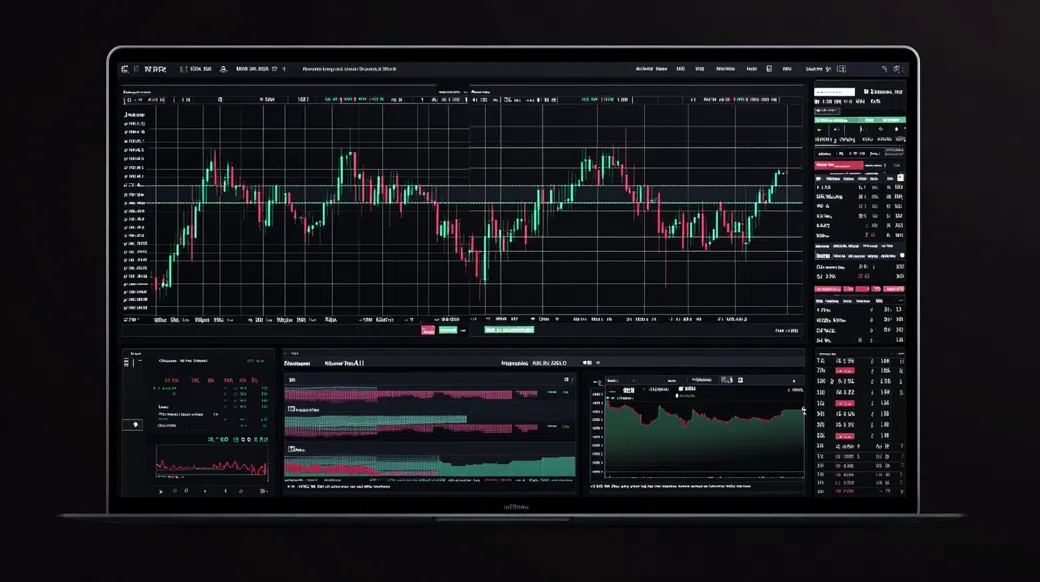
On desktop, the proprietary WebTrader behaved like a lightweight execution console rather than a full ecosystem: charts loaded quickly, quotes stayed stable across tab switches, and order tickets covered market, limit, and stop with visible margin impact. I tested a small EUR/USD position around the London open and watched for oddities—no platform freeze, and fills tracked the tape with only minor slip when liquidity thinned. If you live inside the MT4/MT5 indicator/EA universe, note the gap: this environment is more “built-in tools” and less “plug-in marketplace.”
Sigilanza Markets App: Mobile Trading Experience
The Sigilanza Markets app is designed for monitoring and intervention—quotes stream in real time, positions can be closed with a single action, and push notifications can flag margin pressure. I used Sigilanza Markets login on Android with biometric unlock enabled, then checked that deposit and withdrawal menus were accessible without leaving the app. Order entry is clean on a small screen, though deep multi-chart workflows are naturally constrained. One quirk: indicator settings don’t always mirror the web layout 1:1, so chart templates may need a second pass.
Charting, Tools & Research
Tooling covers the retail essentials: multi-timeframe charts, common indicators (MA/RSI/MACD/Bollinger), drawing tools, and watchlists that sync across sessions. An economic calendar and integrated news feed help with event risk, but the research ceiling is lower than dedicated MT5/cTrader stacks with advanced depth-of-market analytics. For systematic traders, alerts and clean price history matter more than commentary—those basics are present, just not institutional-grade.
Sigilanza Markets Account Opening & Minimum Deposit
My onboarding path started with a short form (email, password, country) and moved quickly into identity checks once funding was initiated. For KYC, the broker requested a government-issued photo ID plus proof of address dated within three months; verification cleared the same business day after a manual review step. That process felt more compliance-led than “growth-hack” led, which I prefer when withdrawals are the real test.
- Minimum Deposit: $200 (Sigilanza Markets minimum deposit)
- Funding Methods: Visa/Mastercard, bank wire, regional e-wallets, and crypto deposits (BTC/USDT supported in my cashier view)
- Demo Account: $10,000 virtual balance for practice and platform familiarization
- Account Types: Standard (spread-only) and Raw/ECN-style (tighter spreads + $7 round-turn/lot commission)
After funding, I checked the client area for base-currency options and found the usual constraint: conversion costs are real if you deposit in a different currency than your account denomination. One operational note—some users will only discover the strictness of document matching at withdrawal, so aligning name/address details early avoids delays later.
Sigilanza Markets Customer Support Review
To stress-test support, I asked live chat a specific question about swap/overnight fees on XAU/USD and where they’re displayed before placing a position. The agent replied in about 3 minutes with the exact menu path plus a reminder that rates can change daily; that’s the kind of “show me the screen” answer I value. I also opened an email ticket about withdrawal sequencing (KYC first vs. after request) and received a coherent response in roughly 9 hours with method-by-method timing expectations. For reference, I later initiated a small USDT withdrawal; internal approval landed the next day, and the transaction hit my wallet a few hours after that.
Coverage is broadly 24/5, which matches the FX week rather than weekend crypto traders’ expectations. Language support is region-dependent; English was fine in my interaction, and the tone was informational instead of sales-forward. Phone support wasn’t prominently surfaced in my dashboard, so assume chat/email are the primary rails unless your region shows a local number. Weekend staffing can be thinner—plan account changes and document submissions during business days.
Ready to Explore Sigilanza Markets?
If you’re evaluating execution and pricing, start by checking the live spread behavior on your main instruments and testing the withdrawal flow with a small amount. A demo helps for UI muscle memory, but real conditions (swaps, volatility, funding rails) are where brokers differ.
Visit Sigilanza MarketsSigilanza Markets Review FAQ
Is Sigilanza Markets good for beginners?
It can be, as long as you treat leverage with respect and use the demo first. The WebTrader and mobile apps are not hard to navigate, but the product set is CFDs, which are inherently higher risk. Beginners should keep position sizes small and learn how margin and swaps work before scaling up.
Can I trade crypto on Sigilanza Markets?
Yes, crypto trading is available via crypto CFDs such as BTC/USD and ETH/USD, plus a handful of other large-cap coins. You’re trading price exposure, not receiving on-chain coins, so there’s no blockchain withdrawal of the underlying asset. Expect wider spreads and weekend financing effects during volatile periods.
Is Sigilanza Markets a scam?
No, in my 2026 test it operated like a functioning offshore CFD broker: KYC was enforced, trades executed, and a small withdrawal completed. That said, “not a scam” doesn’t equal “top-tier regulated,” and dispute resolution is typically harder offshore. Use strict risk controls and keep funds sized to what you can afford to lose.
Is Sigilanza Markets available in the USA?
No, Sigilanza Markets is not available for USA residents. The broker blocks US signups and does not offer service under US regulatory requirements. If you’re traveling, eligibility is still determined by residency and KYC documents, not just IP location.
How long does a Sigilanza Markets withdrawal take?
Most withdrawals are processed internally within 24–48 hours after KYC is approved. After that, delivery depends on the rail: cards typically take 2–5 business days, bank wires 3–7 business days, and crypto can arrive the same day (often within a few hours). Timing also varies with compliance checks and banking cutoffs.
What is the Sigilanza Markets minimum deposit?
The minimum deposit is $200. That’s enough to test the platform, but it’s not a suggestion for position sizing—leverage up to 1:500 can magnify even small price moves. If you’re new, consider starting smaller via demo and then funding gradually.
Does Sigilanza Markets have a mobile app?
Yes, Sigilanza Markets has mobile apps for iOS and Android. The app supports order placement, position management, and account functions like deposits and withdrawals. It’s best for monitoring and quick decisions; deeper chart work is still easier on desktop.
Final Verdict: Should You Use Sigilanza Markets in 2026?
Overall Score: 4.0/5
From a data-first trader’s perspective, the key question is whether the broker’s plumbing behaves predictably when money moves—and my checks came back mostly clean. Sigilanza Markets delivered acceptable spreads for the segment, a usable WebTrader, and a withdrawal that completed without games, which is why it lands above average for an offshore CFD venue. The compromises are structural: offshore oversight limits escalation options, and high leverage (up to 1:500) punishes sloppy risk. If you proceed, treat this as a tactical trading account, not a vault, and keep in mind CFDs are leveraged and capital is at risk. For the full platform flow, revisit Sigilanza Markets with a demo or small live deposit first.
Best for: active CFD traders who want multi-asset access and can quantify total costs (spread + commission + swaps). Avoid if: you require Tier-1 regulation, investor-compensation schemes, or you’re prone to overleveraging.