Senvestium Trading Platform Alternatives 2026 (US/EU)
Compare Senvestium alternatives for 2026: regulated brokers, costs, platforms (MT4/MT5/cTrader), and safety checks for a risk-aware switch.
Senvestium Trading Platform Alternatives 2026: Reliable Options for Online Traders
Data leaves fingerprints. Marketing leaves slogans. When I evaluate a broker, I look for the things that are hard to fake: clear legal entities, verifiable regulator records, consistent funding/withdrawal rails, and an execution setup that behaves the same under stress as it does in a quiet market. That lens is why many traders end up searching for Senvestium alternatives in 2026—especially if their current setup is offshore, high-leverage, and built around a proprietary WebTrader.
From what is typically observable in this broker segment, Senvestium appears positioned as a CFD-first provider: forex and CFDs at the center, with crypto CFDs often present, and stocks/ETFs more likely offered as CFDs rather than true share ownership. Expect a basic-to-mid WebTrader plus mobile apps (iOS/Android), a minimum deposit around $250, typical EUR/USD spreads around 2.0 pips on a standard-style account, and headline leverage that can reach 1:500. Those numbers are not automatically “bad”—they’re simply characteristic of offshore frameworks where the guardrails can be thinner.
If your priority is verifiable protections (segregated client funds rules, negative balance protection where applicable, and recourse through regulators like FCA, ASIC, CySEC, or NFA), then regulated options vs Senvestium become a practical comparison rather than a philosophical one. This guide to Senvestium trading platform alternatives 2026 focuses on platforms with clear regulatory footprints and well-understood trading stacks, so you can match a broker to your strategy—not your hopes.
Disclaimer: This article is for informational purposes only and does not constitute investment advice. CFDs and other leveraged products carry a high risk of loss and are not suitable for all investors.
Key Takeaways (TL;DR)
- Offshore/high-leverage brokers can look cheap on the surface; compare round-turn trading costs (spread + commission + swap) and execution quality under volatility.
- If you need real stocks/ETFs, options, or futures, multi-asset brokers like IBKR or Saxo typically close the “CFD-only” gap better than platforms like Senvestium.
- Switching is operational: get KYC approved at the new broker first, then withdraw using the original deposit method to avoid AML friction.
What Is Senvestium and How Does Its Trading Platform Work?
In practical terms, Senvestium fits the profile of an offshore CFD broker built for retail traders who want quick onboarding, a single account dashboard, and access to leveraged forex and index/commodity contracts. The structure is usually “platform-first”: a proprietary web terminal for charting and order entry, plus a mobile companion app. That model can be convenient, but it also tends to concentrate risk in areas traders don’t see—custody arrangements, dispute resolution, and the rules that govern how client funds are handled. For traders benchmarking competitors to Senvestium, the key question is less “What can I click?” and more “What protections apply when something goes wrong?”
Senvestium Web Trading Platform: Core Features and Tools
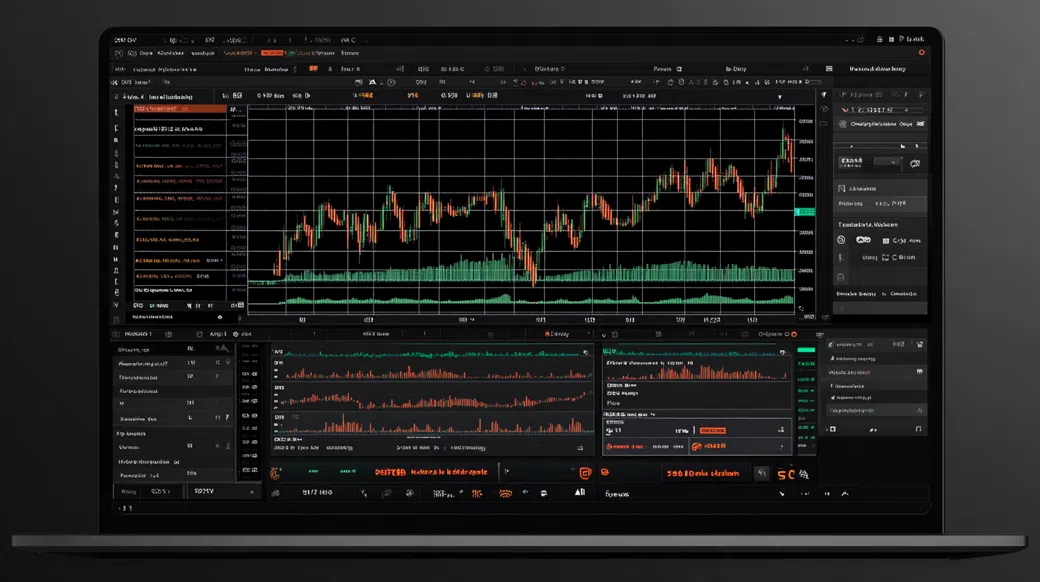
The typical WebTrader in this category delivers the essentials: watchlists, one-click trading, basic order tickets, and charting that’s adequate for discretionary trading. You’ll usually find common indicators and drawing tools, with timeframes sufficient for intraday work, but not the depth or customization power that systematic traders expect from MT4/MT5 or cTrader. Execution feels fine in calm markets; the real test is slippage during fast tape—news spikes, index opens, and crypto weekend gaps. Mobile apps often mirror the web layout, which helps for monitoring margin and managing stops, though advanced analytics and multi-window workflows are usually limited compared with desktop-oriented stacks.
Trading Fees, Spreads, and Account Types at Senvestium
Cost-wise, the common pattern is a spread-led “Standard” account with EUR/USD around 2.0 pips under normal conditions, and sometimes a tighter-spread tier that adds a commission (often framed as Raw/ECN style). In that tighter tier, industry-typical pricing is near 0.0–0.4 pips plus roughly $5–$8 per round turn—useful for high-frequency styles if execution is stable. Overnight financing (swap) matters more than many realize: holding CFDs across sessions can turn into a persistent drag, especially on indices and crypto CFDs. Also watch for non-trading fees: inactivity charges and withdrawal fees are where some offshore brokers recoup revenue when spreads look “competitive.”
When Do Traders Start Looking for Senvestium Alternatives?
Sometimes the trigger is emotional—an argument with support, a delayed withdrawal. More often it’s statistical: the P&L distribution shifts because costs and execution start dominating edge. Traders hunting Senvestium alternatives typically notice friction where it shows up in data: wider realized spreads around volatile events, inconsistent fills, or a platform that can’t support their process (automation, multi-asset hedging, or proper reporting). One more catalyst is jurisdiction: the US is commonly restricted, and cross-border clients may discover that “available globally” has a long footnote.
- Your strategy needs MT4/MT5 or cTrader (EAs, custom indicators, or granular order control) and a proprietary terminal can’t replicate it.
- You’re modeling costs and notice that a ~2.0 pip EUR/USD spread is erasing expectancy on high-turnover systems.
- You want regulator-backed complaint channels and client-money rules, not just internal ticketing.
- Withdrawals become unpredictable, or you’re asked to change funding routes midstream (a common AML red flag).
How to Choose a Reliable Alternative to the Senvestium Trading Platform
Think of broker selection as a risk-budget problem: you’re not only choosing markets and features, you’re choosing which failures you can survive. Alternatives to the Senvestium trading platform should be judged on verifiable supervision, custody rules, execution model, and whether the fee schedule matches your holding period (scalping vs swing vs long-only investing).
Regulation, Safety, and Investor Protection
In the US/EU context, names matter: FCA (UK), ASIC (Australia), CySEC (EU/Cyprus), and NFA/CFTC (US) are the regulators most traders can independently check. The practical value is enforcement plus structure—segregated client funds rules and, in some jurisdictions, compensation schemes such as the UK’s FSCS (up to £85,000) or Cyprus ICF (up to €20,000) for eligible clients. No scheme removes trading risk, but it changes the failure mode if a firm collapses.
Available Markets and Instruments
Write down what you truly need: FX and index CFDs, or a portfolio across stocks/ETFs, options, futures, bonds, plus FX for hedging. Many brokers similar to Senvestium cover the first bucket well, but fall short on true multi-asset access. If you want to own shares (with corporate actions and voting rights), you’ll usually need a multi-asset venue rather than CFD-only exposure. For EU clients, also check whether the broker offers local exchanges or only synthetic instruments.
Trading Costs: Spreads, Commissions, and Other Fees
Spreads are the visible tax; commissions and swap are the quiet ones. Compare costs in round-turn terms: for a 1-lot EUR/USD trade, the all-in cost is (spread in pips) + (commission converted to pips). Then add expected swap if you hold overnight. In many cases, a “from 0.0 pips” headline loses to a slightly wider spread if commissions, slippage, or stop execution are worse. For data-driven traders, exportable statements and clean fee line items are not optional—they’re how you audit reality.
Platforms, Tools, and Execution Quality
Platform choice is strategy choice. MT4/MT5 enable a huge ecosystem of indicators and automation; cTrader is popular with execution-focused traders; proprietary platforms can be clean but closed. Execution model matters: market maker setups can be fine for small size but may behave differently around news; STP/ECN/DMA frameworks aim to route flow more transparently, though slippage can still occur. If you’re coming from Senvestium, test the new broker by measuring fill speed, requotes (if any), and stop-loss behavior during liquid and illiquid hours.
Support, Education, and Overall User Experience
Support quality shows up when things break: document requests, card chargeback questions, platform outages, and corporate actions on equities. For a global audience, check live support hours across time zones and whether the firm can operate in your language with consistent answers. Education is secondary, but good brokers publish margin rules, product specs, and fee tables that don’t require detective work. Finally, mobile parity matters if you manage risk on the move—margin calls don’t wait for your desktop.
Senvestium and Different Asset Classes: When Alternatives May Be Better
Senvestium Forex and CFD Trading
Forex and CFDs are likely the “home turf” here: roughly a few dozen FX pairs, a set of major indices, and a small commodities menu. The risk is that the performance you model from a calm sample can degrade when volatility hits—wider realized spreads, more slippage, and stop execution that diverges from backtests. If your edge is small, execution quality is the product. Brokers like Pepperstone and OANDA are often used as benchmarks in this lane because their regulatory footprints are clearer and their platform stacks (MT4/MT5/cTrader or strong proprietary tooling) are built for repeatable workflows. For EU/UK traders, regulated leverage caps also reduce “blow-up probability,” which matters more than headline 1:500 leverage when you run the math on drawdowns.
Senvestium Stock and ETF Trading
Stocks and ETFs are where many platforms like Senvestium reveal their ceiling. CFD exposure can track price, but it doesn’t equal ownership: no shareholder rights, and fees can include financing that long-term investors don’t want. If you need genuine exchange access (DMA), corporate actions, and the ability to hold unleveraged positions, Interactive Brokers (IBKR) is a common reference point for global market breadth (equities, options, futures, bonds, and FX). Saxo Bank is another multi-asset route that tends to fit traders who want a more guided interface without losing product depth. For US readers, real stock access plus a mature reporting stack is often the deciding factor when comparing top substitutes for Senvestium.
Senvestium Crypto Trading
Crypto is frequently offered in this broker category as crypto CFDs: you’re trading price exposure, not moving coins on-chain, and you won’t have wallet withdrawal rights because you don’t hold the underlying asset. That distinction matters if your thesis involves custody, staking, or on-chain activity. For traders who simply want directional exposure with risk controls, regulated brokers such as IG (in permitted jurisdictions) can provide crypto CFD access alongside indices and FX, with clearer conduct rules than many offshore venues. If you want to marry on-chain analytics with trading, you’ll still need to reconcile that CFD pricing is an off-chain derivative—use it as a market instrument, not as “crypto ownership.”
Best Senvestium Alternatives for 2026: Comparison of Top Trading Platforms
Interactive Brokers (IBKR): Key Facts and How It Compares to Senvestium
Regulation: SEC/FINRA (US), FCA (UK), IIROC (Canada)
Markets: Stocks, ETFs, options, futures, FX, bonds
Fees: Commissions vary by product/venue; FX pricing is typically tight relative to retail CFD spreads (review your region’s schedule)
Platform: Trader Workstation (TWS), IBKR Mobile, Client Portal; API access available
Best For: Multi-asset traders who need DMA-style access and rigorous reporting
Pepperstone: Key Facts and How It Compares to Senvestium
Regulation: FCA (UK), ASIC (Australia), CySEC (EU), DFSA (Dubai)
Markets: FX, CFDs (indices, commodities, some crypto CFDs depending on region)
Fees: Standard spreads often around ~1.0 pip+ on EUR/USD; Raw-style accounts can be ~0.0–0.3 pips plus commission (varies by platform/region)
Platform: MT4, MT5, cTrader, TradingView integration (availability varies)
Best For: Execution-focused FX traders running MT4/MT5 or cTrader workflows
Saxo Bank: Key Facts and How It Compares to Senvestium
Regulation: FCA (UK), MAS (Singapore), DFSA (Dubai)
Markets: Stocks, ETFs, options, futures, FX, bonds, CFDs
Fees: Pricing depends on tier and product; FX spreads are commonly competitive for active clients, with commissions on many exchange-traded products
Platform: SaxoTraderGO, SaxoTraderPRO
Best For: Portfolio builders who want one broker for investing plus tactical FX/CFDs
OANDA: Key Facts and How It Compares to Senvestium
Regulation: CFTC/NFA (US), FCA (UK), ASIC (Australia), IIROC (Canada)
Markets: FX (core), CFDs in certain regions
Fees: Costs are primarily spread-based; typical EUR/USD spreads often fall in the ~0.6–1.2 pip range in liquid conditions (varies by region/account)
Platform: OANDA platform, MT4 (availability varies)
Best For: Risk-managed FX traders who value strong regulatory coverage (including US)
IG: Key Facts and How It Compares to Senvestium
Regulation: FCA (UK), ASIC (Australia), MAS (Singapore)
Markets: CFDs (indices, FX, commodities, shares), spread betting (UK/IE), some crypto CFDs depending on rules
Fees: Spread-based pricing on many CFDs; costs vary by instrument and market hours
Platform: IG platform (web/mobile), MT4 (in supported regions)
Best For: Macro traders who want broad CFD coverage with strong platform stability
CMC Markets: Key Facts and How It Compares to Senvestium
Regulation: FCA (UK), ASIC (Australia), BaFin (Germany)
Markets: CFDs (FX, indices, commodities, treasuries, shares)
Fees: Spread-led pricing with competitive headline spreads on majors in liquid hours; non-trading fees depend on region and account terms
Platform: Next Generation platform; MT4 (in supported regions)
Best For: Active chartists who want rich tooling without relying on plugins
Comparison Summary
| Platform | Regulation | Main Markets | Typical Costs | Best For |
|---|---|---|---|---|
| Interactive Brokers (IBKR) | SEC/FINRA, FCA, IIROC | Stocks/ETFs, options, futures, FX, bonds | Product-based commissions; FX often tighter than retail CFD-only pricing | Multi-asset traders who need DMA-style access and rigorous reporting |
| Pepperstone | FCA, ASIC, CySEC, DFSA | FX, CFDs | EUR/USD ~1.0 pip+ (Standard) or ~0.0–0.3 + commission (Raw-style) | Execution-focused FX traders running MT4/MT5 or cTrader workflows |
| Saxo Bank | FCA, MAS, DFSA | Stocks/ETFs, options, futures, FX, bonds, CFDs | Tiered pricing; commissions on exchanges; competitive FX for active clients | Portfolio builders who want one broker for investing plus tactical FX/CFDs |
| OANDA | CFTC/NFA, FCA, ASIC, IIROC | FX (core), CFDs in some regions | Mainly spread-based; EUR/USD often ~0.6–1.2 pips in liquid conditions | Risk-managed FX traders who value strong regulatory coverage (including US) |
| IG | FCA, ASIC, MAS | CFDs, spread betting (UK/IE) | Mostly spread-based; varies by market and instrument | Macro traders who want broad CFD coverage with strong platform stability |
| CMC Markets | FCA, ASIC, BaFin | CFDs (FX, indices, commodities, shares) | Spread-led; competitive majors in liquid hours; region-specific non-trading fees | Active chartists who want rich tooling without relying on plugins |
How to Safely Move from Senvestium to Another Broker
Switching brokers is less about “finding a better UI” and more about controlling operational risk: identity checks, payment rails, and position management. Treat it like a deployment. Move in stages, keep evidence, and don’t scale up until the new venue behaves predictably. Leverage amplifies small mistakes, so keep size minimal during the transition from Senvestium.
- Confirm the new broker’s license on the regulator’s own register (FCA Register, ASIC Connect, CySEC register, or NFA BASIC) and match the legal entity name exactly.
- Open the new account and complete KYC/AML verification first (ID plus proof of address), so withdrawals and deposits aren’t blocked mid-move.
- Flatten risk on the old account: close open CFD positions rather than assuming they can be transferred; rebuild exposure on the new broker with fresh entries if needed.
- Withdraw funds using the same method used to deposit whenever possible; many payment processors and brokers enforce this to satisfy AML rules.
- Export statements, trade history, and fee reports before you stop using the old platform; you’ll want them for tax, performance attribution, and disputes.
Ready to Explore Senvestium?
If you’re still evaluating account terms, verify onboarding steps, eligible countries, and the current platform stack before funding. Compare spreads, swap, and execution on a small test size, then decide whether to stay or switch to one of the best Senvestium alternatives 2026 highlights.
Visit SenvestiumFAQ: Senvestium Alternatives and Trading Platforms
What is the best alternative to Senvestium in 2026?
The best alternative depends on whether you need true multi-asset access or primarily FX/CFDs. For global stocks/ETFs/options/futures plus institutional-grade reporting, Interactive Brokers is hard to match; for FX execution with MT4/MT5/cTrader, Pepperstone is a common pick. In practice, many traders shortlist two: one multi-asset venue for investing and one FX/CFD specialist for tactical trading.
Is Senvestium a safe broker/platform?
Senvestium appears to operate under an offshore/unregulated framework (commonly associated with jurisdictions like Seychelles), which usually provides fewer investor protections than FCA/ASIC/CySEC/NFA regimes. That doesn’t automatically mean a platform can’t function, but it changes the downside scenario: weaker compensation coverage and fewer formal dispute channels. If safety is your priority, regulated options vs Senvestium typically offer clearer client-money rules and more enforceable oversight.
Can I trade stocks, futures, or crypto with Senvestium?
With brokers in this segment, forex and CFDs are usually the core offering, and “stocks” are often provided as share CFDs rather than real equity ownership. Futures are more commonly available at multi-asset brokers like IBKR or Saxo, not at typical WebTrader-first CFD venues. Crypto exposure, when offered, is usually via crypto CFDs—price tracking without on-chain ownership or wallet withdrawals.
What should I check before switching from Senvestium to another platform?
Before switching, verify the new broker’s exact legal entity on the regulator’s public register and confirm whether you get protections like segregated client funds and negative balance protection. Next, compare your real costs: round-turn spread/commission plus swap, not just headline leverage. Finally, test execution with small size and confirm withdrawals follow the same payment route used for deposits to avoid AML-related delays.
About the Author: Alice Wu is a data scientist and financial journalist who evaluates brokers the way she evaluates models: by inputs, constraints, and failure modes. She focuses on transaction reality—fees, execution, and settlement pathways—because price narratives change, but data trails don’t.