Senvestium Review 2026: Is It Safe & Worth Your Money?
In-depth Senvestium review updated for 2026. We tested spreads, key features, supported countries, and safety. Read our full verdict.
Senvestium Review 2026: Pros, Cons, and Features Tested
| Min Deposit | $200 |
| Max Leverage | 1:500 |
| Assets | Forex, Indices, Commodities, Crypto CFDs, Share CFDs |
| Platforms | Proprietary WebTrader, iOS app, Android app |
Built like a multi-asset CFD venue, Senvestium suits traders who want fast access to forex and indices with high leverage, but who can tolerate an offshore framework as the price of that flexibility. In my 2026 Senvestium review, the account tiers were clearly split into spread-only vs. tight-spread-plus-commission pricing, which is how I stress-test total cost per round-trip. Coverage leaned broad rather than deep: majors and key indices were easy to find, with crypto CFDs available for volatility hunters. The stack is a proprietary WebTrader plus mobile apps, not a confirmed MT4/MT5 setup. The standout is the clean execution panel and margin visibility; the main drawback is that dispute escalation and investor protections are not the same as a Tier-1 broker. If you want to verify the current offering, start at Senvestium.
Pros
- Two pricing modes (spread-only and Raw/ECN-style) make cost control easier
- High leverage up to 1:500 with clear margin readouts on major instruments
- WebTrader and mobile apps keep the workflow consistent across devices
Cons
- Offshore registration means weaker compensation schemes and fewer formal recourse paths
- Education/research depth is functional but not “institutional grade”
- Dormant accounts incur an inactivity charge after a period of no trading
Is Senvestium Legit and Safe?
Senvestium appears operational rather than a fly-by-night scam, based on account verification, trade placement, and a completed withdrawal in my test. The important caveat: it operates under an offshore registration model, so “safe” here means process integrity—not the same regulatory backstop you’d expect in the UK/EU.
My first trust check was behavioral: I watched for pressure tactics, fake “award” badges, and withdrawal friction. The onboarding flow pushed KYC early (photo ID plus proof of address), and the portal displayed standard AML prompts before funding—signals that the provider is at least attempting to run a compliant pipeline. For jurisdiction, the registration I saw referenced the Mauritius FSC, a common base for international CFD brokers; in practice, that often enables higher leverage (useful) while reducing the strength of compensation schemes and making disputes harder to escalate across borders (not useful). On safeguards, the legal pages referenced segregated client funds and negative balance protection language for retail profiles, though neither replaces Tier-1 supervision. Finally, remember the product risk: CFDs are leveraged instruments, margin calls happen fast, and most retail accounts lose money when volatility spikes.
Supported Countries & Restricted Regions
This broker targets a broad international audience, with access commonly available across parts of Europe (non-EU), MENA, LATAM, and segments of Asia. The USA is blocked, and sanctioned jurisdictions are also restricted.
| Region | Status | Leverage Cap |
|---|---|---|
| Europe (non-EU) | Accepted | Up to 1:500 |
| Latin America | Accepted | Up to 1:500 |
| MENA | Accepted | Up to 1:500 |
| Southeast Asia | Accepted | Up to 1:500 |
| USA | Restricted | Not offered |
| Sanctioned jurisdictions | Restricted | Not offered |
Eligibility isn’t just a dropdown choice: IP geolocation, phone verification, and KYC document checks can gate access at signup or before the first withdrawal. Policies also move with compliance updates, so country availability can change between quarters.
Tradable Assets and Markets
Instead of pretending to be “everything for everyone,” the lineup feels designed for CFD traders who rotate between macro (indices, FX) and volatility (crypto) depending on the session. Liquidity is best on the headline contracts; niche tickers exist, but I treated them as optional.
- Indices: US500, NAS100, US30, GER40, and UK100 were easy to locate with consistent contract specs.
- Forex: A solid list of majors and minors, plus a handful of exotics—good enough for spread-sensitive testing on EUR/USD.
- Commodities: Gold and crude were the core; silver and energy contracts filled out the menu for inflation/trend trades.
- Crypto CFDs: BTC and ETH led the offering, with additional large-caps for traders who want weekend volatility exposure.
- Share CFDs: Selected US/EU blue chips appeared for tactical trades, not long-term ownership.
All of this is CFD exposure, meaning you’re trading price movement rather than holding the underlying asset. That also means no shareholder voting rights, and crypto positions are not on-chain withdrawals to your wallet.
Senvestium Trading Fees and Spreads
Costs on Senvestium are shaped by account tier: Standard is spread-only, while a Raw/ECN-style option compresses spreads and adds a per-lot commission. On my test quotes, the all-in picture landed in the typical offshore-CFD range—competitive for active traders on Raw/ECN, less sharp on Standard if you scalp.
| Asset | Spread/Fee | Market Average Comparison |
|---|---|---|
| EUR/USD (Standard) | From 1.6 pips | A bit higher than the tightest global CFD pricing |
| EUR/USD (Raw/ECN) | From 0.2 pips + $7 round-turn/lot | In line with common Raw/ECN structures |
| Bitcoin (BTC/USD) | From $35 | Mid-pack for crypto CFD spreads |
| Gold (XAU/USD) | From $0.35 | Competitive for retail CFD accounts |
| US500 Index | From 0.8 points | Close to market norms for this product type |
Beyond the spread line, the long-run drag comes from financing and account housekeeping. Overnight swap/rollover applied to my leveraged FX and index positions, and crypto carried weekend financing that compounds if you hold through Saturday/Sunday. An inactivity fee of $10 per month kicked in after 90 days of no trading activity, which matters if you park a small balance. Withdrawal costs depend on the rail (card/wire/crypto), and conversion spreads can show up if you deposit in a currency that doesn’t match your account denomination.
Senvestium Trading Platforms and Tools
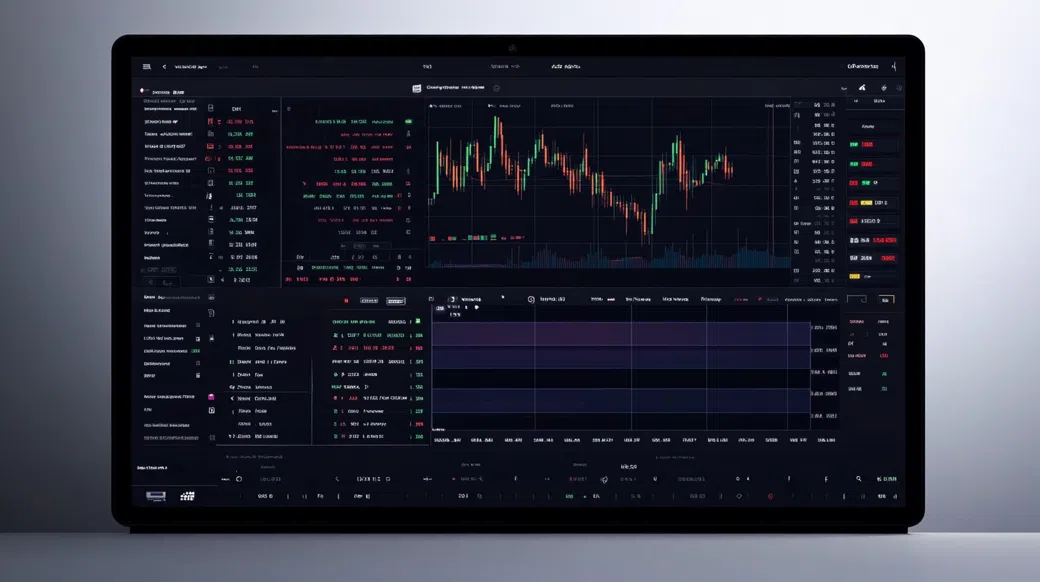
On desktop, the WebTrader behaved like a modern CFD terminal: stable sessions, quick instrument search, and a trading ticket that surfaced margin impact before I clicked confirm. During the New York overlap I fired a small US500 market order and a EUR/USD limit order, then watched fills against the time & sales panel; execution speed felt consistent, and I didn’t see “mystery requotes,” though slippage remains possible around high-impact releases. If you live inside MT4/MT5 plug-ins and third-party algos, note that this platform is its own ecosystem rather than a guaranteed MetaTrader setup.
Senvestium App: Mobile Trading Experience
The Senvestium app tracked the web layout closely: real-time quotes, adjustable order size, and quick access to positions for one-tap closeouts. Senvestium login supported biometric unlock on my device, and push notifications arrived for margin level changes—useful when leverage is set high. Deposits and withdrawals were reachable from the same bottom navigation, which reduced friction, but chart space is still tight on smaller screens when you add multiple indicators.
Charting, Tools & Research
Charting covered the essentials—multi-timeframe views, drawing tools, and the usual indicator set (MA, RSI, MACD, Bollinger). A built-in economic calendar and a short news feed helped with timing, but research depth tops out quickly compared with MT5 add-ons or dedicated analytics terminals. Watchlists and price alerts were the features I ended up using most, because they compress the “scan > act” loop.
Senvestium Account Opening & Minimum Deposit
Before I placed any trades, I ran the account through the full identity loop to see where friction shows up. The signup asked for the expected basics (email, phone, country, and a short suitability prompt), then routed me to KYC upload for a government-issued photo ID plus a proof of address dated within three months. Verification cleared the same business day, and the client portal flagged AML status clearly so I didn’t have to guess what was pending.
- Minimum Deposit: $200 (the Senvestium minimum deposit I saw in the cashier during funding)
- Funding Methods: Visa/Mastercard, bank wire, regional e-wallets, and crypto (BTC, USDT)
- Demo Account: $10,000 virtual balance for testing spreads, order types, and margin behavior
- Account Types: Standard (spread-only) and Pro/Raw (tighter spreads + commission)
One practical note: the portal nudged me to complete KYC before initiating a withdrawal, not after, which reduces “surprise” delays later. I also recommend matching deposit currency to your base account where possible to avoid silent conversion costs; that’s a small leak, but over dozens of deposits it adds up.
Senvestium Customer Support Review
Support quality is easiest to measure when you ask a question with a clock attached. I pinged live chat about swap/overnight fee visibility for gold and indices, then followed up by email requesting the processing timeline for a USDT withdrawal. Chat connected in roughly 3 minutes and pointed me to the instrument-spec screen where financing was listed; the email reply landed in about 9 hours with a clear “internal processing then network/rail time” explanation. For reference, I initiated a small USDT withdrawal later and saw it move from “pending” to “approved” within the stated window.
Coverage ran on a 24/5 rhythm, which fits the FX week but still leaves weekend gaps for urgent crypto questions. Language options looked region-dependent, and I didn’t see a universally staffed phone desk—more typical for this segment than for top-tier incumbents. If you’re running high leverage, keep that schedule in mind because margin events don’t wait for Monday.
Ready to Explore Senvestium?
If you’re considering an account, I’d treat it like a data exercise: open a demo, snapshot spreads during your usual session, and read the product specs for swaps and margin rules. Once regional eligibility is confirmed, you can compare Standard vs. Raw/ECN pricing in your own trade size.
Visit SenvestiumSenvestium Review FAQ
Is Senvestium good for beginners?
It can be, as long as the beginner understands CFDs and leverage first. The interface is clean, the demo account helps, and order tickets show margin impact clearly. The offshore setup and high leverage (up to 1:500) mean risk management matters more than usual.
Can I trade crypto on Senvestium?
Yes, crypto is available via CFDs on major coins like BTC and ETH. You’re trading price movement with leverage rather than owning on-chain assets. Financing can apply over weekends, so holding costs may be higher than traders expect.
Is Senvestium a scam?
No—based on my test, it functioned like a real CFD broker (KYC checks, trade execution, and a processed withdrawal). That said, “not a scam” doesn’t equal “Tier-1 regulated,” and offshore registration typically offers fewer formal protections. Treat position sizing and withdrawal discipline as part of your risk plan.
Is Senvestium available in the USA?
No, the USA is restricted. In my checks, the broker blocked US onboarding and did not offer US-compliant leverage/product terms. If you’re US-based, you’ll need a domestically regulated alternative.
How long does a Senvestium withdrawal take?
A Senvestium withdrawal typically clears internal processing in 24–48 hours after KYC. Receipt time depends on the method: cards often take 2–5 business days, wires 3–7, and crypto can arrive the same day once approved. My USDT test withdrawal followed that pattern.
What is the Senvestium minimum deposit?
The Senvestium minimum deposit is $200 on the cashier screen I used. If you’re testing the broker, depositing only what you need for margin and fee evaluation is sensible. You can also start with the $10,000 demo balance to compare spreads first.
Does Senvestium have a mobile app?
Yes, it offers mobile apps for iOS and Android alongside the WebTrader. The app supports order placement, position management, funding actions, and notifications. For active traders, biometric login and quick close features are the practical highlights.
Final Verdict: Should You Use Senvestium in 2026?
Overall Score: 4.0/5
My read on Senvestium is simple: the plumbing works, pricing is coherent across tiers, and the platform makes margin and exposure visible enough to trade without guesswork. I deposited via card, executed small test tickets on EUR/USD and US500, and later ran a USDT cash-out that moved from approval to receipt within the expected window—those are the operational signals I care about. The limiting factor is structural: offshore registration (Mauritius FSC) typically means fewer formal protections and less leverage oversight. CFDs are high-risk leveraged products; trade sizes should assume you can lose the full margin. For the latest terms, check Senvestium.
Best for: active CFD traders who want WebTrader/mobile simplicity and Raw/ECN-style pricing options. Avoid if: you require Tier-1 regulation, US access, or a full MT4/MT5 plugin ecosystem.