Rhonevène Trading Platform Alternatives 2026
A data-driven guide to Rhonevène alternatives in 2026—compare regulated brokers, costs, platforms, and safety checks for US/EU traders.
Rhonevène Trading Platform Alternatives 2026: Reliable Options for Online Traders
On-chain flows don’t tell you which broker to trust—but they do teach one brutal lesson: settlement and custody are where narratives go to die. If your trading account lives inside a black box, your “edge” is only as real as the withdrawal button. That’s the lens I use when reviewing Rhonevène and, more importantly, Rhonevène alternatives for 2026.
Rhonevène appears to sit in the offshore CFD/FX segment, where the product set is typically forex pairs plus CFD exposure to indices, commodities, and often crypto CFDs. In that bracket, you usually see a proprietary WebTrader (functional, but not deeply extensible), a mobile app, and headline leverage that can reach 1:500. Typical pricing for the category often lands around ~2.0 pips on EUR/USD on a standard-style account, with a minimum deposit around $250. That combination can work for small, discretionary trading—but it’s also where execution quality, dispute resolution, and client-funds safeguards matter more than marketing.
This article focuses on regulated options vs Rhonevène, with an EU/UK and US lens: regulators like FCA, ASIC, CySEC, and NFA/CFTC set different rules around leverage, negative balance protection, reporting, and segregation of client funds. The goal isn’t to “bash” any platform. It’s to map risk and functionality so you can choose a broker that fits your strategy, jurisdiction, and tolerance for counterparty uncertainty.
Disclaimer: This content is for informational purposes only and does not constitute investment advice. CFDs and other leveraged products carry a high risk of loss and may not be suitable for all investors.
Key Takeaways (TL;DR)
- If you need real stocks/ETFs (not CFDs), multi-asset brokers like Interactive Brokers or Saxo are structurally different from offshore CFD venues.
- Compare round-turn trading cost (spread + commission + slippage), not just “max leverage” headlines—execution model is part of the fee.
- Before moving, open and KYC-verify the new account first; then withdraw using the same rail you deposited with to reduce AML friction.
What Is Rhonevène and How Does Its Trading Platform Work?
From a market-structure perspective, Rhonevène looks like a CFD-first brokerage offering leveraged access to price movements rather than ownership of underlying assets. Public signals for this segment commonly align with an offshore framework (often Seychelles FSA), a retail-focused onboarding flow, and a product menu centered on forex and CFDs (indices, commodities, and frequently crypto CFDs). For traders comparing brokers similar to Rhonevène, that positioning has trade-offs: fast account opening and high leverage on one side; fewer investor-protection layers and less transparent execution on the other.
Rhonevène Web Trading Platform: Core Features and Tools
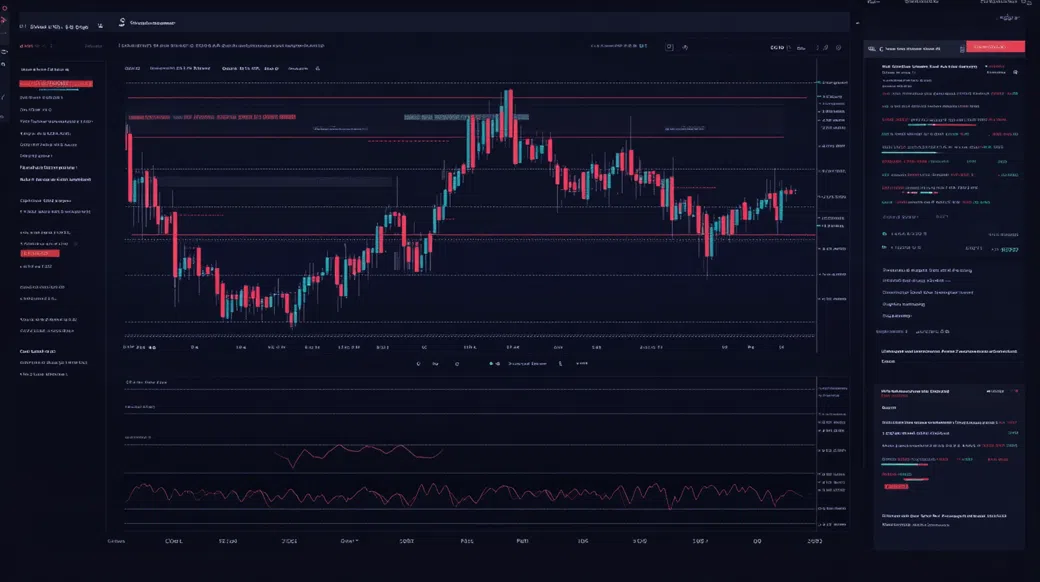
Interface first: the platform stack is typically a proprietary WebTrader with a companion iOS/Android app, designed for basic-to-mid complexity workflows. Expect standard charting with a workable set of indicators and drawing tools, plus the usual order ticket for market/limit/stop orders and position management. Where these platforms often thin out is depth: fewer conditional order types, limited strategy automation compared with MT4/MT5/cTrader, and an execution “feel” that can vary during volatility (wider spreads, more slippage). Mobile parity tends to be decent for monitoring and manual entries, but heavy analysis is usually more comfortable on desktop.
Trading Fees, Spreads, and Account Types at Rhonevène
Cost tends to be packaged as a spread-first model. A typical reference point for this category is EUR/USD from ~2.0 pips on a standard account, with higher spreads on less liquid pairs and during news. Some brokers in the same segment advertise “raw” pricing (e.g., 0.0–0.4 pips plus a round-turn commission), but unless terms are clearly documented, treat the all-in cost as “spread + execution quality.” Also watch for swap/overnight financing on CFDs, and for non-trading fees such as withdrawal processing charges or inactivity fees. These line items matter because they accumulate quietly—like a slow leak in a backtest.
When Do Traders Start Looking for Rhonevène Alternatives?
Usually the trigger is not a chart pattern—it’s an operational constraint. If your strategy depends on repeatable execution, the “platform layer” becomes part of your risk model. Rhonevène alternatives come up most often when traders hit a mismatch between what they need (tools, protections, market access) and what an offshore CFD setup reliably delivers, especially under stress: volatile sessions, margin calls, or time-sensitive withdrawals.
- You need MT4/MT5 or cTrader for automation (EAs, advanced order management) and the current WebTrader can’t support that workflow.
- Your risk plan requires strict negative balance protection and clearer margin-call rules than what offshore providers typically disclose.
- You want verifiable regulator oversight (FCA/ASIC/CySEC/NFA) plus segregated client funds, not just “registered” entities.
- Withdrawal timing or payment-rail limitations start affecting position sizing and confidence in the account.
How to Choose a Reliable Alternative to the Rhonevène Trading Platform
Think of broker selection like building a dataset: you don’t accept a model without checking the inputs. Alternatives to the Rhonevène trading platform should be evaluated on verifiable constraints—regulatory perimeter, execution model, and fee math—then matched to your strategy (scalping, swing, hedging, long-only investing). A broker can be cheap on paper and still expensive after slippage.
Regulation, Safety, and Investor Protection
Start with the regulator’s public register: FCA (UK), ASIC (Australia), CySEC (EU), and NFA/CFTC (US) each enforce different conduct and reporting rules. In the UK, FCA-regulated firms may fall under FSCS protection up to £85,000 for eligible clients; in Cyprus, the ICF can cover up to €20,000 in certain cases. Add checks for segregated client funds policies and dispute-resolution pathways. Regulation doesn’t remove market risk, but it changes your counterparty risk profile.
Available Markets and Instruments
Map markets to intent. If you’re building long-horizon exposure, “stocks/ETFs as CFDs” is not the same as owning the underlying—no shareholder rights, and different tax and financing mechanics. For active macro trading, FX and index CFDs may be enough. For cross-asset hedging, access to options and futures (real listed products) can matter more than a bigger list of synthetic CFDs. Many platforms like Rhonevène focus on CFDs; multi-asset brokers can offer direct market access for cash equities.
Trading Costs: Spreads, Commissions, and Other Fees
Compare like-for-like using an all-in round-turn estimate: spread (in pips) + commission + expected slippage. A 0.2–0.4 pip improvement in effective EUR/USD cost can outweigh most “perk” features if you trade size or frequency. Then layer in swap/overnight fees for holds, plus non-trading charges (inactivity, withdrawals, currency conversion). Marketing often highlights the tightest spread; your P&L experiences the median execution.
Platforms, Tools, and Execution Quality
Platform choice is a capability constraint. MT4/MT5 and cTrader support automation, custom indicators, and a broader ecosystem; proprietary WebTraders can be clean but closed. Execution model also matters: market maker setups internalize flow, while STP/ECN/DMA models route differently and may expose you to variable spreads and more visible slippage. During fast markets, latency and price re-quotes become real costs. If you’re moving from Rhonevène, test execution with small orders around liquid hours before scaling.
Support, Education, and Overall User Experience
Operational UX is part of risk. Look for support that matches your timezone, clear ticketing, and documented policies (margin, withdrawals, corporate actions for CFDs). Education is useful, but policy transparency is more important. Mobile parity matters if you manage risk on the go; a good app should handle orders, alerts, and margin monitoring without lag. The best substitutes for Rhonevène make the “boring” workflows—statements, tax reports, funding—predictable.
Rhonevène and Different Asset Classes: When Alternatives May Be Better
Rhonevène Forex and CFD Trading
For FX-first traders, the key comparison is not the number of pairs (often ~30–50 in this segment) but the effective cost of execution. A typical offshore CFD profile advertises high leverage (often up to 1:500) and spread-based pricing (often around ~2.0 pips EUR/USD), yet your realized outcome is shaped by spread widening, stop execution, and slippage during volatility. Regulated FX/CFD specialists like Pepperstone and IC Markets are widely used by systematic and active traders because they offer MT4/MT5/cTrader stacks and commonly provide raw/commission pricing options. If your edge is a few pips, consistency beats maximum leverage headlines—because leverage amplifies noise as efficiently as it amplifies returns.
Rhonevène Stock and ETF Trading
Here the gap is usually structural. Many competitors to Rhonevène in the offshore CFD bracket provide stock and ETF exposure primarily via CFDs, which behave differently from owning shares: financing (swap) applies, voting rights don’t exist, and corporate actions can be handled in platform-specific ways. If your objective is portfolio building—dividends, long-term holding, multi-currency allocation—consider multi-asset brokers such as Interactive Brokers or Saxo Bank, which are designed around access to real exchanges and broader product coverage (stocks, ETFs, options, futures). For US traders especially, the regulatory perimeter (SEC/FINRA and NFA/CFTC for relevant products) is a practical divider: it determines which instruments you can access and under what protections.
Rhonevène Crypto Trading
Crypto is where wording matters. In many offshore CFD platforms, “crypto trading” means crypto CFDs: you’re speculating on price without on-chain ownership, no self-custody, and no ability to transfer coins. That can be fine for short-term hedging, but it’s not the same as holding assets in a wallet. Regulated CFD firms like IG and Plus500 (region-dependent) typically offer crypto CFDs under stricter rulebooks than offshore venues, though availability and leverage caps vary by jurisdiction. If your analysis starts from blockchain transactions, remember: CFD exposure won’t show up in on-chain data, and that disconnect can confuse risk reporting unless you track positions carefully off-chain.
Best Rhonevène Alternatives for 2026: Comparison of Top Trading Platforms
Interactive Brokers (IBKR): Key Facts and How It Compares to Rhonevène
Regulation: SEC/FINRA (US), FCA (UK), IIROC (Canada) (entity depends on region)
Markets: Stocks, ETFs, options, futures, bonds, FX (product access varies by jurisdiction)
Fees: FX and listed-market pricing is generally commission-based; costs vary by product, venue, and tiering rather than a single “spread-only” model
Platform: Trader Workstation (TWS), IBKR mobile, Client Portal; APIs for systematic workflows
Best For: Data-heavy multi-asset traders who need real market access
Pepperstone: Key Facts and How It Compares to Rhonevène
Regulation: FCA (UK), ASIC (Australia), CySEC (EU), DFSA (Dubai)
Markets: FX and CFDs (indices, commodities; crypto CFDs where permitted)
Fees: Standard accounts typically spread-only; raw-style accounts often pair very low spreads with a per-trade commission (all-in cost depends on venue and session)
Platform: MT4, MT5, cTrader (availability depends on entity)
Best For: Systematic FX traders optimizing for tight execution
IG: Key Facts and How It Compares to Rhonevène
Regulation: FCA (UK), ASIC (Australia), MAS (Singapore)
Markets: CFDs (FX, indices, commodities, shares), spread betting (UK/IE where eligible)
Fees: Typically spread-based on many CFD products; financing applies on leveraged holds; costs vary by instrument and volatility
Platform: IG web platform, mobile app; MT4 available in some regions
Best For: Macro CFD traders who value strong regulatory oversight
Saxo Bank: Key Facts and How It Compares to Rhonevène
Regulation: FCA (UK), DFSA (Dubai), MAS (Singapore) (entity depends on region)
Markets: Stocks, ETFs, options, futures, FX, bonds, CFDs (availability varies by jurisdiction)
Fees: Product-specific commissions/spreads; multi-asset pricing varies by market and account tier
Platform: SaxoTraderGO, SaxoTraderPRO
Best For: Portfolio builders who also trade derivatives
IC Markets: Key Facts and How It Compares to Rhonevène
Regulation: ASIC (Australia), CySEC (EU), FSA Seychelles (group-level entity options)
Markets: FX and CFDs (indices, commodities; crypto CFDs where permitted)
Fees: Raw/commission pricing is common for active traders; standard spread-only accounts also exist (actual costs depend on instrument and session)
Platform: MT4, MT5, cTrader
Best For: Scalpers who need low-friction order routing
Plus500: Key Facts and How It Compares to Rhonevène
Regulation: FCA (UK), CySEC (EU), ASIC (Australia), MAS (Singapore)
Markets: CFDs (FX, indices, commodities, shares; crypto CFDs where permitted)
Fees: Primarily spread-based with overnight financing on CFD holds; simplicity over granular commission schedules
Platform: Proprietary WebTrader and mobile app
Best For: Beginners who want a simple CFD interface
Comparison Summary
| Platform | Regulation | Main Markets | Typical Costs | Best For |
|---|---|---|---|---|
| Interactive Brokers (IBKR) | SEC/FINRA, FCA, IIROC | Stocks/ETFs/options/futures/bonds/FX | Commission-led pricing; varies by product/venue | Data-heavy multi-asset traders who need real market access |
| Pepperstone | FCA, ASIC, CySEC, DFSA | FX + CFDs | Spread-only or raw + commission (entity/account dependent) | Systematic FX traders optimizing for tight execution |
| IG | FCA, ASIC, MAS | CFDs (FX/indices/commodities/shares) | Mostly spread-based; financing on leveraged holds | Macro CFD traders who value strong regulatory oversight |
| Saxo Bank | FCA, DFSA, MAS | Multi-asset (incl. stocks/ETFs/options/futures) | Market-based commissions/spreads by asset class | Portfolio builders who also trade derivatives |
| IC Markets | ASIC, CySEC, FSA Seychelles | FX + CFDs | Raw + commission common; standard spread-only available | Scalpers who need low-friction order routing |
| Plus500 | FCA, CySEC, ASIC, MAS | CFDs (FX/indices/commodities/shares) | Spread-based; overnight financing applies | Beginners who want a simple CFD interface |
How to Safely Move from Rhonevène to Another Broker
Switching brokers is less about “sign up here” and more about controlling failure modes: identity checks, payment rails, and open exposure. Treat the move as a staged rollout—small tests first, then scale. If you’re migrating from Rhonevène, remember that leveraged CFDs can move faster than your operational processes, so reduce risk before you start clicking through forms.
- Confirm the new broker’s legal entity on the regulator’s register (FCA Register, ASIC Connect, CySEC directory, or NFA BASIC) and match the name to the account-opening documents.
- Create the new account and complete KYC/AML verification (ID + proof of address) before you attempt to withdraw or close anything on the old account.
- Flatten or reduce open positions on the old platform; assume you cannot “transfer” CFD positions broker-to-broker, and re-enter later if needed.
- Withdraw funds using the same method you used to deposit (card-to-card, bank-to-bank, wallet-to-wallet) because many brokers enforce source-of-funds and return-of-funds rules.
- Export statements, trade history, and funding records for taxes and dispute documentation before you lose access to the dashboard.
Ready to Explore Rhonevène?
If you’re still evaluating your options, compare onboarding steps, available instruments in your region, and the platform stack side-by-side. Check leverage limits, margin policy, and how fees appear on statements before committing meaningful capital.
Visit RhonevèneFAQ: Rhonevène Alternatives and Trading Platforms
What is the best alternative to Rhonevène in 2026?
The best alternative depends on whether you need real multi-asset access or mainly FX/CFDs. For exchange-traded stocks/ETFs/options/futures, Interactive Brokers and Saxo are strong fits; for FX/CFD execution with MT4/MT5/cTrader, Pepperstone or IC Markets are common picks. If you want a simpler, app-like CFD experience under tier-1 regulation, Plus500 can be a cleaner match.
Is Rhonevène a safe broker/platform?
Rhonevène appears consistent with an offshore CFD setup (commonly seen under frameworks like Seychelles FSA), which generally offers fewer investor-protection layers than FCA/ASIC/CySEC/NFA-regulated brokers. “Safe” is therefore more about your tolerance for counterparty risk, dispute resolution, and funding/withdrawal reliability than about the UI. If safety is your top variable, prioritize regulated options vs Rhonevène with segregated client funds and clear compensation-scheme eligibility.
Can I trade stocks, futures, or crypto with Rhonevène?
Rhonevène is typically positioned around forex and CFDs, so stocks and crypto are more likely offered as CFDs rather than direct ownership, and listed futures may not be available as exchange-traded contracts. Crypto exposure in this model is usually synthetic (CFDs), meaning no on-chain transfers or self-custody. If you need real stocks/ETFs and listed derivatives, Interactive Brokers or Saxo are more appropriate Rhonevène trading platform alternatives 2026.
What should I check before switching from Rhonevène to another platform?
Verify the new broker’s regulator entry (FCA/ASIC/CySEC/NFA) and confirm which legal entity will hold your account. Next, compare all-in trading costs (spread + commission + expected slippage), margin rules, and negative balance protection. Finally, ensure you can fund and withdraw using compatible rails, and test with small size before migrating full capital—especially if your Rhonevène alternatives shortlist includes different execution models (market maker vs STP/ECN/DMA).
About the Author: Alice Wu is a data scientist and market analyst who evaluates trading risk through the lens of transaction data, market microstructure, and verifiable disclosures. She focuses on execution quality, fee math, and the operational realities (KYC, funding rails, withdrawal behavior) that determine whether a strategy survives contact with live markets.