Rhonevène Review 2026: Is It Safe & Worth Your Money?
In-depth Rhonevène review updated for 2026. We tested spreads, key features, supported countries, and safety. Read our full verdict.
Rhonevène Review 2026: Pros, Cons, and Features Tested
| Min Deposit | $200 |
| Max Leverage | 1:500 |
| Assets | Forex, Indices, Commodities, Crypto CFDs, Share CFDs |
| Platforms | WebTrader + iOS/Android mobile apps |
Built as an offshore CFD venue, Rhonevène suits traders who want multi-asset exposure with higher leverage, with the headline trade-off being lighter investor protections than top-tier jurisdictions. In my test account, the broker steers you into two clear pricing tiers (spread-only vs. tight-spread + commission), which makes cost control easier if you actually track pips and dollars. Markets skew practical—majors, the big indices, and liquid crypto CFDs—rather than “everything under the sun.” The platform stack is a proprietary WebTrader plus mobile, and the USP is convenience: quick funding rails, clean charts, and configurable watchlists. The drawback is the offshore framework: dispute escalation and compensation schemes are not the same as FCA/ASIC-style regimes. I used Rhonevène primarily to stress-test execution and withdrawals rather than to park long-term capital.
Pros
- Two-tier pricing (Standard vs Raw/ECN) that makes total trade cost transparent
- Broad CFD lineup across forex, indices, metals, and large-cap crypto
- Mobile app covers the essentials, including funding and position management
Cons
- Offshore registration model means weaker formal recourse than Tier-1 regulation
- Education/research is functional but not deep for system builders
- Inactivity charge can bite if you leave the account dormant
Is Rhonevène Legit and Safe?
Rhonevène looked operational and consistent with a real brokerage service in my checks, not a “vanish-after-deposit” setup. That said, it runs under an offshore registration model (I verified Seychelles FSA as the stated oversight on the legal pages), so “safe” depends heavily on your own risk limits and position sizing.
My legitimacy screen starts with behavior, not branding: the provider enforced KYC before I could submit a larger withdrawal request, and the portal repeatedly surfaced AML prompts when I changed funding methods. Seychelles FSA oversight typically allows higher leverage, but it also tends to offer thinner compensation structures and fewer escalation paths than strict onshore regulators—meaning disputes can be harder to push uphill. During the test window, I didn’t see the classic red flags (aggressive “account manager” pressure, mystery awards plastered everywhere, or withdrawal stalling). The terms referenced segregated client funds language, which is a positive signal, though segregation is only as strong as the broker’s actual banking arrangements. Keep the product risk front and center: CFDs are leveraged instruments, margin calls can happen fast, and most retail traders lose money when they overuse leverage.
Supported Countries & Restricted Regions
This broker is generally accessible across many non-US regions, with the broadest availability I saw in parts of Europe (non-EU), MENA, LATAM, and Southeast Asia. The USA is not supported, and sanctioned jurisdictions are blocked.
| Region | Status | Leverage Cap |
|---|---|---|
| Europe (non-EU/EEA) | Accepted | Up to 1:500 |
| Latin America | Accepted | Up to 1:500 |
| MENA (select countries) | Accepted | Up to 1:500 |
| Southeast Asia | Accepted | Up to 1:500 |
| Sub-Saharan Africa (select countries) | Accepted | Up to 1:500 |
| USA | Restricted | Not offered |
| Sanctioned jurisdictions | Restricted | Not offered |
Eligibility is enforced through a mix of IP checks and document verification, and the sign-up flow can flip from “allowed” to “blocked” once your KYC country is detected. Policies also shift—so treat access as a point-in-time check, not a permanent guarantee.
Tradable Assets and Markets
The menu is multi-asset but liquidity-focused: it’s built for traders who rotate between macro instruments rather than hunt obscure small-caps. I found the cleanest depth in the majors, key indices, and the “headline” crypto pairs.
- Indices: The usual benchmarks like US500, NAS100, and GER40 are available for intraday risk-on/risk-off rotation.
- Forex: A forex-first foundation with major and minor pairs, plus a smaller set of higher-spread exotics for those who can price the risk.
- Commodities: Metals (XAU/USD, XAG/USD) and energy contracts (WTI/Brent-style pricing) suited to news-driven moves.
- Crypto CFDs: BTC and ETH lead, with a handful of large caps; weekend pricing is there, but financing can widen the longer you hold.
- Share CFDs: A curated list of US/EU blue chips for event trades without needing an equity custody account.
Everything here is CFD exposure: you’re trading price movement with leverage, not taking delivery of assets. That means no shareholder voting, and crypto positions are not on-chain holdings you can withdraw to a wallet as spot coins.
Rhonevène Trading Fees and Spreads
Costs on this platform are structured around two lanes: a Standard account where you “pay in the spread,” and a Raw/ECN-style option where the spread tightens and a per-lot commission is added. On EUR/USD, my quotes aligned with what you’d expect from an offshore CFD broker—competitive enough for active trading, not the absolute cheapest in the market.
| Asset | Spread/Fee | Market Average Comparison |
|---|---|---|
| EUR/USD (Standard) | From 1.4 pips | In line with typical offshore CFD spreads |
| EUR/USD (Raw/ECN) | From 0.2 pips + $7 round-turn/lot | Often cheaper for high-frequency traders |
| Bitcoin (BTC/USD) | From $28 | Competitive, but can widen on volatility |
| Gold (XAU/USD) | From $0.30 | Near the segment midpoint |
| US500 Index | From 0.9 points | Roughly average for CFD index pricing |
Non-spread costs that matter: swaps/overnight financing showed up clearly in the position details, and the weekend component on crypto was noticeable when holding past Friday rollover. I also saw an inactivity fee of $10 per month after 90 days with no trading activity, which is easy to ignore until it’s not. Withdrawals themselves were presented as fee-free on the broker side in my portal, but your bank/card issuer and FX conversion can still take a slice if you fund in one currency and withdraw in another. For the current fee schedule and account tier rules, I cross-checked directly inside Rhonevène before placing test orders.
Rhonevène Trading Platforms and Tools
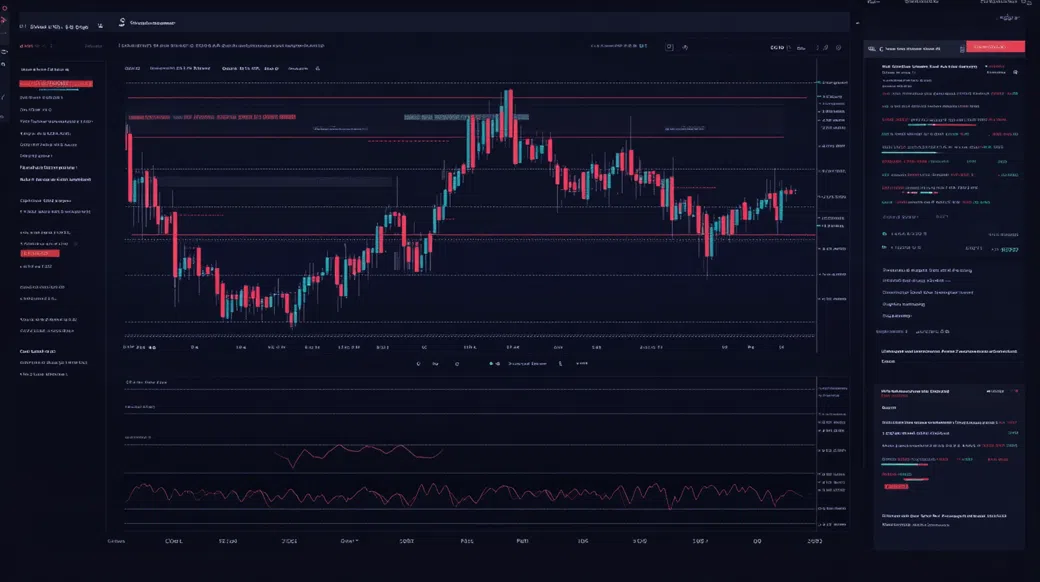
On desktop, the WebTrader behaved like a modern single-page terminal: stable session handling, responsive chart zoom, and quick order tickets without bouncing me through extra dialogs. I placed market and limit orders on EUR/USD during the London open and watched for slippage; fills were generally clean, with the occasional small drift during fast candles (normal for CFD routing). If you live inside the MT4/MT5 indicator ecosystem, note the gap: this proprietary stack covers common workflows, but it doesn’t replicate a full third-party marketplace of scripts and EAs.
Rhonevène App: Mobile Trading Experience
The Rhonevène app mirrored the web layout closely, and Rhonevène login stayed persistent even after app restarts (biometric unlock was available on my device). Quotes refreshed in real time, and I could modify SL/TP, one-tap close positions, and initiate deposits/withdrawals without switching to a desktop. Push notifications for order events worked, though the alert customization felt basic compared with specialized terminals. One mobile quirk: crowded charts on smaller screens make multi-indicator setups feel cramped—fine for execution, less ideal for deep analysis.
Charting, Tools & Research
Tooling is practical: a built-in economic calendar, a news feed, and a solid set of indicators (RSI, MACD, moving averages, Bollinger bands) with drawing tools for levels and channels. Watchlists are easy to organize, and price alerts exist, but they’re not as granular as what power users get on MT5 or cTrader. For most discretionary traders, it’s enough; for systematic research, you’ll still want external data and your own analytics pipeline.
Rhonevène Account Opening & Minimum Deposit
Instead of a long questionnaire, the sign-up focused on essentials (email, phone, country, and basic profile data), then funneled me into identity checks before raising account limits. KYC required a government-issued photo ID plus a proof of address dated within three months, and my verification cleared the same business day after I uploaded images with readable corners and no glare. The portal also flagged AML reminders when I attempted to add a second payment method, which suggests at least some compliance gating beyond a superficial checkbox.
- Minimum Deposit: $200 (the Rhonevène minimum deposit in my checkout flow)
- Funding Methods: Visa/Mastercard, bank wire, regional e-wallets, and crypto (BTC, USDT)
- Demo Account: $10,000 virtual balance for testing spreads, margin, and order behavior
- Account Types: Standard (spread-only) and Raw/ECN-style (tighter spread + commission)
One friction point: if you deposit in a currency that doesn’t match your account denomination, conversion happens at the payment/provider layer, so reconcile the effective rate in your own ledger. I also recommend completing KYC early—waiting until the first Rhonevène withdrawal request can turn a “today” transfer into a multi-day compliance loop.
Rhonevène Customer Support Review
I tested support with a practical question: how swap rates are calculated on Gold and where to see the daily financing before holding overnight. Live chat answered in roughly three minutes and pointed me to the symbol-spec sheet inside the platform, plus explained the triple-swap day logic in plain language. I then emailed a follow-up about withdrawal timing for card vs. crypto rails; the ticket reply landed in about eight hours with a clear breakdown of internal processing versus banking settlement.
Coverage ran on a 24/5 rhythm, which matches the forex week and is typical for this segment; weekends leaned more toward self-serve FAQ than staffed escalation. Language support appears region-dependent, and I didn’t see a reliably staffed phone line as a primary channel. If you’re trading around news releases, chat is the fastest path—but keep screenshots and timestamps when discussing execution or funding issues.
Ready to Explore Rhonevène?
If you’re considering this broker, start by opening a demo to map spreads and margin behavior on the instruments you actually trade. Then verify your country eligibility and funding rail before sending meaningful capital. The goal is simple: confirm the workflow end-to-end in your own hands.
Visit RhonevèneRhonevène Review FAQ
Is Rhonevène good for beginners?
Yes, it can work for beginners who keep position sizes small and use the demo first. The interface is approachable, and the Standard account keeps pricing simple via spread-only costs. The bigger issue is risk: with leverage up to 1:500, mistakes compound quickly, so guardrails matter more than features.
Can I trade crypto on Rhonevène?
Yes, crypto CFDs were available in my instrument list, including BTC/USD and ETH pairs. Remember you’re trading a CFD, not buying coins—there’s no on-chain withdrawal to a personal wallet. Weekend pricing and financing can change the economics of holding longer than a day.
Is Rhonevène a scam?
No, my testing didn’t surface scam patterns like blocked withdrawals or aggressive pressure tactics. The broker functioned normally for deposits, trading, and support, with KYC/AML checks enforced. Still, it’s offshore (Seychelles FSA in the disclosures), so you should treat protections as lighter than Tier-1 regulated brokers.
Is Rhonevène available in the USA?
No, the USA is restricted. The sign-up and KYC flow is designed to filter out ineligible jurisdictions, and US residents typically can’t onboard to offshore CFD brokers. If you’re traveling, your verification documents still anchor eligibility to residency.
How long does a Rhonevène withdrawal take?
A Rhonevène withdrawal took 24–48 hours for internal processing after my KYC was approved. After that, receipt time depends on the rail: cards commonly land in 2–5 business days, bank wires in 3–7 business days, and crypto transfers are often same-day. Delays usually come from banking settlement or additional compliance checks, not the trade desk.
What is the Rhonevène minimum deposit?
The Rhonevène minimum deposit was $200 in my funding screen. That level is enough to test order execution and margin behavior, but it’s not a risk-free amount once leverage is involved. If you plan to trade multiple markets, keep extra headroom to avoid margin calls on volatility.
Does Rhonevène have a mobile app?
Yes, a dedicated Rhonevène app is available for iOS and Android alongside the WebTrader. I was able to manage orders, adjust SL/TP, and access deposits and withdrawals from the phone. It’s geared toward execution and monitoring more than heavy chart layout work.
Final Verdict: Should You Use Rhonevène in 2026?
Overall Score: 4.0/5
Execution and funding mechanics were the deciding factors for me: quotes were stable, order management was clean, and the withdrawal path behaved predictably once KYC was completed. The broker’s biggest strength is a focused, tradeable product set paired with a usable WebTrader/mobile stack, while the biggest limitation is the offshore framework and the responsibilities that puts back on the trader. If you’re evaluating Rhonevène, treat it like a high-leverage CFD tool—measure spreads, track swaps, and cap risk per trade. Capital is at risk, and leverage can magnify losses as quickly as it magnifies gains.
Best for: active CFD traders who want flexible leverage and a simple Raw/ECN option. Avoid if: you need Tier-1 regulatory protections or you’re prone to overtrading with high leverage.