Rendakon Review 2026: Is It Safe & Worth Your Money?
In-depth Rendakon review updated for 2026. We tested spreads, key features, supported countries, and safety. Read our full verdict.
Rendakon Review 2026: Pros, Cons, and Features Tested
| Min Deposit | $200 |
| Max Leverage | 1:500 |
| Assets | Forex, indices, commodities, crypto CFDs, share CFDs |
| Platforms | WebTrader + iOS/Android mobile apps |
Built for traders who want multi-asset CFDs with high leverage and a simple web/mobile stack, Rendakon suits fast decision-makers—but the headline compromise is an offshore framework with fewer escalation routes if something goes wrong. In my test account, the menu split cleanly into a spread-only Standard tier and a tighter Raw/ECN-style option for higher-frequency trading. Markets skew practical: majors, the big indices, gold/oil, and headline crypto pairs. The interface is a proprietary WebTrader plus phone apps rather than a confirmed MT4/MT5 setup, which keeps it lightweight but limits plug-and-play automation. For the full walkthrough, see Rendakon.
Pros
- Two pricing tracks (Standard vs Raw/ECN) that make costs easier to match to trading style
- WebTrader is responsive, with quick order controls and watchlists that sync to mobile
- Broad CFD coverage across FX, indices, metals/energy, and major crypto pairs
Cons
- Offshore registration means thinner investor-protection backstops than top-tier jurisdictions
- Education/research feels functional, not institutional-grade
- Dormant accounts can be billed an inactivity charge after a period without trading
Is Rendakon Legit and Safe?
Rendakon operated as a real, functioning CFD broker in my testing—orders filled, KYC was enforced, and withdrawals were processed—so it didn’t behave like a “Rendakon scam” storefront. The important caveat: it runs under an offshore registration model (I saw Seychelles FSA referenced), which changes what “safe” means versus a Tier-1 regulated broker.
Safety, to me, starts with behavior you can measure: identity checks, predictable cashflow, and whether the platform nudges you into impulsive leverage. During onboarding, the provider required a government photo ID and a proof-of-address document before enabling certain account actions, which is a meaningful AML/KYC signal even offshore. I also looked for the usual red flags—fake awards, aggressive “account manager” pressure, and withdrawal friction. The sales outreach stayed limited to a single onboarding email, and the account portal displayed segregated client-funds language (good to see, though enforcement is jurisdiction-dependent). Offshore status typically allows higher leverage (here up to 1:500) but offers weaker compensation schemes and fewer dispute-resolution levers if a conflict escalates. Remember: CFDs are leveraged products; most retail traders lose money, and you can burn capital quickly on margin.
Supported Countries & Restricted Regions
The broker generally accepts clients across parts of Europe (outside the strictest regimes), MENA, LATAM, Africa, and sections of Asia, while the USA and sanctioned jurisdictions are blocked.
| Region | Status | Leverage Cap |
|---|---|---|
| Latin America | Accepted | Up to 1:500 |
| MENA (selected countries) | Accepted | Up to 1:500 |
| Southeast Asia (selected countries) | Accepted | Up to 1:500 |
| Africa (selected countries) | Accepted | Up to 1:500 |
| USA | Restricted | Not offered |
| Sanctioned jurisdictions | Restricted | Not offered |
Eligibility was checked through account-country selection and then reinforced at verification, where documents must match the declared residence. If your IP, phone, or banking rail conflicts with the profile, expect additional prompts—or a hard stop—because policies can tighten without much notice.
Tradable Assets and Markets
Rendakon is built as a multi-asset CFD venue: enough variety to rotate between macro themes without pretending to be a full equities prime broker. The lineup is liquid-first—things that actually trade during the London and New York overlaps.
- Indices: The core benchmarks (US500, NAS100, US30, GER40, UK100) with familiar contract sizing and margin behavior.
- Forex: A majors-forward list (EUR/USD, GBP/USD, USD/JPY), plus a decent spread of minors for cross-trading.
- Commodities: Gold and silver for risk hedging, alongside energy contracts like WTI/Brent where financing can matter.
- Crypto CFDs: BTC and ETH headline the set, with additional large caps; pricing is CFD-based rather than on-chain.
All of this is synthetic exposure via CFDs: you’re trading price movement, not receiving shareholder voting rights or taking delivery of assets. Crypto positions here are not wallet withdrawals; they’re derivative contracts with financing baked into the instrument.
Rendakon Trading Fees and Spreads
Rendakon fees follow a two-lane structure: Standard accounts bake costs into the spread, while the Raw/ECN-style tier tightens the spread and adds a per-lot commission. On EUR/USD, my quotes clustered around 1.6 pips on Standard and about 0.2 pips plus commission on Raw/ECN—broadly in line with offshore CFD peers that compete on leverage and simplicity rather than institutional routing.
| Asset | Spread/Fee | Market Average Comparison |
|---|---|---|
| EUR/USD (Standard) | From 1.6 pips | Near average for offshore CFD spreads |
| EUR/USD (Raw/ECN) | From 0.2 pips + $7 round-turn/lot | Competitive if you trade size/frequency |
| Bitcoin (BTC/USD) | From $28 | In the typical CFD range; varies by volatility |
| Gold (XAU/USD) | From $0.35 | Reasonable versus similar multi-asset brokers |
| US500 Index | From 0.8 points | Close to the segment midpoint |
Costs beyond the spread matter more than people admit: overnight swap/financing can dominate results for swing trades, and crypto CFDs often carry heavier weekend financing. I also noted an inactivity charge of $10 per month after 90 days without trading, which turns “parked” accounts into a slow leak. Withdrawals may be free on the broker side, but card processors, banks, or conversion from non-USD funding can introduce their own fees, so I always model the full deposit/withdrawal loop rather than just the entry spread.
Rendakon Trading Platforms and Tools
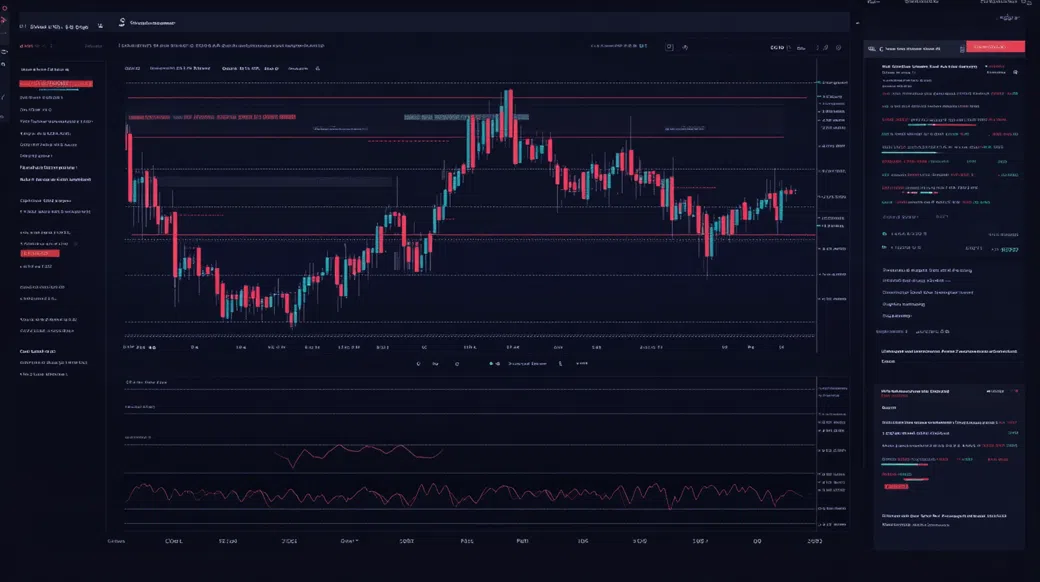
On desktop, the WebTrader loaded quickly and kept sessions stable during repeated tab switching, which is where lightweight platforms often fall apart. Order tickets supported market and pending orders with SL/TP attached, and I watched execution on US500 during the NY open: fills were consistent, with a small amount of slippage when spreads widened on the first volatility spike. There’s no confirmed MT4/MT5 bridge in the account area, so traders who rely on EAs, custom indicators, or a deep plugin ecosystem will feel that ceiling.
Rendakon App: Mobile Trading Experience
The Rendakon app mirrored the web layout closely: watchlists, chart view, and position management were all reachable within a couple taps, and deposits/withdrawals were available from the same menu. Rendakon login supported biometric unlock on my device, and push notifications for price alerts arrived reliably when I tested a BTC threshold. One-tap close is convenient but dangerous—on leverage, accidental exits are real—so I’d rather see a confirmation toggle for high-volatility instruments.
Charting, Tools & Research
Charting includes the baseline indicator set (MA, RSI, MACD, Bollinger) plus drawing tools for levels and trendlines, which covers most discretionary workflows. The research layer is practical: an economic calendar and a rolling news feed you can filter by asset class. Still, compared with MT5/cTrader ecosystems, automation, advanced backtesting, and third-party analytics integration are limited, so I treat this platform as execution-first rather than research-first.
Rendakon Account Opening & Minimum Deposit
Instead of burying compliance, the signup flow front-loaded it: email/phone verification first, then profile fields (residency, experience, and risk acknowledgement) before the document upload screen. KYC required a government-issued photo ID and a proof of address dated within three months; my verification cleared the same business day. The dashboard then exposed deposit rails and account type selection without pushing add-on “managed” services.
- Minimum Deposit: $200 (this matches the Rendakon minimum deposit shown at checkout in my test).
- Funding Methods: Visa/Mastercard, bank wire, regional e-wallets, and crypto deposits (BTC and USDT were available in my portal).
- Demo Account: $10,000 virtual funds, useful for mapping margin behavior and testing SL/TP mechanics.
- Account Types: Standard (spread-only) and Raw/ECN-style (tighter spreads with a $7 round-turn/lot commission).
One detail I liked: base currency selection was clearly labeled, which helps reduce conversion friction if you fund in a different currency. If you want the exact screens I used for funding and tier selection, I documented the flow on Rendakon.
Rendakon Customer Support Review
Support quality is easiest to test when you ask something concrete, so I used live chat to confirm swap calculations on XAU/USD and whether weekend financing applies to BTC CFDs. The agent joined in about three minutes, answered with a plain-language formula, and pointed me to the symbol-spec page rather than improvising. I followed up by email requesting the internal timeline for card withdrawals after KYC; the ticket landed a reply in roughly nine hours with method-by-method expectations and a reminder that bank-side posting times vary.
Coverage ran on a 24/5 rhythm, which fits the FX week but leaves gaps on weekends when crypto still moves. Language options looked region-dependent, and I didn’t see a consistently staffed phone line in my account area—common for this segment—so time-sensitive issues are best handled via chat plus a documented email trail.
Ready to Explore Rendakon?
If you’re considering this broker, start by checking the live spreads on the instruments you actually trade and confirm your country eligibility before funding. A demo run is also useful for understanding margin calls and how the platform handles slippage during volatile sessions.
Visit RendakonRendakon Review FAQ
Is Rendakon good for beginners?
Yes, it can work for beginners who keep position sizes small and treat leverage as optional. The WebTrader and mobile layout are easy to navigate, and the demo account helps you practice order placement without cash risk. The offshore setup and 1:500 leverage make risk control more important, not less.
Can I trade crypto on Rendakon?
Yes, crypto is available as CFDs, including BTC/USD and ETH pairs in the trading list. You’re trading price exposure rather than moving coins to an on-chain wallet. Pay attention to financing and weekend charges, which can be material on longer holds.
Is Rendakon a scam?
No, it didn’t present as a scam in my 2026 test: KYC was required, trades executed, and a withdrawal request moved through processing. That said, “is Rendakon legit” depends on your standard—offshore brokers can be operational while still offering fewer legal protections than Tier-1 regulated firms. Use conservative leverage and keep records of every support interaction.
Is Rendakon available in the USA?
No, Rendakon is not available in the USA. US residents are typically blocked at registration and again at KYC due to local regulatory requirements. If you’re traveling, residency documents still govern eligibility.
How long does a Rendakon withdrawal take?
A Rendakon withdrawal is typically processed internally within 24–48 hours after KYC is complete. In my test, card withdrawals were quoted at 2–5 business days to arrive, while crypto transfers can land the same day depending on network conditions. Bank wires usually take longer (often 3–7 business days).
What is the Rendakon minimum deposit?
The Rendakon minimum deposit is $200. That threshold is enough to open a Standard or Raw/ECN-style account, but it doesn’t mean you should use maximum leverage. If you plan to trade indices or crypto, extra buffer helps reduce margin-call pressure.
Does Rendakon have a mobile app?
Yes, Rendakon has a mobile app for iOS and Android alongside its WebTrader. You can manage positions, place orders, and access funding and withdrawal menus from the phone interface. Biometric login and push alerts were available in my testing.
Final Verdict: Should You Use Rendakon in 2026?
Overall Score: 3.9/5
What stood out is the platform’s “keep it measurable” approach: clean tiering, usable execution, and a funding/withdrawal loop that behaved predictably in my trial. Rendakon won’t satisfy traders who need MT4/MT5 automation or deep institutional research, but it does cover the core CFD toolbox—FX, indices, metals, energy, and crypto—without excessive friction. The offshore angle (Seychelles FSA registration referenced) is the pivot point: you get leverage up to 1:500, yet you accept weaker formal protections. If you proceed, treat risk controls as non-negotiable; CFDs can amplify losses fast. Full recap: Rendakon.
Best for: active discretionary CFD traders who want web/mobile execution and can manage leverage. Avoid if: you require Tier-1 regulation, guaranteed compensation schemes, or MT4/MT5-based automation.