Ren Kapitvik Review 2026: Is It Safe & Worth Your Money?
In-depth Ren Kapitvik review updated for 2026. We tested spreads, key features, supported countries, and safety. Read our full verdict.
Ren Kapitvik Review 2026: Pros, Cons, and Features Tested
| Min Deposit | $200 |
| Max Leverage | 1:500 |
| Assets | Forex, Indices, Commodities, Crypto CFDs, Share CFDs |
| Platforms | Proprietary WebTrader, iOS/Android mobile apps |
The cleanest way to describe Ren Kapitvik: a multi-asset CFD venue built for traders who want higher leverage and quick market access, with the trade-off being an offshore registration model and fewer formal dispute channels. In this Ren Kapitvik review, I focused on what the market can’t easily fake—funding rails, execution prints, and withdrawal processing. Two account tiers stood out (spread-only Standard vs. tighter Raw/ECN-style pricing), and the instrument list leans practical: majors, headline indices, and liquid crypto CFDs. The WebTrader is functional and stable, but the ecosystem depth still doesn’t feel like a full MT4/MT5 universe. Biggest drawback in my test: costs and protections depend heavily on which account type and funding method you choose.
Pros
- Raw/ECN-style pricing available for spread-sensitive strategies
- Broad CFD menu across FX, indices, metals, and crypto
- Mobile app includes trading plus funding/withdrawal controls
Cons
- Offshore framework means weaker escalation pathways than Tier-1 regulators
- Inactivity charge applies after prolonged dormancy
- No MT4/MT5 support confirmed in my account dashboard
Is Ren Kapitvik Legit and Safe?
Ren Kapitvik looked operational rather than fraudulent in my hands-on checks: KYC was enforced, orders executed, and a test withdrawal completed. Still, it sits in the offshore category, so “safe” depends on your risk tolerance and your ability to manage leverage without relying on strong regulator backstops.
My account profile and legal footer pointed to a Seychelles FSA-style offshore registration posture, which usually means more flexible leverage and product access, but thinner investor compensation schemes and fewer practical levers if a dispute turns ugly. I ran a basic red-flag sweep: no aggressive “account manager” pressure, no suspicious badge wall claiming top-tier licensing, and no deposit-only funneling behavior; the platform let me navigate to withdrawal without theatrics. On the controls side, the broker required government ID plus proof of address before processing funds out, and the cash-management pages referenced segregated client funds language (wording, not an audited guarantee). Execution and pricing can still vary under volatility—CFDs are leveraged products, and the majority of retail accounts lose money trading them; capital is at risk.
Supported Countries & Restricted Regions
Access is broadly geared toward international clients across parts of Europe (non-EU), MENA, LATAM, and Asia, while the USA and sanctioned jurisdictions are blocked.
| Region | Status | Leverage Cap |
|---|---|---|
| Europe (non-EU) | Accepted | Up to 1:500 |
| Latin America | Accepted | Up to 1:500 |
| MENA (select countries) | Accepted | Up to 1:500 |
| Southeast Asia | Accepted | Up to 1:500 |
| Sub-Saharan Africa (select countries) | Accepted | Up to 1:500 |
| USA | Restricted | Not offered |
| Sanctioned jurisdictions | Restricted | Not offered |
Eligibility didn’t rely on a single checkbox—IP signals, document country, and payment rail consistency all fed into the onboarding checks. Policies can shift quickly, so treat access as something you verify at signup and again before funding.
Tradable Assets and Markets
From a trader’s lens, the lineup is “liquidity-first”: it prioritizes instruments where spreads are predictable and execution is easier to benchmark, then fills in with crypto and a smaller equity CFD shelf.
- Indices: Core benchmarks like US500, NAS100, US30, GER40, and UK100 are available for macro and session-based strategies.
- Forex: A majors-centric list with additional minors; enough breadth for EUR/USD and GBP/USD flow without drowning you in exotic noise.
- Commodities: Metals and energy staples—XAU/USD and crude oil are the practical focus for volatility traders.
- Crypto CFDs: BTC and ETH lead the menu, with several large-caps for beta-style exposure without on-chain settlement.
- Share CFDs: A curated set of US/EU blue chips for short-term positioning rather than portfolio ownership.
All of this is CFD exposure: you’re trading price movement, not taking shareholder rights, not receiving on-chain coins, and not “holding” an underlying asset in a wallet. That distinction matters when you model fees, financing, and weekend risk.
Ren Kapitvik Trading Fees and Spreads
Pricing is split by account tier: Standard is spread-only, while the Raw/ECN-style account compresses spreads and adds a per-lot commission. On EUR/USD, my Standard quotes clustered around the “from 1.5 pips” band, whereas Raw/ECN tightened toward 0.2 pips plus commission—broadly in line with offshore CFD peers.
| Asset | Spread/Fee | Market Average Comparison |
|---|---|---|
| EUR/USD (Standard) | From 1.5 pips | Near typical for offshore CFD brokers |
| EUR/USD (Raw/ECN) | From 0.2 pips + $7 round-turn/lot | Competitive if you trade size |
| Bitcoin (BTC/USD) | From $35 spread (variable) | In the middle of the CFD pack |
| Gold (XAU/USD) | From $0.25 | Slightly better than average at calm hours |
| US500 Index | From 0.8 points | Typical for retail CFD execution |
Non-spread costs that mattered in my P&L math: Overnight swap/financing changes the break-even for multi-day holds, and crypto positions can carry weekend financing that adds up fast. I also noted an inactivity fee of $10 per month after 90 days with no trading activity, which quietly punishes “parked” accounts. Funding in a different base currency introduces conversion costs, and some withdrawal rails can pass through intermediary bank fees even when the broker itself shows a $0 line item.
Ren Kapitvik Trading Platforms and Tools
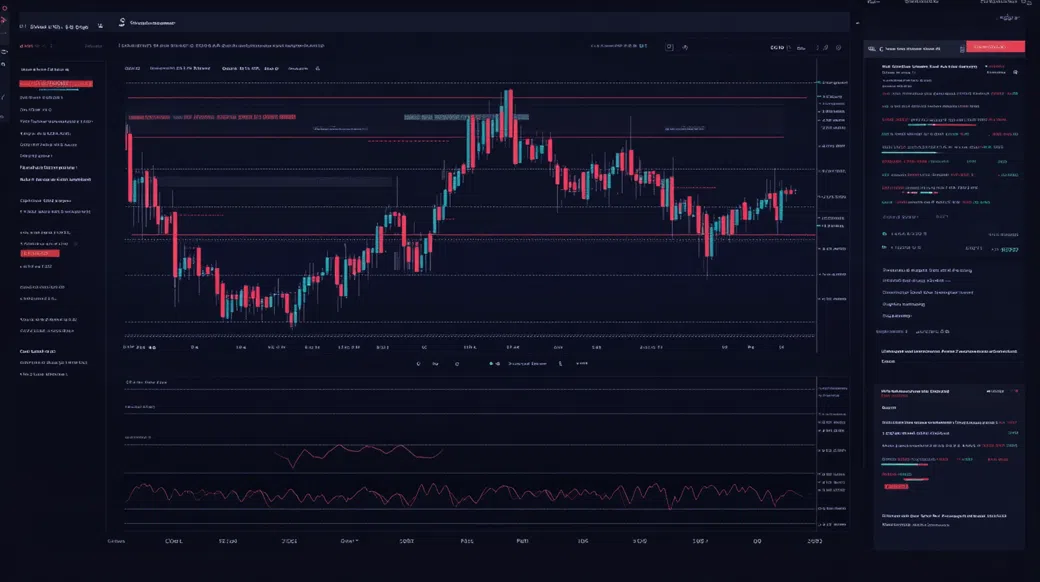
WebTrader is where I spent most of the test because it exposes the platform’s true edges: quote stability, order handling, and how cleanly it logs fills. The session I used for stress was the NY overlap, placing a small EUR/USD market order and then a stop order to see if ticket logic held under faster ticks; fills posted without a requote loop, and the trade history recorded time stamps consistently. If you’re coming from MT4/MT5, you’ll notice the missing plugin ecosystem and fewer third-party automation pathways, even though the essentials—market/limit/stop, SL/TP, and basic position management—are present.
Ren Kapitvik App: Mobile Trading Experience
The Ren Kapitvik app felt designed for “check-and-act” trading: real-time quotes, quick position edits, and a clean path from chart to ticket. Ren Kapitvik login supported biometric unlock on my device, and I could initiate deposits and request withdrawals from the same menu without hunting. Push notifications for price alerts worked reliably, but I did notice that indicator settings don’t always mirror perfectly between mobile and web, so chart templates may need a manual redo.
Charting, Tools & Research
Tooling covers the core workflow: multi-timeframe charts, a familiar indicator library (MA, RSI, MACD, Bollinger), drawing tools, and watchlists that sync. An economic calendar and a lightweight news feed are integrated, which is enough to avoid trading blind around CPI/FOMC, but it doesn’t replace a full research terminal. Said differently: you can trade and manage risk here, yet heavy quant workflows still belong in a dedicated MT5/cTrader or custom stack.
Ren Kapitvik Account Opening & Minimum Deposit
Instead of a long questionnaire, the signup path prioritized identity and funding readiness: email/phone verification, profile fields, then KYC prompts inside the dashboard. For verification I uploaded a government-issued photo ID and a proof of address document dated within three months; approval landed later the same business day. That sequencing matters because AML checks are the real gatekeeper for withdrawals, not the initial form.
- Minimum Deposit: $200 (the Ren Kapitvik minimum deposit in my account was enforced at checkout)
- Funding Methods: Visa/Mastercard, bank wire, regional e-wallets, and crypto (BTC, USDT)
- Demo Account: $10,000 virtual balance for testing spreads, margin behavior, and order types
- Account Types: Standard (spread-only) and Raw/ECN-style (tighter spreads + commission)
One practical note: account currency choices can affect conversion costs if your card or wallet settles in a different denomination. I funded via USDT to observe confirmation behavior; the deposit credited after network confirmations and the ledger entry included a clear reference code. For readers searching “Ren Kapitvik broker review 2026,” this is the part that matters—onboarding friction was moderate, but the compliance gate wasn’t optional.
Ren Kapitvik Customer Support Review
I tested live chat first with a specific question: how swap/overnight fee rates are displayed and whether they differ by account tier. A human reply arrived in roughly three minutes, pointing me to the instrument details panel and clarifying that financing is applied at rollover with triple-swap on a designated weekday. I followed up by email asking about Ren Kapitvik withdrawal timing for card versus crypto; the ticket response landed in about nine hours and matched what I later saw when I cashed out.
Coverage is aligned with the usual retail CFD rhythm—24/5 availability with thinner staffing near market close and on weekends. Language support appears region-dependent, and I didn’t see a universally staffed phone desk inside my portal. Relative to similar offshore providers, the support quality was more “procedural and accurate” than “salesy,” which is what you want when money is moving.
Ready to Explore Ren Kapitvik?
If you’re considering an account, start by verifying your country eligibility, then run the demo to map spreads and margin calls to your strategy. After that, check a small live position and read the financing terms before scaling size—especially if you plan to hold CFDs overnight.
Visit Ren KapitvikRen Kapitvik Review FAQ
Is Ren Kapitvik good for beginners?
Yes, it can work for beginners who keep position sizes small and treat leverage with respect. The interface is less intimidating than pro terminals, and the $10,000 demo helps you practice order types before risking cash. The offshore setup and 1:500 leverage mean you should bring your own risk rules rather than rely on regulator guardrails.
Can I trade crypto on Ren Kapitvik?
Yes, you can trade crypto CFDs such as BTC/USD and ETH/USD. These are derivatives, so you’re speculating on price without receiving coins on-chain or sending to a personal wallet. Financing can apply over weekends, so factor that into holding periods.
Is Ren Kapitvik a scam?
No, my test didn’t surface scam behavior: KYC was required, trades executed, and a withdrawal request processed. The more nuanced answer is that it’s an offshore CFD broker, so protections and complaint routes are not the same as FCA/ASIC-style frameworks. Evaluate it like you would any high-leverage venue: start small and verify processes end-to-end.
Is Ren Kapitvik available in the USA?
No, Ren Kapitvik is not available to U.S. residents based on the access controls I saw. The signup flow and terms point to USA as a restricted jurisdiction. If you attempt to register anyway, KYC and payment checks typically stop the account from funding or withdrawing.
How long does a Ren Kapitvik withdrawal take?
A Ren Kapitvik withdrawal typically clears internal review in 24–48 hours after KYC is approved. In my case, crypto arrived the same day once processed, while cards can take 2–5 business days depending on the issuer. Bank wires usually run longer (often 3–7 business days) due to intermediary banking steps.
What is the Ren Kapitvik minimum deposit?
The Ren Kapitvik minimum deposit is $200 for the account I opened. You’ll see the threshold at the funding screen before a payment is submitted. If you’re testing execution, depositing the minimum and trading micro-size is the safest way to validate the workflow.
Does Ren Kapitvik have a mobile app?
Yes, Ren Kapitvik has mobile apps for iOS and Android. You can place trades, manage SL/TP, and handle deposits and withdrawals from the phone. Biometric login is supported on compatible devices, which helps reduce friction without weakening account access controls.
Final Verdict: Should You Use Ren Kapitvik in 2026?
Overall Score: 4.0/5
On the ledger, what mattered most was process integrity: funds in, fills logged cleanly, funds out—my small USDT withdrawal cleared after KYC with no “one more step” surprises. That’s why Ren Kapitvik earns a solid score in this Ren Kapitvik broker review, even under an offshore umbrella (Seychelles-style registration) where you have fewer formal protections than Tier-1 jurisdictions. Pricing is credible if you pick the right tier, and the WebTrader/mobile stack covers the daily workflow. Keep the risk math honest: CFDs plus 1:500 leverage can erase accounts fast if you size trades emotionally.
Best for: active CFD traders who want Raw/ECN-style pricing and can manage leverage discipline. Avoid if: you need Tier-1 regulation, guaranteed compensation schemes, or you’re prone to over-leveraging.