Rask Rentheim Trading Platform Alternatives 2026
Compare Rask Rentheim alternatives for 2026 across regulation, fees, platforms, and markets. Safer broker options and a practical migration checklist.
Rask Rentheim Trading Platform Alternatives 2026: Reliable Options for Online Traders
Every day, I watch capital move in public: exchange inflows that front-run volatility, stablecoin issuance that quietly expands risk appetite, and wallet clusters that light up right before big headlines. That on-chain layer is brutally honest. Brokerage marketing, by contrast, is often just narrative. If you’re evaluating Rask Rentheim or already trading there, the question isn’t whether a platform “looks professional”—it’s whether the infrastructure, protections, and execution standards match the risk you’re taking.
Rask Rentheim appears to fit the familiar offshore CFD playbook: forex and CFDs as the center of gravity, a proprietary WebTrader plus mobile apps, and headline leverage that can run as high as 1:500. In that segment, EUR/USD pricing is commonly around 2.0 pips on a standard-style account, with higher-risk features (like aggressive leverage) doing the selling. That combination can work for short-term traders who understand margin mechanics, but it also raises practical questions: what regulator has jurisdiction, how client money is handled, what recourse exists in a dispute, and whether execution quality stays consistent during fast markets.
This guide maps out Rask Rentheim alternatives for 2026 with a bias toward verifiable safeguards—top-tier regulation, transparent cost structures, and platforms that support real workflows (from DMA equities to MT4/MT5 or API-style setups). You’ll get concrete comparisons, plus a migration sequence that reduces operational risk while you switch.
Disclaimer: This article is for informational purposes only and does not constitute investment advice. CFDs and other leveraged products can move against you quickly and may result in losses exceeding your expectations—use risk controls and trade only what you can afford to lose.
Key Takeaways (TL;DR)
- Offshore-style CFD brokers often pair ~2.0 pip EUR/USD spreads with high leverage (e.g., 1:500); compare “round-turn” trading costs and execution behavior, not slogans.
- Tier-1 regulated brokers (FCA/ASIC/CySEC/NFA) add concrete protections like segregated client funds and, in some regions, compensation schemes (FSCS up to £85,000; ICF up to €20,000).
- Before withdrawing and switching, open and fully verify the new account first; KYC/AML sequencing prevents payout delays and reduces downtime.
What Is Rask Rentheim and How Does Its Trading Platform Work?
From what is typically observable in this category, Rask Rentheim operates as an offshore CFD-oriented provider, often associated with the Seychelles FSA framework rather than a major onshore regulator. The product mix is usually built around forex pairs and CFD exposure to indices, commodities, and crypto. That design is optimized for margin trading—fast to open, easy to speculate—but it’s not the same thing as a multi-asset brokerage where you can hold real shares or access exchange-traded futures. Traders who are comparing brokers similar to Rask Rentheim should treat jurisdiction, client-funds handling, and dispute pathways as first-class features, not footnotes.
Rask Rentheim Web Trading Platform: Core Features and Tools
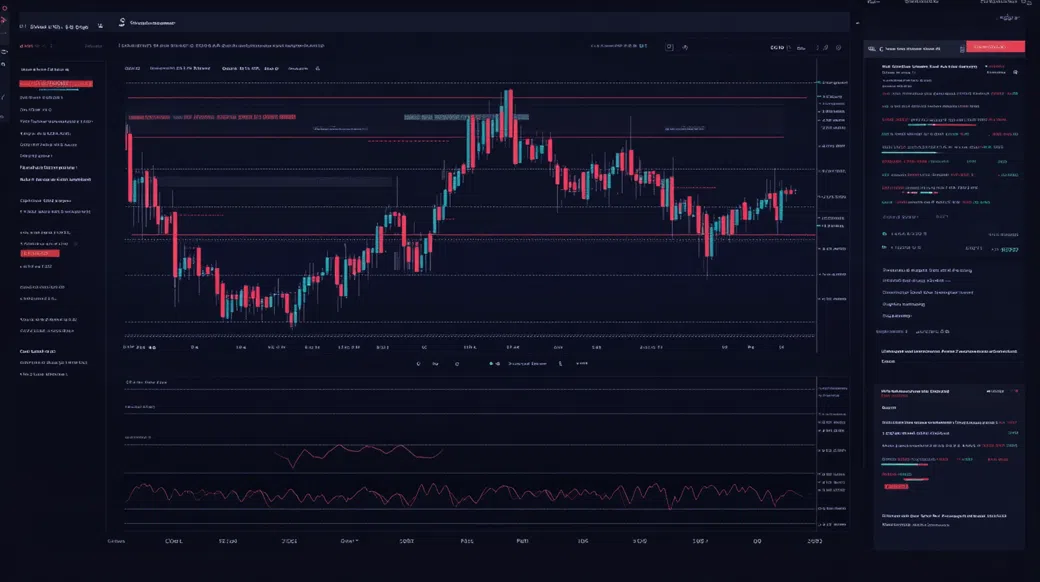
The platform stack is typically a proprietary WebTrader supported by iOS/Android apps. Expect a functional but not institutional toolset: decent charting, a standard set of indicators and drawing tools, and common order tickets (market/limit/stop). Where these platforms tend to diverge from more mature ecosystems is workflow depth—multi-chart layouts, advanced conditional orders, strategy automation, and auditability of fills. Mobile often mirrors the basics (watchlists, positions, simple charting), but power features can feel compressed. If your edge depends on repeatable execution (latency sensitivity, slippage control, or systematic rules), this is where competitors to Rask Rentheim can meaningfully separate.
Trading Fees, Spreads, and Account Types at Rask Rentheim
Costs in offshore CFD setups are commonly packaged as spread-only pricing on a “Standard” tier, with EUR/USD often around 2.0 pips in normal conditions. Some brokers in this segment also advertise a “Raw/ECN-style” tier—tight spreads (sometimes near 0.0–0.4 pips) plus a commission in the neighborhood of $6–$8 round-turn—though the real test is fill quality during volatility, not the screenshot spread at 3 a.m. Swap/overnight financing is another quiet cost center for CFD holds, and withdrawal or inactivity charges can show up depending on payment rails. Minimum deposits are frequently around $250, with maximum leverage reaching 1:500—powerful, but unforgiving.
When Do Traders Start Looking for Rask Rentheim Alternatives?
Capital leaves a platform for the same reason it leaves an exchange wallet: the risk-adjusted math stops working. In practice, traders begin hunting for Rask Rentheim alternatives when they can’t reconcile protections, pricing, and execution with the strategy they’re running. Offshore leverage can magnify returns, but it also compresses your error margin—one slip in slippage, one margin call cascade, or one withdrawal delay can be the whole P&L for the month. If you’re comparing platforms like Rask Rentheim, focus on what happens on bad days, not good ones.
- You need MT4/MT5 or cTrader for an EA/systematic workflow, and the current proprietary WebTrader can’t support that toolchain.
- Your strategy is spread-sensitive (scalping or frequent re-entries), and a ~2.0 pip EUR/USD typical spread makes the expectancy math ugly.
- You want onshore oversight (FCA/ASIC/CySEC/NFA) plus clear client-money rules, not an offshore-only dispute pathway.
- Withdrawals require extra back-and-forth, or payouts are slow when markets are volatile and you most need liquidity.
How to Choose a Reliable Alternative to the Rask Rentheim Trading Platform
I treat broker selection like a data pipeline: inputs (pricing, execution, rules) must be stable, or your outputs (returns) are noise. Start by writing down your actual use-case—holding period, frequency, instrument set, and maximum acceptable drawdown—then choose the venue that minimizes avoidable failure modes. Regulated options vs Rask Rentheim are less about “prestige” and more about enforceable standards when something breaks.
Regulation, Safety, and Investor Protection
For US/EU-focused traders, the credibility line usually runs through the FCA, ASIC, CySEC, or NFA/CFTC (depending on product). FCA-regulated firms may fall under the FSCS, which can cover eligible clients up to £85,000; CySEC-linked coverage can run through the ICF up to €20,000 for eligible cases. Also look for segregated client funds, negative balance protection (where applicable), and clear disclosures. Regulation doesn’t eliminate losses—CFDs still bite—but it changes the legal physics of how brokers must behave.
Available Markets and Instruments
Next, match the instrument to the goal. FX and index CFDs are fine for short-horizon macro expressions; real stocks/ETFs matter if you want ownership, corporate actions, and long-term compounding without swap drag. Options and futures add defined-risk structures and exchange transparency. Many alternatives to the Rask Rentheim trading platform broaden the toolkit beyond CFDs—use that to reduce leverage dependence rather than increase it.
Trading Costs: Spreads, Commissions, and Other Fees
Compare total cost per round-turn, not just the “from 0.0” headline. A raw account might show 0.1–0.3 pips but charge commission; a standard account might be commission-free but wider. Add swaps/overnight fees for holds, plus any inactivity or withdrawal charges. If you’re trading 200–500 round-turns a month, a 1-pip difference can dominate your edge more than any extra 1:500 leverage ever will.
Platforms, Tools, and Execution Quality
Platform choice is strategy choice. MT4/MT5 and cTrader support automation, custom indicators, and a broader ecosystem; proprietary platforms can be clean but limited. Execution model matters too: market maker vs STP/ECN/DMA changes how orders are internalized and how slippage behaves in fast markets. Look for published execution policies, realistic slippage disclosures, and stable fills around news releases. This is where many Rask Rentheim alternatives justify their fees.
Support, Education, and Overall User Experience
Support is operational risk. Confirm local language coverage, live hours across your time zone, and whether the broker can resolve funding or KYC issues without multi-day latency. Education quality also signals maturity: platform guides, margin-call explanations, and product-specific risk modules reduce user-error losses. Mobile parity matters if you manage risk on the go—closing a position during a margin squeeze should not require a desktop.
Rask Rentheim and Different Asset Classes: When Alternatives May Be Better
Rask Rentheim Forex and CFD Trading
Forex and CFDs are the natural habitat here: roughly 30–50 FX pairs, a handful of commodities (often 5–10), and index CFDs (commonly 8–15). The tradeoff is in cost and execution predictability—EUR/USD around ~2.0 pips can be a high hurdle for active traders, and high leverage (up to 1:500) amplifies both slippage and human mistakes. If your edge is short-term, consider FX specialists like Pepperstone or IC Markets, where raw-style pricing and MT4/MT5/cTrader support make it easier to measure true transaction costs. For traders who want stronger oversight and a mature dealing framework, IG or CMC Markets bring long-standing CFD infrastructure under top-tier regulation.
Rask Rentheim Stock and ETF Trading
Stocks and ETFs are where offshore CFD-first platforms often show a structural gap: you may only get stock CFDs (synthetic exposure) rather than owning the underlying shares. That difference is not academic—CFDs don’t give shareholder rights, and financing/overnight charges can turn a long-term hold into a slow bleed. Multi-asset venues such as Interactive Brokers and Saxo Bank are built for real equities/ETFs, with broad market access and more robust order types. If you’re moving from “price exposure” to “portfolio construction,” these are top substitutes for Rask Rentheim because they support cash equities, options, and—in many cases—futures, letting you hedge without relying on high leverage.
Rask Rentheim Crypto Trading
Crypto on CFD platforms is typically price-only exposure—no on-chain withdrawal, no self-custody, and no direct interaction with the underlying network. That can be fine for short-term directional trades, but it’s not “owning crypto,” and it won’t show up in your wallet history because the position lives inside the broker’s ledger. For regulated access, brokers like IG and Plus500 offer crypto CFDs in certain jurisdictions, with clearer risk disclosures and regulated conduct (availability varies by region). If your thesis depends on blockchain activity—exchange flows, stablecoin velocity, wallet cohort behavior—consider separating “market data conviction” from “execution venue,” and choose a regulated platform where product labeling is explicit.
Best Rask Rentheim Alternatives for 2026: Comparison of Top Trading Platforms
Interactive Brokers (IBKR): Key Facts and How It Compares to Rask Rentheim
Regulation: SEC/FINRA (US), FCA (UK), IIROC (Canada)
Markets: Stocks, ETFs, options, futures, bonds, FX
Fees: FX spreads often from ~0.1–0.6 pips (commission-based model varies by route); equities pricing depends on venue and tier
Platform: Trader Workstation (TWS), IBKR Desktop/Web, mobile; API access
Best For: Data-driven multi-asset traders who want real market access
Pepperstone: Key Facts and How It Compares to Rask Rentheim
Regulation: FCA, ASIC, CySEC, DFSA
Markets: FX, CFDs (indices, commodities, some crypto CFDs depending on region)
Fees: Standard spreads commonly from ~1.0+ pip; Razor/Raw-style pricing can run ~0.0–0.3 pips plus commission (often around $7 round-turn)
Platform: MT4, MT5, cTrader, TradingView (where available)
Best For: MT4/MT5/cTrader users optimizing spread + execution
Saxo Bank: Key Facts and How It Compares to Rask Rentheim
Regulation: FCA, MAS, DFSA
Markets: Stocks, ETFs, options, futures, FX, CFDs
Fees: FX spreads typically from ~0.6+ pips (tiered by account/volume); multi-asset commissions vary by exchange
Platform: SaxoTraderGO, SaxoTraderPRO
Best For: Portfolio builders who mix equities with tactical hedges
IC Markets: Key Facts and How It Compares to Rask Rentheim
Regulation: ASIC, CySEC, FSA Seychelles (group-level)
Markets: FX, CFDs (indices, commodities; crypto CFDs depending on entity/region)
Fees: Raw spreads often ~0.0–0.3 pips plus commission (commonly about $6–$7 round-turn); Standard accounts typically wider
Platform: MT4, MT5, cTrader
Best For: High-frequency FX traders and scalpers tracking true round-turn cost
IG: Key Facts and How It Compares to Rask Rentheim
Regulation: FCA, ASIC, MAS
Markets: CFDs (FX, indices, commodities, shares), spread betting (UK/IE), limited crypto CFDs where permitted
Fees: FX spreads often from ~0.6+ pips (varies by pair/account); overnight financing applies on CFDs
Platform: IG Web Platform, mobile; MT4 available in some regions
Best For: Risk-aware CFD traders who prioritize strong regulatory oversight
Plus500: Key Facts and How It Compares to Rask Rentheim
Regulation: FCA, CySEC, ASIC, MAS
Markets: CFDs (FX, indices, commodities, shares, crypto CFDs where allowed)
Fees: Spread-based pricing; major FX pairs often around ~0.6–1.5+ pips depending on conditions
Platform: Plus500 proprietary WebTrader and mobile apps
Best For: Simple interface seekers who still want top-tier regulation
Comparison Summary
| Platform | Regulation | Main Markets | Typical Costs | Best For |
|---|---|---|---|---|
| Interactive Brokers (IBKR) | SEC/FINRA, FCA, IIROC | Real stocks/ETFs, options, futures, bonds, FX | FX often ~0.1–0.6 pips (commission model); exchange-based pricing for equities | Data-driven multi-asset traders who want real market access |
| Pepperstone | FCA, ASIC, CySEC, DFSA | FX + CFDs | Raw ~0.0–0.3 pips + ~$7 RT; Standard ~1.0+ pip | MT4/MT5/cTrader users optimizing spread + execution |
| Saxo Bank | FCA, MAS, DFSA | Stocks/ETFs, options, futures, FX, CFDs | FX often ~0.6+ pips; commissions vary by exchange and tier | Portfolio builders who mix equities with tactical hedges |
| IC Markets | ASIC, CySEC, FSA Seychelles (group-level) | FX + CFDs | Raw ~0.0–0.3 pips + ~$6–$7 RT; Standard wider | High-frequency FX traders and scalpers tracking true round-turn cost |
| IG | FCA, ASIC, MAS | CFDs on FX/indices/commodities/shares; spread betting (UK/IE) | FX spreads often ~0.6+ pips; financing on holds | Risk-aware CFD traders who prioritize strong regulatory oversight |
| Plus500 | FCA, CySEC, ASIC, MAS | CFDs across major asset classes | Spread-based; majors often ~0.6–1.5+ pips | Simple interface seekers who still want top-tier regulation |
How to Safely Move from Rask Rentheim to Another Broker
Switching brokers is less like “installing a new app” and more like changing the rails your capital rides on. Sequence matters: verification first, then controlled transfers, then strategy redeployment. Keep leverage low during the handover—margin calls don’t care that you’re mid-migration. If you’re exiting Rask Rentheim, treat every step as a reconciliation task: balances, positions, fees, and records.
- Confirm the new broker’s license on the regulator’s public register (FCA Register, ASIC Connect, CySEC listings, or NFA BASIC) and make sure the legal entity matches your account documents.
- Open the new account and complete KYC (ID plus proof of address) before you change anything on the old platform; this reduces the chance you’re stuck with funds in transit.
- Flatten exposure on the old account by closing open CFD positions; don’t assume positions can be transferred—plan to re-enter on the new venue if needed.
- Withdraw using the same funding rail you deposited with whenever possible; AML controls often route refunds back to the original method before other payouts.
- Export statements, trade history, and funding logs for tax and dispute records; keep screenshots of balances and withdrawal confirmations.
Ready to Explore Rask Rentheim?
If you’re still comparing conditions, review regional eligibility, product labels (CFDs vs real assets), and the platform stack you’ll actually use day-to-day. Then line it up against the best Rask Rentheim alternatives 2026 in this guide and decide with evidence, not vibes.
Visit Rask RentheimFAQ: Rask Rentheim Alternatives and Trading Platforms
What is the best alternative to Rask Rentheim in 2026?
The best option depends on whether you need real multi-asset access or just FX/CFDs with sharp execution. For real stocks/ETFs and professional tooling, Interactive Brokers or Saxo Bank are strong picks; for MT4/MT5/cTrader-focused FX trading, Pepperstone and IC Markets are closer tactical matches. If you mainly want regulated CFDs with a clean interface, IG or Plus500 can fit—subject to your country and product availability.
Is Rask Rentheim a safe broker/platform?
Rask Rentheim appears consistent with offshore CFD providers (often associated with a Seychelles FSA-style framework), which generally offers fewer investor protections than FCA/ASIC/CySEC/NFA-regulated firms. Safety isn’t just about security features; it’s about enforceable rules on client funds, complaint handling, and conduct. If you’re weighing Rask Rentheim alternatives, verify the legal entity and regulator first, then evaluate execution and withdrawal reliability under stress.
Can I trade stocks, futures, or crypto with Rask Rentheim?
With brokers in this offshore CFD category, stocks and crypto are typically offered as CFDs (price exposure), and exchange-traded futures are often not part of the core offering. That means no share ownership rights and no on-chain crypto withdrawals—your exposure lives inside the broker ledger. If you need real equities or listed futures, consider multi-asset Rask Rentheim alternatives like Interactive Brokers or Saxo Bank; for crypto CFDs under regulation, IG or Plus500 may be available depending on jurisdiction.
What should I check before switching from Rask Rentheim to another platform?
Before switching, confirm the new broker’s regulator and entity name on the official register, then complete KYC so your account is withdrawal-ready. Next, compare round-turn costs (spread + commission + swap) and platform fit (MT4/MT5/cTrader vs proprietary), because those determine slippage sensitivity and strategy compatibility. Finally, download your statements and funding records from Rask Rentheim before you close anything, so you have clean audit trails for tax and support disputes.
About the Author: Alice Wu is a data scientist and financial journalist who studies market structure through the lens of blockchain flows, order routing, and execution data. She focuses on turning trading claims into testable questions—because the market can spin stories, but the data leaves fingerprints.