Quantum AII Trading Platform Alternatives 2026 Guide
Quantum AII Trading Platform Alternatives 2026: Reliable Options for Online Traders
Quantum AII is commonly presented as an AI-assisted online trading venue, typically positioned around fast onboarding and a simplified web interface for leveraged trading. In practice, traders start searching for Quantum AII alternatives when they want clearer regulatory coverage, more transparent pricing, and verifiable execution quality. From a data-science lens, the market’s marketing claims are cheap—your account history, fills, and fund flows are not. If you can’t independently verify where your broker is regulated, how your orders are routed, and what you’re really paying, it’s rational to compare reputable substitutes for Quantum AII that operate under stricter supervision in the US/EU ecosystem.
Because public, real-time, broker-specific data about Quantum AII can be limited or inconsistent, this guide uses baseline “industry standard” assumptions (clearly labeled) to help you benchmark safety, costs, and features against well-known, regulated firms. The goal is not hype—it’s due diligence: custody risk, withdrawal friction, and execution slippage can matter more than any “AI” label.
Disclaimer: This article is for informational purposes only and does not constitute investment advice. Trading leveraged products carries a high level of risk.
Key Takeaways (TL;DR)
- Prioritize regulated brokers (FCA/CySEC/ASIC/CFTC/NFA) and clear client-funds protections over marketing claims.
- Compare like-for-like costs: spreads, commissions, overnight financing, and withdrawal/inactivity fees.
- Before migrating, test withdrawals, document all activity, and move capital in small steps.
What Is Quantum AII and How Does Its Trading Platform Work?
Quantum AII is often described as an AI-driven trading platform. However, when independently verifiable disclosures are thin, the safest way to evaluate it is via baseline assumptions used across this article: Unregulated or Offshore (High Risk) status, Forex and CFDs as primary markets, and a Proprietary Web Trader (Basic) as the main interface. These are not confirmations—just conservative defaults for comparison when audited, regulator-linked documentation is not readily accessible.
From a transaction-data perspective, what matters is not the promise of “quantum” or “AI,” but the mechanics: where your funds are held, whether client money is segregated, how price feeds are sourced, and whether you have recourse if something breaks. A key limitation of many high-risk venues is that critical information (legal entity, regulator ID, complaint route) is either hard to find or presented in ways that don’t map cleanly to regulator registries.
Quantum AII Web Trading Platform: Core Features and Tools
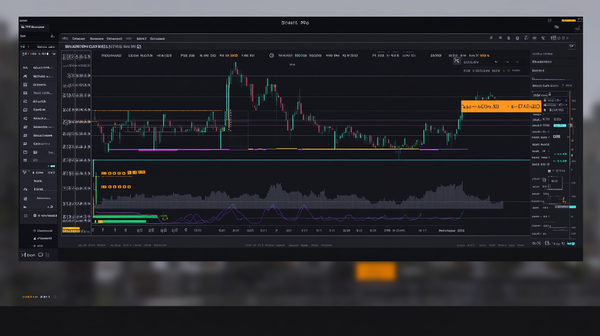
Using the industry-default profile, Quantum AII would typically offer a browser-based dashboard with basic charting, a small set of technical indicators, watchlists, and one-click trading. This class of interface is usually designed for simplicity rather than depth: fewer order types (often market/limit), limited advanced risk controls, and minimal transparency around execution metrics (fill speed, slippage distribution, rejection rates).
For systematic traders, the biggest functional gap is often the absence of institutional-grade tooling: API access, tick-level exports, strategy testing, and detailed trade logs suitable for post-trade analytics. If you can’t export clean data, you can’t audit your edge—so many traders migrate to platforms with MT4/MT5, TradingView integrations, or professional desktop suites.
Trading Fees, Spreads, and Account Types at Quantum AII
Applying baseline assumptions, Quantum AII-style venues commonly advertise “low fees” while monetizing through floating spreads from ~2.0 pips on major FX pairs, plus overnight financing on CFDs. Some may also apply withdrawal, inactivity, or conversion fees. Account tiers (e.g., “Silver/Gold/VIP”) can exist, but without regulator-standard disclosures, it can be hard to verify which tier changes spreads, leverage, or service levels—and under what conditions.
In short: the problem is rarely that fees exist; it’s that the full cost stack is difficult to model in advance. That’s the core reason traders compare platforms like Quantum AII against regulated brokers with standardized fee schedules and documented best-execution frameworks.
When Do Traders Start Looking for Quantum AII Alternatives?
Traders usually don’t switch platforms because of a single bad trade—they switch when the data trail starts breaking: unclear legal coverage, inconsistent fills, or friction around deposits/withdrawals. In that moment, searching for Quantum AII alternatives becomes a risk-management decision, not a feature shopping spree.
- Regulatory uncertainty: If you cannot match the broker’s legal entity to a regulator registry (FCA, CySEC, ASIC, CFTC/NFA), you may have limited investor protections and weak dispute resolution.
- Execution and pricing opacity: Frequent slippage, requotes, widened spreads during normal liquidity, or unclear order-routing policies often push traders toward brokers similar to Quantum AII in UX but stronger on disclosures.
- Platform limitations: No MT4/MT5, limited order types, no API, and poor exportable trade history make it hard to run proper analytics, journaling, and strategy iteration.
- Operational friction: Slow withdrawals, aggressive “account manager” pressure, or unclear fee deductions are common triggers to seek competitors to Quantum AII with cleaner operational processes.
How to Choose a Reliable Alternative to the Quantum AII Trading Platform
The right replacement isn’t the flashiest interface—it’s the venue where you can verify rules, reproduce costs, and audit outcomes. When comparing Quantum AII alternatives across the US/EU market, treat it like a data-quality problem: prefer systems that generate reliable, reviewable records.
Regulation, Safety, and Investor Protection
Start with jurisdiction. In the US, futures/retail FX venues typically fall under CFTC oversight with NFA membership; in the EU/UK, common frameworks include CySEC and FCA. Regulation doesn’t eliminate risk, but it improves accountability: segregated client funds policies, capital requirements, standardized risk disclosures, and defined complaint channels. Verify the legal entity name and license number on the regulator’s official site—don’t rely on a logo in a footer.
Available Markets and Instruments
Map your strategy to instruments: spot FX vs FX CFDs, index CFDs, commodities, single-stock CFDs (EU/UK often), or exchange-traded stocks/ETFs (more common at multi-asset brokers). If you need futures, you’ll likely need a US-regulated futures broker rather than a CFD-only provider. The best regulated options vs Quantum AII clearly disclose what is OTC (broker as counterparty) versus exchange-traded.
Trading Costs: Spreads, Commissions, and Other Fees
Model the full cost stack: spread + commission + swap/financing + platform/data fees + withdrawal/conversion fees. Don’t compare “from” numbers; compare typical costs during your trading hours. A practical baseline: tighter spreads with commissions often beat wider all-in spreads for active traders, while casual traders may prefer simple pricing with fewer add-ons.
Platforms, Tools, and Execution Quality
Choose platforms that let you audit: detailed fill reports, downloadable statements, and stable charting. MT4/MT5 ecosystems support EAs and backtesting; TradingView integration can improve analysis workflows. If execution quality matters (it does), look for published best-execution policies and clear descriptions of liquidity sourcing.
Support, Education, and Overall User Experience
Support is part of risk control. Test response times before funding heavily. Look for transparent onboarding, clear leverage/margin explanations, and documented withdrawal procedures. Many top substitutes for Quantum AII also provide robust education and platform guides—useful, but never a replacement for regulatory clarity.
Quantum AII and Different Asset Classes: When Alternatives May Be Better
Quantum AII Forex and CFD Trading
Under the baseline assumption (Forex and CFDs), Quantum AII-style offerings typically focus on major/minor FX pairs and CFD baskets (indices, commodities, sometimes metals). This is a flexible sandbox for short-term strategies, but it also concentrates risks: OTC pricing, broker-as-counterparty dynamics, and financing costs that compound on longer holds.
For traders comparing Quantum AII alternatives, the practical advantage of regulated CFD/FX brokers is consistency: clearer margin rules, standardized risk warnings, and generally better documentation of fees and execution. If your edge depends on tight spreads or fast fills (scalping, news trading), verify broker policies—some venues restrict these styles or widen spreads aggressively in volatile windows.
Quantum AII Stock and ETF Trading
True cash equities and ETFs (ownership of shares) are often not the primary focus of CFD-centric platforms. Where “stocks” exist, they may be offered as CFDs rather than exchange-traded holdings—meaning you’re trading price exposure with financing costs and no shareholder rights. If your goal is long-term investing, portfolio margin efficiency, or dividends, you may prefer multi-asset brokers that offer direct market access to stocks/ETFs in the US/EU.
In that case, alternatives to the Quantum AII trading platform that provide exchange-traded equities can improve transparency: clearer corporate-action handling, standardized statements for tax reporting, and fewer surprises around overnight charges.
Quantum AII Crypto Trading
Crypto availability on platforms like this can be limited, offered only as crypto CFDs, or subject to jurisdictional restrictions (especially for UK retail). If crypto is available via CFDs, you’re exposed to financing and broker pricing rather than on-chain settlement. From a blockchain-transaction viewpoint: if you care about verifiable settlement and custody, you may prefer regulated venues that support transparent custody arrangements, proof-of-reserves disclosures (where applicable), and clean deposit/withdrawal rails.
Bottom line: if your strategy requires real crypto ownership, on-chain withdrawals, or audited custody, you’ll likely need a different venue than the typical “one-page AI trading” experience—one of the best platforms like Quantum AII will still be the one that lets you verify what’s happening when you move value.
Best Quantum AII Alternatives for 2026: Comparison of Top Trading Platforms
IG: Key Facts and How It Compares to Quantum AII
Regulation: IG operates through regulated entities in major jurisdictions (commonly including the UK FCA and EU regulators depending on region). Always confirm the exact entity for your country.
Markets: Broad multi-asset offering, typically including CFDs across FX, indices, commodities, and shares; availability varies by jurisdiction.
Fees: Often spread-based pricing on CFDs/FX, with additional financing on leveraged positions; other charges (e.g., inactivity) can apply depending on region and account activity.
Platform: Proprietary web/mobile platforms, typically with strong charting and risk tools; integrations may be available depending on location.
Best For: Traders who want a large, regulated CFD venue with mature platform tooling and clear disclosures—one of the strongest competitors to Quantum AII for EU/UK-focused users.
Saxo Bank: Key Facts and How It Compares to Quantum AII
Regulation: Regulated in multiple top-tier jurisdictions (entity-specific). Confirm the Saxo entity serving your country (EU/UK and other regions vary).
Markets: Multi-asset access often spanning FX, CFDs, stocks, ETFs, bonds, and more (product set depends on jurisdiction and client classification).
Fees: Pricing varies by product; typically competitive for active traders, with clear schedules for commissions and financing where applicable.
Platform: Advanced proprietary platforms (web/desktop/mobile) with deep analytics and portfolio tools.
Best For: Serious traders and investors who want strong reporting, robust tooling, and institutional-style platform depth versus basic web traders.
Interactive Brokers (IBKR): Key Facts and How It Compares to Quantum AII
Regulation: Regulated across major jurisdictions; in the US, Interactive Brokers is widely known for operating under SEC/FINRA for securities and CFTC/NFA for relevant derivatives activities (entity and product dependent).
Markets: Extensive global market access including stocks, ETFs, options, futures, FX, and more (varies by region and permissions).
Fees: Typically commission-based with transparent schedules; market data fees may apply; margin/financing costs depend on rates and balances.
Platform: Trader Workstation (desktop) plus web/mobile; API access for systematic trading and robust reporting.
Best For: Advanced traders who want global access, strong auditability, and automation—often a top pick among Quantum AII alternatives for data-driven strategies.
CMC Markets: Key Facts and How It Compares to Quantum AII
Regulation: Operates via regulated entities (commonly including FCA in the UK and other regulators depending on region). Verify your local entity.
Markets: Strong CFD lineup, typically including FX, indices, commodities, treasuries, and shares (jurisdiction-dependent).
Fees: Often competitive spreads; some account structures may add commissions for FX. Financing applies to leveraged CFDs.
Platform: Proprietary web/mobile platform with rich charting and pattern tools; platform features can vary by region.
Best For: Active CFD traders who value charting depth and a well-established regulated provider—solid for those seeking brokers similar to Quantum AII but with stronger oversight.
OANDA: Key Facts and How It Compares to Quantum AII
Regulation: Operates under regulated entities in several jurisdictions; in the US, OANDA is commonly associated with NFA membership/CFTC oversight for retail FX (confirm current entity and offering by country).
Markets: Primarily FX; CFDs may be available outside the US depending on the entity and local rules.
Fees: Typically spread-based pricing; some regions offer commission-plus-spread structures. Financing applies where leverage is used.
Platform: Proprietary platforms plus integrations (availability varies), with a focus on FX usability and reporting.
Best For: FX-focused traders who want a regulated venue and straightforward pricing—useful when comparing alternatives to the Quantum AII trading platform for currency trading.
Pepperstone: Key Facts and How It Compares to Quantum AII
Regulation: Regulated through multiple entities (commonly including ASIC and FCA among others, depending on region). Verify which entity applies to you.
Markets: Commonly offers FX and CFD markets (indices, commodities, etc.), subject to jurisdiction.
Fees: Often offers both spread-only and commission-based accounts; typical advantage is competitive pricing for active traders, with financing on leveraged positions.
Platform: Frequently supports MT4/MT5 and other professional platforms depending on region; good for traders who need automation and third-party tooling.
Best For: Traders seeking tighter pricing and MT4/MT5-style workflows—one of the best Quantum AII alternatives 2026 candidates for execution-sensitive strategies (entity-dependent).
Comparison Summary
| Platform | Regulation | Main Markets | Typical Costs | Best For |
|---|---|---|---|---|
| IG | FCA / EU regulators (entity-dependent) | FX & CFDs (indices, commodities, shares CFDs) | Spreads + financing; possible inactivity/other fees (region-dependent) | Broad CFD access with mature tooling |
| Saxo Bank | Top-tier regulated entities (country-dependent) | Multi-asset (FX, CFDs, stocks/ETFs and more) | Commissions/spreads by product + financing where leveraged | Advanced traders/investors needing strong reporting |
| Interactive Brokers (IBKR) | US/EU/UK regulated entities (product-dependent) | Global stocks/ETFs, options, futures, FX, more | Transparent commissions; possible data fees; margin financing | Systematic and global-market traders |
| CMC Markets | FCA / other regulators (entity-dependent) | CFDs (FX, indices, commodities, shares CFDs) | Competitive spreads; sometimes commission on FX; financing | Chart-driven active CFD traders |
| OANDA | CFTC/NFA in US (retail FX) + other entities elsewhere | Primarily FX (CFDs outside US may vary) | Spreads (sometimes commission options) + financing where applicable | FX-focused traders prioritizing regulated access |
| Pepperstone | ASIC / FCA (entity-dependent) | FX & CFDs (indices, commodities, etc.) | Spread-only or commission-based + financing | MT4/MT5 users and execution-sensitive trading |
How to Safely Move from Quantum AII to Another Broker
Migration is a financial-operations task. Treat it like moving a production system: preserve logs, validate endpoints, and move funds in controlled batches. If you’re leaving a high-risk venue, prioritize safety over speed when transitioning to Quantum AII alternatives.
- Export and archive records: Download trade history, account statements, fee reports, and all emails/chat logs. Screenshot key pages (balances, open positions, withdrawal status).
- Flatten risk where appropriate: Close or reduce leveraged positions to avoid margin events during the transfer window. Record timestamps and fill prices for post-checking.
- Test withdrawals first: Before moving your full balance, submit a small withdrawal and time the process end-to-end. Track bank/chain confirmations where applicable.
- Open and verify the new account: Complete KYC with the new broker, confirm the regulated entity, read fee schedules, and test the platform in demo/small-size live trading.
- Move capital in stages and reconcile: Transfer funds in tranches, then reconcile deposits vs. bank statements and platform ledgers. If anything looks off, pause and escalate via official support channels.
FAQ: Quantum AII Alternatives and Trading Platforms
What is the best alternative to Quantum AII in 2026?
The “best” option depends on your market (US vs EU/UK), instruments (CFDs vs futures vs cash equities), and need for automation. For many data-driven traders, Interactive Brokers stands out for global access, reporting depth, and API tooling. For CFD-focused EU/UK users, IG or CMC Markets are common picks. Use this list as a shortlist of Quantum AII alternatives, then verify the exact regulated entity that will hold your account.
Is Quantum AII a safe broker/platform?
Safety hinges on verifiable regulation, client-funds protections, and operational track record. Where public, regulator-linked documentation is limited, the prudent assumption is Unregulated or Offshore (High Risk) until proven otherwise through official registries and entity disclosures. If you’re using Quantum AII, prioritize withdrawing a small test amount, preserving records, and comparing regulated options with transparent governance.
Can I trade stocks, futures, or crypto with Quantum AII?
Based on baseline assumptions used when broker-specific disclosures can’t be verified, Quantum AII-style platforms typically focus on Forex and CFDs, which may include index/commodity CFDs and sometimes stock CFDs. Exchange-traded futures usually require a dedicated futures broker and appropriate regulation (especially in the US). Crypto, if offered, may be via CFDs and may be restricted by jurisdiction. If you need real share ownership or futures access, consider multi-asset, regulated venues rather than basic web-only setups.
What should I check before switching from Quantum AII to another platform?
Verify the new broker’s regulated entity on the official regulator website; read the fee schedule (spreads, commissions, financing, withdrawals, inactivity); confirm product availability in your country; test support responsiveness; and run a small live “pilot” to validate deposits, withdrawals, and execution. For clean migration, export your history from Quantum AII, reconcile balances, and move funds in stages.
About the Author: Alice Wu is a data scientist and financial journalist who evaluates trading platforms through verifiable records—trade logs, execution reports, and (when relevant) blockchain settlement trails. Her work focuses on turning broker due diligence into measurable checks traders can reproduce across jurisdictions.
Final verdict: If you can’t independently verify regulatory standing and cost mechanics, assume the baseline risk profile and prefer regulated, auditable Quantum AII alternatives. In most cases, that means moving from a basic proprietary web setup to a broker with documented execution policies, exportable reporting, and clear investor protections—especially if your current experience with Quantum AII feels opaque.