Quantix Finance Trading Platform Alternatives 2026
Compare Quantix Finance alternatives for 2026: regulated brokers, platforms, costs, execution, and safety checks for US/EU-focused traders.
Quantix Finance Trading Platform Alternatives 2026: Reliable Options for Online Traders
On-chain, the cleanest signal is usually the boring one: consistent settlement flows, predictable counterparties, and withdrawal behavior that matches the marketing. When traders message me about a broker, they rarely start with charting tools—they start with friction: payout delays, shifting terms, or leverage that feels like a trap disguised as “opportunity.” That’s the lens for this guide to Quantix Finance alternatives in 2026.
Quantix Finance generally sits in the offshore CFD lane: a Forex-and-CFD-first offering, a proprietary WebTrader, and a mobile app aimed at quick access rather than deep workstation-grade tooling. Publicly observable patterns in this category often include higher leverage (commonly up to 1:500), a mid-range minimum deposit (here, typically around $250), and spreads that look “fine” until you measure them in pips across real volume (often ~2.0 pips on EUR/USD on a standard-style setup). If you’re considering Quantix Finance, the practical question isn’t only “Can I place trades?” It’s “Do I have enforceable protections if something goes wrong?”
For US/EU traders in particular, the gap between offshore and tier-1 regulated brokers shows up in audit trails: segregated client funds, transparent execution policies, negative balance protection where required, and credible dispute channels. The aim below is to map platforms like Quantix Finance to regulated substitutes that fit different strategies—manual, systematic, and multi-asset—without hand-waving the risks.
Disclaimer: This article is for informational purposes only and does not constitute investment advice. CFDs and other leveraged products involve a high risk of loss and may not be suitable for all investors.
Key Takeaways (TL;DR)
- Offshore CFD brokers can offer high leverage (e.g., 1:500), but tier-1 regulation often adds stronger client-fund rules and clearer complaint pathways.
- Cost comparisons should use round-turn trading cost (spread + commissions + slippage), not headline “from 0.0 pips” claims.
- If you need real stocks/ETFs (not CFDs) or futures/options access, multi-asset brokers like IBKR or Saxo are structurally different from CFD-only venues.
- Migration is smoother when you complete KYC at the new broker first, then withdraw using the original funding rail to satisfy AML checks.
What Is Quantix Finance and How Does Its Trading Platform Work?
Quantix Finance is typically presented as an online trading venue focused on Forex and CFDs (often including indices, commodities, and crypto CFDs). In this segment, the operating model is frequently closer to a market-maker or hybrid setup than a pure DMA venue—meaning your execution quality depends on the broker’s internal routing, pricing policy, and how it handles fast markets. Quantix Finance is commonly associated with an offshore framework (Seychelles FSA) rather than a tier-1 regulator such as the FCA, ASIC, CySEC, or NFA. That distinction matters because enforcement power, reporting standards, and investor-protection mechanisms aren’t equal across jurisdictions.
Quantix Finance Web Trading Platform: Core Features and Tools
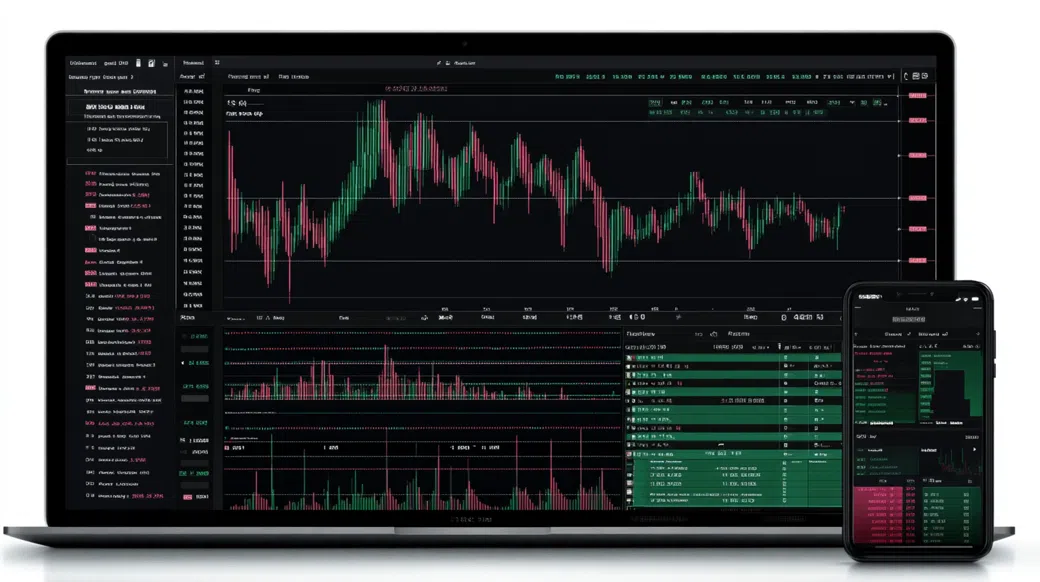
From a tooling perspective, Quantix Finance typically runs a proprietary WebTrader with basic-to-mid charting, plus iOS/Android apps designed to keep trade entry close at hand. Expect the essentials: common indicators, drawing tools, watchlists, and one-click trading. The ceiling shows up when you try to scale workflows—limited multi-chart layouts, fewer order types than professional platforms, and less transparency around execution metrics such as slippage distributions or order-routing logic. Mobile parity is usually decent for monitoring and quick edits, while deeper analysis still feels constrained compared with MT4/MT5 or cTrader stacks used by many competitors to Quantix Finance.
Trading Fees, Spreads, and Account Types at Quantix Finance
In the offshore CFD category, pricing is often a mix of spread-only accounts and “raw” tiers with explicit commissions. A realistic benchmark for a standard-style account is ~2.0 pips typical spread on EUR/USD, while raw/ECN-style pricing—when offered—may show 0.0–0.4 pips plus roughly $6–$8 round-turn commission per standard lot. Overnight financing (swap) is usually applied on leveraged CFD positions, and it can dominate costs for multi-day holds. Also watch for operational fees: withdrawals, currency conversion, and inactivity charges can matter more than the headline spread if your trading cadence is uneven.
When Do Traders Start Looking for Quantix Finance Alternatives?
Data rarely screams; it accumulates. Traders start exploring Quantix Finance alternatives when small inconsistencies add up—pricing that widens beyond expectation, support that can’t answer execution questions, or a regulatory footprint that doesn’t match the size of capital at risk. For systematic traders, the pain point is often platform limitations: if your strategy depends on MT4/MT5 EAs, VPS latency, or granular order controls, a proprietary WebTrader becomes a bottleneck. For longer-horizon traders, swap/overnight fees and withdrawal handling tend to be the silent killers.
- Needing MT4/MT5 or cTrader to run an Expert Advisor or automate execution—something a basic WebTrader can’t reliably support.
- Seeing repeated slippage on news releases and wanting an STP/ECN-style environment with clearer execution policies.
- Trying to trade real stocks/ETFs (with ownership features) rather than stock CFDs that carry no shareholder rights.
- Hitting withdrawal friction (extra documentation loops, long processing times, or unexpected fees) and preferring a broker with a stronger compliance and banking footprint.
How to Choose a Reliable Alternative to the Quantix Finance Trading Platform
Think of broker selection as a risk-budget problem: you’re not only buying spreads, you’re buying legal recourse, custody standards, and predictable operations under stress. Regulated options vs Quantix Finance can look “more expensive” on a single screenshot, yet cheaper in practice when you count slippage, swap transparency, and the ability to escalate disputes through a real regulator.
Regulation, Safety, and Investor Protection
Start with the regulator’s public register: FCA (UK), ASIC (Australia), CySEC (EU), or NFA/CFTC (US) provide stronger oversight than most offshore frameworks. In the UK, eligible clients may have FSCS coverage up to £85,000 if a firm fails; in Cyprus, the ICF can cover up to €20,000 for eligible clients. Add operational basics: segregated client funds, negative balance protection (where required), and clear AML/KYC policies that are enforced consistently rather than selectively.
Available Markets and Instruments
Match instruments to intent. If your job is FX execution, you may only need majors/minors and a clean CFD index slate. If you’re building a diversified portfolio, you’ll want access to real stocks and ETFs, possibly options and futures, and the ability to route orders with DMA rather than accept a single internal price stream. Brokers similar to Quantix Finance often focus on CFDs; multi-asset firms can reduce product gaps, especially for US/EU traders who need regulated access to exchanges.
Trading Costs: Spreads, Commissions, and Other Fees
Spreads are only the first line item. The more honest comparison is round-turn cost: spread + commissions + expected slippage. A 0.2 pip spread with a $7 round-turn commission can be cheaper than a 1.2 pip spread on a spread-only account, depending on trade size and frequency. Then come the “quiet” fees: swap/overnight financing, currency conversion, and inactivity. If you scalp, latency and execution quality can outweigh a 0.1 pip headline difference.
Platforms, Tools, and Execution Quality
Platform choice is strategy choice. MT4/MT5 ecosystems support EAs and a large indicator library; cTrader is favored by many for depth-of-market and order management; proprietary platforms vary wildly in stability and transparency. Execution model matters: market maker pricing can be fine for small tickets, while STP/ECN or DMA setups may better align with traders sensitive to slippage. If you’re comparing alternatives to the Quantix Finance trading platform, ask for documented execution policies and how margin calls and stop-outs are handled.
Support, Education, and Overall User Experience
Support quality shows up when volatility hits. Look for multilingual coverage, clear hours, and response times that don’t collapse during major macro events. Education can be a signal too: regulated brokers often publish risk disclosures, margin methodology, and product-specific explanations because regulators expect it. Finally, check mobile parity and account dashboards—funding, statements, and tax reporting should be straightforward, not an obstacle course.
Quantix Finance and Different Asset Classes: When Alternatives May Be Better
Quantix Finance Forex and CFD Trading
Forex and CFDs are the core use case for Quantix Finance-style brokers: think 30–50 FX pairs, 8–15 indices, and a handful of commodities, with leverage commonly marketed up to 1:500. The trade-off is that the total cost isn’t just the quoted spread (often around 2.0 pips on EUR/USD); it’s also execution behavior in fast markets and how stops are filled when liquidity thins. For traders who care about repeatable fills, FX specialists like Pepperstone or IC Markets tend to offer broader platform support (MT4/MT5/cTrader) and pricing structures that can be modeled more cleanly (e.g., raw spreads + commission). That makes it easier to backtest assumptions and estimate slippage, rather than treating fills as “noise.”
Quantix Finance Stock and ETF Trading
If your goal is equity exposure, the first question is ownership. Many offshore CFD venues primarily offer stock CFDs, which can track price but don’t provide shareholder rights and can introduce financing costs on leveraged holds. That’s a different product than buying real shares on an exchange with transparent order routing. Multi-asset brokers such as Interactive Brokers (IBKR) and Saxo Bank are built for this: real stocks and ETFs, broader market access, and tools that resemble an actual investment workstation rather than a CFD ticket window. For EU traders, that can mean cleaner reporting and fewer surprises around corporate actions; for US traders, it can be the difference between “not available” and a fully regulated pathway.
Quantix Finance Crypto Trading
Crypto exposure is another place where labels mislead. Quantix Finance-type offerings often revolve around crypto CFDs (commonly 10–30 coins), which provide price exposure but not on-chain ownership—no withdrawals to a self-custody wallet, no on-chain settlement, and no direct participation in network activity. If you view the market through blockchain transactions, that distinction is the whole story: a CFD is a synthetic contract, not the asset. Regulated brokers like IG and Plus500 offer crypto CFDs in certain regions, with clearer risk disclosures and leverage constraints that can reduce blow-up risk for retail accounts. Either way, crypto CFDs remain high-volatility leveraged instruments; sizing and margin discipline matter more than the number of listed tokens.
Best Quantix Finance Alternatives for 2026: Comparison of Top Trading Platforms
Interactive Brokers (IBKR): Key Facts and How It Compares to Quantix Finance
Regulation: SEC/FINRA (US), FCA (UK), IIROC (Canada)
Markets: Stocks, ETFs, options, futures, bonds, FX, funds
Fees: FX spreads vary by venue/liquidity; commissions typically transparent and low-to-mid depending on product and region
Platform: Trader Workstation (TWS), IBKR Mobile, Client Portal; API access
Best For: Data-driven multi-asset traders who need real market access
Pepperstone: Key Facts and How It Compares to Quantix Finance
Regulation: FCA (UK), ASIC (Australia), CySEC (EU), DFSA (UAE)
Markets: FX, index CFDs, commodity CFDs, some crypto CFDs (region-dependent)
Fees: EUR/USD from ~0.0–0.3 pips on Raw + commission (~$7 round-turn typical); ~1.0–1.3 pips on Standard-style pricing
Platform: MT4, MT5, cTrader, TradingView integration (where available)
Best For: Execution-sensitive FX traders running MT4/MT5 or cTrader
Saxo Bank: Key Facts and How It Compares to Quantix Finance
Regulation: FCA (UK), MAS (Singapore), DFSA (UAE)
Markets: Stocks, ETFs, bonds, FX, options, futures, CFDs
Fees: FX spreads generally competitive (often ~0.6–1.2 pips depending on tier); commissions apply on exchange-traded products
Platform: SaxoTraderGO, SaxoTraderPRO
Best For: Portfolio builders combining FX with exchange-traded assets
IG: Key Facts and How It Compares to Quantix Finance
Regulation: FCA (UK), ASIC (Australia), MAS (Singapore)
Markets: CFDs (indices, FX, commodities, shares), spread betting (UK/IE), some crypto CFDs (region-dependent)
Fees: FX spreads often from ~0.6–1.0 pips on majors (market conditions apply); financing costs apply to leveraged holds
Platform: IG web platform, mobile apps, MT4 (where available)
Best For: Macro-focused CFD traders who want a long-standing regulated venue
IC Markets: Key Facts and How It Compares to Quantix Finance
Regulation: ASIC (Australia), CySEC (EU), FSA Seychelles (group-level)
Markets: FX, index CFDs, commodity CFDs, some crypto CFDs (region-dependent)
Fees: EUR/USD often ~0.0–0.3 pips on Raw + commission (~$6–$7 round-turn typical); Standard spreads commonly ~0.8–1.2 pips
Platform: MT4, MT5, cTrader
Best For: High-frequency and scalping styles that need tight pricing
Plus500: Key Facts and How It Compares to Quantix Finance
Regulation: FCA (UK), CySEC (EU), ASIC (Australia), MAS (Singapore)
Markets: CFDs on FX, indices, commodities, shares; crypto CFDs (where permitted)
Fees: Spread-only pricing; typical FX spreads often around ~0.6–1.5 pips depending on pair and volatility; overnight fees apply
Platform: Plus500 proprietary web and mobile platform
Best For: UI-first CFD traders who prefer a simple, regulated app
Comparison Summary
| Platform | Regulation | Main Markets | Typical Costs | Best For |
|---|---|---|---|---|
| Interactive Brokers (IBKR) | SEC/FINRA, FCA, IIROC | Real stocks/ETFs, options, futures, FX, bonds | Transparent commissions; FX pricing varies with venue/liquidity | Data-driven multi-asset traders who need real market access |
| Pepperstone | FCA, ASIC, CySEC, DFSA | FX + major CFD markets | Raw ~0.0–0.3 pips + ~$7 RT; Standard ~1.0–1.3 pips | Execution-sensitive FX traders running MT4/MT5 or cTrader |
| Saxo Bank | FCA, MAS, DFSA | Stocks/ETFs + FX + options/futures + CFDs | FX often ~0.6–1.2 pips (tiered); commissions on exchanges | Portfolio builders combining FX with exchange-traded assets |
| IG | FCA, ASIC, MAS | CFDs across FX/indices/commodities/shares | FX often ~0.6–1.0 pips on majors; financing on holds | Macro-focused CFD traders who want a long-standing regulated venue |
| IC Markets | ASIC, CySEC (plus group-level FSA Seychelles) | FX + CFDs (indices/commodities/crypto where allowed) | Raw ~0.0–0.3 pips + ~$6–$7 RT; Standard ~0.8–1.2 pips | High-frequency and scalping styles that need tight pricing |
| Plus500 | FCA, CySEC, ASIC, MAS | CFDs on FX/indices/commodities/shares | Spread-only; often ~0.6–1.5 pips on FX depending on conditions | UI-first CFD traders who prefer a simple, regulated app |
How to Safely Move from Quantix Finance to Another Broker
Switching brokers is less like “opening a new app” and more like changing the rules of custody, margin, and dispute resolution. I treat it as a controlled migration: verify regulation first, reduce exposure next, then move cash with a full audit trail. If you’re moving away from Quantix Finance, remember that leveraged CFDs can amplify losses during the transition—avoid carrying oversized positions while you’re changing execution venues and margin policies.
- Confirm the new broker’s authorization on the regulator’s own register (FCA Register, ASIC Connect, CySEC database, or NFA BASIC) and match the legal entity name, not just the brand.
- Open the new account and complete KYC/AML upfront (ID + proof of address). Many approvals clear quickly, but delays happen when documents don’t match exactly.
- Before touching withdrawals, export statements and full trade history for records and tax reporting; screenshots aren’t enough—download the official ledger if available.
- Flatten or reduce positions on the old account rather than assuming transfers. Most retail CFD positions cannot be ported broker-to-broker; you’ll typically re-establish exposure at the new venue.
- Withdraw using the same payment rails used to fund the account whenever possible. AML rules often require “back to source” processing, and switching methods can trigger reviews.
Ready to Explore Quantix Finance?
If you’re still evaluating the venue, compare onboarding steps, regional eligibility, and trading conditions side-by-side with regulated competitors to Quantix Finance. A quick tour of the platform is fine; committing capital should wait until you understand fees, execution policy, and withdrawal handling.
Visit Quantix FinanceFAQ: Quantix Finance Alternatives and Trading Platforms
What is the best alternative to Quantix Finance in 2026?
The best pick depends on whether you need real multi-asset access or primarily FX/CFDs. For exchange-traded depth (stocks/ETFs/options/futures), Interactive Brokers (IBKR) is a strong benchmark; for FX execution and MT4/MT5/cTrader workflows, Pepperstone or IC Markets are common choices. If you want a regulated, simpler CFD-only experience, Plus500 or IG can fit—subject to your region and product permissions.
Is Quantix Finance a safe broker/platform?
Quantix Finance is typically associated with an offshore regulatory framework (commonly Seychelles FSA) rather than tier-1 oversight like the FCA, ASIC, CySEC, or NFA. That doesn’t automatically mean you can’t trade, but it usually means weaker investor-protection mechanisms (such as FSCS or ICF coverage) and less robust dispute escalation. In a leveraged CFD environment—often marketed with leverage up to 1:500—risk management and withdrawal discipline become non-negotiable.
Can I trade stocks, futures, or crypto with Quantix Finance?
Quantix Finance is generally positioned around Forex and CFDs, so stock exposure—if offered—is commonly via CFDs rather than real shares. Futures access is often limited on CFD-first offshore platforms, while crypto is typically offered as crypto CFDs (price exposure without on-chain ownership or wallet withdrawals). If you need real stocks/ETFs or exchange-listed futures, a multi-asset venue like IBKR or Saxo is usually the cleaner route.
What should I check before switching from Quantix Finance to another platform?
Before switching, verify the new broker’s legal entity on the regulator register and confirm protections like segregated client funds and negative balance protection where applicable. Then compare round-turn trading costs (spread + commission + expected slippage) and read the execution policy for how stops, margin calls, and fast markets are handled. Finally, secure your records and plan withdrawals carefully—many brokers enforce “back to source” AML rules when moving money from Quantix Finance.
About the Author: Alice Wu is a data scientist and financial journalist who evaluates brokers the way markets should be evaluated: through evidence, not slogans. She focuses on execution details, custody and compliance signals, and the transaction-level reality that separates a good trading venue from a costly lesson.