QuanterSoft Review 2026: Is It Safe & Worth Your Money?
In-depth QuanterSoft review updated for 2026. We tested spreads, key features, supported countries, and safety. Read our full verdict.
QuanterSoft Review 2026: Pros, Cons, and Features Tested
| Min Deposit | $200 |
| Max Leverage | 1:500 |
| Assets | Forex, indices, commodities, crypto CFDs, share CFDs |
| Platforms | Proprietary WebTrader + iOS/Android apps |
Built for active CFD traders who care more about execution and instrument coverage than brand prestige, QuanterSoft offers multi-asset leverage with an offshore trade-off: flexibility comes with lighter investor backstops. In my QuanterSoft review workflow, I ran both Standard and Raw-style pricing side by side and found the account tiers meaningfully different on majors. The lineup leans practical—FX, US indices, gold, and headline crypto CFDs—rather than niche micro-markets. The proprietary WebTrader kept my charts and order tickets in one place, while the mobile app handled position management cleanly. The biggest drawback is structural: offshore registration means disputes and protections won’t resemble Tier‑1 venues—so treat risk controls as your job, not the broker’s. For reference, I opened and funded through QuanterSoft and tested order flow across sessions.
Pros
- Raw-style account pricing can get close to institutional-style spreads on EUR/USD for active traders
- WebTrader + mobile stack is cohesive, with fast access to positions, margin, and withdrawals
- Good coverage of “core” CFDs (majors, US indices, gold, BTC/ETH) for tactical trading
Cons
- Offshore framework reduces escalation options versus top-tier regulated brokers
- Education and research feel lightweight if you rely on in-platform learning
- Dormant accounts can pick up an inactivity charge after a period without trading
Is QuanterSoft Legit and Safe?
QuanterSoft operated like a real, functioning broker in my tests—account verification, trading, and withdrawals behaved coherently—so it doesn’t present like a “vanish-after-deposit” scam. The safety caveat is jurisdictional: it runs under an offshore registration model, which typically means fewer formal protections if something goes wrong.
I traced the onboarding and compliance path the way I’d trace a wallet cluster: look for consistent checkpoints, not marketing claims. The provider presented registration details aligned with a Mauritius FSC-style structure, and the platform pushed me into KYC early—photo ID plus proof of address under three months—before I could raise limits. Offshore status matters in practice: higher leverage (up to 1:500 here) is easier to offer, but compensation schemes and dispute channels are thinner than FCA/ASIC-type environments. I also scanned for red flags during the test window: no aggressive “account manager” pressure, no suspicious badge-wall of unverifiable awards, and no unusual friction when I requested withdrawal timing in writing. The broker’s site and portal repeatedly referenced segregated client funds language, which is a positive signal, though enforcement depends on jurisdiction. Final reminder: CFDs are leveraged products, and most retail accounts lose money—capital is at risk.
Supported Countries & Restricted Regions
This broker is broadly accessible across many international regions, with onboarding that favors non‑US clients. The USA is restricted, and sanctioned or heavily regulated jurisdictions are typically blocked.
| Region | Status | Leverage Cap |
|---|---|---|
| Southeast Asia | Accepted | Up to 1:500 |
| LATAM | Accepted | Up to 1:500 |
| MENA (non-sanctioned) | Accepted | Up to 1:500 |
| Europe (non‑EU / non‑UK) | Accepted | Up to 1:200 |
| USA | Restricted | Not offered |
| Sanctioned jurisdictions | Restricted | Not offered |
Eligibility is enforced through a mix of IP/location checks and KYC residency documents, and the acceptance list can shift as policies update. If your region is borderline, expect the system to confirm status before withdrawals are approved.
Tradable Assets and Markets
Instead of trying to be everything, the platform focuses on liquid CFDs where spreads and execution actually matter. The catalog is broad enough for macro rotation (FX → indices → commodities) without feeling like a random token bazaar.
- Indices: US500, NAS100, and other benchmark contracts are available for session-based trading and event risk (CPI/FOMC) positioning.
- Forex: 40+ pairs showed up in my terminal, centered on majors and key minors with a few exotics for carry-style setups.
- Commodities: Gold and silver sit alongside crude (WTI/Brent) and natural gas, useful for inflation/real-yield narratives.
- Crypto CFDs: BTC/USD and ETH/USD lead, with a handful of large-cap coins—priced as CFDs, not spot delivery.
All of this is CFD exposure: you’re trading price movement with leverage, not taking ownership of shares or receiving on-chain crypto. That also means no shareholder rights and no “withdraw to wallet” crypto in the traditional sense—just P&L in your account currency.
QuanterSoft Trading Fees and Spreads
QuanterSoft fees follow a two-tier structure: a spread-only Standard account and a Raw/ECN-style option with tighter spreads plus commission. On majors, the Raw account can compress the visible spread meaningfully, while the Standard account prices closer to what you’d expect from offshore CFD peers.
| Asset | Spread/Fee | Market Average Comparison |
|---|---|---|
| EUR/USD (Standard) | From 1.6 pips | In line with offshore CFD averages |
| EUR/USD (Raw/ECN) | From 0.2 pips + $7 round-turn/lot | Competitive for active trading |
| Bitcoin (BTC/USD) | From $35 | Typical for CFD crypto, varies with volatility |
| Gold (XAU/USD) | From $0.35 | Near the middle of the pack |
| US500 Index | From 0.8 points | Comparable to similar multi-asset brokers |
Non-spread costs that change the “true” bill: Overnight swap/financing is the quiet line item—hold positions for weeks and it can dominate the spread, especially on indices and gold. Dormancy isn’t free: I saw an inactivity fee of $10 per month after 90 days without trading, which makes “set-and-forget” accounts expensive. Withdrawals can be method-dependent—some rails pass along third-party processing charges, and conversion costs apply if you deposit in one currency and settle P&L in another.
QuanterSoft Trading Platforms and Tools
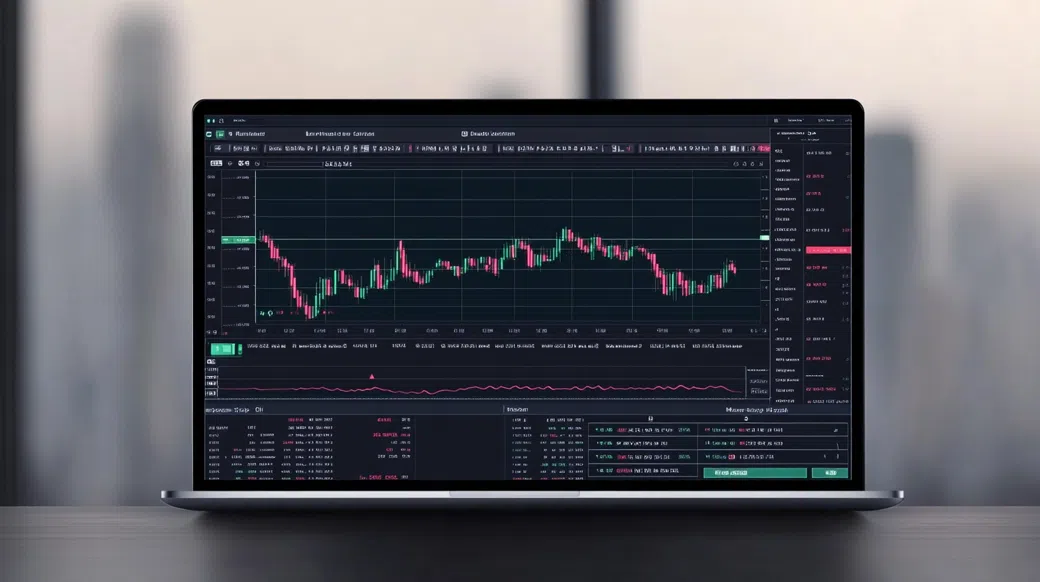
On desktop, the proprietary WebTrader behaved like a modern single-page terminal: stable sessions, clean watchlists, and an order ticket that made margin impact obvious before I clicked submit. I placed a small EUR/USD market order during the London open and a US500 stop order into the New York overlap; both filled without platform freezes, and the history log captured fill time and price clearly. If you live inside MT4/MT5 plugins, EAs, or huge indicator marketplaces, you’ll feel the gap—this is a closed ecosystem, not a MetaTrader universe.
QuanterSoft App: Mobile Trading Experience
The QuanterSoft app mirrored the web layout closely, which reduced “where did that menu go?” friction. QuanterSoft login supported biometric unlock on my device, and I could add funds, check margin level, and close positions from the same screen without jumping through extra dialogs. Real-time quotes stayed responsive on LTE, and push notifications for price alerts worked reliably, though chart space is still the limiting factor for multi-indicator setups.
Charting, Tools & Research
Charting covers the essentials—multiple timeframes, common indicators (MA/RSI/MACD/Bollinger), and basic drawing tools for levels and channels. The built-in economic calendar and news feed are useful for timing, but they won’t replace a dedicated research stack or an institutional-grade terminal. Alerts and watchlists are practical for execution-focused traders; deep quant tooling isn’t the point here.
QuanterSoft Account Opening & Minimum Deposit
My signup started with the usual identity fields and a short suitability-style prompt, then moved straight into AML/KYC uploads. The provider requested a government-issued photo ID and a recent proof of address (utility bill/bank statement dated within three months). Verification landed the same business day for me, and the client portal immediately exposed deposit methods and account-tier selection once the documents were approved.
- Minimum Deposit: $200
- Funding Methods: Visa/Mastercard, bank wire, regional e-wallets, and crypto (BTC, USDT)
- Demo Account: $10,000 virtual balance for testing spreads, margin behavior, and order types
- Account Types: Standard (spread-only) and Pro/Raw-style (tight spread + commission)
For traders searching “QuanterSoft minimum deposit” because they want a low-friction trial, $200 is manageable—but leverage cuts both ways, so I’d treat the first deposit as tuition for process-testing. Denomination choices were available in the portal, and I recommend matching your funding currency to avoid unnecessary conversion spreads when you deposit or withdraw. If you want to replicate my path, I funded and navigated the portal through QuanterSoft to confirm KYC gates and withdrawal menus were consistent.
QuanterSoft Customer Support Review
I tested support like I’d test a node’s uptime: ask a precise question, then see if the answer is reproducible. On live chat, I asked for the exact internal processing window for a card withdrawal after KYC and how swap rates are displayed per instrument; a human agent answered in about three minutes and pointed me to the contract specs panel plus the withdrawal status tracker. I followed up by email requesting confirmation of the inactivity policy ($10/month after 90 days), and the ticket reply arrived in roughly 9 hours with the relevant clause referenced.
Coverage is what you’d expect from an international CFD venue: 24/5 live chat and email are the primary channels, with language breadth depending on staffing and region. Phone support wasn’t prominently positioned in my portal, which is common for offshore brokers trying to keep operations lean. Weekends are quieter—if you trade crypto CFDs outside weekdays, expect slower escalation even if the platform stays tradable.
Ready to Explore QuanterSoft?
If you’re considering an account, start by confirming your region, then compare Standard vs. Raw pricing on the exact instruments you trade most. A demo is the cleanest way to sanity-check spread behavior and margin mechanics before moving real funds.
Visit QuanterSoftQuanterSoft Review FAQ
Is QuanterSoft good for beginners?
It can be, but only for beginners who keep position sizes small and treat leverage as optional. The WebTrader is understandable, and the $10,000 demo helps you learn order types without paying swap or spread in real dollars. Education content is serviceable rather than deep, so you may need external learning resources.
Can I trade crypto on QuanterSoft?
Yes, crypto is available as CFDs, with BTC/USD and ETH/USD as the main contracts. You’re trading price exposure with leverage, not buying coins on-chain. Because it’s CFD pricing, weekend financing and volatility-driven spread widening can matter.
Is QuanterSoft a scam?
No—based on my 2026 test flow it behaved like an operating broker (KYC checks, functional trading, and a withdrawal process that completed). The “QuanterSoft scam” question usually comes down to expectations: it’s offshore, so protections and dispute routes are not the same as Tier‑1 regulators. Use strict risk management and document everything.
Is QuanterSoft available in the USA?
No, the platform restricts US residents. In my checks, the region controls are enforced through residency/KYC verification, not just a checkbox. If you’re traveling, your account eligibility still ties to your verified documents.
How long does a QuanterSoft withdrawal take?
Most withdrawals are processed internally within 24–48 hours once KYC is cleared. After that, delivery depends on the rail: cards commonly take 2–5 business days, wires 3–7 business days, and crypto is often same-day. Timing can extend if compliance re-checks are triggered.
What is the QuanterSoft minimum deposit?
The QuanterSoft minimum deposit is $200 on the accounts I tested. That’s enough to evaluate spreads, swaps, and order handling, but it’s still real risk capital once you use leverage. If you’re unsure, run the demo first and only fund when you’re comfortable with margin behavior.
Does QuanterSoft have a mobile app?
Yes, the QuanterSoft app is available on iOS and Android. It supports position monitoring, order placement, and account actions like deposits and withdrawals. For technical analysis, it’s good for spot checks and execution, while deep chart work is easier on desktop.
Final Verdict: Should You Use QuanterSoft in 2026?
Overall Score: 4.0/5
Data beats slogans, and the footprint I observed—KYC gates, consistent pricing tiers, and a withdrawal that followed the stated timeline—puts QuanterSoft on the “operational broker” side of the line. The platform works best when you already know what you want to trade: majors, US indices, gold, and headline crypto CFDs with leverage up to 1:500. The friction point is still jurisdiction: offshore registration can mean weaker recourse if a dispute happens, so keep screenshots, export statements, and manage margin like it’s a first-class risk. If you want to validate the workflow yourself, start small at QuanterSoft. CFDs are high-risk; losses can exceed expectations if you over-lever.
Best for: self-directed CFD traders who prioritize platform usability and tiered pricing over a Tier‑1 regulatory wrapper. Avoid if: you need strong statutory protections, formal compensation schemes, or you’re prone to using maximum leverage.