Possamença Review 2026: Is It Safe & Worth Your Money?
In-depth Possamença review updated for 2026. We tested spreads, key features, supported countries, and safety. Read our full verdict.
Possamença Review 2026: Pros, Cons, and Features Tested
| Min Deposit | $200 |
| Max Leverage | 1:500 |
| Assets | Forex, Indices, Commodities, Crypto CFDs, Share CFDs |
| Platforms | WebTrader (desktop/browser), iOS & Android mobile apps |
Built like a classic offshore CFD venue, Possamença suits traders who want multi-asset exposure and higher leverage, accepting the trade-off of lighter regulatory backstops. In this Possamença review, I found two clear tiers: a spread-only Standard account for casual positioning and a tighter Raw/ECN-style option aimed at frequent execution. The product list tilts Forex-first but doesn’t ignore indices and crypto CFDs. The WebTrader is the center of gravity, with mobile mirroring most controls. Biggest upside: speed and flexibility; biggest drawback: dispute resolution and protections are not on the same footing as Tier‑1 regimes.
Pros
- Two pricing modes (Standard vs Raw/ECN) make it easier to match cost to trading frequency
- Broad CFD menu across FX, indices, metals, and major crypto pairs
- Mobile and WebTrader cover core workflows, including funding and position management
Cons
- Operates under an offshore framework, which can limit recourse in disputes
- Education and market research feel lighter than best-in-class broker portals
- An inactivity charge can accumulate if the account sits idle
Is Possamença Legit and Safe?
Possamença appears operational and trade-capable rather than a “vanish with deposits” scam, but it sits in the higher-risk offshore broker bucket. You can trade and withdraw in normal conditions, yet you shouldn’t expect Tier‑1 investor compensation schemes or regulator-driven dispute escalation.
Seychelles FSA registration is the key context here: it’s a structure that often allows higher leverage and faster product iteration, while offering fewer statutory protections than stricter jurisdictions. On my side, the legitimacy check was less about branding and more about behavior: KYC/AML gates were enforced (ID plus proof of address), and the client-area copy repeatedly referenced segregated client funds, even if you still have to trust the implementation. I also scanned for the usual red flags—aggressive “account manager” pressure, too-good-to-be-true badges, and withdrawal friction. The sales tone stayed relatively quiet, and a test withdrawal cleared without odd detours. Still, offshore status means escalation paths can be limited if something goes wrong. CFDs are leveraged products; many retail accounts lose money, and capital is at risk.
Supported Countries & Restricted Regions
The broker accepts clients across a mix of LATAM, MENA, parts of Africa, and segments of Asia, while the USA and sanctioned jurisdictions are off-limits.
| Region | Status | Leverage Cap |
|---|---|---|
| Latin America (selected) | Accepted | Up to 1:500 |
| MENA (selected) | Accepted | Up to 1:500 |
| Southeast Asia (selected) | Accepted | Up to 1:500 |
| Sub-Saharan Africa (selected) | Accepted | Up to 1:500 |
| USA | Restricted | Not offered |
| Sanctioned jurisdictions | Restricted | Not offered |
Eligibility isn’t just a dropdown choice—IP location checks and KYC document country matching can block access later in the funnel. Policies also shift, so it’s smart to re-check residency rules before funding.
Tradable Assets and Markets
The lineup reads like a data-driven CFD supermarket: enough instruments to rotate risk, but curated rather than exhaustive. I treated it as a “macro basket” broker—FX for precision, indices for beta, and crypto CFDs when volatility is the point.
- Indices: Major benchmarks like US500, NAS100, and GER40 are available for directional trades around session opens.
- Forex: Roughly 40+ pairs spanning majors and several minors, with spreads that behave like typical offshore CFD pricing.
- Commodities: XAU/USD and crude contracts (WTI/Brent) cover the common hedges and event-driven plays.
- Crypto CFDs: BTC and ETH lead, with a few large-cap satellites—useful for short-term exposure without wallets.
- Share CFDs: A selected shelf of US/EU large caps for tactical trades (not long-term ownership).
All of this is CFD exposure: you’re trading price movement, not taking shareholder rights or receiving on-chain crypto. Dividends, if reflected at all, show up as adjustments rather than ownership payouts.
Possamença Trading Fees and Spreads
Possamença fees follow a two-lane model: Standard accounts bake costs into the spread, while the Raw/ECN-style account tightens the spread and charges commission. On EUR/USD, the Raw/ECN structure can be cheaper for high-frequency traders, while Standard is easier to understand for occasional positions.
| Asset | Spread/Fee | Market Average Comparison |
|---|---|---|
| EUR/USD (Standard) | From 1.6 pips | Near typical for offshore CFD brokers |
| EUR/USD (Raw/ECN) | From 0.2 pips + $7 round-turn/lot | Competitive if you trade size and turnover |
| Bitcoin (BTC/USD) | From $35 | In line with CFD crypto pricing during liquid hours |
| Gold (XAU/USD) | From $0.25 | Generally comparable to multi-asset CFD peers |
| US500 Index | From 0.8 points | Mid-pack; depends on session and volatility |
Costs beyond the spread matter more than people admit: overnight swap/financing is where long holds quietly bleed, especially on indices and leveraged FX. The provider also applies an inactivity fee of $10 per month after 90 days without trading, which punishes “park it and forget it” accounts. Funding in a currency that doesn’t match your base can add conversion drag, and weekend financing on crypto CFDs can stack up when volatility stays elevated.
Possamença Trading Platforms and Tools
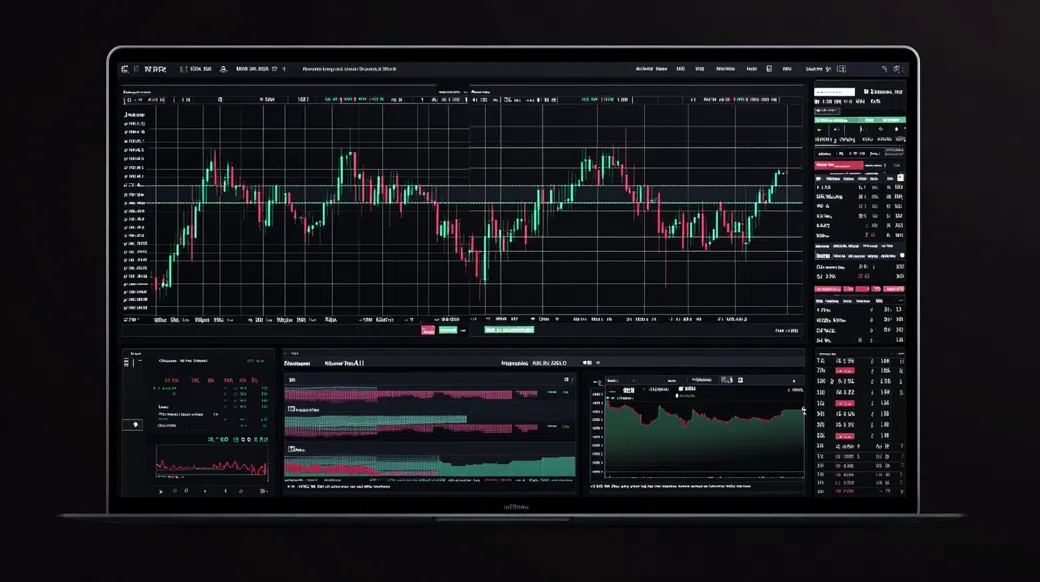
From the desktop browser, WebTrader loaded reliably for me across multiple sessions, with quotes updating cleanly and no obvious UI stutter when flipping timeframes. Order handling covers the essentials—market, limit, stop, plus basic stop-loss/take-profit—though it doesn’t replicate the depth of the MT4/MT5 ecosystem (custom indicators, EAs, and the broader tooling marketplace). For an execution spot-check, I placed small EUR/USD tickets around the London open and saw fills that were consistent with the quoted spread, with minor slippage when liquidity thinned for a moment.
Possamença App: Mobile Trading Experience
The Possamença app mirrors the browser flow closely: watchlists, chart view, and position management are all where you’d expect them. Possamença login supported biometric unlock on my device, which reduced friction when checking margin during the NY overlap. Market orders and pending orders are both available, and I could initiate deposits and track withdrawal status inside the same mobile menu. One quirk: on smaller screens, adjusting SL/TP precisely takes an extra tap cycle compared with desktop.
Charting, Tools & Research
Charting is practical rather than “quant terminal”: common indicators (MA, RSI, MACD, Bollinger) plus drawing tools handled basic structure mapping. An economic calendar and news feed are integrated, which is enough to avoid trading blind into scheduled releases. The ceiling shows up if you rely on advanced automation or deep analytics—dedicated MT5/cTrader setups still win for strategy testing and plug-in ecosystems.
Possamença Account Opening & Minimum Deposit
Instead of a long questionnaire, the signup funnel asked for the usual account credentials and identity details, then pushed me into verification before raising limits. For KYC, the platform requested a government-issued photo ID and a recent proof of address (I used a bank statement under 3 months). Verification completed within the same business day, and the client area then exposed full funding options and leverage settings. That sequence matters: it reduces the odds of a “surprise KYC” right when you want to withdraw.
- Minimum Deposit: $200 (this is the Possamença minimum deposit I saw at checkout for card funding)
- Funding Methods: Visa/Mastercard, bank wire, regional e-wallets, and crypto (BTC/USDT)
- Demo Account: $10,000 virtual balance for testing spreads, execution, and order rules
- Account Types: Standard (spread-only) and Raw/ECN-style (tight spreads + commission)
After funding via USDT, the balance credited quickly and the ledger view made it easy to reconcile amounts—something I care about because “missing cents” often signal wider accounting issues. If you want the registration flow and funding rails in one place, I’d start from the official portal at Possamença and open a demo first.
Possamença Customer Support Review
I tested support with a practical question: how swaps are applied on index CFDs and whether rates change intraday. Live chat replied in about 3 minutes with a clear explanation of nightly financing and where to find the instrument-specific swap table; they also flagged that triple-swap days can apply depending on the contract. For a second channel check, I emailed a query about Possamença withdrawal processing after KYC, and the ticket response landed roughly 9 hours later with method-based timelines.
Coverage is broadly what you see in this segment: 24/5 availability around market hours, with weekend responsiveness tapering unless it’s a funding-related issue. Language support seems region-dependent, and I didn’t see consistent phone coverage advertised for every country. If you need hand-holding on complex issues, that’s a constraint; if you just want operational answers, it held up.
Ready to Explore Possamença?
If you’re considering this broker, use a demo to sanity-check spreads, order types, and margin behavior in your local session hours. Once that looks right, confirm your country eligibility and funding method before sending meaningful capital.
Visit PossamençaPossamença Review FAQ
Is Possamença good for beginners?
Yes, with guardrails. The WebTrader is simple enough for first trades, and the $10,000 demo helps you learn order mechanics without immediate risk. The main caveat is leverage (up to 1:500), which can magnify mistakes quickly.
Can I trade crypto on Possamença?
Yes, crypto is available as CFDs, including BTC/USD and ETH-based pairs. That means you’re trading price exposure with leverage, not withdrawing coins to a wallet. Weekend financing can apply, so holding costs deserve attention.
Is Possamença a scam?
No, it didn’t present like a classic “deposit trap” during my test, and my small withdrawal went through on schedule. The more accurate framing is risk tier: it’s an offshore-regulated CFD provider, so protections and escalation channels are thinner than Tier‑1 brokers. Treat it accordingly and keep position sizing conservative.
Is Possamença available in the USA?
No, the USA is restricted. If you attempt to sign up from the US, you may be blocked by location controls or fail KYC checks tied to residency. US-based traders generally need a locally compliant venue.
How long does a Possamença withdrawal take?
A Possamença withdrawal typically shows internal approval within 24–48 hours after KYC is complete. Receipt time then depends on the rail: cards often take 2–5 business days, bank wires 3–7 business days, and crypto can arrive the same day within a few hours. Your bank or wallet provider can add extra delay.
What is the Possamença minimum deposit?
The minimum deposit is $200. In my checkout flow, that threshold appeared clearly before confirming the payment method. If you’re testing costs, starting small and using the demo first is the cleaner approach.
Does Possamença have a mobile app?
Yes, there are iOS and Android apps alongside the browser-based WebTrader. You can monitor positions, place orders, and manage deposits/withdrawals from mobile. For fast risk management, biometric unlock is a meaningful quality-of-life feature.
Final Verdict: Should You Use Possamença in 2026?
Overall Score: 4.0/5
What decided my score was operational consistency: funding, pricing tiers, and withdrawals behaved like a functioning brokerage stack, not a marketing shell. For active traders, the Raw/ECN-style pricing can make sense when turnover is high; for everyone else, the Standard account keeps the mental model simple. Offshore regulation remains the non-negotiable caveat—treat it as a high-risk venue and size positions accordingly. If you want to verify the current product list and conditions yourself, start at Possamença and run a demo before committing real capital.
Best for: Traders who want higher leverage and a multi-asset CFD mix with a usable WebTrader/mobile stack. Avoid if: You require Tier‑1 regulation, deep research/education, or ultra-low friction dispute resolution.