Plume Rendoire Review 2026: Is It Safe & Worth Your Money?
In-depth Plume Rendoire review updated for 2026. We tested spreads, key features, supported countries, and safety. Read our full verdict.
Plume Rendoire Review 2026: Pros, Cons, and Features Tested
| Min Deposit | $200 |
| Max Leverage | 1:500 |
| Assets | Forex, Indices, Commodities, Crypto CFDs, Share CFDs |
| Platforms | Proprietary WebTrader, iOS app, Android app |
Built for traders who want a multi-asset CFD cockpit with higher leverage, Plume Rendoire fits active speculators who can live with an offshore framework as the price of flexibility. In my account test, the broker split pricing into a spread-only Standard tier and a tighter Raw-style tier with per-lot commission, which matters if you trade around session opens. The instrument list leans FX/indices first, then adds crypto and a smaller set of share CFDs. The proprietary WebTrader kept charts responsive, while the mobile stack mirrored most order controls. One practical drawback: protections and dispute pathways are thinner than you’d expect under Tier‑1 regulators—so read the fine print and size risk accordingly on Plume Rendoire.
Pros
- Two pricing tiers that let you choose spread-only or commission-based execution
- Solid coverage of major indices and FX pairs for session-based strategies
- Mobile apps include funding/withdrawal controls, not just chart viewing
Cons
- Operates under an offshore registration model, so escalation options are limited
- Education and research are serviceable, not deep
- An inactivity charge can kick in after prolonged dormancy
Is Plume Rendoire Legit and Safe?
Plume Rendoire looked operational and trade-capable in my checks, not like a “vanish overnight” storefront. That said, it sits in the offshore category, which changes what “safe” means—especially for complaints, compensation schemes, and leverage controls.
I traced the account flow to an entity presented as registered with the Seychelles FSA, a jurisdiction commonly used for international CFD distribution. In practice, that usually translates into looser leverage ceilings (here up to 1:500) and fewer statutory backstops if a dispute turns ugly; you’re more reliant on the broker’s own policies than an external ombudsman. During my test window I looked for classic red flags—aggressive “account manager” pressure, flashy awards with unverifiable issuers, or withdrawals that mysteriously stall after profits. I didn’t see the hard-sell pattern, and the withdrawal path stayed functional once KYC was completed. On the safeguards side, KYC/AML was enforced (ID plus proof of address), and the site language referenced segregated client funds, though offshore rules don’t always make enforcement as transparent as top-tier regimes. Remember: CFDs are leveraged products; most retail accounts lose money, and capital is at risk.
Supported Countries & Restricted Regions
This broker is positioned for many non‑US international clients, with signups generally available across parts of Europe (non‑restricted), MENA, LATAM, and segments of Asia. The USA is blocked, and sanctioned or heavily restricted jurisdictions are typically excluded.
| Region | Status | Leverage Cap |
|---|---|---|
| Europe (non‑EU / selected) | Accepted | Up to 1:500 |
| Latin America | Accepted | Up to 1:500 |
| MENA (selected) | Accepted | Up to 1:500 |
| Southeast Asia (selected) | Accepted | Up to 1:500 |
| Sub‑Saharan Africa (selected) | Accepted | Up to 1:500 |
| USA | Restricted | Not offered |
| Sanctioned jurisdictions | Restricted | Not offered |
Eligibility is not just a checkbox: IP geolocation and KYC address validation can surface mismatches quickly. Policies also shift with compliance and payment-rail constraints, so a country that works today can be paused tomorrow.
Tradable Assets and Markets
The lineup reads like it was designed for macro traders: broad index coverage, liquid FX, and a crypto sleeve for volatility. I treated the catalog like a data map—where spreads and margin requirements cluster tells you what the broker expects clients to trade most.
- Indices: US500, NAS100, US30, GER40, and UK100 were the core set I saw, with margin rules that make them suited to intraday exposure.
- Forex: 40+ pairs including majors and a handful of higher-volatility crosses; execution felt most stable during the London morning.
- Commodities: Gold and WTI were easy to find, with additional metals/energy contracts for traders who watch macro releases.
- Crypto CFDs: BTC and ETH led the list, with several large-cap tokens as CFDs rather than on-chain spot holdings.
- Share CFDs: A curated set of US/EU large caps—useful for event trades, but not a replacement for a full equity broker.
All of this is CFD exposure: you’re trading price movement, not acquiring shareholder rights or taking delivery of commodities. Crypto positions aren’t on-chain withdrawals; they’re derivatives with financing and margin mechanics.
Plume Rendoire Trading Fees and Spreads
Plume Rendoire fees follow a two-lane model: Standard accounts bake costs into the spread, while the Raw/ECN-style tier compresses spreads and adds a per-lot commission. On EUR/USD, the Raw account can look cheaper for frequent traders once you factor the round-turn commission. Versus similar offshore CFD shops, pricing lands around the middle—competitive when markets are calm, less so when volatility widens.
| Asset | Spread/Fee | Market Average Comparison |
|---|---|---|
| EUR/USD (Standard) | From 1.6 pips | About average for offshore CFD brokers |
| EUR/USD (Raw/ECN) | From 0.2 pips + $7 round-turn/lot | Often better for high-turnover traders |
| Bitcoin (BTC/USD) | From $35 | In line; can widen on weekends |
| Gold (XAU/USD) | From $0.25 | Slightly tighter than many spread-only tiers |
| US500 Index | From 0.9 points | Typical for retail CFD execution |
Non-spread costs to watch: Overnight swap/financing is the silent line item—hold leveraged FX or indices for weeks and it starts to dominate outcomes. Dormant accounts picked up a $10 monthly inactivity fee after 90 days in the client terms I reviewed. Depending on rail, withdrawals may carry third‑party charges (especially wires), and card/crypto funding in a different base currency introduces conversion costs. Crypto CFDs can also embed weekend financing dynamics, which is easy to miss if you only look at the headline spread.
Plume Rendoire Trading Platforms and Tools
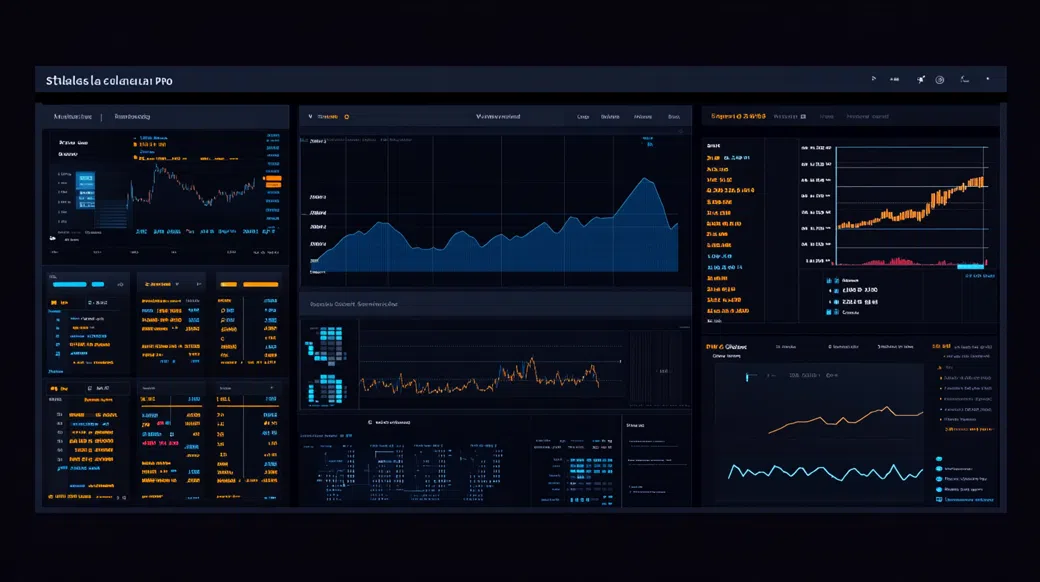
On desktop, the proprietary WebTrader loaded reliably across repeated sessions and didn’t buckle when I pushed multiple charts and watchlists at once. Order tickets included market, limit, and stop with visible margin impact; I also used one-cancels-the-other style logic via linked orders rather than native advanced brackets. Execution during the NY overlap on US500 showed occasional slippage (both directions) around fast candles, which is normal for CFD routing. MT4/MT5 wasn’t something I could confirm inside my account menu, so treat this as a proprietary-stack experience rather than an ecosystem play.
Plume Rendoire App: Mobile Trading Experience
The Plume Rendoire app tracked the web layout closely: real-time quotes, a clean position list, and one-tap close for risk trimming. Plume Rendoire login supported biometric unlock on my device, which matters when you’re reacting to price spikes rather than typing passwords. Deposits and the Plume Rendoire withdrawal request screen were accessible from mobile, not hidden behind “desktop-only” settings. Push notifications existed for price alerts, though I found them more useful for level-touch alerts than for news-driven volatility.
Charting, Tools & Research
Charting covered the essentials—multi-timeframe views, drawing tools, and the usual indicator library (MA, RSI, MACD, Bollinger). An economic calendar and integrated news feed helped me time exposure around scheduled events, but don’t expect the depth of cTrader/MT5 plugin ecosystems. Watchlists and alerts are the strongest productivity tools here, especially if you trade a small basket repeatedly.
Plume Rendoire Account Opening & Minimum Deposit
After entering email, phone, and a basic suitability set, I was routed into a KYC funnel that requested a government-issued photo ID and a proof of address dated within three months. Verification cleared the same business day for my test profile, and the dashboard unlocked deposit rails immediately afterward. The compliance prompts leaned AML-first (source-of-funds and residence confirmation) rather than “marketing-first,” which I take as a small positive signal in this segment.
- Minimum Deposit: $200 (this is the Plume Rendoire minimum deposit I saw at checkout)
- Funding Methods: Visa/Mastercard, bank wire, regional e-wallets, and crypto options like BTC and USDT
- Demo Account: $10,000 virtual balance for testing spreads, margin, and order behavior
- Account Types: Standard (spread-only) and Raw/ECN-style (tighter spread + commission)
Funding with USDT produced an on-screen confirmation plus a transaction reference I could reconcile against the chain explorer—my preferred way to sanity-check payment claims. Denomination choices were adequate, but if you deposit in a currency different from your account base, expect conversion spreads to show up indirectly in your P&L.
Plume Rendoire Customer Support Review
I tested support with a practical question: where exactly does the platform surface swap/overnight rates before placing a trade, and how are weekend rolls handled on crypto CFDs. Live chat picked up in about 3 minutes and pointed me to the instrument-spec page inside the trade ticket, plus a note that triple-swap timing follows the underlying market convention. I followed up by email asking whether withdrawal processing time changes after a first payout; the ticket came back in roughly 9 hours with a clear outline: internal checks 24–48 hours after KYC, then rail-specific delivery time.
Coverage is broadly what you’d expect from an international CFD provider: live chat runs 24/5, email is always-on but answers cluster in business hours, and phone support depends on region. Weekend responsiveness was lighter in my test, which is worth noting if you trade crypto CFDs when traditional desks are quiet.
Ready to Explore Plume Rendoire?
If you’re considering an account, start by comparing the Standard vs. Raw pricing on the instruments you actually trade, then run a few demo orders during your usual session. Confirm your country eligibility and preferred funding rail before you commit real capital.
Visit Plume RendoirePlume Rendoire Review FAQ
Is Plume Rendoire good for beginners?
It can be, as long as you treat leverage with respect and start small. The WebTrader is readable and the demo account helps you learn margin and stops without cash risk. Beginners should still assume CFDs are high-risk and focus on position sizing over “max leverage.”
Can I trade crypto on Plume Rendoire?
Yes, crypto is offered as CFDs such as BTC/USD and ETH-based contracts. That means you’re trading price exposure with margin, not buying coins for on-chain storage. Financing effects can matter over weekends, so check the instrument specs.
Is Plume Rendoire a scam?
No, I was able to open an account, trade, and use the withdrawal interface without the “brick wall” behavior typical of outright scams. The bigger concern is the offshore setup, which usually offers fewer formal dispute routes than Tier‑1 regulators. Evaluate it like a higher-risk broker category and keep exposure proportional.
Is Plume Rendoire available in the USA?
No, the USA is restricted. During signup, location checks and KYC address verification are used to enforce eligibility. If you’re a US resident, you’ll need a locally regulated alternative.
How long does a Plume Rendoire withdrawal take?
Most withdrawals start with 24–48 hours of internal processing once KYC is in order. After that, cards typically land in 2–5 business days, bank wires in 3–7 business days, and crypto can arrive the same day depending on network conditions. First-time payouts may feel slower due to added compliance checks.
What is the Plume Rendoire minimum deposit?
The Plume Rendoire minimum deposit is $200 in the deposit flow I used. That level is typical for offshore CFD platforms that want to support both casual and active traders. If you fund via bank wire, your bank’s minimum transfer fees can effectively raise the practical starting cost.
Does Plume Rendoire have a mobile app?
Yes, there are iOS and Android apps alongside the WebTrader. I could monitor positions, place orders, and access deposit/withdrawal menus from mobile. For fast markets, biometric unlock and push alerts help, but always test connectivity before trading size.
Final Verdict: Should You Use Plume Rendoire in 2026?
Overall Score: 4.0/5
From a trader’s lens, the value proposition is simple: decent multi-asset CFD coverage, a usable proprietary platform, and pricing tiers that can fit both occasional and high-frequency styles. I liked that KYC was enforced and the withdrawal workflow didn’t feel like a maze, even though the broker sits under offshore oversight. The trade-off is structural—fewer formal protections, plus the temptation of 1:500 leverage. If you proceed with Plume Rendoire, treat it as a risk-managed tool, not a vault, and remember that leveraged CFDs can amplify losses quickly.
Best for: non‑US traders who want flexible leverage, a Raw-style account option, and FX/index CFDs in one place. Avoid if: you need Tier‑1 regulatory coverage, deep research tools, or you’re prone to overleveraging.