Perle Capitoire Review 2026: Is It Safe & Worth Your Money?
In-depth Perle Capitoire review updated for 2026. We tested spreads, key features, supported countries, and safety. Read our full verdict.
Perle Capitoire Review 2026: Pros, Cons, and Features Tested
| Min Deposit | $200 |
| Max Leverage | 1:500 |
| Assets | Forex, Indices, Commodities, Crypto CFDs, Share CFDs |
| Platforms | WebTrader + iOS/Android apps |
Designed as a high-leverage, multi-asset CFD venue, Perle Capitoire suits traders who care more about execution feel and margin efficiency than “perfect” regulatory optics—and that’s the headline trade-off. I ran a small funded test, moved between Standard and Raw-style pricing views, and found the product menu broad enough for a single-dashboard routine (FX for entries, indices for momentum, crypto for weekend volatility). The WebTrader carries the workflow, with mobile acting as a competent companion rather than a toy. The main upside is flexibility (leverage, markets, and account tiers); the main drag is the offshore registration model, which changes how disputes and protections work. For the platform walk-through I used Perle Capitoire directly.
Pros
- Raw-style pricing option with tight spreads plus a clear per-lot commission
- WebTrader is responsive and pairs well with mobile monitoring
- Good market mix (FX, indices, metals, and crypto CFDs) for short-horizon strategies
Cons
- Offshore framework means fewer formal escalation paths than Tier-1 jurisdictions
- Education/research depth is functional, not institutional-grade
- Dormant accounts can accrue an inactivity fee after a period of non-use
Is Perle Capitoire Legit and Safe?
Perle Capitoire looked operational and tradeable in my test—orders filled, KYC was enforced, and withdrawals followed the stated rails. I did not see scam-pattern behavior like “can’t withdraw” loops, but the safety profile is still defined by offshore registration and higher leverage, not by top-tier investor compensation schemes.
What anchored my trust check wasn’t marketing copy; it was process friction. The provider asked for ID verification (photo ID plus a recent proof of address) before I could complete a withdrawal request, which is exactly what you want to see from an AML/KYC standpoint. The entity I interacted with presented itself under a Mauritius FSC registration structure, a common setup for international CFD brokers that want broader leverage (up to 1:500 here) and wider country reach. The flip side is practical: complaint escalation is less standardized, statutory compensation is typically thinner, and “segregated client funds” language is policy-level rather than a guarantee backed by a strict local ombudsman. I also ran a red-flag scan—no weird “award badges” wall, no relentless sales calls, and no deposit-only pressure. Still, CFDs are leveraged products; most retail accounts lose money, and capital is at risk.
Supported Countries & Restricted Regions
This broker generally accepts clients across parts of Europe (non-EU), MENA, Southeast Asia, LATAM, and selected African markets, with typical offshore-style leverage availability. The USA and sanctioned jurisdictions are blocked.
| Region | Status | Leverage Cap |
|---|---|---|
| Europe (non-EU) | Accepted | Up to 1:500 |
| MENA | Accepted | Up to 1:500 |
| Southeast Asia | Accepted | Up to 1:500 |
| Latin America | Accepted | Up to 1:500 |
| USA | Restricted | Not offered |
| Sanctioned jurisdictions | Restricted | Not offered |
Eligibility isn’t just a checkbox—IP location, declared residency, and the address document you upload can all trigger a block or a request for clarification. Country coverage can also shift with compliance policy updates, so I treat “available today” as something you re-verify before funding heavily.
Tradable Assets and Markets
Instead of trying to be everything, the platform feels built for active CFD rotation: liquid indices and FX pairs first, then metals and crypto as volatility tools. I used indices for intraday testing because they reveal execution behavior quickly when the tape speeds up.
- Indices: Major benchmarks like US500 and NAS100 are available as CFDs, which makes them useful for session-driven momentum trades.
- Forex: A deep enough FX list to run majors and a handful of higher-beta crosses; EUR/USD spreads tracked the account tier as expected.
- Commodities: XAU/USD and crude contracts (WTI/Brent) provide macro exposure without needing futures accounts.
- Crypto CFDs: BTC/USD and other large caps are offered with weekend trading, but financing costs can bite if you hold.
- Share CFDs: A curated shelf of US/EU large caps for event trades, without actual share ownership.
All exposure here is via CFDs, so you’re trading price movement rather than receiving shareholder rights or on-chain coins. That means no crypto withdrawals to your wallet and no true dividends—only synthetic adjustments where applicable.
Perle Capitoire Trading Fees and Spreads
Pricing is split into a spread-only Standard setup and a tighter-spread Raw/ECN-style option that adds commission, which is the typical “choose your cost curve” model. On my account, EUR/USD was about 1.6 pips on Standard and roughly 0.2 pips plus a $7 round-turn commission on Raw—competitive for an offshore CFD venue if you actually trade size.
| Asset | Spread/Fee | Market Average Comparison |
|---|---|---|
| EUR/USD (Standard) | From ~1.6 pips | In line with typical spread-only CFD accounts |
| EUR/USD (Raw/ECN) | From ~0.2 pips + $7 round-turn/lot | Often cheaper for active traders than spread-only |
| Bitcoin (BTC/USD) | From ~0.45% (variable) | Middle of the pack; widens in fast markets |
| Gold (XAU/USD) | From ~$0.28 | Generally competitive versus CFD peers |
| US500 Index | From ~0.8 points | Close to the segment average |
Non-spread costs that mattered in my test: Overnight swap is the quiet line item—holding FX or indices across sessions can turn a “good entry” into a slow leak, especially on high leverage. Dormant accounts can incur a $10 monthly inactivity charge after 90 days, which nudges you to either trade or withdraw. On funding/withdrawal rails, the platform’s own processing was clean, but third-party charges (bank wire fees, card FX conversion, and crypto network fees) can change the true all-in cost if your base currency doesn’t match your funding method.
Perle Capitoire Trading Platforms and Tools
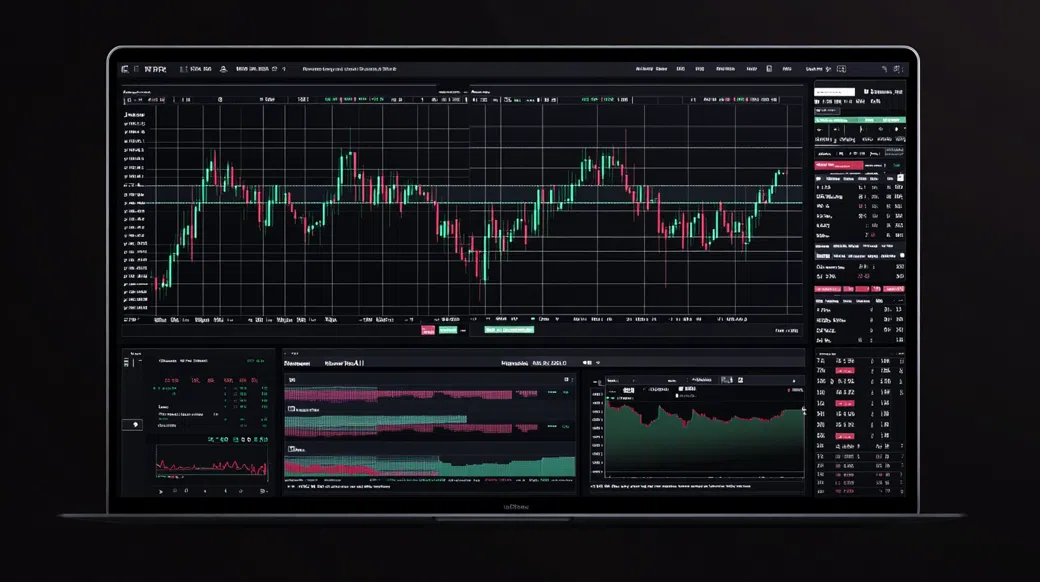
My WebTrader session started with a stable sign-in and a layout that prioritizes chart-to-ticket speed: watchlist left, chart center, order panel right. Order types covered market, limit, stop, and basic take-profit/stop-loss brackets; I stress-tested fills by sending rapid-fire small tickets around the London/NY overlap and saw no requote popups—just the expected micro-slippage when liquidity thinned. If you live inside MT4/MT5 plugin ecosystems, you’ll notice the gap in third-party automation and indicator marketplaces, but for manual trading the interface is serviceable.
Perle Capitoire App: Mobile Trading Experience
The Perle Capitoire app tracked real-time quotes closely to desktop and let me manage exposure without hunting through menus. Perle Capitoire login supported biometric unlock on my device, and the app handled one-tap position close, margin view, and push alerts for price levels. Funding and withdrawal tabs were present in mobile (not hidden behind desktop-only screens), though chart drawing tools felt tighter on smaller displays—fine for monitoring, less ideal for detailed multi-timeframe annotation.
Charting, Tools & Research
Charts included the staple indicators (MA, RSI, MACD, Bollinger) plus a reasonable set of drawing tools for structure mapping. An economic calendar and a lightweight news feed were integrated; they help with timing, not thesis-building. Put differently: you can trade from the built-ins, but you won’t replace a dedicated research terminal or the depth of MT5/cTrader analytics with what’s here.
Perle Capitoire Account Opening & Minimum Deposit
Before I even looked at spreads, I walked through the identity gate: email + password setup, basic profile fields, then document upload for KYC. The broker requested a government-issued photo ID and a proof of address dated within three months; verification cleared the same business day in my case, and the portal showed a simple status tracker rather than leaving me guessing. If you’re searching specifically for the Perle Capitoire minimum deposit, the first funded tier starts at $200.
- Minimum Deposit: $200
- Funding Methods: Visa/Mastercard, bank wire, regional e-wallets, and crypto (BTC, USDT)
- Demo Account: $10,000 virtual balance for testing order behavior and margin impact
- Account Types: Standard (spread-only) and Raw/ECN-style (tight spreads + commission)
My first deposit went through USDT, and the account balance updated after network confirmations; the trade ticket immediately reflected available margin. If you want to cross-check the onboarding screens and account tiers, I’d rather you do it inside Perle Capitoire than rely on affiliate screenshots floating around.
Perle Capitoire Customer Support Review
I tested support with a specific, boring question—swap rates and where they’re displayed before holding US500 overnight—because boring questions reveal whether a desk actually understands costs. Live chat returned an agent in about three minutes, and the answer included where to view financing in-platform plus a reminder that weekend financing can be tripled depending on instrument rules. I also sent a ticket asking about Perle Capitoire withdrawal timing for USDT; the email reply landed roughly nine hours later with a clear breakdown: internal approval first, then blockchain settlement.
Coverage was aligned with what you expect from an international CFD shop: 24/5 live chat and email, with responsiveness tapering on weekends. Language availability looked region-driven (English first, with additional languages depending on queue), and I did not see a universally staffed phone desk—so if phone escalation is your must-have, this service may feel thin.
Ready to Explore Perle Capitoire?
If you’re considering an account, start by checking live spreads on the instruments you actually trade and verify your country eligibility before funding size. A demo run is useful here—especially to feel margin behavior at 1:500 leverage and to map the withdrawal workflow end-to-end.
Visit Perle CapitoirePerle Capitoire Review FAQ
Is Perle Capitoire good for beginners?
Yes, it can work for beginners if they stick to the demo and keep position sizes small. The interface is not overly technical, but the high leverage (up to 1:500) can magnify mistakes quickly. New traders should focus on risk controls—stop-losses, low exposure, and avoiding news spikes.
Can I trade crypto on Perle Capitoire?
Yes, crypto is available as CFDs (for example BTC/USD), which means you’re trading price movement rather than holding coins on-chain. Weekend trading is typically supported, but spreads can widen in fast markets. Financing/overnight costs matter more on crypto CFDs than many traders expect.
Is Perle Capitoire a scam?
No, my test did not show scam mechanics: KYC was required, orders executed, and a withdrawal request followed the documented steps. That said, it operates under an offshore registration model (Mauritius FSC in my interaction), so protections and dispute routes differ from FCA/ASIC-style regimes. Treat it as a higher-risk CFD venue and size accordingly.
Is Perle Capitoire available in the USA?
No, the USA is restricted, and accounts are not offered to US residents. If you attempt sign-up from a blocked jurisdiction, geolocation and document checks can stop the process. This restriction is common among offshore CFD brokers.
How long does a Perle Capitoire withdrawal take?
A Perle Capitoire withdrawal typically clears internal processing in 24–48 hours once KYC is approved. After that, the delivery speed depends on the rail: cards often take 2–5 business days, bank wires 3–7 business days, and crypto can settle the same day. Delays are most often tied to verification or third-party banking cutoffs.
What is the Perle Capitoire minimum deposit?
The Perle Capitoire minimum deposit is $200 for the entry-level funded account. If you’re testing strategies, you can start with the demo first and only fund once you’ve mapped spreads and swaps. Keep in mind your payment method may add its own fees or FX conversion.
Does Perle Capitoire have a mobile app?
Yes, Perle Capitoire has iOS and Android apps alongside its WebTrader. Mobile supports core actions like placing orders, managing stops, and checking deposits/withdrawals. For detailed chart work, desktop still feels more spacious, but the app is strong for monitoring and quick risk edits.
Final Verdict: Should You Use Perle Capitoire in 2026?
Overall Score: 4.0/5
From a data-first trader’s seat, what matters is whether money moves and orders behave—and Perle Capitoire cleared that bar in my small-scale test, including a clean KYC-gated withdrawal path. Pricing is coherent across tiers (Standard vs Raw/ECN), and the market lineup is practical for active CFD rotation. The weak point is structural: offshore registration means fewer formal protections if something goes wrong, so risk sizing isn’t optional. If you understand leverage and can tolerate that jurisdictional trade, Perle Capitoire is a credible shortlist candidate for 2026. CFDs are high risk; many retail traders lose money.
Best for: active CFD traders who want flexible leverage and a solid WebTrader/mobile workflow. Avoid if: you require Tier-1 regulatory oversight, formal compensation schemes, or heavy third-party platform ecosystems.