Neuf Reservance Alternatives 2026: Safer Trading Platforms
Compare Neuf Reservance alternatives for 2026 with a US/EU safety lens: regulated brokers, typical fees, platforms, and a checklist for switching securely.
Neuf Reservance Trading Platform Alternatives 2026: Reliable Options for Online Traders
Neuf Reservance is typically presented as an online trading venue for leveraged products—most often Forex and CFDs—accessed through a basic proprietary web terminal. When traders ask me for Neuf Reservance alternatives, it’s rarely about “better charts” alone. It’s usually about verifiable safety: regulation you can check, segregation rules you can read, and execution you can measure. Markets can lie in marketing copy; data doesn’t. That’s why I treat Neuf Reservance as a baseline case study: if a platform’s legal entity, oversight, and order-routing disclosures aren’t easy to verify, you should assume higher counterparty risk and compare against regulated venues in the US/EU. This guide focuses on broker due diligence, common cost structures, and practical migration steps—so you can evaluate competitors without relying on promises.
Disclaimer: This article is for informational purposes only and does not constitute investment advice. Trading leveraged products carries a high level of risk.
Key Takeaways (TL;DR)
- Prioritize regulated brokers with clear legal entities, investor protections, and transparent execution policies.
- Assume higher risk if a platform is unregulated/offshore; compare costs and tools using industry-standard baselines.
- Move funds safely: verify withdrawal capability first, export records, and test a new broker with small transfers.
What Is Neuf Reservance and How Does Its Trading Platform Work?
Based on publicly typical patterns for similar brands (and applying industry-standard baselines where details are not independently verifiable), Neuf Reservance appears to operate as a CFD/FX-style brokerage offering leveraged trading via a proprietary web interface. In this framework, you’re usually not buying underlying assets; you’re entering a contract with the broker on price movements. That distinction matters for risk: your P&L depends not only on market moves, but also on the broker’s execution quality, margin rules, and—most importantly—its ability and willingness to honor withdrawals.
When traders compare platforms like Neuf Reservance, the first question I ask is: can you confirm the regulated entity and the applicable protections (segregation, compensation schemes, negative balance protection where required)? If you can’t, treat it as “Unregulated or Offshore (High Risk)” by default until proven otherwise. Under that baseline, expected product coverage is typically Forex and CFDs, offered through a “Proprietary Web Trader (Basic)” rather than MT4/MT5 or a full-featured multi-asset stack.
Neuf Reservance Web Trading Platform: Core Features and Tools
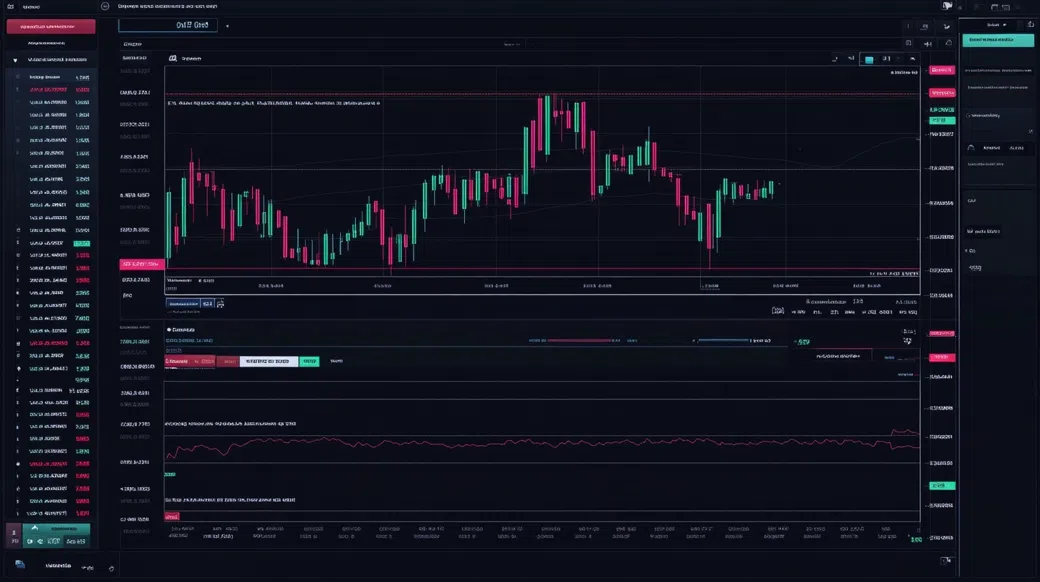
A basic proprietary web trader usually includes watchlists, market/limit orders, simple indicators, and an account dashboard showing balance, margin, and open positions. Charting is often serviceable for discretionary trading but limited for systematic workflows: fewer indicators, minimal backtesting, and less control over order types than pro-grade platforms. If you trade off data—latency, rejection rates, slippage distributions—these web terminals rarely provide the telemetry you’d want to audit execution quality.
For a US/EU audience, a key differentiator versus brokers similar to Neuf Reservance is third-party platform support (e.g., MT4/MT5, TradingView integrations, or institutional-style order tickets) and clearer reporting (downloadable fills, timestamps, and fee breakdowns). The more you can export, the more you can verify.
Trading Fees, Spreads, and Account Types at Neuf Reservance
When broker-specific pricing is not independently confirmed, a realistic baseline assumption for a CFD/FX web broker is floating spreads from ~2.0 pips on major FX pairs, with costs embedded in the spread rather than an explicit commission. Additional charges traders commonly encounter in this category include overnight financing (swap), conversion fees, inactivity fees, and withdrawal fees—terms that can materially change your net returns.
Account tiers (often marketed as Silver/Gold/VIP) may promise “tighter spreads” or “account managers,” but those claims should be evaluated against audited fee schedules and real fill data. In practice, the safest comparison is to measure total cost per round trip (spread + commission + financing) and to prefer regulated options vs Neuf Reservance where disclosures are standardized and enforceable.
When Do Traders Start Looking for Neuf Reservance Alternatives?
Traders usually start searching for alternatives to the Neuf Reservance trading platform when operational friction shows up in the data: inconsistent fills, widening spreads at routine times, confusing fees, or delayed withdrawals. In my work, the tell isn’t a single bad experience—it’s a pattern across account statements, timestamps, and transaction logs. If a broker’s behavior can’t be reconciled with normal market microstructure, you don’t “hope” it improves; you de-risk.
- Regulation and entity clarity issues: unclear legal entity, hard-to-verify licensing, or no straightforward regulator lookup—common reasons traders seek Neuf Reservance alternatives.
- Platform limitations: lack of MT4/MT5, weak order types, limited reporting/export, or no reliable API—pain points versus competitors to Neuf Reservance.
- Cost surprises: spreads that expand beyond expectations, opaque financing charges, or fees triggered by inactivity/withdrawals—often pushing traders toward top substitutes for Neuf Reservance.
- Operational risk events: withdrawal delays, aggressive bonus terms, or pressure tactics from “account managers”—a strong signal to prioritize regulated brokers and move cautiously.
How to Choose a Reliable Alternative to the Neuf Reservance Trading Platform
Choosing among Neuf Reservance alternatives is less about finding the “best app” and more about minimizing avoidable counterparty risk. You want a broker where rules are enforceable, disclosures are standardized, and your trade and cash records can be reconciled. Below is the framework I use—built for a US/EU lens, but applicable globally.
Regulation, Safety, and Investor Protection
Start with the legal entity, not the brand name. Verify the regulator record directly (e.g., FCA in the UK, CySEC in Cyprus/EU passport contexts, ASIC in Australia, IIROC/CIRO in Canada, MAS in Singapore, and in the US: CFTC/NFA for FX/derivatives; SEC/FINRA for securities). Check whether client money is segregated, what leverage limits apply, whether negative balance protection is mandated (common in the EU/UK retail CFD context), and whether compensation schemes exist. This is the core advantage of regulated options vs Neuf Reservance when the latter’s oversight is unclear.
Available Markets and Instruments
Map your actual needs: spot FX vs CFDs, index CFDs, commodities, single-stock CFDs, real shares/ETFs, options, or futures. Many platforms like Neuf Reservance emphasize FX/CFDs; if you need real equities/ETFs (for long-term portfolios) or listed derivatives (for hedging with exchange transparency), select a broker that is natively built for those instruments rather than “adding them later.”
Trading Costs: Spreads, Commissions, and Other Fees
Compare total cost of ownership: average spread (not “from”), commissions (per side), financing/swap, conversion fees, market data fees (for exchange products), and withdrawal/inactivity fees. If you don’t have broker-specific data, use a baseline comparison: many FX/CFD venues advertise low minimum spreads but deliver higher realized spreads during liquid hours plus financing overnight. Ask for: a published fee schedule, swap tables, and a sample statement with itemized charges.
Platforms, Tools, and Execution Quality
Pick tooling that matches your process. If you’re discretionary, you may want robust charting and alerts; if you’re systematic, you’ll care about APIs, stable execution, and exportable fill data (timestamps, slippage, partial fills, re-quotes). Brokers similar to Neuf Reservance may offer basic web terminals; higher-tier venues often provide MT4/MT5, TradingView, or professional desktop platforms plus better reporting.
Support, Education, and Overall User Experience
Support matters most when something breaks: deposit/withdrawal issues, platform outages, corporate actions, or margin disputes. Test support before funding heavily. Evaluate educational content as a signal of maturity, but prioritize operational competence: clear onboarding, documented policies, and straightforward complaint escalation routes.
Neuf Reservance and Different Asset Classes: When Alternatives May Be Better
Neuf Reservance Forex and CFD Trading
Using the Auto-Simulation baseline, Neuf Reservance is best understood as a Forex and CFDs venue with a proprietary web trader and floating spreads from ~2.0 pips. That structure can be sufficient for small-size, short-horizon speculation—but it concentrates risk in the broker. With CFDs, you’re trading an OTC derivative; pricing, execution, and margin calls are governed by the broker’s terms. If you can’t independently validate the legal entity and execution policy, you should treat it as higher risk and compare Neuf Reservance alternatives that are regulated and provide clearer best-execution language, standardized risk disclosures, and robust reporting.
From a data perspective, you want to be able to audit: (1) your fill timestamps versus public market proxies, (2) slippage distributions around news, and (3) stop-loss behavior in fast markets. Basic web platforms often make that hard. If your strategy depends on precise entries or frequent trading, a regulated CFD/FX broker with MT4/MT5 or a professional platform and downloadable fill logs is usually a safer operational fit than platforms like Neuf Reservance.
Neuf Reservance Stock and ETF Trading
Many CFD-first brokers either don’t offer real (exchange-traded) stocks/ETFs or offer them only as CFDs. That’s a major distinction for investors who care about ownership, voting rights, and long-term holding without financing charges. If Neuf Reservance provides stocks/ETFs only as CFDs (a common pattern), costs can include spreads plus overnight financing—making long holds expensive. This is where alternatives to the Neuf Reservance trading platform that offer real shares/ETFs (often through SEC/FINRA or EU-regulated entities, depending on region) can be structurally better for portfolio building.
For US/EU users, also consider product governance: PRIIPs KIDs in the EU/UK context, suitability rules, and clear custody disclosures for real securities. If those documents aren’t easily accessible, treat it as a caution flag and compare against brokers similar to Neuf Reservance that publish these materials consistently.
Neuf Reservance Crypto Trading
Crypto is the asset class where marketing most often outruns compliance. Some brokers offer crypto only as CFDs (no on-chain withdrawal, no wallet ownership), while exchanges offer spot crypto with wallet transfers. If Neuf Reservance offers crypto exposure, it may be limited to crypto CFDs under the same OTC model—meaning you can’t verify reserves on-chain or withdraw to self-custody. That can be acceptable for short-term hedging, but it’s not the same as holding assets in a personal wallet.
If you care about on-chain verifiability, the best move isn’t “another CFD platform,” it’s choosing a regulated venue appropriate for your jurisdiction and then verifying flows: test deposits/withdrawals, confirm address ownership, and keep a clean ledger of transactions. For many traders, the more prudent route is to keep leveraged trading at a regulated broker and keep spot crypto at a compliant exchange/custody setup—rather than forcing everything into a single high-risk wrapper.
Best Neuf Reservance Alternatives for 2026: Comparison of Top Trading Platforms
IG: Key Facts and How It Compares to Neuf Reservance
Regulation: Multi-jurisdiction regulated broker (commonly includes FCA in the UK; entity/regime depends on your country).
Markets: Broad multi-asset access, typically including FX, indices, commodities, and other CFDs; offerings vary by region.
Fees: Usually spread-based pricing for CFDs/FX; additional financing for overnight positions; published schedules by entity.
Platform: Proprietary platforms plus integrations (availability varies); generally stronger tooling than a basic web terminal.
Best For: Traders who want a large, established, regulated venue as one of the best Neuf Reservance alternatives 2026 for CFDs/FX.
Saxo Bank: Key Facts and How It Compares to Neuf Reservance
Regulation: Regulated financial institution (jurisdiction-specific entities; commonly under Danish/EU frameworks for many clients).
Markets: Multi-asset breadth (often including stocks, ETFs, bonds, FX, options, futures, and CFDs depending on region).
Fees: Generally transparent commissions for exchange-traded products; spreads/financing for FX/CFDs; tiering may apply.
Platform: Professional-grade proprietary platforms (web/desktop/mobile) with strong reporting.
Best For: Portfolio-oriented traders seeking regulated, multi-asset competitors to Neuf Reservance with robust tooling.
Interactive Brokers (IBKR): Key Facts and How It Compares to Neuf Reservance
Regulation: Regulated across major jurisdictions (US/EU/UK entities; protections depend on the entity you onboard with).
Markets: Deep global access to exchange-traded products (stocks/ETFs/options/futures) and FX (structure varies by region).
Fees: Generally commission-based for many exchange products; low, transparent schedules; market data fees may apply.
Platform: Trader Workstation (desktop), web, mobile, and APIs; strong for systematic workflows.
Best For: Data-driven traders who want auditability, APIs, and exchange access—top substitutes for Neuf Reservance for serious execution needs.
CMC Markets: Key Facts and How It Compares to Neuf Reservance
Regulation: Regulated broker (often includes FCA in the UK; other entities for EU/overseas clients).
Markets: Broad CFD lineup typically covering FX, indices, commodities, and more; region-dependent.
Fees: Spread-based CFDs/FX with published costs; financing applies to overnight leveraged positions.
Platform: Strong proprietary web platform; MT4 may be available in some regions/product lines.
Best For: Active CFD traders looking for platforms like Neuf Reservance but with stronger regulatory footing and tooling.
OANDA: Key Facts and How It Compares to Neuf Reservance
Regulation: Regulated entities in multiple jurisdictions (exact regulator depends on your region; verify the entity on signup).
Markets: Primarily FX (and CFDs in some regions), depending on local rules.
Fees: Typically spread-based FX pricing; some accounts/regions may offer commission-plus-spread structures.
Platform: Proprietary platforms, APIs, and often MT4 support; emphasis on FX execution and data access.
Best For: FX-focused traders who want regulated options vs Neuf Reservance and cleaner FX-centric product design.
Pepperstone: Key Facts and How It Compares to Neuf Reservance
Regulation: Regulated broker with multiple entities (commonly includes ASIC and FCA among its group; availability varies).
Markets: FX and CFDs across indices/commodities and more (region-dependent).
Fees: Often offers both spread-only and commission-based accounts; total cost depends on account type and instrument.
Platform: Commonly supports MT4/MT5 and other third-party platforms; better for algorithmic trading than basic web terminals.
Best For: Traders seeking alternatives to the Neuf Reservance trading platform with MT4/MT5-style ecosystems and competitive pricing models.
Comparison Summary
| Platform | Regulation | Main Markets | Typical Costs | Best For |
|---|---|---|---|---|
| IG | Regulated (e.g., FCA; entity varies) | FX/CFDs and multi-asset (region-dependent) | Spreads + overnight financing (published schedules) | Established regulated CFD/FX trading |
| Saxo Bank | Regulated bank/broker (entity varies) | Multi-asset incl. stocks/ETFs/options/futures (region-dependent) | Commissions for exchanges; spreads/financing for FX/CFDs | Multi-asset investing + advanced platforms |
| Interactive Brokers (IBKR) | Regulated US/EU/UK entities | Global exchange-traded markets + FX | Commissions; possible market data fees | APIs, execution auditability, serious traders |
| CMC Markets | Regulated (e.g., FCA; entity varies) | CFDs (FX/indices/commodities and more) | Spreads + overnight financing | Active CFD traders needing better tooling |
| OANDA | Regulated (entity varies by region) | Primarily FX (and CFDs in some regions) | Spreads; some commission options by region | FX-focused trading with data/API access |
| Pepperstone | Regulated (e.g., ASIC/FCA entities; varies) | FX and CFDs (region-dependent) | Spread-only or commission-based; instrument-dependent | MT4/MT5 ecosystem and active trading |
How to Safely Move from Neuf Reservance to Another Broker
Switching from Neuf Reservance alternatives research to execution is a risk process. Treat the migration like a controlled cutover: preserve records, test withdrawals, and avoid doubling exposure during the transition.
- Verify your current account status: close or reduce leveraged positions, check margin requirements, and document open trades and balances with dated screenshots/statements.
- Test withdrawals before anything else: request a small withdrawal first; confirm timelines, fees, and whether the payment method matches the original funding source (a common compliance requirement).
- Export and archive all records: download trade history, fills, fee lines (swap/financing), and communications. If disputes arise, data wins.
- Onboard with a regulated replacement: complete KYC with your chosen broker, confirm the exact legal entity/regulator, read the client agreement, and fund with a small amount for initial testing.
- Run parallel validation, then scale: place small trades to compare spreads/slippage and platform stability; only scale position sizes after you’ve validated execution and successful withdrawals.
FAQ: Neuf Reservance Alternatives and Trading Platforms
What is the best alternative to Neuf Reservance in 2026?
The best choice depends on what you trade and where you live, but the “best Neuf Reservance alternatives” are typically regulated brokers with transparent fee schedules and robust reporting. For multi-asset access and professional tooling, Interactive Brokers and Saxo Bank are common picks. For CFD/FX-focused traders who want platforms like Neuf Reservance with stronger oversight, IG or CMC Markets are frequently considered. Always verify the specific regulated entity you’ll onboard with.
Is Neuf Reservance a safe broker/platform?
If you cannot independently confirm the regulator, licensed entity, and client-money protections, the prudent baseline is “Unregulated or Offshore (High Risk).” That doesn’t automatically mean you will lose money, but it does mean you carry elevated counterparty and withdrawal risk versus regulated options. If you’re currently using Neuf Reservance, prioritize verifying the legal entity on your contract, then test withdrawal reliability with small amounts before keeping significant balances on-platform.
Can I trade stocks, futures, or crypto with Neuf Reservance?
Under the baseline profile used when details aren’t verifiable, Neuf Reservance primarily aligns with Forex and CFDs, which may or may not include stock/crypto CFDs depending on the product menu. Real stocks/ETFs and listed futures generally require more specialized, regulated infrastructure and exchange connectivity. If you need real equities or listed derivatives, consider competitors to Neuf Reservance such as Interactive Brokers or Saxo Bank, then confirm product availability in your country and entity.
What should I check before switching from Neuf Reservance to another platform?
Before switching, verify: (1) the new broker’s regulator and exact legal entity, (2) the complete fee schedule (spreads/commissions/financing/withdrawals), (3) supported platforms (MT4/MT5/APIs if you need them), (4) the withdrawal process and funding-method rules, and (5) reporting/export features so you can audit fills and costs. The goal isn’t just to find “Neuf Reservance trading platform alternatives 2026,” but to move to a venue where your risk and costs are provably bounded by enforceable rules.
About the Author: Alice Wu is a data scientist and financial journalist who analyzes trading risk through transaction records, execution data, and market microstructure. She focuses on separating marketing claims from measurable reality, with an emphasis on broker safety, transparency, and trader protections in US/EU markets. Neuf Reservance