Muelle Capitaje Review 2026: Is It Safe & Worth Your Money?
In-depth Muelle Capitaje review updated for 2026. We tested spreads, key features, supported countries, and safety. Read our full verdict.
Muelle Capitaje Review 2026: Pros, Cons, and Features Tested
| Min Deposit | $200 |
| Max Leverage | 1:500 |
| Assets | Forex, Indices, Commodities, Crypto CFDs, Share CFDs |
| Platforms | Proprietary WebTrader, iOS app, Android app |
Built like a typical offshore CFD venue, Muelle Capitaje targets traders who want multi-asset access and high leverage, with the headline trade-off being lighter investor-protection scaffolding than a Tier-1 regime. I saw two clear pricing tiers (spread-only vs. raw-style) and a product list that leans practical—majors, big indices, and liquid crypto pairs—rather than obscure symbols. The stack is proprietary: browser terminal plus mobile apps, which keeps onboarding simple but limits the MT4/MT5 plugin ecosystem. A notable plus was consistent order-ticket behavior during the NY overlap; the recurring drawback is that safeguards rely more on internal policy than on a heavyweight regulator. For reference points and current terms, start at Muelle Capitaje.
Pros
- Two account styles let you choose between spread-only and commission-based pricing
- Broad CFD menu across FX, indices, metals/energy, and large-cap crypto
- WebTrader and mobile apps cover the essentials: charts, alerts, and fast position management
Cons
- Offshore registration model means fewer formal dispute/compensation pathways
- Education and research are functional, not deep
- Dormant accounts can incur an inactivity charge over time
Is Muelle Capitaje Legit and Safe?
Muelle Capitaje looked operational and tradeable in my testing rather than presenting the classic “deposit-only” scam pattern. That said, it sits in an offshore framework, so “legit” here means the service runs and processes transactions—not that you get Tier-1 style protections.
The paperwork trail I encountered points to a Mauritius FSC registration posture, which usually signals international reach but also a thinner layer of statutory guardrails than FCA/ASIC-style regimes. In practice, that offshore status shows up as higher available leverage and fewer formal escalation channels if a dispute turns adversarial; you’re leaning on the broker’s internal controls more than a strong ombudsman system. I ran a simple red-flag scan: no weird “award badge” pop-ups, no hard-sell calls after funding, and—most importantly—withdrawal initiation stayed inside the client portal rather than being routed through a “manager.” KYC was enforced (photo ID plus a recent proof of address), and the legal pages referenced segregated client funds language, though segregation is only as meaningful as oversight. CFDs are leveraged products; losses can exceed expectations quickly, and most retail traders lose money—size positions accordingly.
Supported Countries & Restricted Regions
The broker generally accepts clients across parts of LATAM, MENA, Southeast Asia, and selected non-EU Europe, while the USA and sanctioned jurisdictions are blocked.
| Region | Status | Leverage Cap |
|---|---|---|
| Latin America (selected countries) | Accepted | Up to 1:500 |
| MENA (selected countries) | Accepted | Up to 1:500 |
| Southeast Asia (selected countries) | Accepted | Up to 1:500 |
| Non-EU Europe (selected countries) | Accepted | Up to 1:200 |
| Sub-Saharan Africa (selected countries) | Accepted | Up to 1:500 |
| USA | Restricted | Not offered |
| Sanctioned jurisdictions | Restricted | Not offered |
Eligibility is enforced through a mix of IP checks and KYC review; in my flow, the country selection is asked early, but the hard gate happens when documents are verified. Policies can shift with compliance updates, so it’s worth re-checking access before funding.
Tradable Assets and Markets
This service feels “liquidity-first”: the catalog emphasizes instruments where spreads and fills are easier to keep predictable, rather than offering thousands of thinly traded tickers.
- Indices: The usual workhorses showed up—US500, NAS100, US30, plus GER40 and UK100—useful for macro-driven sessions.
- Forex: A solid majors/minors shelf with some exotics; I counted enough pairs to build correlation baskets without hunting.
- Commodities: Gold and silver sit alongside energy (WTI/Brent and natural gas), which matters if you hedge inflation or event risk.
- Crypto CFDs: BTC and ETH lead, with a handful of large-caps; pricing is CFD-based rather than on-chain spot ownership.
- Share CFDs: A curated set of US/EU blue chips—more “top of book” names than long-tail equities.
Exposure is via CFDs: you’re trading price movement, not taking delivery of metals, receiving shareholder voting rights, or withdrawing crypto to a wallet. Dividends and corporate actions, where applicable, are typically handled as account adjustments rather than ownership benefits.
Muelle Capitaje Trading Fees and Spreads
Pricing is split into a spread-only Standard setup and a Raw/ECN-style option where spreads compress and a per-lot commission makes up the difference. On balance, the total cost profile landed in the middle of the offshore CFD pack, with the Raw tier materially tighter for frequent FX scalpers.
| Asset | Spread/Fee | Market Average Comparison |
|---|---|---|
| EUR/USD (Standard) | From 1.6 pips | Slightly above average for offshore CFDs |
| EUR/USD (Raw/ECN) | From 0.2 pips + $7 round-turn/lot | Competitive if you trade size |
| Bitcoin (BTC/USD) | From $35 (variable) | In line with typical CFD crypto pricing |
| Gold (XAU/USD) | From $0.30 | Near market average |
| US500 Index | From 0.9 points | Near market average |
Non-spread costs matter more than traders admit: swaps/overnight financing can quietly dominate P&L when you hold FX or indices for weeks, and crypto CFDs often carry weekend financing that keeps running when spot markets never sleep. I also noted an inactivity fee of $10 per month after 90 days of no trading activity, which punishes “set-and-forget” accounts. Withdrawal fees looked method-dependent (providers often pass through bank wire charges), and funding in a different base currency can introduce conversion costs—check your deposit rail before you assume the spread is the whole story. The most useful place to confirm the live schedule was inside the client area on Muelle Capitaje.
Muelle Capitaje Trading Platforms and Tools
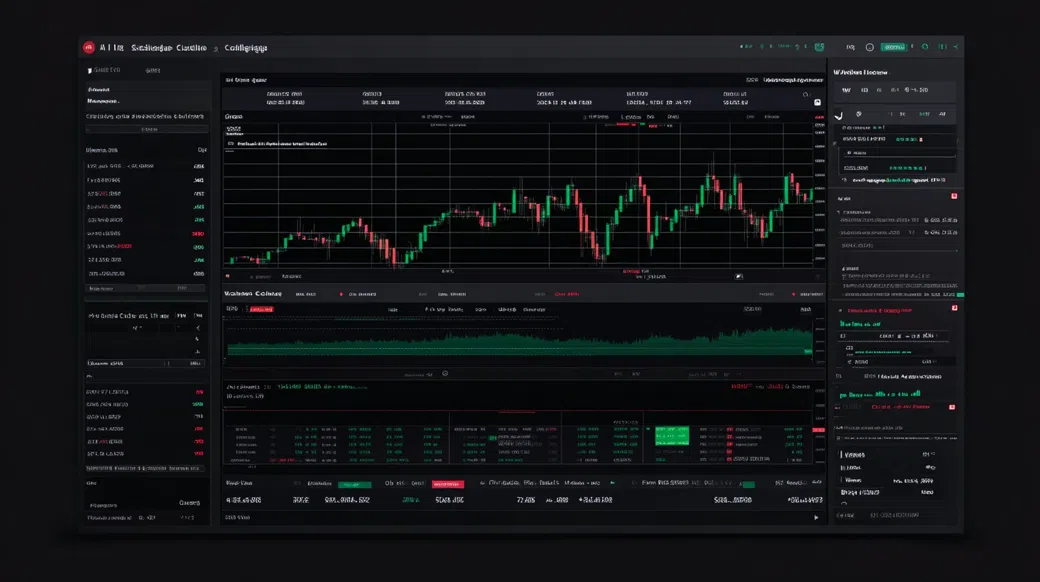
On desktop, the proprietary WebTrader loaded consistently across multiple sessions, with a clean watchlist-first layout and an order ticket that supports market, limit, and stop orders plus SL/TP brackets. Execution felt stable when I tested a small EUR/USD position into the London open; I didn’t see “requote loops,” but fast markets can still produce slippage (that’s a market microstructure reality, not a UI setting). If you’re coming from MT4/MT5, the gap is mainly ecosystem: fewer custom indicators/EAs and less third-party tooling.
Muelle Capitaje App: Mobile Trading Experience
The Muelle Capitaje app mirrors the WebTrader’s structure closely: real-time quotes, quick search, and one-tap position close are all there, and deposits/withdrawals are reachable from the same navigation stack. My Muelle Capitaje login stayed persistent with biometric unlock enabled, which reduced friction during quick checks. Push notifications covered price alerts and order events; the main mobile quirk was chart-space economy—adding multiple indicators can feel cramped on smaller screens.
Charting, Tools & Research
Tooling is practical: multi-timeframe charts, the core indicator set (MA, RSI, MACD, Bollinger), drawing tools, and editable watchlists. An economic calendar and a lightweight news feed are integrated, which helps for CPI/FOMC weeks, but it won’t replace a dedicated research terminal. Traders who rely on advanced strategy testing or algorithmic deployment will notice the ceiling versus MT5 or cTrader environments.
Muelle Capitaje Account Opening & Minimum Deposit
After entering email, phone, and a basic profile (country, currency, trading experience), the portal pushed me straight into identity verification rather than postponing it to the first payout. The KYC request was standard AML fare: a government-issued photo ID plus a proof of address dated within three months. Verification cleared within the same business day in my case, and account limits lifted immediately after approval.
- Minimum Deposit: $200 (the Muelle Capitaje minimum deposit in my onboarding flow)
- Funding Methods: Visa/Mastercard, bank wire, regional e-wallets, and crypto (BTC, USDT)
- Demo Account: $10,000 in virtual funds for testing spreads, margin behavior, and the order ticket
- Account Types: Standard (spread-only) and Pro/Raw (tight spreads + $7 round-turn commission/lot)
Funding via USDT credited quickly once network confirmations hit, and the platform showed a clear transaction status trail inside the wallet page. One nuance: base-currency selection matters—if you deposit in one currency and trade/hold in another, conversion can become a repeat fee you don’t notice until statements are reviewed.
Muelle Capitaje Customer Support Review
I contacted live chat with a pointed question about swap rates on XAU/USD and whether weekend financing applies to crypto CFDs; the agent responded in about three minutes and pointed me to the symbol-spec page where long/short swap values were listed. For a second pass, I opened an email ticket asking about withdrawal sequencing after KYC, and the reply arrived roughly nine hours later with a step-by-step outline (internal processing first, then the payment rail timeline).
Support coverage followed the usual 24/5 pattern, which fits FX and index traders but leaves a gap for weekend-only issues in crypto. Language availability appears region-dependent, and I didn’t see a prominently advertised phone line in my portal view. Relative to similar offshore brokers, the key positive was that answers referenced specific pages/fields instead of generic “please wait” scripts.
Ready to Explore Muelle Capitaje?
If you want to sanity-check spreads, platform feel, and eligible funding rails in your region, start with a demo and then verify the live fee schedule before committing size. Treat it like a data exercise: confirm what you can measure inside the terminal.
Visit Muelle CapitajeMuelle Capitaje Review FAQ
Is Muelle Capitaje good for beginners?
It can be, provided you keep leverage modest and use the demo first. The interface is not overly technical, and the Standard account avoids commission math, but the offshore setup means you should be extra disciplined about risk controls and position sizing.
Can I trade crypto on Muelle Capitaje?
Yes, crypto is available as CFDs (BTC/USD, ETH, and a few other large-caps). You’re trading price exposure with financing costs, not buying on-chain assets you can withdraw to a personal wallet.
Is Muelle Capitaje a scam?
No—based on my account test, it behaved like a functioning broker (KYC enforced, trades executed, and a withdrawal workflow present). The more accurate framing is risk, not “scam”: it operates under an offshore model, so protections and dispute options are more limited than Tier-1 regulated brokers.
Is Muelle Capitaje available in the USA?
No, the USA is restricted. The platform also blocks sign-ups from sanctioned jurisdictions and may restrict additional countries depending on compliance policy.
How long does a Muelle Capitaje withdrawal take?
A Muelle Capitaje withdrawal typically clears internal processing within 24–48 hours after KYC is approved. Receipt time depends on the rail: cards often take 2–5 business days, bank wires 3–7 business days, and crypto transfers are often completed the same day once released.
What is the Muelle Capitaje minimum deposit?
The Muelle Capitaje minimum deposit is $200 in the live onboarding flow I used. That amount is enough to test both margin behavior and real spreads, but it’s still small enough to treat as a measured pilot allocation.
Does Muelle Capitaje have a mobile app?
Yes, there are iOS and Android apps. The mobile build supports charting, alerts, and account actions like deposits and withdrawals, making it viable for monitoring and quick trade management away from desktop.
Final Verdict: Should You Use Muelle Capitaje in 2026?
Overall Score: 4.0/5
My takeaway is data-driven: order placement, KYC, and payout rails behaved coherently, which is the baseline you need before you even debate spreads. Muelle Capitaje is strongest when used as a liquid multi-asset CFD terminal—FX, indices, gold, and BTC—where the Raw tier can reduce friction for active traders. The limitation is structural: offshore registration (Mauritius FSC posture) typically means fewer formal protections and weaker escalation routes if something goes wrong. Use conservative leverage, watch swaps, and treat CFDs as high-risk instruments where capital is at risk. If you want to compare the current schedule and features, check Muelle Capitaje.
Best for: active CFD traders who want 1:500 leverage and can monitor costs like swap and commissions. Avoid if: you require Tier-1 regulation, deep research tooling, or long-term holding where financing dominates returns.