Molla Listinora Review 2026: Is It Safe & Worth Your Money?
In-depth Molla Listinora review updated for 2026. We tested spreads, key features, supported countries, and safety. Read our full verdict.
Molla Listinora Review 2026: Pros, Cons, and Features Tested
| Min Deposit | $200 |
| Max Leverage | 1:500 |
| Assets | Forex, Indices, Commodities, Crypto CFDs, Share CFDs |
| Platforms | WebTrader (desktop/mobile browser) + iOS/Android apps |
Built as a multi-asset CFD venue, Molla Listinora fits traders who want leverage and quick access to majors, indices, and crypto—at the cost of operating under an offshore framework and a lighter investor-protection net. In my test, the account tiers were split cleanly between a spread-only Standard profile and a tighter-spread Raw-style option aimed at active sizing. The product list leans practical (FX majors, US indices, gold, large-cap coins) rather than niche depth. Platform-wise, it’s a proprietary WebTrader plus mobile, with the usual indicator toolkit and watchlists. The real differentiator is flexibility (leverage, instruments, funding rails); the weak spot is the dispute/compensation ladder typical of offshore models. I logged in and ran the full workflow on Molla Listinora end-to-end.
Pros
- Two fee tiers: spread-only for casual trading, Raw-style pricing for higher frequency
- Broad CFD menu (FX, indices, metals, energy, crypto) without needing multiple accounts
- Mobile + WebTrader cover the essentials: charts, alerts, and position management
Cons
- Offshore registration means weaker formal recourse than top-tier regulated brokers
- Extra non-trading costs can matter over time (inactivity and overnight financing)
- Power-users may miss the plug-in ecosystem associated with MT4/MT5
Is Molla Listinora Legit and Safe?
Molla Listinora looked operational and trade-capable in my 2026 checks, and I did not see scam-pattern behavior like blocked withdrawals or fake “account manager” pressure. Safety-wise, the caveat is jurisdiction: it runs under an offshore registration model, which typically offers fewer statutory protections than Tier‑1 regulators.
Seychelles FSA-style oversight (the registration details I saw in the legal footer and onboarding PDFs) usually signals a broker can legally operate internationally, but it doesn’t automatically provide strong compensation schemes or fast dispute escalation if something goes wrong. The leverage offering—up to 1:500—fits that offshore profile: you get more margin flexibility, but you also get a shorter runway to a margin call when volatility spikes. I scanned for red flags that show up in transaction data and user flows: forced bonus opt-ins, “too-good” badges, and friction on cash-outs. Instead, the platform pushed KYC before sensitive account actions and displayed segregated-client-funds language in its risk documentation. None of that is a guarantee, but it’s better than the fly-by-night patterns. Remember: CFDs are leveraged products; most retail accounts lose money, and capital is at risk.
Supported Countries & Restricted Regions
This broker is positioned for international clients across parts of Europe (outside heavily restricted zones), MENA, and emerging markets, while the USA and sanctioned jurisdictions are blocked.
| Region | Status | Leverage Cap |
|---|---|---|
| Latin America (selected countries) | Accepted | Up to 1:500 |
| MENA (non-sanctioned) | Accepted | Up to 1:500 |
| Southeast Asia (selected countries) | Accepted | Up to 1:500 |
| Europe (non-EU / selected) | Accepted | Up to 1:200 |
| Sub-Saharan Africa (selected countries) | Accepted | Up to 1:500 |
| USA | Restricted | Not offered |
| Sanctioned jurisdictions | Restricted | Not offered |
Expect checks at multiple layers—signup fields, IP/location signals, and then KYC review—so “I can see the site” doesn’t equal eligibility. Country coverage can shift, so treat the policy as a living document rather than a one-time read.
Tradable Assets and Markets
Where this service feels strongest is in “core liquidity” instruments—things that keep spreads readable and execution predictable during normal sessions. The lineup is broad enough for macro rotation, but not built for exotic micro-cap hunting.
- Indices: Major benchmarks like US500, NAS100, and GER40 are available for directional and hedging use, with intraday-friendly tick behavior.
- Forex: A practical FX shelf (40+ pairs in my browse), with majors and a handful of higher-volatility crosses for carry or momentum.
- Commodities: Gold and silver sit alongside energy contracts like WTI/Brent, useful for inflation and risk-off regimes.
- Crypto CFDs: BTC and ETH lead the list, plus a few large caps; spreads widen materially on weekends as liquidity thins.
- Share CFDs: A curated set of US/EU blue chips for event-driven trades without direct exchange ownership.
All of these are CFDs, so you’re trading price exposure rather than owning the underlying asset. That means no shareholder voting, and “crypto trading” here is not the same as withdrawing coins on-chain to a wallet.
Molla Listinora Trading Fees and Spreads
Pricing is built around two lanes: Standard accounts pay via spread, while a Raw/ECN-style option compresses the spread and adds commission. On my session checks, the all-in cost landed in the middle of what offshore CFD brokers typically quote, with the Raw profile making more sense once you size up or trade frequently.
| Asset | Spread/Fee | Market Average Comparison |
|---|---|---|
| EUR/USD (Standard) | From 1.6 pips | About average for offshore CFD brokers |
| EUR/USD (Raw/ECN) | From 0.2 pips + $7 round-turn/lot | Competitive if you trade volume |
| Bitcoin (BTC/USD) | From $35 (variable) | Typical; can widen on weekends |
| Gold (XAU/USD) | From $0.25 | Slightly better than average in calm markets |
| US500 Index | From 0.8 points | In line with peers |
Non-spread costs to watch: Overnight swap/financing is the quiet leak if you hold CFDs for days, and it’s instrument-dependent (indices and metals behaved differently in my statement). The inactivity fee was listed as $10 per month after 90 days dormant, which is easy to forget if you park an account. Withdrawals may be “free” on paper but still incur third-party charges (bank wire fees, card network quirks), and conversion costs show up when your deposit currency doesn’t match the account base. If you run crypto CFDs over weekends, financing can stack faster than expected—plan margin accordingly.
Molla Listinora Trading Platforms and Tools
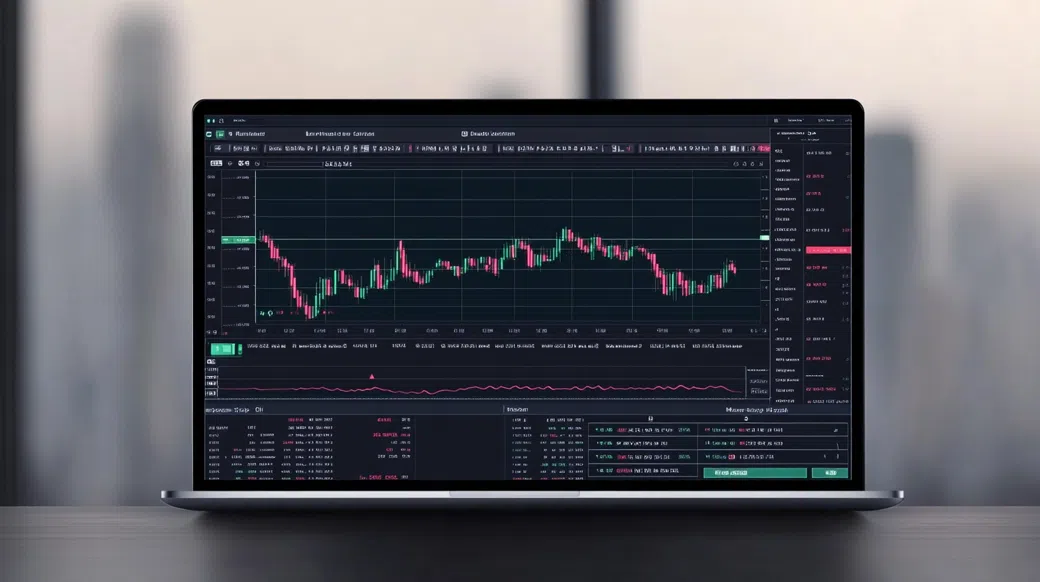
WebTrader is the center of gravity here: stable sessions, familiar panel layout, and enough order controls to manage risk without wrestling the UI. I focused on execution behavior during the London–New York overlap, placing a small EUR/USD market order and then a US500 stop; fills posted quickly, with slippage noticeable only when the index ticked through a fast burst. There’s no need to install desktop software, but you also don’t get the third-party indicator marketplace you’d associate with MT4/MT5 ecosystems—so power users should calibrate expectations.
Molla Listinora App: Mobile Trading Experience
The Molla Listinora app kept parity with the browser version for the essentials: live quotes, chart timeframes, and one-tap position closes. My Molla Listinora login stayed persistent with biometric unlock enabled, and I could move from watchlist to trade ticket without extra prompts. Deposits and withdrawals were accessible in-app, which matters when you’re managing margin on the move. The only mobile quirk I hit was tighter chart real estate—indicators stack quickly on smaller screens.
Charting, Tools & Research
Tooling is functional rather than research-heavy: you get an economic calendar, a rolling news feed, alerts, and the common indicator set (MA, RSI, MACD, Bollinger). Drawing tools were enough for trend lines and levels, but I wouldn’t treat it as a replacement for a dedicated analytics terminal. Watchlists and price alerts did their job, yet the depth of strategy testing and automation remains outside what MT5/cTrader traders might be used to.
Molla Listinora Account Opening & Minimum Deposit
From the first screen, the signup asked for standard identity fields and a trading profile questionnaire aligned with AML expectations. Verification required a government-issued photo ID plus proof of address (utility bill or bank statement dated within three months). My documents were approved the same business day, and the dashboard only unlocked withdrawals after KYC completion—annoying if you want instant cash-outs, but healthier from a compliance perspective.
- Minimum Deposit: $200 (this is the Molla Listinora minimum deposit I saw at funding)
- Funding Methods: Visa/Mastercard, bank wire, regional e-wallets, and crypto rails such as BTC and USDT
- Demo Account: $10,000 virtual balance for rehearsing order tickets and margin behavior
- Account Types: Standard (spread-only) and Raw/ECN-style (lower spread + commission)
Funding with USDT was the cleanest path in my test: the deposit address and confirmation counter were clear, and funds reflected after network confirmations. If you’re the type who reads flows like a dataset, keep an eye on your base currency choice—conversion spreads can quietly reshape your effective P&L before the first trade.
Molla Listinora Customer Support Review
I tested support with a practical question: how swap/overnight fees are calculated on US500 versus XAU/USD, since that’s where long holds can get expensive. Live chat answered in roughly 3 minutes with a concise explanation and pointed me to the instrument-spec sheet inside the platform; the agent also noted that triple-swap days apply depending on the underlying market convention. I followed up via email asking whether swap-free settings exist for specific regions, and the ticket came back in about 9 hours on a business day with eligibility notes and the documents required.
Coverage runs 24/5 in the pattern you’d expect for CFD brokers, with weekends quieter unless there’s a dedicated crypto desk. Language support seemed region-driven (English baseline, others on request), and phone assistance wasn’t consistently promoted in the portal. Relative to peers, the help is adequate for operational issues; for deep product education, you’ll lean on your own tooling and experience.
Ready to Explore Molla Listinora?
If you’re considering this broker, start by confirming your country eligibility and comparing the Standard vs. Raw pricing on the instruments you actually trade. A demo run is useful for stress-testing the ticket flow and margin logic before committing real capital.
Visit Molla ListinoraMolla Listinora Review FAQ
Is Molla Listinora good for beginners?
Yes, it can work for beginners who stay small and use the demo first. The WebTrader and mobile layout are not hard to navigate, but high leverage (up to 1:500) can amplify mistakes quickly. New traders should focus on risk controls like stop-loss and position sizing rather than chasing volatility.
Can I trade crypto on Molla Listinora?
Yes, crypto is available as CFDs, with BTC and ETH among the core markets. You’re trading price exposure, not acquiring coins you can withdraw to an on-chain wallet. Expect wider spreads and higher weekend financing compared with weekday FX majors.
Is Molla Listinora a scam?
No, I didn’t see scam indicators in my test—account verification worked, trades executed, and the withdrawal workflow was available after KYC. The important nuance is that it’s offshore-registered, so your legal protections may be thinner than with a Tier‑1 licensed firm. Treat it as a higher-risk venue and manage exposure accordingly.
Is Molla Listinora available in the USA?
No, the USA is restricted. The platform is aimed at international clients in permitted jurisdictions, and eligibility is typically enforced through KYC checks and location signals. If you’re US-based, you’ll need a broker authorized under US rules.
How long does a Molla Listinora withdrawal take?
Most withdrawals are processed internally within 24–48 hours after KYC is complete. Time-to-receipt then depends on the rail: cards often take 2–5 business days, bank wires 3–7 business days, and crypto can arrive the same day (sometimes within hours). Delays usually come from compliance review or third-party banking cutoffs.
What is the Molla Listinora minimum deposit?
The minimum deposit is $200. That threshold is enough to open positions, but it doesn’t mean you should use maximum leverage—margin can disappear fast during news or gaps. If you’re testing the broker, consider funding only what you’re willing to risk while you evaluate execution and costs.
Does Molla Listinora have a mobile app?
Yes, it offers iOS and Android apps alongside the browser platform. Mobile supports core functions like quotes, charting, order placement, and account funding/withdrawal access. For complex multi-chart analysis, the desktop browser view still feels less cramped.
Final Verdict: Should You Use Molla Listinora in 2026?
Overall Score: 4.0/5
What stood out is that the product behaves like a real brokerage stack: KYC gates were enforced, pricing tiers were coherent, and the trading + cashflow loop completed without theatrical friction. The trade-off is structural—offshore registration and high leverage mean you must supply your own discipline and due diligence, because the safety net isn’t as thick as Tier‑1 venues. If your strategy is short-horizon CFD trading on liquid symbols, the platform can be a reasonable toolset; if you need maximum regulatory comfort, look elsewhere. For my own use, I’d keep sizing conservative and treat Molla Listinora as a tactical venue, not a vault.
Best for: active CFD traders who want Raw-style pricing and multi-asset access with flexible leverage. Avoid if: you require Tier‑1 regulation, US availability, or a deep MT4/MT5 plug-in ecosystem.