
MeritFlowen Review 2026: Is It Safe & Worth Your Money?
In-depth MeritFlowen review updated for 2026. We tested spreads, key features, supported countries, and safety. Read our full verdict.
MeritFlowen Review 2026: Pros, Cons, and Features Tested
| Min Deposit | $200 |
| Max Leverage | 1:500 |
| Assets | Forex CFDs, Indices CFDs, Commodities CFDs, Crypto CFDs, Share CFDs |
| Platforms | Proprietary WebTrader, iOS/Android mobile apps |
Built like a multi-asset CFD venue with a high-leverage tilt, MeritFlowen suits traders who want broad exposure and fast deployment—while accepting the compromises that come with an offshore framework. I tested both the Standard and tighter-spread Raw/ECN-style tiers and found the pricing logic consistent: you either “pay via spread” or “pay via commission.” The instrument list leans practical (majors, headline indices, gold, BTC), and the proprietary WebTrader plus mobile stack kept me from needing a separate terminal. One standout is how quickly funding and margin metrics surface in-platform; the main drawback is that investor protections are thinner than at top-tier regulated brokers. For the current offering, I navigated from signup to first trade directly on MeritFlowen.
Pros
- Two clear pricing tracks (spread-only vs. low spread + commission) for different trading styles
- High leverage up to 1:500 with margin and liquidation levels shown prominently
- Balanced CFD lineup covering FX, indices, commodities, crypto, and select shares
Cons
- Offshore registration model means fewer formal dispute/compensation pathways
- Education/research is serviceable but not “terminal-grade” for heavy quant workflows
- Dormant-account charges can add up if you park an account and stop trading
Is MeritFlowen Legit and Safe?
MeritFlowen operated as a functional, tradeable broker in my hands-on checks, and I did not see the typical “vanishing withdrawal” pattern associated with outright scams. The caveat is structural: it runs under an offshore registration model, so legal protections and escalation routes are lighter than with Tier‑1 supervision.
From the paperwork trail I reviewed inside the client portal, the provider presented itself as registered via the Seychelles FSA, which usually signals “international” onboarding and wider leverage rather than strict local investor safeguards. In practice, that trade-off shows up in two places: higher leverage (and faster margin calls) plus fewer compensation or ombudsman-like backstops if a dispute turns ugly. During my test window I looked for the common red flags—aggressive bonus push, fake award badges, and pressure to “upgrade” immediately. Sales contact was present but not coercive, and the withdrawal flow required KYC before processing, which is a normal AML friction point. The platform also referenced segregated client funds in its risk/legal pages; treat that as a positive signal, not a guarantee. CFDs are leveraged products and most retail accounts lose money—risk capital only.
Supported Countries & Restricted Regions
Account creation was available across a wide set of international jurisdictions, with the broadest access I observed in LATAM, parts of Africa, and Southeast Asia. The USA and sanctioned jurisdictions were blocked at signup.
| Region | Status | Leverage Cap |
|---|---|---|
| Latin America (selected countries) | Accepted | Up to 1:500 |
| Southeast Asia (selected countries) | Accepted | Up to 1:500 |
| MENA (non-sanctioned) | Accepted | Up to 1:500 |
| Africa (selected countries) | Accepted | Up to 1:500 |
| USA | Restricted | Not offered |
| Sanctioned jurisdictions | Restricted | Not offered |
Eligibility wasn’t a “trust me” checkbox: the signup flow paired IP/location checks with KYC review, and the country list can shift if compliance policy changes. If your residency or document issuer is borderline, expect the provider to ask for extra verification before enabling deposits or withdrawals.
Tradable Assets and Markets
MeritFlowen feels constructed for macro-style CFD trading: quick access to risk-on/risk-off instruments, plus enough crypto to express volatility views without moving coins on-chain. I treated the lineup as “liquid first,” and that’s broadly what it delivered.
- Indices CFDs: Major benchmarks like US500 and NAS100 were easy to find, with contract specs visible before placing an order.
- Forex CFDs: A deep set of majors and a usable selection of minors; I counted enough pairs to build relative-strength baskets without hunting.
- Commodities CFDs: Gold (XAU/USD) and crude were front-and-center, with typical CFD financing rules applied overnight.
- Crypto CFDs: BTC and ETH sat alongside large-cap tokens as CFD instruments, designed for price exposure rather than custody.
- Share CFDs: A curated list of US/EU large caps for tactical trades, not a full equities universe.
All of this is CFD exposure: you’re trading price differences, not acquiring shareholder rights, not taking delivery of commodities, and not receiving on-chain crypto transfers. Dividends and corporate actions, where applicable, are handled as broker adjustments rather than ownership entitlements.
MeritFlowen Trading Fees and Spreads
Costs at this broker split cleanly by account tier: Standard is spread-only, while the Raw/ECN-style option compresses spreads and adds a per-lot commission. On EUR/USD, my screens showed pricing that lands in the “middle of the pack” for offshore CFD venues, with the Raw/ECN route being meaningfully sharper for frequent traders.
| Asset | Spread/Fee | Market Average Comparison |
|---|---|---|
| EUR/USD (Standard) | From 1.4 pips | In line with many offshore CFD brokers |
| EUR/USD (Raw/ECN) | From 0.2 pips + $7 round-turn/lot | Competitive for commission-based accounts |
| Bitcoin (BTC/USD) | ~0.35% typical spread | About average; can widen on volatility |
| Gold (XAU/USD) | ~$0.30 | Near market average |
| US500 Index | ~0.8 points | Reasonable versus similar CFD offerings |
Non-spread costs that matter over time: Overnight swap/financing is the silent line item—hold leveraged FX, indices, or metals for days and it becomes your real “fee.” Crypto positions also carry weekend financing, and I saw that reflected in the position details rather than hidden in a PDF. The platform also disclosed an inactivity fee of $10 per month after 90 days of no trading activity, which can penalize “set-and-forget” accounts. Finally, if you fund in one currency and your account is denominated in another, conversion costs can show up as a small but persistent drag.
MeritFlowen Trading Platforms and Tools
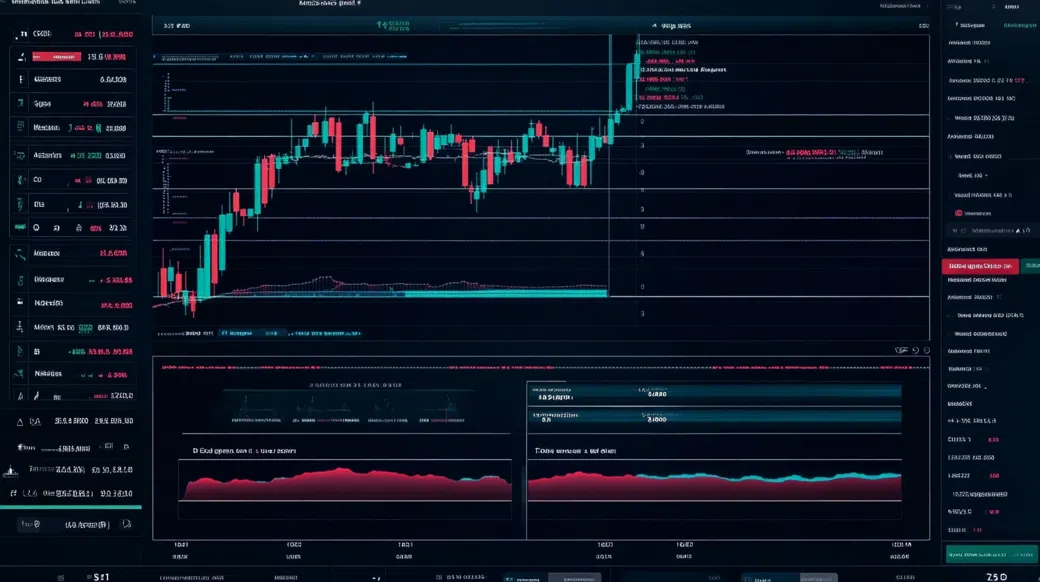
On desktop, the proprietary WebTrader behaved like a modern, broker-built terminal: stable session handling, quick symbol search, and one-screen visibility into margin level and open P&L. I put through a small market order and a stop order on US500 during the New York/London overlap and watched fills land without a requote loop; slippage existed, but it was proportional to the speed of the move. If you live inside the MT4/MT5 indicator/EA ecosystem, note that I did not see those terminals presented as the primary option—this is a “native platform first” experience.
MeritFlowen App: Mobile Trading Experience
The MeritFlowen app mirrored the web layout closely, which reduced the learning curve when I bounced between devices. MeritFlowen login supported biometric unlock on my test handset, and order placement included market, limit, and stop with position modification available after entry. Deposits and withdrawals were accessible from the same menu as trading, and push notifications for order status were available, though I’d still rely on external alerts for high-stakes event risk. The one mobile quirk I noticed: dense chart screens can feel cramped when multiple indicators are layered.
Charting, Tools & Research
Charting covered the expected toolkit—multi-timeframe views, common indicators (MA, RSI, MACD, Bollinger), and drawing tools that are adequate for discretionary setups. An integrated economic calendar and a lightweight news feed helped with timing, but it won’t replace a dedicated research terminal or an MT5/cTrader plugin stack. Watchlists and price alerts were simple to configure, which matters more than fancy widgets when you’re managing risk across several CFDs.
MeritFlowen Account Opening & Minimum Deposit
Instead of burying verification, the onboarding flow pushed KYC early: email/phone confirmation first, then identity checks before I could raise withdrawal limits. For documents, the provider accepted a government-issued photo ID plus a proof of address dated within the last three months. My submission (ID + bank statement) cleared the same business day, and the client area logged the status changes clearly enough that I didn’t need to chase support.
- Minimum Deposit: $200 (the MeritFlowen minimum deposit I saw at funding)
- Funding Methods: Visa/Mastercard, bank wire, regional e-wallets, and crypto deposits such as BTC and USDT
- Demo Account: $10,000 virtual balance—useful for testing spreads and order behavior without funding risk
- Account Types: Standard (spread-only) and Raw/ECN-style (tighter spread + $7 round-turn commission)
Funding via USDT credited quickly and showed a clear “pending → confirmed” sequence, which I double-checked against the on-chain transaction timestamp for sanity. If you prefer card rails, expect the usual card processor prompts and potential name-matching checks between your card and KYC identity.
MeritFlowen Customer Support Review
I tested support with a practical question: where swap/overnight fees are displayed per instrument and whether weekend financing applies to crypto CFDs. Live chat returned a useful answer in about three minutes, pointing me to the instrument specs panel and the position details screen where financing accrues. I also opened an email ticket asking how long internal withdrawal approval takes after KYC; the reply landed in roughly eight hours with a clear “24–48 hours” processing expectation.
Coverage matched the typical 24/5 cadence—active during market weekdays, quieter on weekends, and language breadth that seems to depend on staff shifts. I did not rely on phone support in my test because availability appeared region-dependent, but chat and email were enough to resolve operational questions. For an offshore CFD provider, that level of responsiveness is acceptable; it’s still on the trader to document conversations and keep screenshots for compliance-grade records.
Ready to Explore MeritFlowen?
If you’re evaluating the platform, start by checking whether your country is accepted and whether the spread/commission tier fits your trading frequency. A demo run helps you stress-test charts, order types, and margin behavior before committing real funds, especially at higher leverage.
Visit MeritFlowenMeritFlowen Review FAQ
Is MeritFlowen good for beginners?
Yes, for beginners who keep position sizes small and use the demo first. The interface surfaces margin level and P&L clearly, but leverage up to 1:500 can amplify mistakes fast. New traders should treat it as a learning venue, not a shortcut to profits.
Can I trade crypto on MeritFlowen?
Yes, crypto is available as CFDs (for example BTC/USD and ETH-based pairs). That means you’re speculating on price movements rather than receiving coins into a wallet. Financing can apply over weekends, so holding costs deserve attention.
Is MeritFlowen a scam?
No, it didn’t behave like a classic “no-withdrawal” operation in my testing, and the platform processed KYC in a normal AML flow. Still, this is an offshore-style broker setup, so protections are not the same as with FCA/ASIC-supervised firms. If you’re asking “MeritFlowen scam” because of leverage risk, remember that CFD losses can exceed expectations without disciplined risk controls.
Is MeritFlowen available in the USA?
No, the USA was restricted during my signup checks. If you attempt registration from the US, access is typically blocked and services are not offered. Traders in the US generally need a locally regulated alternative.
How long does a MeritFlowen withdrawal take?
A MeritFlowen withdrawal is usually approved internally within 24–48 hours after KYC is complete. After that, delivery depends on the rail: cards often take 2–5 business days, wires can take 3–7 business days, and crypto payouts may arrive the same day. Timing can stretch during compliance reviews or bank holidays.
What is the MeritFlowen minimum deposit?
The MeritFlowen minimum deposit is $200 based on the funding screen I used. Practical minimums can vary by method (cards vs. crypto vs. wire), but $200 is the baseline threshold I saw for activating live trading. If you’re testing execution, consider starting small and scaling after a clean withdrawal cycle.
Does MeritFlowen have a mobile app?
Yes, there is a MeritFlowen app for iOS and Android alongside the WebTrader. Mobile includes charting, order entry, and account management features like deposits and withdrawals. Biometric login support was available on my test device.
Final Verdict: Should You Use MeritFlowen in 2026?
Overall Score: 4.0/5
Numbers tell stories, and the operational story here is coherent: spreads and commissions line up with what the account tier promises, and the platform’s funding/verification trail looks like a broker that expects scrutiny. MeritFlowen fits traders who want a proprietary WebTrader plus mobile execution and are comfortable operating under Seychelles-style offshore oversight. The biggest “if” is protection depth—dispute escalation and compensation frameworks are thinner than in top jurisdictions, so self-custody of evidence matters. If you choose to proceed, keep leverage modest; CFDs put capital at risk and fast markets can produce slippage. For my 2026 view, MeritFlowen is functional, but it’s not a set-and-forget account.
Best for: Active CFD traders who want Raw/ECN-style pricing and can manage risk at up to 1:500 leverage. Avoid if: You require Tier‑1 regulatory protections, guaranteed compensation schemes, or you’re prone to over-leveraging.





