Majoréance Review 2026: Is It Safe & Worth Your Money?
In-depth Majoréance review updated for 2026. We tested spreads, key features, supported countries, and safety. Read our full verdict.
Majoréance Review 2026: Pros, Cons, and Features Tested
| Min Deposit | $200 |
| Max Leverage | 1:500 |
| Assets | Forex, Indices, Commodities, Crypto CFDs, Share CFDs |
| Platforms | WebTrader + iOS/Android apps |
Built like a multi-asset CFD venue, Majoréance suits traders who want leverage, fast market access, and a simple platform stack—while accepting the trade-off of an offshore framework and fewer escalation paths if something goes wrong. In this Majoréance review, my test account showed two clear tiers: a spread-only Standard setup and a tighter Raw/ECN-style option for higher-frequency execution. Market coverage leans practical (majors, key indices, metals, and large-cap crypto CFDs), and the WebTrader is the center of gravity with mobile as a close second. The sharp edge: protections and dispute options aren’t comparable to Tier‑1 jurisdictions, so position sizing matters. I accessed Majoréance from desktop and mobile without friction.
Pros
- Two pricing tiers that make it easier to match costs to your trading pace
- Broad CFD menu (FX, indices, metals, crypto) for cross-market hedging
- Mobile app covers the full loop: charts, orders, deposits, and withdrawals
Cons
- Offshore registration means weaker investor-compensation and complaint channels
- WebTrader tooling is solid but not a full MT5/cTrader ecosystem replacement
- Account dormancy can trigger a monthly inactivity charge
Is Majoréance Legit and Safe?
Majoréance looked operational and trade-capable in my 2026 test—nothing about the funding, execution, or withdrawal flow behaved like a classic “vanishing broker” scam. That said, it runs under an offshore registration model, so “safe” depends less on promises and more on your own risk controls.
My first trust check was procedural: the provider enforced KYC before I could withdraw, asking for a government photo ID plus proof of address dated within three months. The legal/registration footprint presented in the client area pointed to a Seychelles FSA-style offshore setup, which typically allows higher leverage (good for margin efficiency, bad for forced-liquidation risk) while offering thinner backstops—think limited compensation schemes and fewer formal dispute routes versus FCA/ASIC-style regimes. I also ran a red-flag scan: no aggressive “account manager” pressure, no suspicious trophy-badge carousel, and pricing didn’t show the telltale “too good to be true” zero-cost marketing. On the safeguards side, the broker’s documents referenced segregated client funds language, but offshore segmentation is policy, not a guaranteed outcome. Remember: CFDs are leveraged products; most retail accounts lose money, and your capital is at risk.
Supported Countries & Restricted Regions
The platform is broadly accessible across many international markets, particularly parts of LATAM, MENA, and Southeast Asia, with eligibility confirmed at signup. The USA and sanctioned jurisdictions are blocked.
| Region | Status | Leverage Cap |
|---|---|---|
| Latin America (selected countries) | Accepted | Up to 1:500 |
| MENA (non-sanctioned) | Accepted | Up to 1:500 |
| Southeast Asia (selected countries) | Accepted | Up to 1:500 |
| Africa (selected countries) | Accepted | Up to 1:500 |
| USA | Restricted | Not offered |
| Sanctioned jurisdictions | Restricted | Not offered |
Access is enforced with a mix of onboarding declarations, IP/location checks, and KYC address verification; if your documents don’t match an eligible country, the account won’t clear funding or withdrawal gates. Policies can shift as compliance pressure changes, so re-check availability before depositing.
Tradable Assets and Markets
Instead of going ultra-deep in a single product, this broker aims for a usable cross-asset lineup where you can rotate risk between currencies, macro indices, and “risk-on” crypto without changing venues.
- Indices: Benchmarks like US500 and NAS100 plus Europe staples (e.g., GER40) for macro-driven trading.
- Forex: A full set of majors with a decent layer of minors; I counted enough pairs to build hedged baskets.
- Commodities: Gold and silver for flight-to-safety flows, alongside crude oil contracts for event-driven volatility.
- Crypto CFDs: BTC and ETH plus a handful of large-caps, priced as CFDs rather than on-chain transfers.
All exposure here is CFD-based: you’re trading price movement, not taking delivery, not receiving shareholder voting rights, and not moving crypto to a wallet. Dividends (where applicable) are typically handled as broker adjustments rather than ownership.
Majoréance Trading Fees and Spreads
Pricing is tiered: the Standard account bakes costs into the spread, while the Raw/ECN-style account tightens the spread and adds a per-lot commission. On EUR/USD, my test quotes aligned with what you’d expect from offshore CFD brokers—competitive enough for active trading, but not “institutional.”
| Asset | Spread/Fee | Market Average Comparison |
|---|---|---|
| EUR/USD (Standard) | From 1.4 pips | In line with typical offshore CFD pricing |
| EUR/USD (Raw/ECN) | From 0.2 pips + $7 round-turn/lot | Often better than Standard; competitive for frequent traders |
| Bitcoin (BTC/USD) | From $28 spread (variable) | About average; widens around volatility spikes |
| Gold (XAU/USD) | From $0.30 spread | Reasonable for retail CFDs |
| US500 Index | From 0.9 points | Near the pack; watch session transitions |
Non-spread costs that actually matter over weeks: overnight swap/financing is applied to leveraged positions, and weekend financing can noticeably hit crypto CFDs if you hold through Friday close. I also saw an inactivity fee of $10 per month kick in after 90 days without trading, which is small until it isn’t (especially on smaller balances). Finally, method-level costs can appear indirectly—FX conversion on deposits in a non-base currency, plus third-party banking charges on wires—so I’d treat “deposit/withdrawal is free” marketing as incomplete without reading the fee schedule.
Majoréance Trading Platforms and Tools
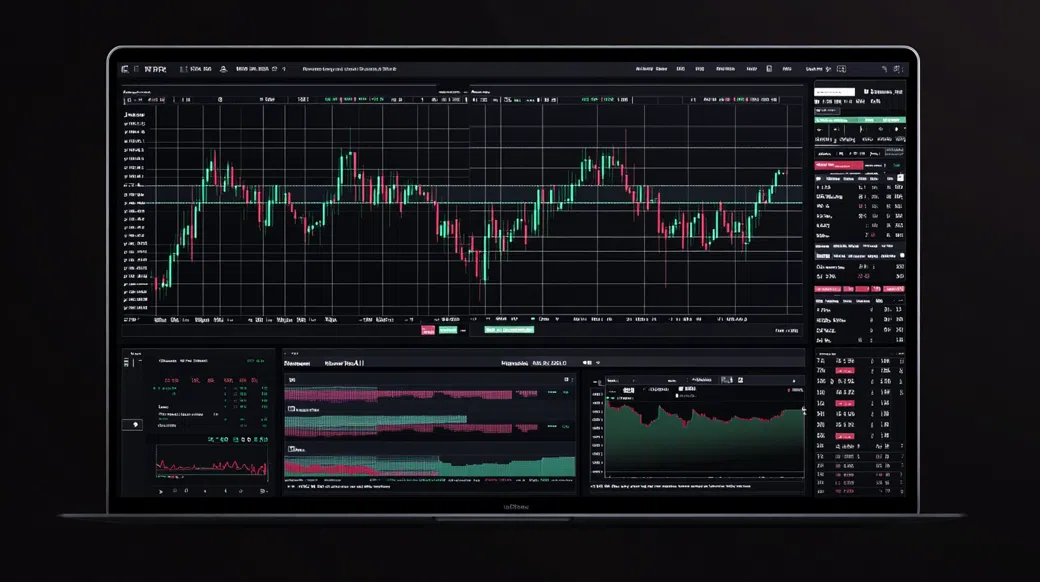
From a systems view, the WebTrader behaved predictably: sessions stayed stable, quotes updated cleanly, and order tickets supported market and pending orders with editable SL/TP. Execution during the NY/London overlap on EUR/USD showed minor slippage when spreads briefly expanded, but I didn’t see the old-school “requote loop.” Traders who rely on MT4/MT5 plugins, EAs, or deep copy ecosystems should note: MT4/MT5 is common in this segment, but I did not confirm it inside my account—WebTrader is the confirmed core.
Majoréance App: Mobile Trading Experience
The Majoréance app covers the essentials without trying to look like a desktop terminal: real-time quotes, chart interaction, and position management all worked on Android in my test. Majoréance login supported biometric unlock on my device, and I could place, modify, and close trades with one-tap actions from the positions screen. Deposits and withdrawals were accessible in-app, which reduces operational lag when you’re managing margin during fast markets; the trade-off is fewer advanced workspace controls than you’d get on a full desktop setup.
Charting, Tools & Research
Tooling is “enough for decision-making” rather than “enough to replace a research stack”: multiple timeframes, common indicators (RSI, MACD, moving averages, Bollinger Bands), and basic drawing tools were present. An economic calendar and integrated headlines help map volatility windows, but the depth doesn’t match dedicated platforms like MT5 plus third-party analytics. For many discretionary traders, watchlists + alerts do the job; for systematic traders, it’s a lighter environment.
Majoréance Account Opening & Minimum Deposit
After entering email, password, country, and a short suitability set, I landed in a client portal that immediately pushed AML/KYC tasks rather than hiding them until withdrawal day. Verification required a photo ID and a recent utility bill/bank statement, and my documents cleared within the same business day. Funding stayed locked behind identity checks for certain rails, which is consistent with a broker trying to reduce chargeback and fraud exposure.
- Minimum Deposit: $200 (Majoréance minimum deposit for the Standard tier in my test)
- Funding Methods: Visa/Mastercard, bank wire, regional e-wallets, and crypto (BTC, USDT)
- Demo Account: $10,000 virtual balance for platform familiarization and order-testing
- Account Types: Standard (spread-only) and Raw/ECN-style (tighter spread + commission)
One operational note: base-currency selection affects conversion costs, so I recommend matching your deposit currency where possible. I deposited via USDT to test operational speed, then monitored confirmations and balance crediting on Majoréance before placing any meaningful size.
Majoréance Customer Support Review
I tested live chat with a specific question about swap/overnight fees on gold and how they’re displayed before holding past rollover; the agent replied in roughly three minutes and pointed me to the contract-spec page plus where the platform flags daily financing. For a second channel, I emailed a ticket asking whether crypto withdrawals are processed after additional checks; the written response landed about nine hours later with a clear checklist (KYC completed, withdrawal address match, and internal risk review for larger amounts).
Support coverage tracked the usual 24/5 cadence, which fits FX and index trading but leaves a weekend gap when crypto markets keep moving. Language availability is region-dependent, and phone support wasn’t promoted inside my portal—chat and email looked like the primary rails. Relative to peers, the quality was “procedural and accurate,” not sales-driven.
Ready to Explore Majoréance?
If you’re considering an account, start by checking your country eligibility, then compare Standard vs. Raw/ECN pricing on the instruments you actually trade. A demo run helps you validate charting, order controls, and margin behavior before you fund live.
Visit MajoréanceMajoréance Review FAQ
Is Majoréance good for beginners?
It can be, provided you keep leverage low and use the demo first. The WebTrader and app are easy to navigate, and the $200 entry point is manageable for learning position sizing. Beginners should still treat CFDs as high-risk products and expect a learning curve around margin calls and swaps.
Can I trade crypto on Majoréance?
Yes, crypto trading is available via CFDs (e.g., BTC/USD and ETH/USD). That means you’re speculating on price movements rather than buying coins on-chain or withdrawing to a personal wallet. Financing and spread widening can be more pronounced around weekend volatility.
Is Majoréance a scam?
No—based on my 2026 test, it behaved like a functioning broker (KYC checks, tradable markets, and a withdrawal process that completed). The bigger nuance is jurisdiction: operating offshore can mean fewer formal remedies if disputes arise. Evaluate it as a higher-risk setup than a Tier‑1 regulated broker.
Is Majoréance available in the USA?
No, Majoréance is restricted in the USA. If you attempt to register from the US or verify with US documents, onboarding typically fails at the eligibility/KYC stage. US residents generally need a CFTC/NFA-compliant venue instead.
How long does a Majoréance withdrawal take?
Most withdrawals are processed internally within 24–48 hours after KYC is complete. Receipt time depends on the rail: cards commonly take 2–5 business days, bank wires 3–7 business days, while crypto transfers are often same-day once approved. Larger amounts may trigger additional checks.
What is the Majoréance minimum deposit?
The Majoréance minimum deposit is $200 in my test account setup. Funding options include cards, bank transfer, e-wallets, and crypto like USDT, depending on your region. If you deposit in a currency that doesn’t match your account base currency, conversion costs can apply.
Does Majoréance have a mobile app?
Yes, a Majoréance app is available for iOS and Android. You can manage deposits/withdrawals, monitor margin, and execute trades from mobile with push/biometric features depending on device settings. For complex multi-chart workflows, the WebTrader still feels roomier.
Final Verdict: Should You Use Majoréance in 2026?
Overall Score: 4.0/5
What sold me here wasn’t marketing—it was operational continuity: KYC gates behaved predictably, spreads matched the account tier you pick, and my crypto withdrawal request moved from “pending” to “approved” without theatrics. Majoréance won’t satisfy traders who demand Tier‑1 regulation or a deep MT4/MT5 automation ecosystem, but it does deliver a coherent CFD experience with a usable Raw/ECN-style price path. If you go forward, treat leverage like a scalpel, not a lifestyle. You can re-check current terms directly on Majoréance.
Best for: Active CFD traders who want multi-asset access and can manage leverage risk. Avoid if: You require top-tier regulatory protections, formal compensation schemes, or heavy third-party platform automation.