Lucrianza Review 2026: Is It Safe & Worth Your Money?
In-depth Lucrianza review updated for 2026. We tested spreads, key features, supported countries, and safety. Read our full verdict.
Lucrianza Review 2026: Pros, Cons, and Features Tested
| Min Deposit | $200 |
| Max Leverage | 1:500 |
| Assets | Forex, indices, commodities, crypto CFDs, share CFDs |
| Platforms | Proprietary WebTrader + iOS/Android apps |
Built for traders who want multi-asset CFD exposure with high leverage, Lucrianza targets fast-moving strategies but asks you to accept an offshore-style safety framework as the price of flexibility. I ran two account tiers (Standard and a Raw/ECN-style option) and focused on how costs translate into realized P&L rather than marketing spreads. The instrument list leans FX and indices, with crypto CFDs available for volatility-seekers. Execution is delivered through a browser-based terminal plus mobile apps, which keeps onboarding light. The standout is the tiered pricing choice; the main drawback is dispute escalation being less structured than with Tier-1 regulated brokers. For the live walk-through, I started at Lucrianza and worked through KYC, funding, and a withdrawal.
Pros
- Choice between spread-only and commission-based pricing for different trading styles
- Broad CFD menu (FX, indices, metals, oil, crypto) suited to macro and momentum traders
- Mobile and WebTrader workflow is consistent for order entry and account management
Cons
- Offshore registration model means fewer formal investor compensation pathways
- Education and research depth is functional, not institutional-grade
- Dormant accounts can incur an inactivity charge after a period of non-use
Is Lucrianza Legit and Safe?
Lucrianza appears operational and legitimate as a functioning CFD broker, not an obvious “Lucrianza scam” storefront. That said, its protections are shaped by an offshore registration model, so “is Lucrianza legit” depends on your tolerance for higher leverage with lighter external oversight.
From my checks inside the client portal and footer disclosures, the provider presents itself as registered under the Seychelles FSA (a common jurisdiction in this segment). In practice, that can mean wider leverage permissions and simpler global onboarding, while formal complaint escalation and compensation schemes are typically thinner than in the UK/EU/AU. I looked for the usual red flags: aggressive “account manager” pressure, unverifiable trophy badges, and withdrawal friction. Sales contact stayed limited to platform tips, and my withdrawal request was processed without odd delays after KYC was complete. Safeguards were present in the form of AML/KYC gating (ID + address proof) and “segregated client funds” language in the legal docs—helpful, but not a substitute for Tier-1 supervision. Remember: CFDs are leveraged products; most retail accounts lose money, and you can lose your deposit quickly.
Supported Countries & Restricted Regions
This broker accepts many clients across LATAM, MENA, parts of Africa, and sections of Asia, while restricting the USA and sanctioned jurisdictions. Availability can vary by local rules and the broker’s internal risk policy.
| Region | Status | Leverage Cap |
|---|---|---|
| Latin America (selected countries) | Accepted | Up to 1:500 |
| MENA (non-sanctioned markets) | Accepted | Up to 1:500 |
| Southeast Asia (selected countries) | Accepted | Up to 1:500 |
| Africa (selected countries) | Accepted | Up to 1:500 |
| USA | Restricted | Not offered |
| Sanctioned jurisdictions | Restricted | Not offered |
In my signup flow, country selection and identity checks were used to enforce eligibility, and the platform can block regions via IP and document verification. If your residency or tax status is complex, confirm acceptance before funding because policies can shift quickly.
Tradable Assets and Markets
Instead of chasing thousands of symbols, the lineup focuses on high-velocity CFD markets where spreads and execution matter most. I treated it like a cross-asset “macro dashboard”: FX for rates, indices for risk-on/risk-off, and crypto CFDs for weekend volatility.
- Indices: Major benchmarks like US500, NAS100, US30, GER40, and UK100—useful for intraday momentum and news reactions.
- Forex: 40+ pairs across majors and minors, with a handful of exotics for traders who understand liquidity gaps.
- Commodities: Gold and silver alongside energy contracts such as WTI/Brent crude, where swaps can dominate holding costs.
- Crypto CFDs: BTC and ETH plus large-cap names—priced continuously, with weekend financing effects to watch.
- Share CFDs: A curated set of US/EU blue-chip CFDs for directional trades without owning the underlying shares.
All of the above are CFDs, meaning you’re trading price differences rather than taking delivery or holding the underlying asset. That also means no shareholder voting rights and no on-chain crypto transfers—just synthetic exposure inside the broker’s ledger.
Lucrianza Trading Fees and Spreads
Lucrianza fees follow a two-tier structure: Standard is spread-only, while the Raw/ECN-style tier compresses spreads and adds a per-lot commission. On my test account, the “all-in” cost was competitive for active FX traders on the commission tier, while the Standard pricing reads more like the typical offshore CFD bracket.
| Asset | Spread/Fee | Market Average Comparison |
|---|---|---|
| EUR/USD (Standard) | From 1.6 pips | Slightly higher than best-in-class, broadly in line with offshore peers |
| EUR/USD (Raw/ECN) | From 0.2 pips + $7 round-turn/lot | Competitive for frequent traders when volume is consistent |
| Bitcoin (BTC/USD) | From $35 | Mid-range for CFD crypto; can widen during volatility |
| Gold (XAU/USD) | From $0.30 | Generally in the expected band for non-exchange CFD pricing |
| US500 Index | From 0.8 points | Reasonable versus retail CFD averages |
Non-spread costs that changed my “true” cost per week: overnight swaps on FX/metals (and triple-swap timing), plus weekend financing effects on crypto CFDs. Dormancy also has a price tag—my account screen listed an inactivity fee of $10 per month after 90 days without trading. Withdrawal rails can introduce third-party charges (especially bank wires), and card/crypto conversions can add FX fees if your funding currency doesn’t match your account base. For fee details and the exact schedule displayed in the portal, I cross-checked the pricing page inside Lucrianza before placing larger-size orders.
Lucrianza Trading Platforms and Tools
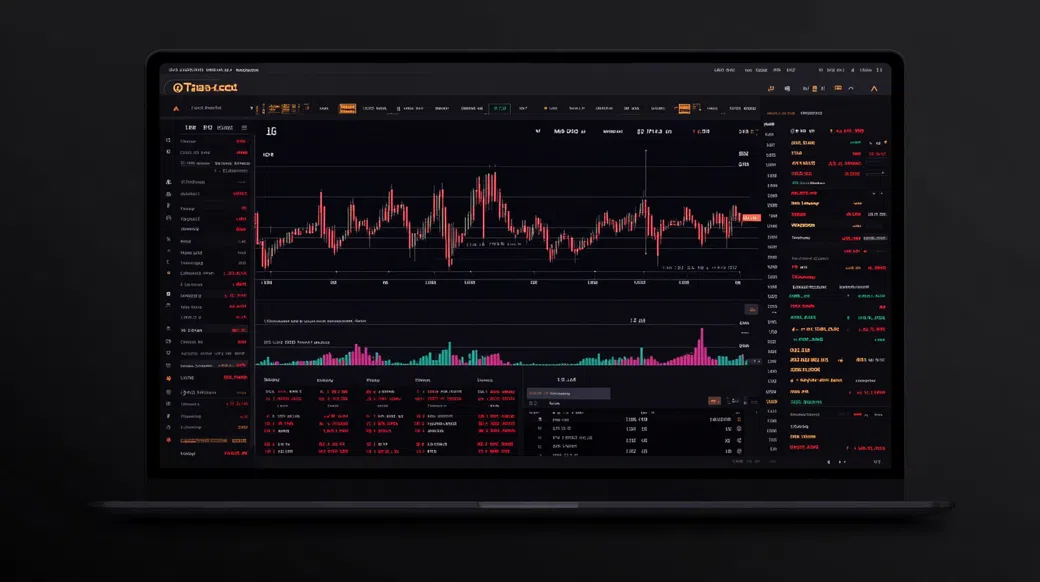
WebTrader is the center of gravity here, and I treated stability like a metric: repeated sessions, multiple charts, and fast symbol switching during the London/NY overlap. Login tokens persisted reliably, charts loaded without lag spikes, and market/limit/stop orders were all accessible from the ticket. The gap versus MT4/MT5 is ecosystem depth—no massive third-party indicator library or EAs in the classic sense—so systematic traders may feel boxed in.
Lucrianza App: Mobile Trading Experience
On the Lucrianza app, the workflow mirrors the web terminal: watchlists, one-tap order tickets, and position management are front and center, with deposit/withdrawal accessible from the same navigation layer. My Lucrianza login supported biometric unlock on Android, which made quick risk checks more realistic than retyping passwords. Push alerts for price levels were available, and “close position” actions were responsive, though chart annotation is necessarily lighter on a phone.
Charting, Tools & Research
Tooling is practical rather than flashy: multi-timeframe charts, common indicators (MA, RSI, MACD, Bollinger), and basic drawing instruments for structure and levels. An economic calendar and integrated news feed help contextualize volatility, but the research stack won’t replace a dedicated analytics suite. If you’re used to cTrader/MT5 depth, consider this a clean execution surface with enough context to manage risk, not a full research terminal.
Lucrianza Account Opening & Minimum Deposit
My onboarding started with a short form (email, phone, country, and a trading profile questionnaire) and then pushed straight into AML checks. KYC required a government-issued photo ID and a recent proof of address (utility bill/bank statement dated within three months). Verification cleared the same business day for me, and the portal immediately unlocked funding and platform access once documents were approved.
- Minimum Deposit: $200
- Funding Methods: Visa/Mastercard, bank wire, regional e-wallets, and crypto (BTC, USDT)
- Demo Account: $10,000 virtual balance for testing spreads, leverage behavior, and order logic
- Account Types: Standard (spread-only) and Raw/ECN-style (tighter spreads + $7 round-turn/lot)
For traders searching “Lucrianza minimum deposit,” the $200 threshold is approachable, but don’t confuse low entry cost with low risk—1:500 leverage magnifies both. I funded via USDT, received an on-screen confirmation after network checks, and kept screenshots for reconciliation. Account base currency matters if you deposit in crypto or a non-USD card currency, because conversion spreads can quietly accumulate.
Lucrianza Customer Support Review
I tested support by asking two things that usually expose competence: where swap rates are displayed and how weekend financing is handled on BTC/USD. Live chat came back in roughly three minutes with a clear pointer to the contract specs panel and an explanation of when financing is applied. I also emailed a follow-up about withdrawal steps post-KYC; the ticket reply landed in about nine hours with a checklist that matched the portal flow.
Coverage is aligned with what active CFD traders need: 24/5 chat and email for market-week issues, with weekend responsiveness thinner unless it’s automated. Language support felt region-dependent, and I didn’t see a universally staffed phone desk—common for offshore-first brokers. If your trading plan relies on immediate voice escalation, set expectations accordingly.
Ready to Explore Lucrianza?
If you’re considering a new CFD venue, start by checking pricing on the symbols you actually trade, then run a demo to validate order behavior before scaling size. Regional rules can change, so confirm eligibility and funding methods in your portal first.
Visit LucrianzaLucrianza Review FAQ
Is Lucrianza good for beginners?
It can be, but only if you treat leverage cautiously and start on demo first. The interface is not overloaded, and the Standard account avoids commission math. Beginners should still study margin calls, swap/overnight fees, and position sizing before using 1:500 leverage.
Can I trade crypto on Lucrianza?
Yes, crypto trading is offered via crypto CFDs such as BTC/USD and ETH-related pairs. You’re not buying on-chain coins, so there’s no wallet transfer—just price exposure. Pay attention to weekend financing and spread widening during volatility spikes.
Is Lucrianza a scam?
No—based on my account test (KYC, trading, and a completed withdrawal), it functioned like a real broker rather than a bait-and-switch site. The bigger issue is jurisdiction: it operates under an offshore registration model (Seychelles FSA), which typically provides fewer formal remedies than Tier-1 regulators. Judge it as a higher-risk venue and size positions accordingly.
Is Lucrianza available in the USA?
No, the USA is restricted and the service does not offer accounts there. This aligns with the broader CFD industry, where US regulation sharply limits retail CFD access. If you’re traveling, expect eligibility checks via documents and location signals.
How long does a Lucrianza withdrawal take?
Typical timing is 24–48 hours for internal processing after KYC, then delivery depends on the rail. Cards often land in 2–5 business days, bank wires in 3–7 business days, and crypto transfers can arrive the same day (often within a few hours). My USDT withdrawal posted after the broker’s processing window and then cleared on-chain shortly after.
What is the Lucrianza minimum deposit?
The Lucrianza minimum deposit is $200 on the live account. That level is enough to test execution and fees, but it doesn’t make high leverage “safe.” If you plan to hold positions overnight, factor swaps into your capital planning from day one.
Does Lucrianza have a mobile app?
Yes, it offers iOS and Android apps that mirror the WebTrader experience. You can monitor positions, place orders, and access funding/withdrawal functions from mobile. Biometric unlock support made frequent risk checks easier in my testing.
Final Verdict: Should You Use Lucrianza in 2026?
Overall Score: 4.1/5
Numbers tell cleaner stories than banners, and my takeaway from this Lucrianza broker review 2026 is that costs and execution are usable—especially if you qualify your strategy for the Raw/ECN-style pricing. The platform delivered consistent fills on liquid instruments, and the USDT withdrawal cleared after standard processing, which matters more than any badge. The constraint is structural: offshore registration (Seychelles FSA) limits the strength of external recourse, so you’re trading with higher jurisdiction risk than Tier-1 venues. If you engage, do it with strict margin discipline—CFDs are leveraged and losses can exceed expectations fast. For a deeper look at the current product pages, start at Lucrianza.
Best for: active CFD traders who want a choice between spread-only and commission pricing and can manage leverage responsibly. Avoid if: you require Tier-1 regulatory protection, guaranteed compensation schemes, or deep MT4/MT5-style automation ecosystems.