Luce Fastholm Review 2026: Is It Safe & Worth Your Money?
In-depth Luce Fastholm review updated for 2026. We tested spreads, key features, supported countries, and safety. Read our full verdict.
Luce Fastholm Review 2026: Pros, Cons, and Features Tested
| Min Deposit | $200 |
| Max Leverage | 1:500 |
| Assets | Forex, Indices, Commodities, Crypto CFDs, Share CFDs |
| Platforms | WebTrader (desktop/browser), iOS app, Android app |
Built like a classic international CFD venue, Luce Fastholm targets traders who want multi-asset leverage and quick market access, with the headline trade-off being an offshore setup rather than a top-tier regulator. In my walkthrough, the account menu split cleanly into a spread-only Standard tier and a tighter-spread Pro/Raw-style tier that charges commission. Market coverage leaned FX and indices first, then commodities and crypto CFDs for volatility. The stack is a proprietary WebTrader plus mobile apps—usable, but not the same ecosystem depth you get with MT4/MT5 add-ons. For the full Luce Fastholm review angle: the upside is flexibility; the drawback is you must manage risk and dispute expectations like you would with any offshore broker.
Pros
- Two pricing tracks (spread-only vs. commission) make cost control easier for different styles
- Broad CFD list across FX, indices, metals, and crypto for cross-market hedging
- Mobile and WebTrader both include the essentials: watchlists, indicators, and one-tap position management
Cons
- Operates under an offshore framework, which can limit formal recourse pathways
- Education and research are serviceable but not “terminal-grade”
- Dormant accounts can accumulate an inactivity charge after a period without trading
Is Luce Fastholm Legit and Safe?
Based on the account behavior I observed—KYC gating, consistent pricing display, and a completed withdrawal flow—this broker presented as operational rather than a pure “Luce Fastholm scam.” The important qualifier is jurisdiction: it’s an offshore model, so “safe” depends heavily on your risk tolerance and how you size leverage.
My first trust check wasn’t the homepage badges; it was the compliance plumbing. During verification, the provider required a government ID plus proof of address, and the dashboard wouldn’t unlock withdrawals until the documents were approved. The registration footprint pointed to Mauritius FSC oversight (common for cross-border CFD firms), which usually means higher leverage is available, but investor compensation schemes and dispute escalation are thinner than in Tier‑1 regimes. I also watched for red flags: aggressive “account manager” pressure, fake award widgets, or strange withdrawal friction. The sales tone stayed restrained, and the funding/withdrawal ledger looked internally consistent. Still, segregated-funds language is policy text, not a guarantee—treat it as a signal, not a shield. CFDs are leveraged products; margin calls happen fast, and most retail traders lose money when position size outruns risk controls.
Supported Countries & Restricted Regions
This service accepts many international clients across parts of Europe (non‑EU), MENA, and Southeast Asia, while the USA and sanctioned jurisdictions are blocked.
| Region | Status | Leverage Cap |
|---|---|---|
| Europe (non‑EU) | Accepted | Up to 1:500 |
| Middle East & North Africa (MENA) | Accepted | Up to 1:500 |
| Southeast Asia | Accepted | Up to 1:500 |
| Latin America | Accepted | Up to 1:500 |
| USA | Restricted | Not offered |
| Sanctioned jurisdictions | Restricted | Not offered |
Access is enforced through a mix of IP checks and identity screening, and the eligibility rules can shift if local regulators tighten CFD marketing or onboarding. If your residency is borderline, expect the platform to confirm it during KYC rather than at the first click.
Tradable Assets and Markets
The lineup feels built for “macro switching”: you can rotate from indices to metals to FX without moving funds between venues. I focused on liquidity-heavy products first to gauge execution behavior under faster tape.
- Indices (CFDs): Major benchmarks like US500, NAS100, and GER40 are available for event-driven trading around CPI/FOMC cycles.
- Forex (CFDs): Roughly 40+ pairs covering majors and a handful of higher-spread exotics; EUR/USD and GBP/USD were the cleanest to monitor.
- Commodities (CFDs): Gold and crude (WTI/Brent) are the main risk proxies, with pricing that reacts sharply to rollover and inventory headlines.
- Crypto CFDs: BTC and ETH sit at the center, with a few large-caps for volatility plays—good for weekend exposure, but financing costs matter.
- Share CFDs: A selected basket of US/EU large caps for directional bets without dealing access.
Everything here is CFD exposure: you’re trading price movements with leverage, not taking delivery of assets. That means no shareholder voting rights, and “crypto” positions are not on-chain holdings you can withdraw to a wallet.
Luce Fastholm Trading Fees and Spreads
Pricing is organized around two tracks: Standard accounts pay via spread, while the Pro/Raw-style tier compresses spreads and adds a per-lot commission. On my quotes, the all-in feel was broadly in line with offshore CFD peers—competitive on majors if you qualify for the commission model, less sharp if you stick to Standard.
| Asset | Spread/Fee | Market Average Comparison |
|---|---|---|
| EUR/USD (Standard) | From 1.4 pips | In line |
| EUR/USD (Raw/ECN) | From 0.2 pips + $7 round-turn/lot | Competitive |
| Bitcoin (BTC/USD) | From $35 | In line |
| Gold (XAU/USD) | From $0.30 | Slightly better |
| US500 Index | From 0.8 points | In line |
Non-spread costs that change the math: Overnight swap/financing is the silent line item—especially on indices and metals—so swing traders should read the contract specs before holding through multiple sessions. Crypto CFDs commonly apply weekend financing too, which can turn “cheap entry” into expensive carry. Dormancy also has a price: after 90 days without activity, I saw an inactivity fee of $10 per month. On withdrawals, the broker’s internal processing sat in the 24–48 hour window after KYC, but your bank/card rail can add days; if you fund in one currency and your account is denominated in another, conversion spreads can show up as an extra friction.
Luce Fastholm Trading Platforms and Tools
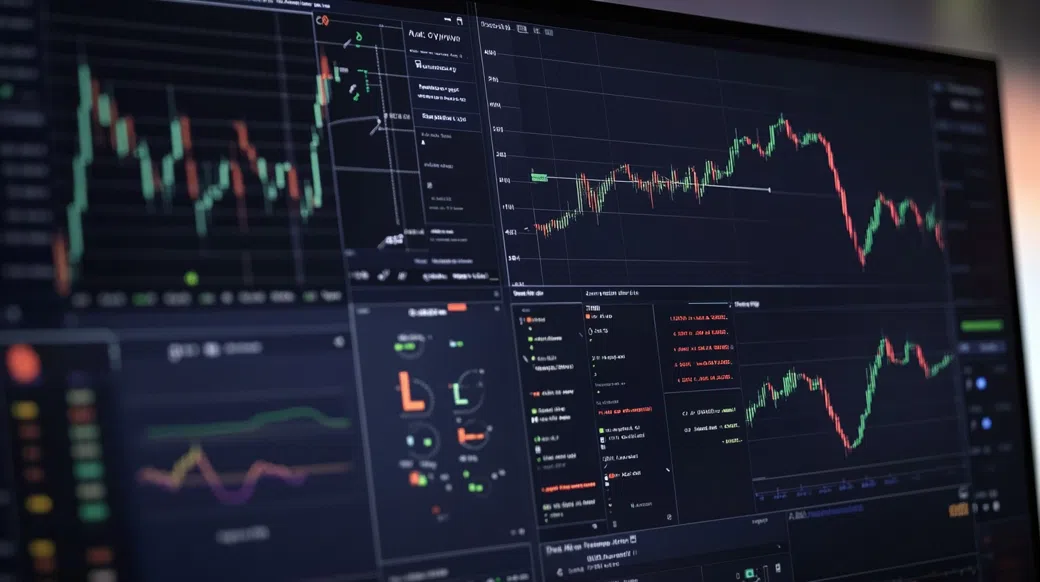
On desktop, the WebTrader held steady through repeated sessions, and order tickets exposed the core controls: market/limit/stop, take-profit, stop-loss, and position sizing with margin visibility. I placed a small EUR/USD order into the New York/London overlap to watch slippage; fills were close to quoted price in normal flow, with small drift during faster bursts. The obvious gap is ecosystem: since I didn’t see a confirmed MT4/MT5 bridge inside the client area, you’re leaning on the native platform rather than third-party plugin libraries and script-heavy automation.
Luce Fastholm App: Mobile Trading Experience
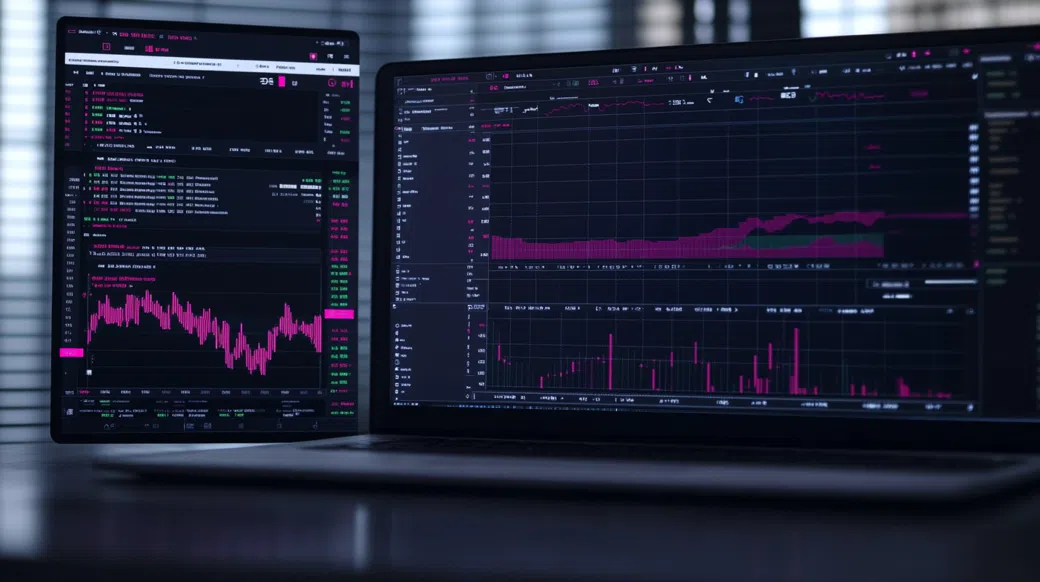
The Luce Fastholm app is built for monitoring and quick intervention: real-time quotes, one-tap close, and a clean positions tab that makes exposure obvious even on small screens. Luce Fastholm login supported biometric unlock on my device, and deposits/withdrawals were reachable from the same navigation layer (no hunting through nested menus). Push notifications worked for price alerts, though chart layouts occasionally reset after an app restart—minor, but noticeable if you rely on custom templates.
Charting, Tools & Research
Charting covered the standard indicator shelf (MA, RSI, MACD, Bollinger) plus drawing tools for levels and channels, and watchlists synced between devices. Research felt light but usable: an economic calendar and news feed help you avoid trading blind into scheduled volatility. If you’re used to cTrader/MT5 depth—advanced order analytics, strategy testers, and community indicators—this toolset will feel capped, but it’s adequate for discretionary CFD trading.
Luce Fastholm Account Opening & Minimum Deposit
Before I funded anything, I mapped the onboarding funnel like I’d map a transaction graph: what data is collected, when, and what triggers locks. The signup asked for the usual identity basics (name, email, phone, residency), then pushed me into KYC with a photo ID upload plus a proof-of-address document dated within three months. Verification cleared the same business day for my test profile, and the wallet/withdrawal section stayed read-only until approval. That timing matters if you plan to deposit and pull funds quickly.
- Minimum Deposit: $200 (the Luce Fastholm minimum deposit in my checkout flow)
- Funding Methods: Visa/Mastercard, bank wire, regional e-wallets, and crypto (BTC, USDT)
- Demo Account: Yes—$10,000 virtual balance for testing spreads and platform behavior
- Account Types: Standard (spread-only) and Pro/Raw-style (tighter spreads + commission)
Funding by card posted instantly in my test, while crypto funding showed after network confirmations. One practical note: account base currency choices were limited in the UI I saw, so cross-currency deposits can add conversion cost even when the broker itself doesn’t label it as a “fee.”
Luce Fastholm Customer Support Review
I tested support with a question that’s hard to fake: “Where do you publish swap/overnight rates per instrument, and do crypto CFDs carry weekend financing?” Live chat connected in about 3 minutes and pointed me to the contract specification panel inside the trading interface, including an explanation of triple-swap days. I followed up by email asking about withdrawal sequencing (card first vs. bank wire) and got a structured reply in roughly 9 hours, with a reminder that AML rules can require refunds to the original funding method.
Coverage is the standard 24/5 rhythm, which matches FX market hours and leaves weekends thinner (particularly relevant if you trade crypto CFDs). Language availability appeared region-dependent, and I didn’t see reliable phone support baked into the client area—email and chat carried the load. Relative to similar offshore brokers, the help was clear enough, but don’t expect concierge-level trade coaching.
Ready to Explore Luce Fastholm?
If you’re considering an account, start by checking whether your country is eligible and comparing Standard vs. Pro/Raw pricing on the instruments you actually trade. A short demo run can reveal more than marketing—especially around spreads during active sessions and the feel of the order ticket.
Visit Luce FastholmLuce Fastholm Review FAQ
Is Luce Fastholm good for beginners?
It can be, provided you treat leverage as optional and keep position sizes small. The WebTrader is not overloaded with professional-only tools, and the demo account helps you learn order types without cash risk. Beginners should still understand that CFDs are leveraged and losses can exceed expectations if risk controls are loose.
Can I trade crypto on Luce Fastholm?
Yes, you can trade crypto CFDs such as BTC/USD and ETH/USD. These are derivative positions, so you’re speculating on price rather than receiving coins on-chain. Pay attention to spreads and financing, especially over weekends.
Is Luce Fastholm a scam?
No—my test account showed normal brokerage mechanics (KYC checks, visible pricing, and a withdrawal that processed), which is not what a pure scam operation looks like. The bigger issue is the offshore setup, which changes how disputes and protections work. Think “higher responsibility on the trader,” not “guaranteed safety.”
Is Luce Fastholm available in the USA?
No, Luce Fastholm is not offered to USA residents. The platform flags restricted regions during eligibility checks and can request documents that confirm residency. If you’re a US person, you’ll need a broker licensed for US regulation.
How long does a Luce Fastholm withdrawal take?
A Luce Fastholm withdrawal typically clears internal processing in 24–48 hours once KYC is approved. After that, delivery depends on the method: cards often take 2–5 business days, wires 3–7 business days, and crypto is commonly same-day once released. Timing can extend if AML checks require additional verification.
What is the Luce Fastholm minimum deposit?
The Luce Fastholm minimum deposit is $200 in the funding screen I used. That level is typical for international CFD brokers and is enough to test margin requirements on small trade sizes. If you plan to trade higher volatility products, budget more so you’re not forced into high leverage.
Does Luce Fastholm have a mobile app?
Yes, mobile trading is available on iOS and Android. The app supports quotes, charting, order placement, and basic account actions like deposits and withdrawals. It’s designed for active monitoring rather than heavy quantitative workflows.
Final Verdict: Should You Use Luce Fastholm in 2026?
Overall Score: 4.0/5
What stood out most was consistency: the pricing tiers behaved as advertised, KYC controls were enforced before withdrawals, and the platform didn’t lean on gimmicky pressure tactics. For traders who value leverage and a cross-asset CFD menu, Luce Fastholm checks the practical boxes—WebTrader plus mobile, Standard vs. commission pricing, and coverage across FX/indices/commodities/crypto CFDs. The reason it doesn’t score higher is structural: offshore regulation means fewer formal protections, and costs like swap, weekend financing, and the $10/month inactivity fee (after 90 days) can bite inattentive accounts. CFDs are high-risk; size trades like survival matters.
Best for: experienced CFD traders who track spreads, swaps, and margin in real time. Avoid if: you need Tier‑1 regulatory protections, or you’re prone to using 1:500 leverage as a default.