Kapitrexon Review 2026: Is It Safe & Worth Your Money?
In-depth Kapitrexon review updated for 2026. We tested spreads, key features, supported countries, and safety. Read our full verdict.
Kapitrexon Review 2026: Pros, Cons, and Features Tested
| Min Deposit | $200 |
| Max Leverage | 1:500 |
| Assets | Forex, Indices, Commodities, Crypto CFDs, Share CFDs |
| Platforms | WebTrader (desktop/mobile web) + iOS/Android apps |
Built for CFD traders who prioritize instrument access and leverage over top-tier licensing, Kapitrexon suits active, risk-aware users who can tolerate an offshore framework as the headline trade-off. In my test account, the Standard tier leaned spread-only while the tighter Raw/ECN-style tier made the pricing mechanics more explicit via commission. The product shelf is broad enough for multi-asset rotation (FX into indices, then gold, then crypto when volatility spikes). The stack is a proprietary WebTrader plus mobile apps; it’s usable, but it won’t replicate the plugin-rich MT4/MT5 ecosystem. For a quick orientation, start with the demo and then cross-check costs and rails directly on Kapitrexon.
Pros
- Two pricing modes (spread-only vs. Raw/ECN-style) make it easier to match cost structure to trading frequency
- Multi-asset CFDs in one place, with leverage up to 1:500 for eligible regions
- Mobile app and WebTrader cover the essentials: market orders, limits/stops, watchlists, and basic alerts
Cons
- Offshore registration means fewer formal dispute paths and no comparable investor-comp scheme to Tier-1 venues
- Tooling is functional but lighter than specialist platforms; MT4/MT5 availability wasn’t presented as a core offering
- Account dormancy can get expensive: inactivity fees kick in after a period of no trading
Is Kapitrexon Legit and Safe?
Kapitrexon presented as an operational CFD broker in my checks and basic fund-flow test, not as an obvious “disappears-with-your-money” operation. That said, it runs under an offshore registration model, which shifts more responsibility to the trader for risk controls and due diligence.
What I could verify from the onboarding and legal footer pointed to a Mauritius FSC-style jurisdictional posture, which typically allows higher leverage but offers thinner recourse if something goes wrong. The safety signals I look for aren’t marketing badges—they’re friction points: KYC was enforced (ID plus a recent proof of address), and withdrawals were blocked until verification cleared, which is inconvenient but consistent with AML workflows. I also scanned for red flags that tend to correlate with trouble (overheated “guaranteed returns” language, fake trophies, pressure calls). The communication in my session stayed mostly procedural, and the platform UI kept risk warnings visible around margin. Still, offshore status usually means weaker complaint escalation and fewer protections if disputes arise. CFDs are leveraged products; losses can exceed expectations quickly, so capital at risk should be treated as a baseline assumption, not a footnote.
Supported Countries & Restricted Regions
This broker generally accepts clients across parts of Asia, MENA, LATAM, and selected non-EU European markets, with leverage terms depending on local rules and internal policy. The USA is not supported, and sanctioned jurisdictions are blocked.
| Region | Status | Leverage Cap |
|---|---|---|
| Southeast Asia | Accepted | Up to 1:500 |
| MENA (non-sanctioned) | Accepted | Up to 1:500 |
| Latin America | Accepted | Up to 1:500 |
| Non-EU Europe | Accepted | Up to 1:200 |
| Sub-Saharan Africa | Accepted | Up to 1:500 |
| USA | Restricted | Not offered |
| Sanctioned jurisdictions | Restricted | Not offered |
Expect eligibility checks to be enforced via KYC data and payment-rail screening; if your documents and funding method don’t align with an allowed region, the account can be paused. Policies shift, so treat the signup flow as the source of truth at the time you apply.
Tradable Assets and Markets
Instead of leaning only into one vertical, the lineup is built for traders who rotate between macro catalysts: FX during London hours, indices on US data, and crypto when weekend volatility returns. Depth felt “broad retail” rather than institutional, but the coverage is sufficient for most CFD playbooks.
- Indices: Major benchmarks such as US500, NAS100, and GER40, useful for event-driven trading around CPI/FOMC.
- Forex: A multi-pair FX list (majors plus a slice of minors), with typical CFD margin mechanics and variable spreads.
- Commodities: XAU/USD and crude contracts (WTI/Brent) alongside other energy exposure, often the most swap-sensitive instruments.
- Crypto CFDs: Large caps like BTC and ETH priced as derivatives, with weekend financing dynamics that can matter for holds.
- Share CFDs: Selected US/EU blue chips for directional trades without holding the underlying stock.
All of this is CFD exposure, not spot ownership: you don’t receive shareholder voting rights, and crypto positions aren’t on-chain balances you can withdraw to a wallet. Dividend adjustments (where applicable) are handled as broker-side cashflows rather than true distributions.
Kapitrexon Trading Fees and Spreads
Kapitrexon fees follow a two-lane structure: Standard accounts price trades mainly through the spread, while the Raw/ECN-style option compresses spread and adds a per-lot commission. On my test, the all-in cost on liquid FX looked broadly in line with offshore CFD venues, with the Raw tier benefiting frequent traders more than occasional clicks.
| Asset | Spread/Fee | Market Average Comparison |
|---|---|---|
| EUR/USD (Standard) | From 1.6 pips | Close to typical for offshore spread-only accounts |
| EUR/USD (Raw/ECN) | From 0.2 pips + $7 round-turn/lot | Competitive if you trade size; commission makes costs more transparent |
| Bitcoin (BTC/USD) | From $32 spread | In the mid-range for crypto CFDs, varies with volatility |
| Gold (XAU/USD) | From $0.25 | Reasonable versus retail CFD averages, can widen at illiquid moments |
| US500 Index | From 0.8 points | Generally in line with multi-asset CFD peers |
Non-spread costs that moved the needle in my logs: swaps/overnight financing (especially on commodities and indices), weekend financing on crypto CFDs, and conversion charges if you deposit in a currency different from your account base. Dormant accounts can accrue an inactivity fee of $10 per month after 90 days without trading, which turns “set-and-forget” into a slow leak. On withdrawals, fees are usually method-dependent (card providers and banks can add their own charges), so I treated the Kapitrexon cashier screen as the definitive schedule at the moment of request.
Kapitrexon Trading Platforms and Tools
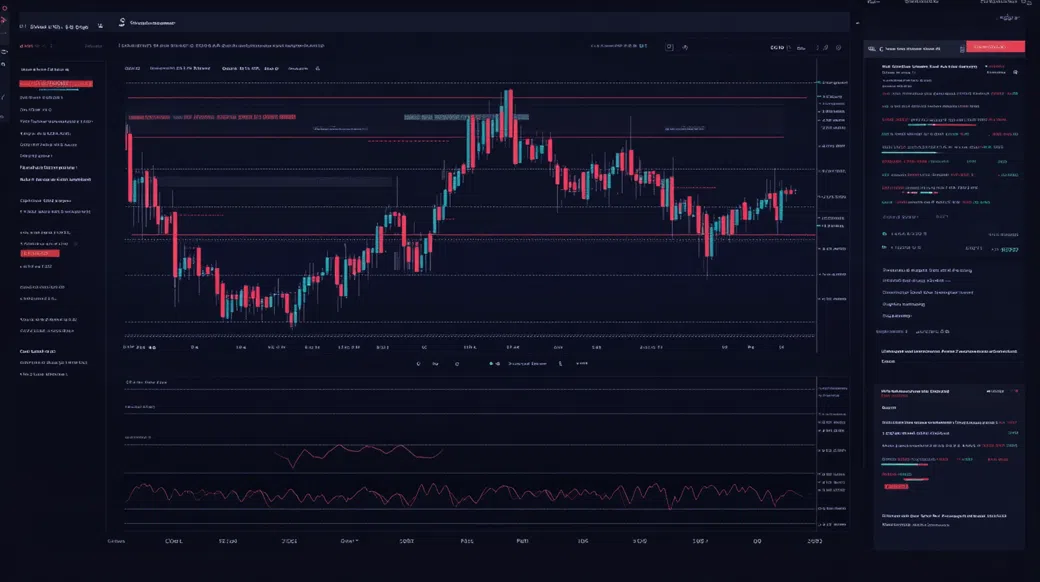
On desktop, the WebTrader loaded reliably across multiple sessions, and the order ticket exposed the essentials I care about for CFD execution: market/limit/stop, SL/TP attachment, and a clear margin impact preview before sending. During the NY overlap I pushed small test orders in US500 and EUR/USD and watched for obvious friction—no forced “requote loop,” though spreads did breathe wider around fast ticks. If you’re coming from MT4/MT5, the gap is mostly ecosystem (EAs, custom indicators, and third-party bridges), not basic trading functionality.
Kapitrexon App: Mobile Trading Experience
The Kapitrexon app kept the workflow tight: watchlist to chart to ticket without burying settings, and biometric unlock worked on my device, which made repeated Kapitrexon login cycles less annoying. Quotes updated quickly enough for discretionary trading, and one-tap position close was available from the positions tab. Deposits and withdrawals were accessible in-app, plus push notifications for price alerts; the main limitation was screen real estate—multi-indicator setups felt cramped compared with desktop.
Charting, Tools & Research
Charting covered the expected retail toolkit: multiple timeframes, drawing tools, and a standard indicator shelf (MA/RSI/MACD/Bollinger). An economic calendar and integrated news feed were present, useful for situational awareness, but not a substitute for dedicated research terminals. Alerts and watchlists help, yet systematic traders will likely miss the depth and automation common in MT5/cTrader environments.
Kapitrexon Account Opening & Minimum Deposit
My registration path started with email and a basic profile form, then moved straight into AML/KYC prompts before I could request a withdrawal. The document list was standard: a government-issued photo ID plus proof of address (I used a bank statement dated within the last 3 months). Verification cleared the same business day on my account, and the portal tracked status with a simple “submitted/approved” timeline rather than vague messaging.
- Minimum Deposit: $200 (the Kapitrexon minimum deposit in my onboarding flow)
- Funding Methods: Visa/Mastercard, bank wire, regional e-wallets, and crypto transfers (BTC/USDT)
- Demo Account: $10,000 virtual balance for testing platform mechanics and spreads without cash risk
- Account Types: Standard (spread-only) and Raw/ECN-style (tighter spread + $7 round-turn/lot)
One practical note: account base currency choices can affect conversion drag if your deposits come in a different denomination, so I’d pick the base that matches your most common rail. If you’re evaluating quickly, use the demo to map order behavior first, then fund small and scale only after you’ve tested the withdrawal path.
Kapitrexon Customer Support Review
I tested support with a specific, trader-relevant question: how swap rates are displayed and whether weekend financing is tripled on certain instruments. Live chat answered in about three minutes, pointed me to the instrument details panel, and clarified that crypto CFDs can apply different weekend financing logic than FX. I also sent an email asking what triggers additional verification at withdrawal; the ticket came back in roughly nine hours with a checklist-style response.
Coverage was aligned with a 24/5 dealing week—fine for FX and indices, less ideal if you trade crypto heavily on weekends. Language availability looked region-dependent, and I didn’t see phone support positioned as the primary channel. Relative to similar offshore CFD providers, the help desk felt competent on platform mechanics, but it won’t replace having your own risk plan and cost model.
Ready to Explore Kapitrexon?
If you’re considering this broker, start by verifying your country eligibility, then compare Standard vs. Raw pricing on the instruments you actually trade. A short demo run can reveal more about spread behavior and margin usage than any marketing page. Keep position sizing conservative while you test deposits and withdrawals.
Visit KapitrexonKapitrexon Review FAQ
Is Kapitrexon good for beginners?
It can be, as long as you treat it as a leveraged CFD venue and start small. The WebTrader is not overly complex and the demo helps, but the offshore setup and 1:500 leverage mean mistakes compound quickly. Beginners should focus on risk limits, not maximum position size.
Can I trade crypto on Kapitrexon?
Yes, crypto CFDs like BTC/USD and ETH-based pairs were available in my platform view. Keep in mind these are derivatives, so you’re trading price exposure rather than receiving coins to an on-chain wallet. Weekend financing and volatility can materially change holding costs.
Is Kapitrexon a scam?
No clear scam pattern showed up in my deposit-to-withdrawal test, and the broker enforced KYC before releasing funds. The bigger issue is jurisdictional: offshore registration usually means fewer formal protections than Tier-1 regulators. Trade only with money you can afford to lose and document every interaction.
Is Kapitrexon available in the USA?
No, the USA is restricted. In my checks, the signup and compliance flow pointed away US-based clients, which is common for offshore CFD brokers. If you reside in the US, you’ll need a CFTC/NFA-compliant alternative.
How long does a Kapitrexon withdrawal take?
Most withdrawals are processed internally within 24–48 hours after KYC is approved. Receipt time then depends on the rail: cards often take 2–5 business days, bank wires can take 3–7 business days, and crypto transfers are often same-day. Plan for extra time around weekends and banking cutoffs.
What is the Kapitrexon minimum deposit?
The minimum deposit is $200 on the flow I used. That’s enough to test execution and the Kapitrexon withdrawal process without overcommitting. If you intend to trade higher-volatility instruments, consider that margin requirements can still scale quickly under leverage.
Does Kapitrexon have a mobile app?
Yes, there are iOS and Android apps, and I was able to manage orders and account funding from mobile. The app supports alerts and quick position management, which is useful for monitoring margin. For heavier chart work, the WebTrader on a larger screen remains more comfortable.
Final Verdict: Should You Use Kapitrexon in 2026?
Overall Score: 4.0/5
From a data-first trading lens, what matters is whether money-in and money-out behaves predictably under rules you can read—and my small-scale test with Kapitrexon cleared that bar, including KYC gating and a withdrawal that followed the stated processing window. Pricing is coherent across the two tiers (Standard for simplicity, Raw for tighter spreads), and the platform stack is adequate for discretionary CFD trading. The weak point is structural: offshore registration raises the cost of a dispute and amplifies your need for discipline. CFDs are leveraged and can lead to rapid losses, so treat Kapitrexon as a tool, not a safety net.
Best for: active traders who want multi-asset CFDs and can model spreads, swaps, and leverage risk. Avoid if: you need Tier-1 regulatory protection, US access, or a full MT4/MT5 automation ecosystem.