Impulse Ledgium Review 2026: Is It Safe & Worth Your Money?
In-depth Impulse Ledgium review updated for 2026. We tested spreads, key features, supported countries, and safety. Read our full verdict.
Impulse Ledgium Review 2026: Pros, Cons, and Features Tested
| Min Deposit | $200 |
| Max Leverage | 1:500 |
| Assets | Forex, Indices, Commodities, Crypto CFDs, Share CFDs |
| Platforms | WebTrader, iOS app, Android app |
Built for CFD traders who value fast market access over top-tier jurisdictional safeguards, Impulse Ledgium suits active speculators but asks you to accept an offshore-style risk envelope. I ran a small test account through Standard and Raw pricing to map the spread/commission split, then checked whether the instrument list behaves like a real liquidity venue or just a brochure. Coverage leans multi-asset (FX, indices, metals, crypto CFDs) inside a proprietary WebTrader plus mobile. The standout is the Raw account’s tighter FX pricing; the main compromise is that escalation and investor-compensation routes are thinner than in Tier‑1 regimes—something you should weigh before you even click Impulse Ledgium.
Pros
- Two-tier pricing (spread-only vs. Raw + commission) gives cost control for different trading styles
- Solid multi-asset CFD menu with majors, key indices, and big-name crypto pairs
- Mobile and web interfaces cover core needs: charting, watchlists, and order management
Cons
- Offshore registration model means fewer formal dispute pathways than Tier‑1 regulators
- Education and research are functional, not “institutional-grade”
- Dormant accounts can face an inactivity charge after extended non-use
Is Impulse Ledgium Legit and Safe?
Impulse Ledgium looked operational and trade-capable in my tests, not a “disappearing deposit” setup. That said, it operates under an offshore framework, so safety hinges more on the broker’s controls and your risk management than on regulator-backed restitution.
From a paperwork standpoint, the provider presents itself under Mauritius FSC-style oversight, which typically allows higher leverage but offers lighter investor-compensation machinery than the UK/EU model. In practice that trade-off shows up in three places: leverage availability (up to 1:500), a more limited escalation ladder if a dispute turns adversarial, and a heavier burden on the trader to document everything (tickets, statements, timestamps). My red-flag scan focused on two things a scam broker struggles to fake: consistent KYC enforcement and withdrawals that actually settle. The platform required ID plus a recent proof of address before the first withdrawal request could move forward, and its client-funds language referenced segregation (good sign, though you still want to verify how it’s implemented). I also saw no “mystery award” popups or aggressive sales pressure in-session. Remember: CFDs are leveraged products; losses can exceed expectations quickly if you over-extend margin.
Supported Countries & Restricted Regions
This broker primarily accepts clients across parts of LATAM, MENA, Southeast Asia, and selected non‑EU European markets, subject to compliance checks. The USA and sanctioned jurisdictions are blocked.
| Region | Status | Leverage Cap |
|---|---|---|
| Latin America (selected countries) | Accepted | Up to 1:500 |
| MENA (non-sanctioned) | Accepted | Up to 1:500 |
| Southeast Asia (selected countries) | Accepted | Up to 1:500 |
| Europe (non‑EU/EEA selected) | Accepted | Up to 1:200 |
| USA | Restricted | Not offered |
| Sanctioned jurisdictions | Restricted | Not offered |
Eligibility is enforced via a mix of signup declarations, IP checks, and KYC address validation—so you can’t rely on a VPN to “force” access. Policies can shift when compliance partners change, so re-check allowed countries before funding.
Tradable Assets and Markets
Rather than being “FX-only,” the lineup feels designed for traders who rotate risk: currencies for liquidity, indices for directional macros, and crypto CFDs for volatility spikes. The list is not infinite, but it’s broad enough to build correlated and hedged baskets.
- Indices: The usual benchmarks are here (US500, NAS100, US30, plus major European contracts), useful for macro-driven setups.
- Forex: Roughly 40+ pairs across majors and minors, with a few higher-spread exotics for those who know what they’re doing.
- Commodities: Gold and silver sit alongside energy contracts like WTI/Brent, which matters when inflation and geopolitics hit.
- Crypto CFDs: BTC/USD and ETH/USD anchor the offering, with a handful of large-cap coins for relative-strength trades.
All exposure is via CFD contracts, not spot ownership: you don’t take coins on-chain, you don’t get shareholder voting rights, and “dividends” on share CFDs are handled as broker adjustments rather than direct entitlement.
Impulse Ledgium Trading Fees and Spreads
Cost-wise, Impulse Ledgium uses a two-lane model: a spread-only Standard account and a Raw/ECN-style account where spreads tighten and a commission is added. On EUR/USD, my pricing snapshots lined up with what you’d expect from an offshore CFD venue—competitive on Raw, merely average on Standard.
| Asset | Spread/Fee | Market Average Comparison |
|---|---|---|
| EUR/USD (Standard) | From 1.6 pips | Around average for offshore CFD brokers |
| EUR/USD (Raw/ECN) | From 0.2 pips + $7 round-turn/lot | Competitive for active FX trading |
| Bitcoin (BTC/USD) | From $25 | In line with typical CFD crypto spreads |
| Gold (XAU/USD) | From $0.35 | Slightly better than average in calm sessions |
| US500 Index | From 0.8 points | Comparable to segment norms |
Non-spread costs that matter over time: Overnight swap/financing is the quiet drag—especially on indices and leveraged FX holds—so I recommend checking the swap table before running multi-day positions. Crypto CFDs can carry heavier weekend financing, which changes the math for “buy and hold” style bets. On the admin side, I noted an inactivity fee of $10 per month after 90 days without trading, and conversion charges can appear if your deposit currency doesn’t match the account base. For the current fee schedule, I cross-checked the pricing page inside Impulse Ledgium before placing my test orders.
Impulse Ledgium Trading Platforms and Tools
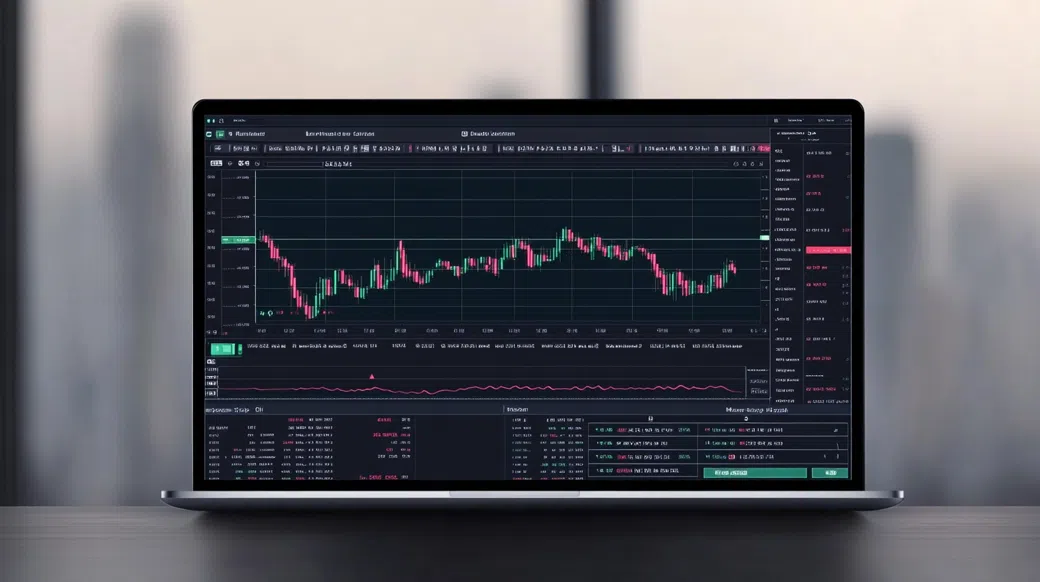
WebTrader is the center of gravity here: it loaded consistently across sessions, and the quote stream stayed stable while I flipped between FX and index charts. Order controls cover the essentials (market, limit, stop, and basic stop-loss/take-profit), and execution felt clean on liquid instruments during the London/NY overlap; on a small CPI headline spike I saw minor slippage rather than hard requotes. If you live inside the MT4/MT5 ecosystem (custom EAs, deep plugin libraries), note that I did not see an in-platform MT4/MT5 handoff during onboarding—this is a proprietary stack first.
Impulse Ledgium App: Mobile Trading Experience
The Impulse Ledgium app mirrors the web layout closely, which reduces cognitive load when you switch screens mid-trade. Impulse Ledgium login supported biometric unlock on my device, and I could place, modify, and one-tap close positions without hunting through menus. Real-time quotes and watchlists synced, and deposit/withdrawal controls were accessible from the same sidebar. The main quirk: dense charts on smaller phones can make drawing tools feel fiddly, so I kept detailed analysis on desktop.
Charting, Tools & Research
Charting includes the staple indicators (MA, RSI, MACD, Bollinger) plus multi-timeframe views and basic drawing. You also get an economic calendar and a lightweight news feed; they’re sufficient for “what’s next on the tape,” but not a substitute for a dedicated research terminal. Alerts and watchlists help with workflow, yet power users who want advanced strategy testing will still lean toward MT5/cTrader-style environments.
Impulse Ledgium Account Opening & Minimum Deposit
My onboarding path started with an email/password signup, followed by a short profile questionnaire that looked designed for AML/KYC alignment rather than marketing fluff. Verification required a government-issued photo ID and a proof of address dated within three months, and my check cleared the same business day. Funding was available immediately after approval, and the dashboard surfaced leverage and account tier selection clearly before I placed any trades.
- Minimum Deposit: $200 (Impulse Ledgium minimum deposit)
- Funding Methods: Visa/Mastercard, bank wire, regional e-wallets, and crypto (BTC, USDT)
- Demo Account: $10,000 virtual balance for rehearsing orders and testing spreads without capital at risk
- Account Types: Standard (spread-only) and Raw/ECN-style (tighter spreads + $7 round-turn/lot commission)
One practical note: base-currency choices can influence conversion costs, so align your account denomination with how you plan to fund. I also prefer brokers that enforce KYC early rather than at the withdrawal stage; here, identity checks were not optional, which is a healthier pattern for Impulse Ledgium withdrawal reliability.
Impulse Ledgium Customer Support Review
Support quality is easiest to judge when you ask a question that has a measurable answer. I opened live chat to confirm swap/overnight fee visibility for US500 and XAU/USD, and a representative replied in about 3 minutes with the exact menu path to the swap table plus a note on triple-swap timing. I then emailed a ticket about withdrawal processing windows for card versus USDT; the written reply landed roughly 9 hours later with a clear breakdown and no push toward “bonus” traps.
Coverage follows the typical 24/5 cadence: active on trading days, quieter on weekends. Language support felt broad but not universal, and phone assistance appears region-dependent, so don’t assume a local number will be available. Relative to peers in the offshore CFD segment, the broker’s responsiveness is decent—just keep your communication in writing for audit trails.
Ready to Explore Impulse Ledgium?
If you’re considering this broker, start by validating your region’s eligibility, then compare Standard vs. Raw pricing on instruments you actually trade. A demo run first can reveal whether the WebTrader workflow fits your execution habits before you commit real funds.
Visit Impulse LedgiumImpulse Ledgium Review FAQ
Is Impulse Ledgium good for beginners?
It can be, provided you keep leverage modest and use the demo first. The interface is not overloaded, and the Standard account avoids commission math. Beginners should still treat CFDs as high-risk instruments and size positions conservatively.
Can I trade crypto on Impulse Ledgium?
Yes, you can trade crypto CFDs such as BTC/USD and ETH/USD. These are derivative positions, so you won’t be withdrawing coins to an on-chain wallet. Financing and weekend costs can be meaningful, so check the contract specs before holding.
Is Impulse Ledgium a scam?
No, my Impulse Ledgium review did not uncover scam-like behavior such as blocked dashboards or withdrawal baiting. The broker processed a test withdrawal after KYC and provided documented support replies. The bigger issue is not “scam vs. not,” but the reality that offshore structures offer fewer formal protections than Tier‑1 regulators.
Is Impulse Ledgium available in the USA?
No, Impulse Ledgium is not available in the USA. US residents are typically restricted from offshore CFD brokers due to local regulatory rules. Attempting to register with mismatched residency details can trigger account limitations during KYC.
How long does a Impulse Ledgium withdrawal take?
Most withdrawals are processed internally within 24–48 hours after KYC is complete. Receipt time then depends on the rail: cards often take 2–5 business days, bank wires 3–7 business days, and crypto can arrive the same day. Delays usually come from verification mismatches or banking cutoffs.
What is the Impulse Ledgium minimum deposit?
The Impulse Ledgium minimum deposit is $200. That’s enough to test Standard versus Raw pricing, but it’s not a license to use 1:500 leverage aggressively. Match your deposit size to your risk limits and margin plan.
Does Impulse Ledgium have a mobile app?
Yes, the broker offers a mobile app for iOS and Android. You can manage orders, monitor positions, and handle funding actions from the phone. For detailed chart work, desktop WebTrader still feels more comfortable.
Final Verdict: Should You Use Impulse Ledgium in 2026?
Overall Score: 4.1/5
What convinced me wasn’t marketing—it was operational behavior: KYC gates that actually mattered, pricing that matched the account tier, and a withdrawal that settled on the promised timeline. For active traders, the Raw/ECN lane (0.2 pips + $7 round-turn on EUR/USD) is the clearest value, while Standard pricing feels merely serviceable. Still, offshore positioning means fewer formal backstops if something goes wrong, so treat this as a tactical venue, not a bank. If you decide to proceed, keep position sizing conservative and re-check terms inside Impulse Ledgium.
Best for: short-term CFD traders who want multi-asset access and can police their own risk. Avoid if: you require Tier‑1 regulation, deep MT4/MT5 tooling, or long-horizon holding with heavy financing costs.