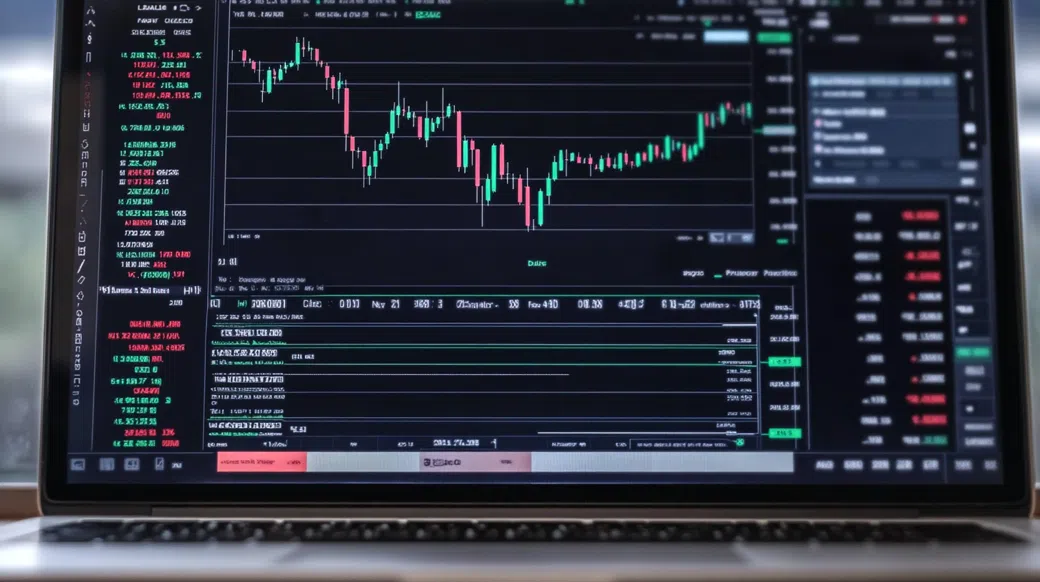
Garantésure Trading Platform Alternatives 2026
A data-driven guide to Garantésure alternatives in 2026: compare regulated brokers, costs, platforms, and safety checks to switch with lower risk.
Garantésure Trading Platform Alternatives 2026: Reliable Options for Online Traders
On-chain flows taught me a simple rule: narratives change faster than settlement. If a broker’s promises don’t line up with how money actually moves—deposits, withdrawals, and dispute handling—you want options. Garantésure is generally presented in the same lane as many offshore CFD-first providers: forex and CFDs at the center, a proprietary WebTrader, and leverage that can look generous on paper. Publicly observable patterns for this segment often include higher leverage (commonly around 1:500), a mid-range starting deposit (often near $250), and “from” spreads that widen in real conditions (a typical EUR/USD all-in spread around 2.0 pips on a standard-style setup is a reasonable expectation for comparison).
That combination can work for short-term speculation—until you hit the edges: limited platform tooling, unclear execution behavior during volatility, or region-based restrictions (US residents are frequently excluded). For US/EU traders, the bigger issue is governance: when oversight is offshore (often under frameworks like the Seychelles FSA), your protections can differ sharply from FCA/ASIC/CySEC environments where segregation rules, negative balance protection policies, and complaint channels are clearer.
This is where Garantésure alternatives matter. The goal isn’t to “find a broker with the highest leverage.” It’s to find a venue where pricing, execution model, and cash-movement rules are legible—and where you can verify the license on a regulator register instead of trusting a landing page.
Disclaimer: This article is for informational purposes only and does not constitute investment advice. CFDs and other leveraged products can move against you quickly and may result in losses exceeding your initial margin.
Key Takeaways (TL;DR)
- For US/EU safety posture, prioritize brokers you can verify on FCA/ASIC/CySEC/NFA registers—then evaluate costs using round-turn trading expense, not headline spreads.
- If you need real stocks/ETFs (not just CFDs), multi-asset venues like IBKR or Saxo typically close the “ownership vs. price exposure” gap.
- Switching platforms is a sequencing problem: KYC the new broker first, export your trade history, then withdraw using the same rails you deposited with to reduce AML friction.
What Is Garantésure and How Does Its Trading Platform Work?
From a market-structure lens, Garantésure sits closer to a CFD brokerage than a full multi-asset investment firm. The product mix is usually centered on forex pairs and CFD contracts (indices, commodities, and often crypto CFDs), designed for margin trading rather than long-term ownership. In this category, the broker commonly internalizes flow as a market maker or uses hybrid routing—either way, the execution model matters because it influences slippage, requotes, and how spreads behave when liquidity thins. Traders who mainly want fast access and flexible leverage may tolerate this; traders who demand auditability and regulator-backed dispute paths often compare brokers similar to Garantésure against tightly supervised alternatives.
Garantésure Web Trading Platform: Core Features and Tools
The platform stack is typically a proprietary WebTrader paired with iOS/Android apps. Expect functional charting—enough indicators and drawing tools for basic technical work—rather than the deep customization you get with MT4/MT5 or cTrader ecosystems. Order entry tends to cover the essentials (market, limit, stop), but advanced workflow features (hotkeys, depth-of-market, custom scripting, detailed execution analytics) are often thinner. Mobile parity is usually decent for monitoring and quick risk actions, yet the desktop browser experience can feel “one-screen” compared to pro terminals that separate watchlists, order tickets, and multi-chart layouts.
Trading Fees, Spreads, and Account Types at Garantésure
Cost-wise, offshore CFD venues frequently advertise tight “from” spreads while real trading conditions track closer to a typical EUR/USD spread around 2.0 pips on standard-style pricing. Some brokers in this segment also offer a raw/ECN-like tier with narrower spreads (often 0.0–0.4 pips) plus a commission that can land around $6–$8 round-turn, but the practical question is consistency during news and rollover. Add swap/overnight financing (a meaningful drag for multi-day holds), and watch for non-trading charges such as inactivity or withdrawal handling fees depending on payment rail and region.
When Do Traders Start Looking for Garantésure Alternatives?
Execution and cash movement are where confidence either compounds—or breaks. I start paying attention when quotes behave one way but fills behave another, especially around high-volatility prints where slippage and spread spikes expose the broker’s true liquidity setup. That’s also when traders actively search for Garantésure alternatives: not for a prettier interface, but for a venue where the rules are enforceable and the trade ledger is coherent. High leverage (often marketed up to 1:500) can amplify small edge… and also magnify small operational weaknesses into account-ending events.
- You need MT4/MT5 or cTrader for an automated strategy, custom indicators, or VPS workflows that a basic WebTrader can’t support.
- Withdrawals become slow, fragmented, or constrained by payment-method “loops” that weren’t clearly explained at deposit time.
- Your strategy relies on tight spreads during liquid sessions, but you observe widening beyond expectations (for example, EUR/USD frequently trading far from ~2.0 pips equivalent on a standard plan).
- You want regulator-backed protections (segregated client funds rules, formal complaint channels, potential compensation schemes) that offshore entities rarely match.
How to Choose a Reliable Alternative to the Garantésure Trading Platform
Think of broker selection as a risk-budget exercise: you’re not only choosing markets and a UI, you’re choosing legal jurisdiction, execution plumbing, and the rules that govern your cash. The best substitutes for Garantésure will differ depending on whether you prioritize real asset access, ultra-low trading frictions, or tooling for systematic trading.
Regulation, Safety, and Investor Protection
Start with verifiable oversight. FCA, ASIC, CySEC, and NFA/CFTC frameworks impose reporting, conduct rules, and clearer dispute processes than an offshore license such as Seychelles FSA. In the UK, FCA-regulated firms may fall under FSCS protections (up to £85,000 in certain cases). In the EU, CySEC entities can be tied to ICF coverage (often up to €20,000). Look for segregated client funds policies, negative balance protection for retail clients where applicable, and a regulator register entry that matches the legal entity you’re onboarding with.
Available Markets and Instruments
Map instruments to your intent. If you only need FX and index CFDs, an FX/CFD specialist may be enough. If your plan includes owning stocks or ETFs (with shareholder rights and proper custody), you want a multi-asset broker with cash equities and, ideally, DMA-style routing. Crypto is a separate fork: many “platforms like Garantésure” offer crypto CFDs—price exposure without on-chain ownership—while some regulated venues restrict crypto products by region.
Trading Costs: Spreads, Commissions, and Other Fees
Compare round-turn cost, not marketing. Spread-only accounts hide the true expense when spreads widen; commission models can look “extra” but may be cheaper for active traders when spreads are consistently tight. Include swap/overnight rates if you hold beyond a session, and check inactivity fees if you trade episodically. For high-frequency styles, the difference between 2.0 pips and 0.6 pips equivalent is not cosmetic—it’s the difference between a viable edge and a negative expectancy.
Platforms, Tools, and Execution Quality
Tooling is strategy. MT4/MT5 ecosystems support EAs, custom indicators, and broad community tooling; cTrader is favored by many for order management and transparency around fills. Proprietary terminals can be fine for discretionary trading but often lack deep logs. Execution model matters: market maker setups can be stable in calm markets but may introduce asymmetric slippage; STP/ECN/DMA routing can improve price discovery but depends on liquidity providers and your order size. If you’re coming from Garantésure, test fill quality with small size before trusting your full risk allocation.
Support, Education, and Overall User Experience
Operational support is part of your trading system. Confirm service hours overlap with your trading window, and check whether support can handle platform logs, trade investigations, and corporate-actions questions (if you plan to hold equities). Education matters less for veterans, but platform documentation and margin-policy clarity matter for everyone—especially around margin calls, stop-out levels, and how negative balance protection is applied in fast markets.
Garantésure and Different Asset Classes: When Alternatives May Be Better
Garantésure Forex and CFD Trading
Forex/CFDs are where Garantésure-type brokers usually concentrate: think roughly 30–50 FX pairs, 8–15 indices, and a small shelf of commodities. The headline draw is often leverage (commonly around 1:500), but leverage is a multiplier, not an edge. In practice, execution and total cost decide outcomes. If your typical EUR/USD spread experience is near 2.0 pips on standard pricing, an FX specialist with a raw account can materially change the math for frequent trading. Pepperstone and IC Markets, for example, are known for offering MT4/MT5/cTrader stacks and competitive pricing structures (often spreads near 0.0–0.3 pips plus commission on raw tiers). That matters when you scale: slippage + spread are the “invisible tax” that no strategy escapes.
Garantésure Stock and ETF Trading
Here’s the cleanest fork in the road: price exposure versus ownership. Offshore CFD-first venues often offer equities as CFDs (if they offer them at all), which means no shareholder rights, no direct custody, and different tax and financing dynamics. If you want real stocks/ETFs—especially for longer horizons—look at multi-asset firms built for custody and routing rather than pure margin speculation. Interactive Brokers (IBKR) is the obvious pro-grade example, with broad global market access, equities/ETFs/options/futures, and institutional-style reporting. Saxo Bank is another multi-asset venue with strong platform tooling and multi-exchange access for many regions. For traders comparing competitors to Garantésure, this asset-class gap is often the deciding factor.
Garantésure Crypto Trading
Crypto offerings around offshore CFD brokers commonly mean crypto CFDs: you track BTC/ETH and a handful of majors (often 10–30 coins), but you do not receive on-chain assets, cannot withdraw to a wallet, and cannot verify holdings via blockchain transactions. That distinction matters if your thesis includes custody risk, counterparty risk, or using assets in DeFi. If you only want price exposure via regulated derivatives, some regulated CFD platforms—such as IG (where available)—offer crypto CFDs with clearer oversight and risk disclosures, though product availability varies by jurisdiction. For traders evaluating regulated options vs Garantésure, the key question is simple: do you want tradable exposure, or do you need verifiable ownership?
Best Garantésure Alternatives for 2026: Comparison of Top Trading Platforms
Interactive Brokers (IBKR): Key Facts and How It Compares to Garantésure
Regulation: SEC/FINRA (US), FCA (UK), IIROC (Canada) (entity depends on region)
Markets: Stocks, ETFs, options, futures, bonds, FX
Fees: FX pricing is typically tight with commission-based models; equities pricing varies by market and plan (tiered/fixed)
Platform: Trader Workstation (TWS), web portal, mobile; APIs for systematic workflows
Best For: Data-heavy, multi-asset traders who want real market access
Pepperstone: Key Facts and How It Compares to Garantésure
Regulation: FCA, ASIC, CySEC, DFSA
Markets: FX and CFDs (indices, commodities, some crypto CFDs where permitted)
Fees: Standard spreads often around ~1.0–1.3 pips EUR/USD; Razor/Raw-style pricing often ~0.0–0.3 pips + commission (varies by entity)
Platform: MT4, MT5, cTrader, TradingView (availability varies)
Best For: Scalpers and algorithmic traders optimizing for spread + execution
Saxo Bank: Key Facts and How It Compares to Garantésure
Regulation: FCA, MAS, DFSA (entity depends on region)
Markets: Stocks, ETFs, bonds, options, futures, FX, CFDs
Fees: Pricing varies by tier; FX spreads can be competitive on higher tiers; commissions apply for exchange-traded products
Platform: SaxoTraderGO, SaxoTraderPRO
Best For: Portfolio-style traders mixing investing with tactical hedging
IG: Key Facts and How It Compares to Garantésure
Regulation: FCA, ASIC, MAS
Markets: CFDs (FX, indices, commodities, shares), spread betting (UK/IE), limited exchange access by region
Fees: Costs are largely spread-based on many CFDs; financing/swap applies on leveraged positions
Platform: IG web platform, mobile app; MT4 supported in many regions
Best For: Risk-managed CFD traders who value strong oversight and tooling
OANDA: Key Facts and How It Compares to Garantésure
Regulation: CFTC/NFA (US), FCA (UK), ASIC (AU), IIROC (CA)
Markets: FX (and CFDs in certain regions), metals; crypto availability depends on jurisdiction
Fees: Typically spread-based pricing; EUR/USD commonly around ~0.6–1.2 pips depending on account and region
Platform: OANDA platform, mobile; MT4 available in many regions
Best For: Compliance-first FX traders (including US eligibility for FX)
IC Markets: Key Facts and How It Compares to Garantésure
Regulation: ASIC, CySEC (group also includes FSA Seychelles entity)
Markets: FX and CFDs (indices, commodities, some crypto CFDs where permitted)
Fees: Raw spreads often ~0.0–0.3 pips EUR/USD + commission; Standard accounts typically higher all-in spread
Platform: MT4, MT5, cTrader
Best For: High-frequency execution testing and low-latency setups
Comparison Summary
| Platform | Regulation | Main Markets | Typical Costs | Best For |
|---|---|---|---|---|
| Interactive Brokers (IBKR) | SEC/FINRA, FCA, IIROC (by entity) | Stocks/ETFs, options, futures, bonds, FX | Commission-based; generally tight FX pricing; exchange fees apply | Data-heavy, multi-asset traders who want real market access |
| Pepperstone | FCA, ASIC, CySEC, DFSA | FX + CFDs | Raw ~0.0–0.3 pips + commission; Standard ~1.0–1.3 pips (EUR/USD ranges vary) | Scalpers and algorithmic traders optimizing for spread + execution |
| Saxo Bank | FCA, MAS, DFSA (by entity) | Multi-asset (cash + derivatives) | Tiered pricing; commissions on exchanges; competitive FX on higher tiers | Portfolio-style traders mixing investing with tactical hedging |
| IG | FCA, ASIC, MAS | CFDs (FX/indices/commodities/shares); spread betting (UK/IE) | Mostly spread-based; financing on leveraged holds | Risk-managed CFD traders who value strong oversight and tooling |
| OANDA | CFTC/NFA, FCA, ASIC, IIROC | FX (plus CFDs in some regions) | Spreads commonly ~0.6–1.2 pips EUR/USD depending on region/account | Compliance-first FX traders (including US eligibility for FX) |
| IC Markets | ASIC, CySEC (plus FSA Seychelles entity at group level) | FX + CFDs | Raw ~0.0–0.3 pips + commission; Standard higher all-in spread | High-frequency execution testing and low-latency setups |
How to Safely Move from Garantésure to Another Broker
Migration is easiest when you treat it like incident prevention: minimize time exposed to operational ambiguity and keep a clean audit trail. The sequence matters because KYC/AML rules can block withdrawals if you change details midstream. Also, remember the trading risk: moving platforms often changes margin policy and execution behavior, so your first week should be an experiment, not a full-scale redeploy. If you’re exiting Garantésure, assume positions won’t “transfer” and plan accordingly.
- Confirm the new broker’s legal entity on the regulator’s public database (FCA Register, ASIC Connect, CySEC register, or NFA BASIC) and match the name to the onboarding documents.
- Open the new account and complete KYC early (government ID + proof of address); keep your profile details consistent with your funding source to avoid compliance delays.
- Export statements, trade history, and funding records from the old platform before you change anything—those files become your tax and dispute evidence.
- Flatten or hedge open exposures instead of assuming position portability; rebuild the exposure on the new broker with fresh orders after you verify pricing and margin rules.
- Withdraw funds using the same payment method used for deposits where possible; many brokers enforce “return-to-source” flows under AML controls.
Ready to Explore Garantésure?
If you’re still evaluating whether the current setup fits your risk limits, review onboarding terms, eligible regions, and the platform stack side-by-side with regulated competitors. Focus on what you can verify: the legal entity, the regulator entry, and the exact fee schedule for your trading style.
Visit GarantésureFAQ: Garantésure Alternatives and Trading Platforms
What is the best alternative to Garantésure in 2026?
The best option depends on whether you need real multi-asset access or mainly FX/CFDs with sharper pricing. For broad stocks/ETFs/options/futures, Interactive Brokers (IBKR) is hard to beat; for MT4/MT5/cTrader-focused FX/CFD trading, Pepperstone or IC Markets are frequent picks. For a balanced, regulated CFD experience with mature tooling, IG is often on the shortlist. If you’re compiling best Garantésure alternatives 2026, start by filtering by your region and the regulator entity you will actually contract with.
Is Garantésure a safe broker/platform?
Garantésure is typically encountered as an offshore/offshore-style CFD platform, commonly associated with frameworks such as Seychelles FSA rather than FCA/ASIC/NFA-level oversight. That doesn’t automatically mean fraud, but it does change the safety envelope: investor compensation schemes and complaint resolution pathways may be weaker than under FCA (FSCS) or CySEC (ICF) structures. Treat leverage (often marketed around 1:500) as a risk amplifier and keep position sizing conservative until you’ve validated deposits/withdrawals and execution behavior.
Can I trade stocks, futures, or crypto with Garantésure?
With brokers in this category, forex and CFDs are usually the core offering; stocks/ETFs are commonly offered as CFDs (price exposure rather than ownership), and exchange-traded futures are often not offered. Crypto exposure, when available, is typically via crypto CFDs—meaning no on-chain withdrawals and no wallet custody. If you want real stocks/ETFs or listed futures, alternatives to the Garantésure trading platform like IBKR or Saxo are better aligned.
What should I check before switching from Garantésure to another platform?
Before switching, verify the new broker’s entity on the regulator register (FCA/ASIC/CySEC/NFA) and read the margin/stop-out policy for your instruments. Next, confirm total trading cost for your style (spread + commission + swap) and test execution with small size. Finally, export your statements and ensure your withdrawal path follows AML rules; if needed, review Garantésure funding and withdrawal terms so you don’t trigger avoidable delays.
About the Author: Alice Wu is a data scientist and market analyst who evaluates brokers the way blockchains evaluate transfers: by focusing on settlement reality, frictions, and verifiable records. She writes as a trader who cares about execution quality, cash-movement rules, and the measurable gap between advertised conditions and live fills. The market lies; data does not.