Forte Rendovale Trading Platform Alternatives 2026
A data-driven guide to Forte Rendovale alternatives in 2026: compare regulated brokers, execution models, platforms, costs, and safer migration steps.
Forte Rendovale Trading Platform Alternatives 2026: Reliable Options for Online Traders
On-chain, money leaves footprints. Off-chain, marketing fills the gaps. That’s why I approach “broker choice” the same way I approach a suspicious token: follow the flows, verify the counterparty, and assume leverage amplifies every small mistake. If you’ve been trading via Forte Rendovale, you’re likely using a CFD-first setup: a proprietary WebTrader-style platform plus mobile access, a product menu centered on forex and CFDs, and headline leverage that can look generous on paper. In this category, it’s also common to see offshore supervision (or none that provides meaningful consumer backstops), which matters because the risk isn’t only the market—it's operational: withdrawals, dispute resolution, and what happens if the firm fails.
Traders search for Forte Rendovale alternatives for reasons that are measurable: execution quality (slippage under volatility), total cost per round trip (spread plus commission), and the range of instruments (real equities vs. equity CFDs). For a US/EU audience, another hard constraint is jurisdiction. The US is typically restricted by many offshore CFD brokers; in the EU/UK, the regulatory perimeter shapes leverage limits, negative balance protection, and eligibility for compensation schemes.
This 2026 guide maps safer, more transparent choices—regulated venues, clearer execution models (STP/ECN/DMA vs. pure market-making), and platform stacks that support systematic workflows. It also includes a migration checklist designed to reduce friction and avoid getting trapped mid-transfer.
Disclaimer: This article is for informational purposes only and does not constitute investment advice. CFDs and other leveraged products carry a high risk of loss and may not be suitable for all investors.
Key Takeaways (TL;DR)
- Compare brokers by round-turn cost (spread + commission + swap), not by headline leverage; a 0.8 pip difference compounds fast at scalper-like volume.
- If you want real stocks/ETFs (ownership, corporate actions), multi-asset brokers like IBKR or Saxo can close the “CFD-only” gap common with platforms like Forte Rendovale.
- Verify regulator registration on official databases (FCA Register, ASIC Connect, CySEC, NFA BASIC) before funding—screenshots and PDFs are not proof.
- Migrate safely by KYC-verifying the new account first, then withdrawing using the original funding rail to avoid AML-related payment reversals.
What Is Forte Rendovale and How Does Its Trading Platform Work?
In practice, Forte Rendovale fits the profile of an offshore, CFD-focused broker, commonly associated with oversight in jurisdictions like the Seychelles FSA rather than a Tier-1 regulator. The product mix typically revolves around leveraged forex and index/commodity CFDs, with crypto CFDs often present as an additional risk-on layer. That configuration can work for short-horizon speculation, but it’s structurally different from a multi-asset brokerage where you can hold cash equities, bonds, or exchange-traded derivatives. For traders evaluating competitors to Forte Rendovale, the key distinction isn’t aesthetics—it’s the legal framework, execution transparency, and what protections apply when something goes wrong.
Forte Rendovale Web Trading Platform: Core Features and Tools
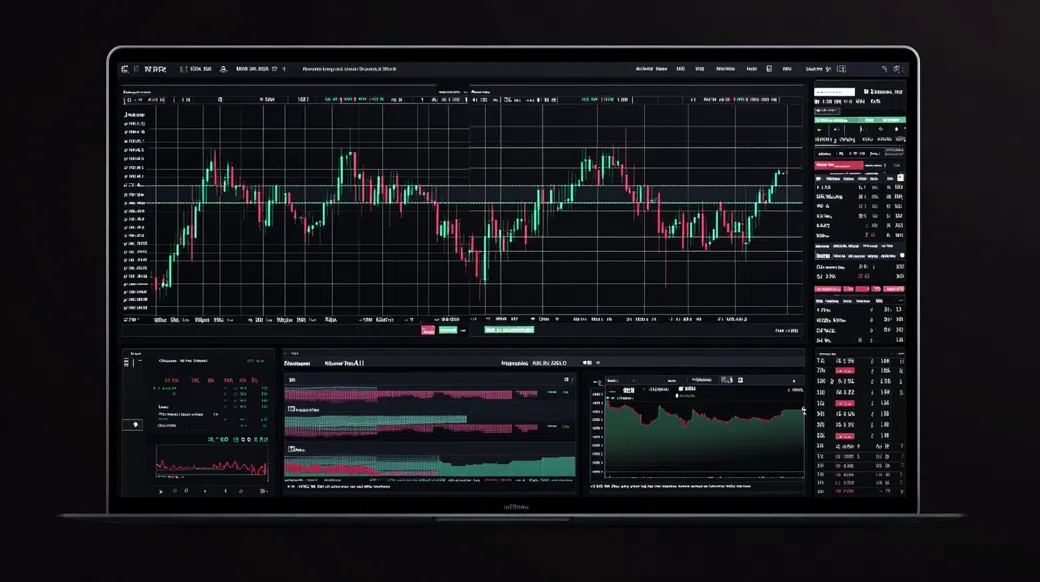
The platform experience is usually anchored by a proprietary WebTrader with basic-to-mid charting and a mobile app that mirrors core functions. Expect standard order tickets (market, limit, stop) and a set of common indicators and drawing tools, with chart layouts that are serviceable but not deeply configurable for research-heavy workflows. The dashboard typically bundles deposits/withdrawals, margin metrics, and open-position monitoring in one place, which is convenient—until you need advanced features such as strategy testing, deep order management, or institutional-style analytics. Execution can feel fine in calm markets, but under fast moves, traders should watch for slippage and requotes, especially on thin liquidity or during news spikes.
Trading Fees, Spreads, and Account Types at Forte Rendovale
Cost-wise, brokers in this segment often present a “Standard” style account where EUR/USD is commonly around 2.0 pips in typical conditions, plus higher spreads on less liquid pairs. Some also advertise a raw/ECN-like tier (usually 0.0–0.4 pips plus about $5–$8 round turn), though the real-world all-in cost depends on fill quality and how often you trade during volatile windows. Overnight financing (swap) is a material line item for swing positions, and fee schedules may also include withdrawal or inactivity charges. The typical minimum deposit is around $250, while maximum leverage can run up to 1:500—a number that boosts exposure faster than it boosts edge.
When Do Traders Start Looking for Forte Rendovale Alternatives?
Cost friction is usually the first datapoint that refuses to stay hidden. If you’re paying ~2.0 pips on EUR/USD, the spread becomes a tax you pay on every entry and exit, and it dominates P&L for high-frequency styles. That’s one reason Forte Rendovale alternatives show up in traders’ shortlists: they want tighter pricing, clearer execution rules, and a regulatory framework that doesn’t rely on “trust me” as a settlement layer. Another common driver is strategy fit—systematic traders need platform features (MT4/MT5/cTrader, API access, detailed reporting) that proprietary terminals may not prioritize.
- You’re running a scalping or news-trading approach and notice slippage spikes that erase the benefit of high leverage.
- You need MT4/MT5 or cTrader for EAs, copy setups, or deeper order controls than a browser terminal provides.
- Your portfolio plan requires real stocks/ETFs instead of equity CFDs (no shareholder rights, different tax and financing mechanics).
- You’re in the US or a restricted jurisdiction and can’t maintain consistent access or support due to regional limitations.
How to Choose a Reliable Alternative to the Forte Rendovale Trading Platform
Think of broker selection like building a risk budget: you’re deciding where to accept uncertainty. Market uncertainty is unavoidable; counterparty uncertainty is optional. The best substitutes for Forte Rendovale are the ones where you can independently verify regulation, understand the execution model, and estimate your all-in trading cost before you deposit meaningful capital.
Regulation, Safety, and Investor Protection
Start with the regulator because it defines enforcement and client-money rules. In the UK, FCA oversight can include FSCS coverage up to £85,000 (eligibility depends on circumstances), and firms typically must keep client funds segregated. In the EU, CySEC-regulated entities may fall under the ICF with coverage up to €20,000. For US forex, NFA/CFTC registration is the non-negotiable gate. Don’t rely on a broker’s footer badge—check the official register entry and match the legal entity name.
Available Markets and Instruments
Map instruments to your strategy, not to a platform’s menu. If you only need FX majors and index CFDs, a specialist can be efficient. If you want to allocate across ETFs, options, futures, and bonds, you’ll need a multi-asset brokerage with exchange access. Many alternatives to the Forte Rendovale trading platform will offer “stocks” as CFDs; that’s trading price exposure, not ownership. For long-term investors, that difference is structural.
Trading Costs: Spreads, Commissions, and Other Fees
The comparison metric I trust is round-turn cost: spread + commission + expected slippage, then layer in swap for holds longer than a day. A 0.5–1.0 pip spread delta on EUR/USD is small per trade, but at 200 round trips a month it becomes a line item you can’t ignore. Also scan for non-trading fees (inactivity, withdrawals) and financing schedules; the cheapest entry price can be offset by expensive overnight funding.
Platforms, Tools, and Execution Quality
Platform choice is really a tooling decision. MT4/MT5 ecosystems support EAs and a huge indicator library; cTrader tends to appeal to traders who care about order handling and UI clarity; proprietary platforms vary widely. Execution model matters too: market maker setups can be fine for some traders, but STP/ECN/DMA frameworks are often preferred when you’re sensitive to fills, requotes, and latency. If you’re benchmarking Forte Rendovale alternatives, record slippage around major data releases and compare it across accounts.
Support, Education, and Overall User Experience
When something breaks, you need fast, documented answers. Look for multi-language support coverage aligned to your time zone (US/EU hours), clear ticketing trails, and a help center that explains margin calls, negative balance protection, and order types without hand-waving. Mobile parity is also real: if you manage risk from a phone, the app must show margin utilization, pending orders, and financing costs reliably.
Forte Rendovale and Different Asset Classes: When Alternatives May Be Better
Forte Rendovale Forex and CFD Trading
For FX and core CFDs, the tradeoff usually comes down to price and fills. A typical offshore-style setup (EUR/USD around 2.0 pips on a standard tier, leverage up to 1:500) can feel “accessible,” but high leverage is not a feature unless your risk controls are stronger than your impulses. Regulated FX/CFD specialists often win on measurables: tighter spreads, clearer execution policies, and platform stacks built for repeatable workflows. Pepperstone and IC Markets, for example, are widely used by cost-sensitive traders because they commonly offer raw-style pricing (spread near zero plus commission) alongside MT4/MT5/cTrader, which makes it easier to test strategies and track performance. If your edge is thin—and most retail edges are—saving even fractions of a pip can be the difference between drift and durability.
Forte Rendovale Stock and ETF Trading
Here’s where many platforms like Forte Rendovale show their boundaries. “Stocks” are often offered as CFDs (price exposure, financing costs, no shareholder voting), and true exchange-traded access may be absent. If you’re building a portfolio that holds real shares or ETFs, a multi-asset broker changes the game: you can route to exchanges, hold positions without CFD financing, and use options or futures for hedging. Interactive Brokers (IBKR) is the archetype for breadth—equities, ETFs, options, futures, bonds, and FX under a single roof—while Saxo Bank also targets multi-asset traders who want research tools and broad market coverage. For many EU/UK traders, that shift also improves reporting quality and reduces the operational anxiety of relying on a CFD-only inventory.
Forte Rendovale Crypto Trading
Crypto is the asset class where wording misleads most often. Crypto CFDs give you price exposure without on-chain ownership—no withdrawals to self-custody, no interaction with smart contracts, and no ability to verify reserves because you’re not holding the asset. That may be acceptable if your goal is short-term directional trading with risk caps, but it’s not “owning crypto.” Some regulated CFD brokers, including IG and Plus500, offer crypto CFDs for eligible regions, which can be a cleaner fit for traders who want regulated account oversight and familiar margin mechanics. If you care about blockchain verifiability, remember the core mismatch: a CFD is an off-chain promise. Size accordingly, and avoid treating leverage as a substitute for thesis quality.
Best Forte Rendovale Alternatives for 2026: Comparison of Top Trading Platforms
Interactive Brokers (IBKR): Key Facts and How It Compares to Forte Rendovale
Regulation: SEC/FINRA (US), FCA (UK), IIROC (Canada)
Markets: Stocks, ETFs, options, futures, bonds, FX, funds (availability varies by region)
Fees: FX spreads vary by market conditions; commissions depend on product and venue (generally low for active traders)
Platform: Trader Workstation (TWS), IBKR Desktop/Mobile, Client Portal, APIs
Best For: Multi-asset traders who want exchange access and data-grade reporting
Pepperstone: Key Facts and How It Compares to Forte Rendovale
Regulation: FCA (UK), ASIC (Australia), CySEC (EU), DFSA (Dubai)
Markets: FX, CFDs (indices, commodities; offering depends on entity)
Fees: Standard spreads commonly from ~1.0 pip on EUR/USD; Raw-style pricing often ~0.0–0.3 pips + commission (varies by platform/entity)
Platform: MT4, MT5, cTrader, TradingView integration (where available)
Best For: Algorithmic FX traders focused on tight pricing and platform choice
Saxo Bank: Key Facts and How It Compares to Forte Rendovale
Regulation: FCA (UK), MAS (Singapore), DFSA (Dubai)
Markets: Stocks, ETFs, bonds, options, futures, FX, CFDs (product scope varies by region)
Fees: Pricing varies by tier and market; FX spreads often competitive for larger accounts, with commissions on many exchange-traded products
Platform: SaxoTraderGO, SaxoTraderPRO
Best For: Portfolio builders who mix investing with tactical FX/CFD hedges
IC Markets: Key Facts and How It Compares to Forte Rendovale
Regulation: ASIC (Australia), CySEC (EU), FSA Seychelles (group-level)
Markets: FX, CFDs (indices, commodities; crypto CFDs may be available depending on region)
Fees: Raw accounts often ~0.0–0.3 pips on EUR/USD + commission (commission and spreads vary by platform/entity)
Platform: MT4, MT5, cTrader
Best For: High-volume scalpers optimizing for low spread and fast execution
IG: Key Facts and How It Compares to Forte Rendovale
Regulation: FCA (UK), ASIC (Australia), MAS (Singapore)
Markets: CFDs (indices, FX, commodities, shares), crypto CFDs (where permitted)
Fees: Costs vary by market; FX spreads typically from ~0.6–1.0+ pips depending on pair and conditions
Platform: IG Trading Platform, MT4 (in supported regions)
Best For: Macro traders wanting broad CFD coverage with strong oversight
eToro: Key Facts and How It Compares to Forte Rendovale
Regulation: FCA (UK), CySEC (EU), ASIC (Australia)
Markets: Stocks and ETFs (region-dependent), CFDs, crypto (availability depends on jurisdiction), copy/social features
Fees: Pricing is typically spread-based; crypto and CFD costs vary by instrument and region
Platform: eToro proprietary web and mobile platform
Best For: Beginners who learn via social/copy workflows and simple UI
Comparison Summary
| Platform | Regulation | Main Markets | Typical Costs | Best For |
|---|---|---|---|---|
| Interactive Brokers (IBKR) | SEC/FINRA, FCA, IIROC | Real stocks/ETFs, options, futures, bonds, FX | Product-based commissions; FX spreads variable | Multi-asset traders who want exchange access and data-grade reporting |
| Pepperstone | FCA, ASIC, CySEC, DFSA | FX and CFDs | ~1.0+ pip Standard; ~0.0–0.3 pip + commission on Raw-style | Algorithmic FX traders focused on tight pricing and platform choice |
| Saxo Bank | FCA, MAS, DFSA | Multi-asset (stocks/ETFs/options/futures) + FX/CFDs | Tiered pricing; commissions on exchanges; FX spreads vary by tier | Portfolio builders who mix investing with tactical FX/CFD hedges |
| IC Markets | ASIC, CySEC, FSA Seychelles (group-level) | FX and CFDs | Raw ~0.0–0.3 pip + commission (platform/entity dependent) | High-volume scalpers optimizing for low spread and fast execution |
| IG | FCA, ASIC, MAS | CFDs across FX/indices/commodities/shares; crypto CFDs (where allowed) | FX spreads often ~0.6–1.0+ pips (market dependent) | Macro traders wanting broad CFD coverage with strong oversight |
| eToro | FCA, CySEC, ASIC | Stocks/ETFs (region-dependent), CFDs, crypto (jurisdiction-dependent) | Mostly spread-based; instrument-specific pricing | Beginners who learn via social/copy workflows and simple UI |
How to Safely Move from Forte Rendovale to Another Broker
Switching brokers is less like changing apps and more like changing counterparties. Do it slowly, and treat each step as a control against avoidable loss—especially if you’ve used high leverage. Before you move funds, confirm the new broker’s legal entity and verify that your region (US/EU) is supported; many Forte Rendovale alternatives have multiple entities with different rules and protections.
- Look up the new broker on the regulator’s official database (FCA Register, ASIC Connect, CySEC list, or NFA BASIC) and match the entity name to the account-opening documents.
- Open the new account and complete KYC/AML checks first (government ID + proof of address), so you’re not stuck waiting while your capital is in transit.
- Flatten exposure on Forte Rendovale by closing open CFD positions; brokers typically don’t transfer positions, so you’ll re-enter on the new platform if you still want the trade.
- Withdraw funds using the same method you used to deposit whenever possible; payment rails and AML rules can delay mismatched routes.
- Export statements, trade history, and funding records for tax and dispute purposes before you stop using the old account.
Ready to Explore Forte Rendovale?
If you’re benchmarking platforms, compare the live onboarding flow, product disclosures, and fee schedules in your own region before committing funds. Small print (entity, protections, leverage rules) changes the risk profile more than a slick interface.
Visit Forte RendovaleFAQ: Forte Rendovale Alternatives and Trading Platforms
What is the best alternative to Forte Rendovale in 2026?
The best alternative depends on whether you need real multi-asset access or mainly FX/CFDs. For exchange-traded stocks/ETFs/options/futures with strong reporting, Interactive Brokers (IBKR) is hard to match; for FX/CFD execution and platform choice, Pepperstone or IC Markets are common picks. If you want broad CFD coverage under a major regulator, IG is a frequent shortlist name for EU/UK traders.
Is Forte Rendovale a safe broker/platform?
Forte Rendovale appears consistent with an offshore/limited-supervision brokerage model (often associated with jurisdictions such as Seychelles), which typically offers fewer investor protections than FCA/ASIC/CySEC/NFA-regulated firms. That doesn’t automatically imply fraud, but it does raise the consequence of operational risk: weaker dispute mechanisms, fewer compensation pathways, and more uncertainty around client-fund safeguards. If safety is your priority, focus on regulated options vs Forte Rendovale and verify registration on official regulator sites.
Can I trade stocks, futures, or crypto with Forte Rendovale?
With brokers similar to Forte Rendovale, stocks are commonly offered as CFDs rather than real shares, and exchange-listed futures are often not part of the core lineup. Crypto exposure is frequently via crypto CFDs (price tracking without on-chain ownership). If you need real stocks/ETFs or listed futures, use a multi-asset venue like IBKR or Saxo; for crypto CFDs in regulated environments, firms like IG or Plus500 (jurisdiction dependent) are typical candidates.
What should I check before switching from Forte Rendovale to another platform?
Before switching, confirm the new broker’s legal entity on the FCA/ASIC/CySEC/NFA register, then read the client-money and negative balance protection terms for your region. Next, compare all-in trading costs (spread + commission + swap) and test execution with small size to observe slippage. Finally, download your funding and trade history from Forte Rendovale and withdraw via the original payment method to reduce AML-related delays.
About the Author: Alice Wu is a data scientist and market analyst who evaluates brokers the same way she evaluates blockchains: by verifiable records, incentives, and failure modes. She writes about trading infrastructure, execution quality, and risk controls with a bias toward measurable evidence over narratives.