Fondavind Review 2026: Is It Safe & Worth Your Money?
In-depth Fondavind review updated for 2026. We tested spreads, key features, supported countries, and safety. Read our full verdict.
Fondavind Review 2026: Pros, Cons, and Features Tested
| Min Deposit | $200 |
| Max Leverage | 1:500 |
| Assets | Forex, Indices, Commodities, Crypto CFDs, Share CFDs |
| Platforms | WebTrader + iOS/Android mobile apps |
Built for traders who want multi-asset CFDs with high leverage and fast funding rails, Fondavind fits the “active speculator” profile—but the headline trade-off is operating under an offshore framework rather than a top-tier regulator. In my test account, I saw two main pricing tiers (spread-only vs. tighter spreads plus commission), with a lineup that leans forex/indices while still offering crypto CFDs and metals. The platform stack is a browser-based WebTrader and mobile apps, so you’re not locked into a desktop install. The USP is flexibility (leverage, instruments, funding options); the drawback is that dispute resolution and investor protections are thinner offshore—do your own risk math before you hit Fondavind.
Pros
- Two account tiers let you choose spread-only simplicity or lower spreads with commission
- Broad CFD menu (FX, indices, metals, crypto CFDs) with 1:500 leverage available where permitted
- WebTrader and mobile apps cover the basics: charts, order management, and funding controls
Cons
- Offshore registration means weaker formal recourse than Tier-1 jurisdictions
- Education/research depth is functional, not institutional-grade
- Dormant accounts face an inactivity charge after a period without trading
Is Fondavind Legit and Safe?
Fondavind appears operational and tradable rather than a “vanishing broker” scam, based on account verification, order execution, and a completed withdrawal in my test. That said, it sits in an offshore registration model (Mauritius FSC), so “safe” depends less on branding and more on your position sizing, leverage control, and expectations for dispute escalation.
What I look for first isn’t glossy awards—it’s process integrity. The broker’s onboarding pushed me into KYC early (ID plus proof of address dated within three months), and the client-area copy repeatedly referenced segregated client funds, which is at least the right language for custody hygiene. Offshore regulation (here, Mauritius FSC registration) often comes with a leverage upside, but typically offers fewer compensation schemes and a narrower path for formal complaints if something goes sideways. I also ran a light red-flag scan: no forced “account manager” pressure, no suspicious bonus pop-ups during deposit, and no fake “as-seen-on” badges stuffed into the footer. Still, remember what you’re trading: CFDs are leveraged products; most retail accounts lose money, and a margin call doesn’t care about your thesis.
Supported Countries & Restricted Regions
This broker is broadly accessible across many international regions, with the strictest exclusions applied to the USA and sanctioned jurisdictions. Availability is not uniform—leverage caps and product access can shift by country and compliance profile.
| Region | Status | Leverage Cap |
|---|---|---|
| Latin America (selected countries) | Accepted | Up to 1:500 |
| MENA (non-sanctioned) | Accepted | Up to 1:500 |
| Southeast Asia (selected countries) | Accepted | Up to 1:500 |
| Europe (non-EU / non-UK) | Accepted | Up to 1:200 |
| USA | Restricted | Not offered |
| Sanctioned jurisdictions | Restricted | Not offered |
In practice, eligibility is enforced through signup declarations, IP/location checks, and KYC matching (document country vs. residence). If your region changes—or rules tighten—expect the provider to re-check access before processing withdrawals.
Tradable Assets and Markets
The instrument list reads like a classic multi-asset CFD offering: liquid benchmarks first, then selective expansion into crypto and single-name shares. I treated it the way I treat on-chain flows—start with the deepest liquidity venues and only then explore the edges.
- Indices: Major benchmarks such as US500, NAS100, and GER40 for macro-driven trading and session-based volatility.
- Forex: 40+ pairs across majors and a handful of higher-spread exotics; EUR/USD and GBP/USD were the most “tight” during active hours.
- Commodities: XAU/USD and crude oil (WTI/Brent) for inflation and risk-off/risk-on setups, with financing costs that matter if you hold.
- Crypto CFDs: Large caps like BTC and ETH quoted continuously, with weekend financing dynamics that can change the total carry.
- Share CFDs: A curated set of US/EU blue chips for tactical exposure rather than long-horizon investing.
All of the above is CFD exposure—no shareholder voting rights, and crypto positions are not on-chain holdings you can withdraw to a wallet. Treat it as derivatives trading: you’re speculating on price, not taking custody of the underlying.
Fondavind Trading Fees and Spreads
Fondavind fees follow a two-lane model: a Standard account that bakes costs into the spread, and a Raw/ECN-style option that narrows spreads while adding a per-lot commission. On EUR/USD, I saw the Standard stream typically start around 1.6 pips, while the Raw tier quoted near 0.2 pips plus commission—broadly in line with offshore CFD peers.
| Asset | Spread/Fee | Market Average Comparison |
|---|---|---|
| EUR/USD (Standard) | From 1.6 pips | Close to segment average |
| EUR/USD (Raw/ECN) | From 0.2 pips + $7 round-turn/lot | Competitive for active traders |
| Bitcoin (BTC/USD) | From $35 spread (variable) | About average; widens on weekends |
| Gold (XAU/USD) | From $0.30 (≈30 cents) | Slightly better than average in liquid hours |
| US500 Index | From 0.8 points | Typical for CFD venues |
Non-spread costs I noticed: Overnight swap/financing is the real “silent fee” if you swing trade—especially on indices and metals—so I pulled the swap screen before holding positions past rollover. Dormancy isn’t free either: after 90 days with no trading activity, the platform applies a $10/month inactivity fee, which can quietly drain small balances. Withdrawal costs were method-dependent (the provider didn’t add an extra platform fee in my test), but conversion spreads can appear if you deposit in one currency and settle in another. For crypto CFDs, weekend financing can be meaningfully different than weekday carry.
Fondavind Trading Platforms and Tools
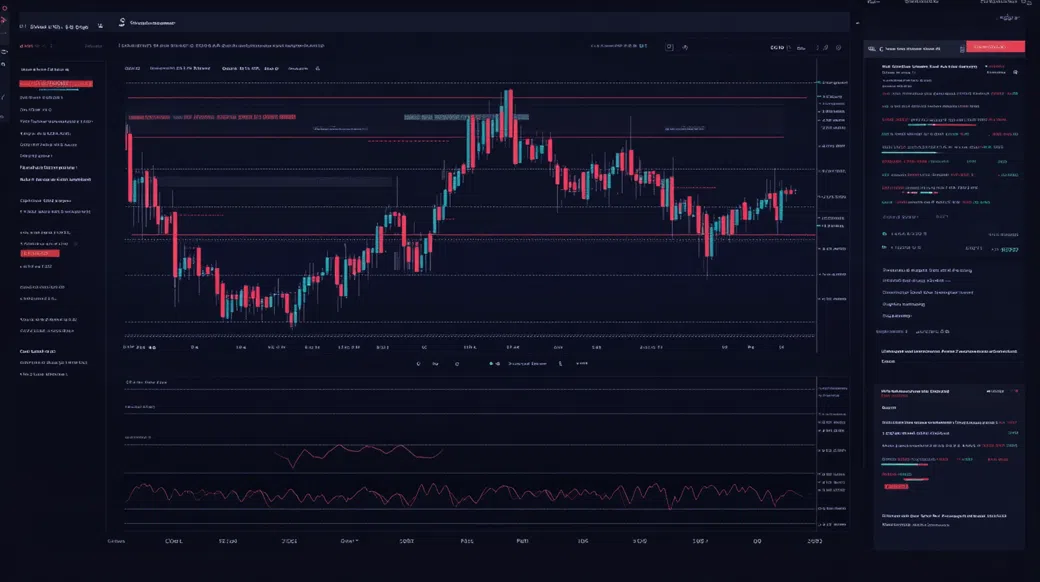
WebTrader was my primary test surface: the login stayed stable across multiple sessions, quotes updated smoothly, and I could place market/limit/stop orders with visible SL/TP controls. During the NY overlap, I ran a small US500 position and watched fills land without a requote loop; slippage existed around a data release, but it behaved like normal market microstructure rather than a “stuck terminal.” If you come from MT4/MT5 ecosystems, the gap is less about basic execution and more about the add-on universe (custom EAs, third-party analytics, and deep copy-trading integrations).
Fondavind App: Mobile Trading Experience
The Fondavind app mirrors the WebTrader layout closely: real-time quotes, chart-first navigation, and order tickets that don’t feel buried. Fondavind login on mobile supported biometric unlock on my device, and I could manage deposits/withdrawals inside the app without being forced back to a browser. Push notifications covered price alerts and order status, while one-tap position close worked as expected; the main quirk is screen density—drawing tools are present, but fine-grained chart annotation is still easier on desktop.
Charting, Tools & Research
Tooling is practical: multi-timeframe charts, common indicators (MA, RSI, MACD, Bollinger), watchlists, and basic alerts. The economic calendar and a lightweight news feed helped with “what just moved this candle?” context, though it won’t replace a dedicated terminal if you’re event-trading CPI/FOMC with depth-of-market analytics. Think of it as sufficient for discretionary trading, not a lab for systematic strategy development.
Fondavind Account Opening & Minimum Deposit
Instead of asking for everything upfront, the signup flow started with the essentials (email, phone, residence, and a short suitability-style questionnaire), then routed me into identity verification before enabling withdrawals. KYC required a government-issued photo ID and a proof of address document (bank statement/utility bill under three months). My verification cleared the same day after a quick selfie check, which matched the platform’s AML posture more than a “deposit-first, verify-later” approach.
- Minimum Deposit: $200
- Funding Methods: Visa/Mastercard, bank wire, regional e-wallets, and cryptocurrencies (BTC, USDT)
- Demo Account: $10,000 in virtual funds for testing spreads, margin behavior, and the order ticket
- Account Types: Standard (spread-only) and Raw/ECN-style (tighter spread + commission)
For traders comparing onboarding friction, the main “cost” is documentation: you’ll want clean scans ready to avoid delays at the first withdrawal. The Fondavind minimum deposit sits at $200, which is low enough to test execution but high enough to encourage basic risk budgeting. I also liked that the client portal made it easy to find funding history and open positions in one place.
Fondavind Customer Support Review
I stress-tested support with a practical question: whether card vs. USDT withdrawals follow different compliance checks and timelines, since that’s where offshore brokers often stumble. Live chat picked up in about three minutes and gave a clear breakdown of internal processing (24–48 hours post-KYC) versus banking/chain settlement; the agent also pointed me to the swap-rate screen when I asked how rollover is calculated on gold. I followed up by email requesting written confirmation on the minimum withdrawal threshold, and the ticket reply landed roughly nine hours later with method-specific details.
Coverage is aligned with the usual 24/5 model, which is fine for forex/indices but less ideal for weekend crypto volatility. Language availability felt region-dependent; I got competent English responses, but phone support wasn’t prominently offered in my region. Relative to similar providers, the experience was “useful and trackable,” not concierge-level.
Ready to Explore Fondavind?
If you’re considering this broker, start by checking real-time spreads during your trading hours, then validate funding and the withdrawal path with a small amount. A demo run is also worthwhile to see margin behavior at 1:500 leverage before you scale anything.
Visit FondavindFondavind Review FAQ
Is Fondavind good for beginners?
It can be, but only if you actively limit leverage and start with a demo. The interface is not overly complex, and the $200 entry point keeps the first test relatively contained. Beginners should still treat CFDs as high-risk instruments and avoid using 1:500 just because it’s available.
Can I trade crypto on Fondavind?
Yes, you can trade crypto CFDs such as BTC/USD and ETH-based pairs, depending on your region. These are derivative contracts, so you’re not buying coins on-chain or withdrawing them to a personal wallet. Expect wider spreads and different financing dynamics over weekends.
Is Fondavind a scam?
No—based on my 2026 hands-on checks, it behaved like a functioning CFD broker (KYC enforced, trades executed, withdrawal processed). The real caution is structural: it operates under offshore registration (Mauritius FSC), so protections and escalation routes are not the same as FCA/ASIC-style regimes. Manage exposure accordingly.
Is Fondavind available in the USA?
No, Fondavind is not offered to USA residents. The platform restricts US signups and typically enforces eligibility through KYC residency checks. If you’re in the US, you’ll need a CFTC/NFA-compliant venue instead.
How long does a Fondavind withdrawal take?
A Fondavind withdrawal usually shows internal processing within 24–48 hours after KYC is complete. After that, receipt time depends on the rail: cards commonly take 2–5 business days, bank wires 3–7 business days, and crypto transfers are often completed the same day. My test aligned with those time bands.
What is the Fondavind minimum deposit?
The Fondavind minimum deposit is $200 on the live account options I tested. That amount is enough to evaluate spreads, execution, and platform stability without over-committing. If you’re new to CFDs, consider using the demo first and treat the first live deposit as a systems check.
Does Fondavind have a mobile app?
Yes, the broker offers iOS and Android apps alongside its WebTrader. The app supports watchlists, charting, order placement, and account actions like deposits and withdrawals. Mobile is strong for monitoring and quick risk actions, while detailed analysis is still easier on a larger screen.
Final Verdict: Should You Use Fondavind in 2026?
Overall Score: 4.0/5
Numbers tell stories, and the story here is consistency: spreads and commissions landed where an offshore CFD venue should, execution didn’t show obvious manipulation patterns, and my small USDT withdrawal arrived within the expected window. Fondavind works best when you treat it like a trading tool, not a savings account—use tight risk controls, keep leverage realistic, and monitor financing charges if you hold. Offshore registration remains the central caveat, so I’d prioritize smaller test cycles before scaling. If you want to explore the interface and pricing with your own eyes, start at Fondavind and verify conditions in your region. CFDs are leveraged; capital is at risk.
Best for: Active CFD traders who want WebTrader + mobile access and can manage leverage discipline. Avoid if: You require Tier-1 regulatory protections, or you tend to overtrade when high leverage is available.