Flusso Valtexis Trading Platform Alternatives 2026
Explore Flusso Valtexis alternatives for 2026. Compare regulated brokers, costs, platforms, and safety checks to pick a reliable US/EU-focused option.
Flusso Valtexis Trading Platform Alternatives 2026: Reliable Options for Online Traders
Order books can be staged. Testimonials can be bought. But when I look at flows—funding routes, settlement patterns, and the friction points where money actually moves—platform risk becomes measurable. That’s the lens to use when evaluating Flusso Valtexis and lining up credible Flusso Valtexis alternatives for 2026. Flusso Valtexis appears to sit in the familiar offshore CFD lane: a proprietary WebTrader, a mobile app, FX/CFDs as the core menu, and leverage that can run far beyond what most tier‑1 regulators allow for retail clients. In this segment, the marketing story is often louder than the evidence trail.
For traders in the US/EU orbit, the pressure points are predictable: jurisdiction and investor protection, withdrawal reliability, cost transparency (spread vs. commission vs. swaps), and execution quality when markets gap. If your strategy depends on tight spreads, stable fills, or automation via MT4/MT5/cTrader, basic WebTraders tend to show their limits quickly. If you care about “owning” assets—real shares, real ETFs, real futures—CFD-first setups don’t match that requirement. And if you’re touching crypto, it matters whether you’re getting price exposure via CFDs or custodying coins (two completely different risk profiles).
Disclaimer: This article is for informational purposes only and does not constitute investment advice. CFDs and other leveraged products involve a high risk of loss and may not be suitable for all investors.
Key Takeaways (TL;DR)
- For US/EU traders, regulated brokers (FCA/ASIC/CySEC/NFA) add guardrails like segregated client funds and, in some regions, investor-compensation schemes.
- Compare “round-turn” trading cost (spread + commission + slippage), not headline leverage—1:500 leverage magnifies errors as fast as it magnifies wins.
- If you need real stocks/ETFs or futures access, a multi-asset broker (e.g., IBKR or Saxo) is structurally different from CFD-only providers.
What Is Flusso Valtexis and How Does Its Trading Platform Work?
Seen through a due‑diligence checklist, Flusso Valtexis looks like an offshore-style CFD venue aimed at retail traders who want quick onboarding, broad leverage, and a streamlined interface. Public-facing offerings in this category typically focus on forex pairs and index/commodity CFDs, often with crypto CFDs layered in for volatility seekers. The operating model is commonly “broker + platform” bundled together, where execution can be internalized (market maker) rather than routed like DMA; that distinction matters when fills, requotes, and slippage become the difference between a backtest and a live result. For people comparing brokers similar to Flusso Valtexis, the most important question is not the feature list—it’s which protections apply when something goes wrong.
Flusso Valtexis Web Trading Platform: Core Features and Tools
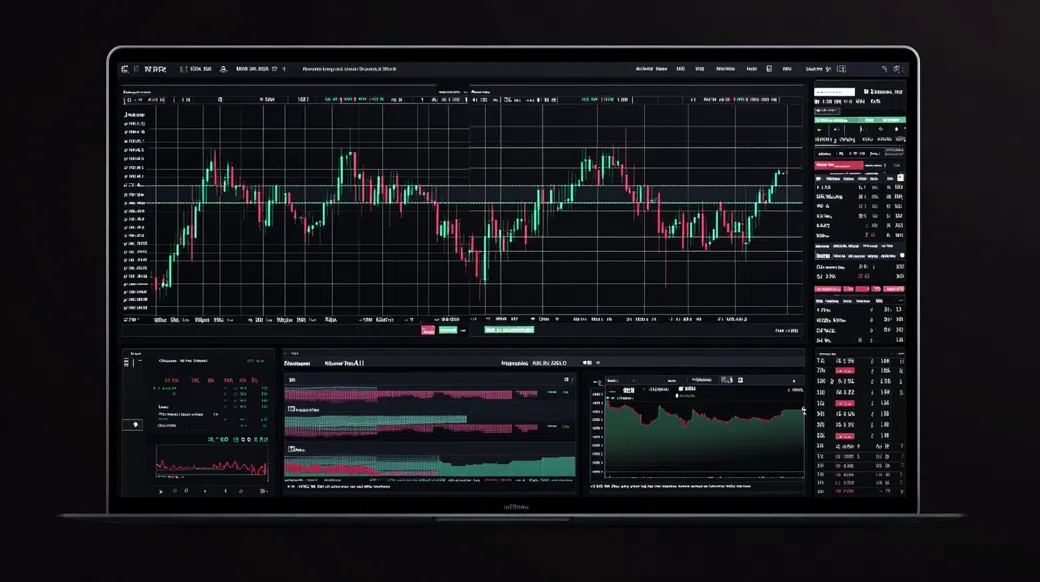
The platform stack is usually a proprietary WebTrader with basic-to-mid charting and a companion iOS/Android app. Expect the essentials: watchlists, one‑click trading toggles, market/limit/stop orders, and a modest set of indicators and drawing tools. Where these platforms often thin out is workflow depth—multi-chart layouts, granular order controls, and strategy tooling that systematic traders take for granted. Mobile tends to mirror the web experience well for monitoring and simple execution, but heavy analysis still favors a desktop-grade platform. Execution “feels fast” in calm markets; the real test is volatile sessions where spreads widen and stop orders become market orders in practice.
Trading Fees, Spreads, and Account Types at Flusso Valtexis
In the offshore CFD lane, pricing usually comes in two wrappers: a spread-only Standard-style account or a Raw/ECN-style tier with tighter spreads plus commission. A reasonable expectation for EUR/USD on a standard tier is around 2.0 pips in normal conditions, while a commission tier can show ~0.0–0.4 pips plus roughly $6–$8 round-turn commission per lot equivalent (terms vary by venue). Beyond spreads, swaps/overnight financing can quietly dominate P&L for hold-time strategies, and some providers add inactivity or withdrawal fees. Minimum deposits in this segment are often around $250, with advertised max leverage frequently near 1:500—a number that deserves respect, not excitement.
When Do Traders Start Looking for Flusso Valtexis Alternatives?
Data tells you when the relationship is breaking: widening effective spreads on fills, longer withdrawal cycles, and a support trail that goes cold right when volatility hits. That’s usually the moment traders type “Flusso Valtexis alternatives” into a search bar. The other push factor is structural: if your broker sits offshore or outside tier‑1 oversight, the dispute path can be shallow, and protections like negative balance rules or compensation schemes may not apply the way you assume. For many portfolios, a regulated option vs Flusso Valtexis is less about “features” and more about minimizing tail risk—especially when CFDs, leverage, and margin calls are in play.
- Needing MT4/MT5 or cTrader for an automated strategy (EAs, custom indicators) that a proprietary WebTrader can’t reliably support.
- Wanting transparent execution reporting (slippage stats, order handling) after noticing frequent stop losses filled worse than expected during news moves.
- Hitting a ceiling on asset access—such as wanting real stocks/ETFs or exchange-traded futures instead of CFD-only exposure.
- Reducing jurisdiction risk after realizing the account sits outside top-tier oversight and may not benefit from schemes like FSCS or ICF.
How to Choose a Reliable Alternative to the Flusso Valtexis Trading Platform
Think of broker selection as a model-selection problem: you’re choosing constraints. Strategy fit matters, but so do failure modes—what happens to funds, positions, and dispute resolution under stress. For alternatives to the Flusso Valtexis trading platform, build your decision around regulation + execution + total cost, then only after that weigh UX and extras.
Regulation, Safety, and Investor Protection
Start with the regulator’s public register, not a logo on a landing page. FCA (UK), ASIC (Australia), CySEC (EU), and NFA/CFTC (US) oversight typically brings requirements around segregated client funds, disclosures, and complaint handling. In the UK, eligible clients may have FSCS coverage up to £85,000; in Cyprus, the ICF can cover up to €20,000 (eligibility and product scope vary). This is the core difference between many platforms like Flusso Valtexis and tier‑1 venues: protections are enforceable, not aspirational.
Available Markets and Instruments
Write down what you actually need to trade. FX and index CFDs cover many short-term strategies; long-horizon portfolios often require real stocks/ETFs, bonds, or futures. Options access matters if you hedge with defined risk. Crypto is a separate decision: some traders want regulated crypto CFDs (price exposure), others want on-chain ownership and self-custody (not something brokers generally provide). The cleanest “fit” comes from matching instruments to the job, not forcing the job to fit the platform.
Trading Costs: Spreads, Commissions, and Other Fees
Compare costs as a round-turn: spread + commission + expected slippage. A “from 0.0 pips” headline can be meaningless if the commission is high or fills are poor in fast markets. Swaps (overnight financing) are the slow leak in many accounts—especially on indices and leveraged crypto CFDs. Also check non-trading fees: inactivity charges, deposit/withdrawal costs, and FX conversion fees can dwarf a tight pip spread over a quarter.
Platforms, Tools, and Execution Quality
Platform choice is really a tooling choice. MT4/MT5 and cTrader support automation and deep charting ecosystems; proprietary platforms can be slick but closed. Execution model matters too: market maker vs STP/ECN vs DMA changes how orders are internalized or routed, which can affect slippage and rejection rates during liquidity shocks. If you’re migrating away from Flusso Valtexis, run a small live test on the new venue during a news event—your fills will tell you more than any brochure.
Support, Education, and Overall User Experience
Support is not a luxury; it’s part of risk control. Look for multilingual coverage in your time zone, clear escalation paths, and fast resolution on funding issues. Education should go beyond beginner gloss—margin policy, stop execution mechanics, swap schedules, and corporate actions for equities. Finally, check mobile parity: if you manage risk on the go, the app must handle position controls, alerts, and account reporting without hiding key fields.
Flusso Valtexis and Different Asset Classes: When Alternatives May Be Better
Flusso Valtexis Forex and CFD Trading
Forex and CFDs are likely the center of gravity at Flusso Valtexis: roughly a few dozen FX pairs, a set of index and commodity CFDs, and leverage that can reach 1:500. The trade-off is that offshore-style pricing and execution can be harder to audit—your “2.0 pips” EUR/USD headline is one thing, your effective spread after slippage is another. Regulated substitutes for Flusso Valtexis—especially FX/CFD specialists—tend to compete on execution tooling and cost structure. Pepperstone (FCA/ASIC/CySEC/DFSA) and IC Markets (ASIC/CySEC; group includes Seychelles FSA) are often chosen by traders who need MT4/MT5/cTrader plus raw pricing options, while IG (FCA/ASIC/MAS) appeals to those who want a long-established CFD venue with broad market coverage and strong regulatory oversight. For short-horizon strategies, execution quality is a first-order variable.
Flusso Valtexis Stock and ETF Trading
If your goal is ownership—voting rights, corporate actions, the clean separation between custody and margin—CFD-only stock exposure is the wrong instrument. With Flusso Valtexis, stock/ETF access is commonly either absent or delivered as CFDs, which means you track price movement without holding the underlying shares. This is where top substitutes for Flusso Valtexis diverge sharply: Interactive Brokers (SEC/FINRA in the US; FCA in the UK; IIROC in Canada) is built for real multi-venue access to stocks, ETFs, options, and futures, and Saxo Bank (FCA/DFSA/MAS) is a strong multi-asset choice for investors who want integrated portfolio reporting across listed products and derivatives. The distinction is not academic: “real assets” and “CFDs on assets” behave differently in taxes, fees, and risk treatment.
Flusso Valtexis Crypto Trading
Crypto at Flusso Valtexis is most plausibly offered as crypto CFDs—price exposure without on-chain ownership. That can be fine for short-term trading, but it’s not the same as holding BTC/ETH in a wallet where you control keys and can verify transfers on-chain. Crypto CFDs also come with financing costs, wider spreads in off-hours, and the same leverage dynamics that trigger margin calls quickly. Among competitors to Flusso Valtexis, IG is widely used for regulated crypto CFD exposure in permitted jurisdictions, while Plus500 (FCA/CySEC/ASIC/MAS) is often selected by traders who prefer a simpler, app-first CFD experience with defined product scope. If your thesis depends on blockchain settlement and self-custody, a broker account won’t deliver that—choose the instrument that matches the thesis.
Best Flusso Valtexis Alternatives for 2026: Comparison of Top Trading Platforms
Interactive Brokers (IBKR): Key Facts and How It Compares to Flusso Valtexis
Regulation: SEC/FINRA (US), FCA (UK), IIROC (Canada)
Markets: Stocks, ETFs, options, futures, bonds, FX
Fees: Pricing varies by product; FX is typically commission-based with tight spreads, while stocks/options use per-share/contract models
Platform: Trader Workstation (TWS), web platform, mobile app, APIs
Best For: Data-driven multi-asset traders who want real market access and APIs
Pepperstone: Key Facts and How It Compares to Flusso Valtexis
Regulation: FCA, ASIC, CySEC, DFSA
Markets: FX, CFDs (indices, commodities, some shares depending on region)
Fees: Standard spreads typically from ~1.0 pip; Raw-style pricing can be ~0.0–0.3 pips plus commission (varies by entity)
Platform: MT4, MT5, cTrader, TradingView integration (availability depends on region)
Best For: Execution-sensitive FX traders using MT4/MT5 or cTrader
Saxo Bank: Key Facts and How It Compares to Flusso Valtexis
Regulation: FCA, DFSA, MAS
Markets: Stocks, ETFs, options, futures, bonds, FX, CFDs
Fees: Spreads and commissions depend on product; FX spreads can be competitive on higher tiers, with transparent commissions on many listed assets
Platform: SaxoTraderGO, SaxoTraderPRO
Best For: Portfolio builders who want one account for listed assets plus derivatives
IG: Key Facts and How It Compares to Flusso Valtexis
Regulation: FCA, ASIC, MAS
Markets: CFDs (FX, indices, commodities, shares), spread betting (UK), selected investing products by region
Fees: CFD pricing is primarily spread-based; major FX pairs often show from ~0.6–1.0 pip in normal conditions (varies by market and time)
Platform: IG web platform, mobile app, MT4 (where available)
Best For: Traders prioritizing long-running, tightly supervised CFD infrastructure
IC Markets: Key Facts and How It Compares to Flusso Valtexis
Regulation: ASIC, CySEC (group also includes Seychelles FSA)
Markets: FX, CFDs (indices, commodities, some crypto CFDs depending on entity)
Fees: Raw spreads often around ~0.0–0.3 pips plus commission; standard accounts typically wider (varies by platform/entity)
Platform: MT4, MT5, cTrader
Best For: Scalpers and algo traders optimizing for low spreads and latency
Plus500: Key Facts and How It Compares to Flusso Valtexis
Regulation: FCA, CySEC, ASIC, MAS
Markets: CFDs (FX, indices, commodities, shares, crypto CFDs where permitted)
Fees: Primarily spread-based; costs vary by instrument and volatility, with overnight funding for leveraged holds
Platform: Plus500 proprietary web platform and mobile app
Best For: App-first CFD traders who want a straightforward interface
Comparison Summary
| Platform | Regulation | Main Markets | Typical Costs | Best For |
|---|---|---|---|---|
| Interactive Brokers (IBKR) | SEC/FINRA, FCA, IIROC | Real stocks/ETFs, options, futures, bonds, FX | Commission schedules by product; FX typically tight with commissions | Data-driven multi-asset traders who want real market access and APIs |
| Pepperstone | FCA, ASIC, CySEC, DFSA | FX + CFDs (indices/commodities; some shares) | Std ~1.0+ pip; Raw ~0.0–0.3 pip + commission | Execution-sensitive FX traders using MT4/MT5 or cTrader |
| Saxo Bank | FCA, DFSA, MAS | Stocks/ETFs, options, futures, FX, CFDs, bonds | Transparent commissions on many listed assets; FX spreads competitive on tiers | Portfolio builders who want one account for listed assets plus derivatives |
| IG | FCA, ASIC, MAS | CFDs across FX/indices/commodities/shares; spread betting (UK) | Spread-based; majors often ~0.6–1.0+ pip depending on conditions | Traders prioritizing long-running, tightly supervised CFD infrastructure |
| IC Markets | ASIC, CySEC | FX + CFDs (indices/commodities; some crypto CFDs by entity) | Raw ~0.0–0.3 pip + commission; standard wider | Scalpers and algo traders optimizing for low spreads and latency |
| Plus500 | FCA, CySEC, ASIC, MAS | CFDs (FX, indices, commodities, shares, crypto CFDs where allowed) | Spread-based + overnight funding on leveraged positions | App-first CFD traders who want a straightforward interface |
How to Safely Move from Flusso Valtexis to Another Broker
Migrations fail in the boring gaps: KYC delays, mismatched payment methods, and open positions that you assumed could be “moved.” Treat the switch as a controlled rollout—verify the destination, reduce exposure, then transfer capital in steps. If you’re exiting Flusso Valtexis, remember that leveraged CFD positions can change sharply while you’re in transit, so flatten risk first and move funds only when you can actively manage margin.
- Confirm the new broker’s license on the regulator’s public database (FCA Register, ASIC Connect, CySEC register, or NFA BASIC), matching the legal entity name—not just the brand.
- Open the new account and complete KYC/AML (government ID + proof of address) before touching withdrawals; approvals often clear within a business day, but don’t plan on it.
- Close or reduce open CFD positions on the old platform; assume you cannot transfer positions broker-to-broker and will need to re-enter trades on the new venue if desired.
- Export statements, trade history, and funding records for tax and dispute purposes; keep screenshots of pending withdrawals and reference IDs.
- Withdraw using the same rail used to deposit when possible (card-to-card, bank-to-bank, wallet-to-wallet) because many brokers enforce source-of-funds rules under AML.
Ready to Explore Flusso Valtexis?
If you’re still evaluating, map your needs first: regulation coverage for your country, instruments you truly trade, and the platform stack you rely on. Then compare conditions side-by-side, including margin rules, swap schedules, and withdrawal methods, before committing meaningful capital.
Visit Flusso ValtexisFAQ: Flusso Valtexis Alternatives and Trading Platforms
What is the best alternative to Flusso Valtexis in 2026?
The best option depends on whether you need CFDs-only trading or real multi-asset access. For real stocks/ETFs/options/futures plus professional tooling, Interactive Brokers is a frequent pick; for FX execution on MT4/MT5/cTrader, Pepperstone or IC Markets are common choices. If your priority is a tightly supervised CFD venue with broad coverage, IG is often shortlisted among the best Flusso Valtexis alternatives 2026.
Is Flusso Valtexis a safe broker/platform?
Flusso Valtexis appears to fit an offshore/unregulated profile, which generally means fewer enforceable investor protections than FCA/ASIC/CySEC/NFA-regulated firms. Safety isn’t just about security features; it’s about legal recourse, segregation of client funds, and how disputes are handled. If those controls matter to you, regulated options vs Flusso Valtexis typically provide clearer accountability.
Can I trade stocks, futures, or crypto with Flusso Valtexis?
With Flusso Valtexis, access is most plausibly centered on FX and CFDs, with crypto exposure often offered as crypto CFDs rather than on-chain ownership. Real exchange-traded futures and true stock/ETF ownership are commonly not part of offshore CFD-first setups, or they may be offered only as CFDs. If you need listed futures or real equities, alternatives to the Flusso Valtexis trading platform like IBKR or Saxo are structurally better matches.
What should I check before switching from Flusso Valtexis to another platform?
Before switching, verify the new broker’s legal entity on the regulator register, then confirm withdrawal rails, margin rules, and whether negative balance protection applies in your region. Next, compare total trading cost (spread + commission + swaps + typical slippage), not just advertised leverage. Finally, make sure your strategy tooling—MT4/MT5/cTrader, APIs, or mobile risk controls—exists in the new stack, and test with a small deposit first.
About the Author: Alice Wu is a data scientist and financial journalist who evaluates trading platforms through transaction behavior, execution quality, and risk controls—not marketing claims. She focuses on how market structure, leverage, and funding rails shape real-world outcomes for traders. Her guiding premise is simple: the market can perform; the data still leaves footprints.