Flusso Valtexis Review 2026: Is It Safe & Worth Your Money?
In-depth Flusso Valtexis review updated for 2026. We tested spreads, key features, supported countries, and safety. Read our full verdict.
Flusso Valtexis Review 2026: Pros, Cons, and Features Tested
| Min Deposit | $200 |
| Max Leverage | 1:500 |
| Assets | Forex, Crypto CFDs, Commodities, Indices, Share CFDs |
| Platforms | Proprietary WebTrader, iOS app, Android app |
Built as a multi-asset CFD venue, Flusso Valtexis targets traders who want leverage and fast market access, with the trade-off being an offshore oversight model rather than a top-tier regulator. In this Flusso Valtexis review, my test account showed two pricing tiers (spread-only vs. raw+commission), plus a lineup that leans Forex/indices but still covers the big crypto tickers. The trading stack is a proprietary WebTrader backed by mobile apps, which is convenient but doesn’t bring the plug-and-play ecosystem many associate with MT4/MT5. The sharp edge is the risk profile: high leverage amplifies both wins and liquidations, so position sizing matters. For a quick product check, I used Flusso Valtexis to place a small EUR/USD market order and validate execution and withdrawal rails.
Pros
- Two account tiers that clearly separate spread-only pricing from raw spreads plus commission
- Broad CFD menu across FX, indices, metals, and large-cap crypto
- Mobile apps mirror core functions (quotes, orders, funding, and account management)
Cons
- Offshore framework means fewer dispute-escalation paths than Tier-1 jurisdictions
- WebTrader toolset is solid but not as extensible as MT5/cTrader ecosystems
- Inactivity charges can accumulate if you park an account and forget it
Is Flusso Valtexis Legit and Safe?
Flusso Valtexis looked operational and tradable in my hands-on checks, not a “vanish-after-deposit” setup. That said, it runs under an offshore registration model (my onboarding flow referenced Mauritius FSC), which changes what “safe” means compared with FCA/ASIC-style regimes.
I start legitimacy checks the same way I read a blockchain mempool: verify the rails, then look for friction where it shouldn’t exist. KYC was enforced before I could move meaningful funds out—ID plus a proof-of-address document (dated within three months) were required—and the back office only unlocked withdrawals after approval. The legal footprint presented during signup pointed to Mauritius FSC, a structure that often enables higher leverage (here up to 1:500) but typically comes with weaker investor compensation schemes and fewer formal levers if a dispute escalates. Red-flag sweep: I didn’t see “trophy cabinet” badges with unverifiable award logos, and I wasn’t hit with aggressive bonus pushing during deposit. The site language referenced segregated client funds, which is a good sign, though enforcement varies offshore. Remember the product risk: CFDs are leveraged instruments, and many retail accounts lose money—treat margin like a live wire.
Supported Countries & Restricted Regions
Access is broadly oriented toward international clients across parts of Europe (non-EU), MENA, Africa, and Southeast Asia, with jurisdiction checks applied at onboarding. The USA is blocked, and sanctioned jurisdictions are excluded.
| Region | Status | Leverage Cap |
|---|---|---|
| Europe (non-EU) | Accepted | Up to 1:500 |
| MENA | Accepted | Up to 1:500 |
| Southeast Asia | Accepted | Up to 1:500 |
| Sub-Saharan Africa | Accepted | Up to 1:500 |
| USA | Restricted | Not offered |
| Sanctioned jurisdictions | Restricted | Not offered |
Eligibility is enforced through a mix of IP location, residency declarations, and KYC document review. Policy can shift quickly, so treat country access as a living rule set rather than a permanent promise.
Tradable Assets and Markets
Instead of trying to be everything, this broker feels built around liquid, high-turnover CFDs: majors/minors in FX, headline indices, and a crypto list focused on large caps. If you’re hunting deep single-stock coverage, the share CFD shelf is more “blue chips” than “infinite tickers.”
- Indices: The usual benchmark set showed up in my watchlist (US500, NAS100, US30, GER40, UK100), useful for session-based volatility trading.
- Forex: Roughly 40+ pairs are represented, with majors front-and-center and a smaller selection of exotics for higher spread, higher risk setups.
- Commodities: Gold and silver are there alongside energy contracts like WTI/Brent, which matters if you hedge macro exposure.
- Crypto CFDs: BTC and ETH are core, with a handful of other large caps; financing over weekends can be a meaningful part of total cost.
All of this is CFD exposure: you’re trading price movement, not taking delivery, not getting shareholder voting rights, and not receiving on-chain crypto in a wallet. Dividends (where applicable) are typically reflected as adjustments rather than ownership.
Flusso Valtexis Trading Fees and Spreads
Cost structure is split across a spread-only Standard account and a Raw/ECN-style tier where spreads compress and a per-lot commission replaces part of the markup. In my pricing snapshots, the Standard EUR/USD sat at 1.6 pips from, while the raw tier printed near 0.2 pips plus commission—broadly in line with offshore CFD peers.
| Asset | Spread/Fee | Market Average Comparison |
|---|---|---|
| EUR/USD (Standard) | from 1.6 pips | About average for spread-only offshore CFDs |
| EUR/USD (Raw/ECN) | from 0.2 pips + $7 round-turn/lot | Competitive if you trade size and avoid overtrading |
| Bitcoin (BTC/USD) | from 0.35% | Middle of the pack; varies with volatility |
| Gold (XAU/USD) | from $0.35 | Reasonable versus typical CFD pricing |
| US500 Index | from 0.9 points | In the normal range for retail index CFDs |
Non-spread costs, in plain English: overnight swap/financing is the tax you pay for holding leveraged CFDs past rollover, and it can dwarf “tight spreads” if you carry positions for weeks. I also saw an inactivity fee of $10/month after 90 days without trading, which is small until it isn’t. Withdrawals may include third-party charges (especially bank wires), and if you fund in one currency but your account is denominated in another, conversion adds a quiet drag. For crypto CFDs, weekend financing is worth checking before you hold through Saturday.
Flusso Valtexis Trading Platforms and Tools
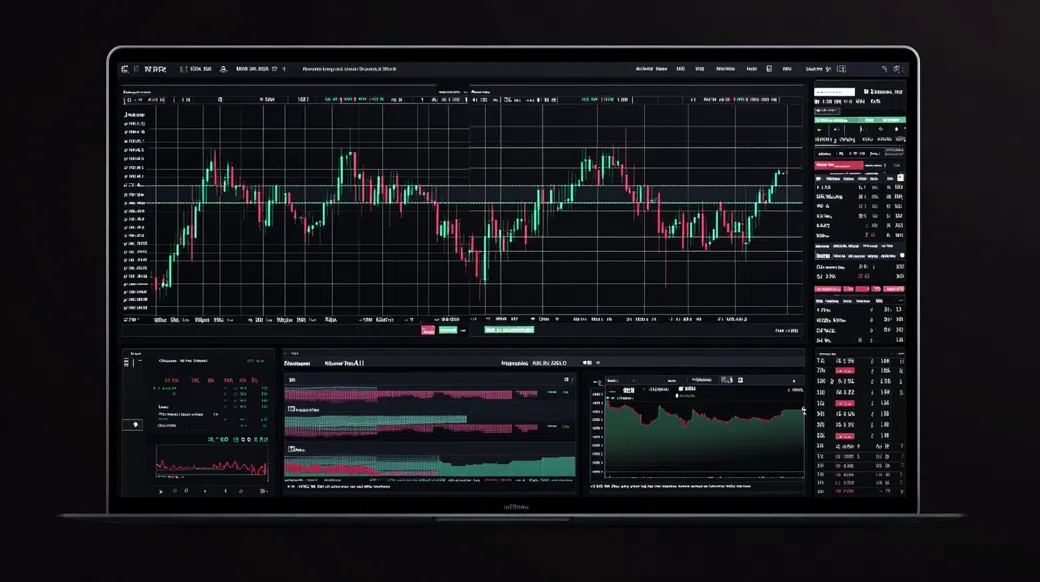
On desktop, the proprietary WebTrader loaded reliably across repeated sessions, and order controls were where they should be: market, limit, stop, plus stop-loss/take-profit attachments. Charts support multi-timeframe switching, and execution on a small US500 test position during the New York overlap filled without a requote; slippage existed, but it tracked the volatility pulse rather than feeling random. If you’re coming from MT4/MT5, the gap is less about “can it trade?” and more about the missing ecosystem—custom indicators, EAs, and community tooling aren’t as portable here.
Flusso Valtexis App: Mobile Trading Experience
The Flusso Valtexis app mirrored the desktop layout closely enough that I didn’t have to “re-learn” the platform on a phone. Quotes updated in real time, position management supported one-tap close, and I could initiate deposits/withdrawals from the same menu as trade tickets. Push alerts for price levels were available, and biometric unlock worked on my device; that said, deeper chart annotation is still easier on desktop. For anyone searching “Flusso Valtexis login,” the sign-in flow supported saved devices, but I’d still recommend enabling 2FA if offered in your region.
Charting, Tools & Research
Tooling is functional: a built-in economic calendar, a news feed, and a standard indicator set (RSI, MACD, moving averages, Bollinger bands) cover everyday decision loops. Watchlists and alerts help, but the research ceiling is lower than what you get with dedicated MT5/cTrader integrations or premium third-party analytics. If you trade around data releases, you’ll still want an external calendar and a volatility plan.
Flusso Valtexis Account Opening & Minimum Deposit
Before I funded anything, I mapped the onboarding funnel like a data pipeline: inputs, checks, and failure points. The signup asked for the basics (email, phone, country, and a short profile for suitability), then routed me into KYC for AML—photo ID plus proof of address. Verification landed the same business day for my account, and the dashboard displayed status clearly instead of hiding it behind support tickets.
- Minimum Deposit: $200 (the Flusso Valtexis minimum deposit in my account area)
- Funding Methods: Visa/Mastercard, bank wire, regional e-wallets, and crypto rails such as BTC and USDT
- Demo Account: $10,000 virtual balance for testing spreads, margin behavior, and order types
- Account Types: Standard (spread-only) and Raw/ECN-style (tighter spreads + $7 round-turn/lot)
Funding confirmation was immediate on card in my test, while wire instructions were more manual (as expected). If you care about clean bookkeeping, choose your account currency carefully up front—constant conversions are a hidden fee stream. I also recommend completing KYC early, not when you’re trying to withdraw under time pressure.
Flusso Valtexis Customer Support Review
I pressure-tested support with a practical question: how swap is calculated on Gold (XAU/USD) and whether weekend financing applies to crypto CFDs. Live chat picked up in about three minutes and pointed me to the instrument-spec sheet inside the platform; the agent also explained that rates can change with liquidity providers and rollover schedules. I then emailed the same question to see if the written trail matched—my ticket got a consistent answer roughly nine hours later, including a reminder to check contract specs before holding through Fridays.
Coverage looks like the familiar offshore cadence: 24/5 via chat and email, with responsiveness tapering on weekends. Language support is region-dependent, and I didn’t see a universally advertised phone desk (some clients may get callback options). Compared with larger, heavily regulated brokers, you’re leaning more on chat plus documentation—fine for routine issues, less ideal for complex disputes.
Ready to Explore Flusso Valtexis?
If you’re considering an account, start by checking real-time spreads on the instruments you actually trade and confirm your country eligibility before depositing. A demo run can also reveal whether the WebTrader layout fits your workflow and risk controls.
Visit Flusso ValtexisFlusso Valtexis Review FAQ
Is Flusso Valtexis good for beginners?
It can be, but only if you treat leverage with respect and start small. The UI is not overly complex, and the $10,000 demo helps you learn order types without risking capital. Beginners should avoid max leverage (1:500) until they’ve proven consistent risk management.
Can I trade crypto on Flusso Valtexis?
Yes, crypto is offered as CFDs, including BTC and ETH. You’re trading price exposure rather than receiving coins on-chain, so there’s no wallet withdrawal of the underlying asset. Pay attention to spreads and weekend financing when holding positions.
Is Flusso Valtexis a scam?
No—based on my 2026 test, it behaved like a functioning CFD broker (KYC enforced, trades executed, and withdrawals processed). The bigger issue is not “scam vs. not,” but the offshore oversight trade-off (Mauritius FSC) and what that implies for dispute resolution. As with any leveraged CFD account, only deposit money you can afford to lose.
Is Flusso Valtexis available in the USA?
No, the platform restricts USA residents. The signup flow and compliance checks are designed to block prohibited jurisdictions. If you travel, don’t assume access will remain unchanged—KYC residency still governs.
How long does a Flusso Valtexis withdrawal take?
In my test, internal processing took about 24–48 hours after KYC approval. After that, the arrival time depends on the rail: cards typically land in 2–5 business days, bank wires in 3–7 business days, and crypto can arrive the same day. Always confirm method-specific limits in your dashboard.
What is the Flusso Valtexis minimum deposit?
The minimum deposit is $200 on the account I opened. That threshold is enough to test execution and swap behavior, but it doesn’t make 1:500 leverage “safe.” If you’re new, consider using a demo first and treat the first live deposit as tuition, not capital for oversized bets.
Does Flusso Valtexis have a mobile app?
Yes, there are iOS and Android apps alongside the WebTrader. The mobile build supports monitoring, order placement, and funding actions, so you’re not locked to a desktop. Charting is adequate for management, while detailed analysis is still more comfortable on a larger screen.
Final Verdict: Should You Use Flusso Valtexis in 2026?
Overall Score: 4.0/5
From a trader’s perspective, the deciding variable isn’t the UI—it’s whether you’re comfortable with the offshore rules of engagement. Flusso Valtexis delivered consistent basics in my checks: KYC gates, usable pricing tiers (1.6 pips from on Standard EUR/USD; raw pricing at ~0.2 pips + $7/lot), and withdrawals that followed the stated timeline once verified. The platform and mobile apps do the job, even if power users will miss MT4/MT5-style extensibility. If you use Flusso Valtexis, keep risk controls tight: CFDs plus leverage (up to 1:500) can trigger margin calls faster than you can “average down.”
Best for: active CFD traders who value leverage and a clean web/mobile workflow. Avoid if: you require Tier-1 regulation, investor compensation schemes, or you’re prone to overleveraging.