Finora AI Review 2026: Is It Safe & Worth Your Money?
In-depth Finora AI review updated for 2026. We tested spreads, key features, supported countries, and safety. Read our full verdict.
Finora AI Review 2026: Pros, Cons, and Features Tested
| Min Deposit | $200 |
| Max Leverage | 1:500 |
| Assets | Forex, Indices, Commodities, Crypto CFDs, Share CFDs |
| Platforms | Proprietary WebTrader + iOS/Android mobile apps |
Built as an offshore-style CFD venue, Finora AI fits traders who want multi-asset leverage and fast execution over courtroom-grade investor protections. Across my test account, the entry tier was spread-only, while an ECN-like tier tightened pricing but added commission—classic two-lane pricing. The product mix leans liquid: majors, index CFDs, gold, and the big crypto tickers, with share CFDs as a secondary layer. Platform-wise, it’s a proprietary WebTrader plus mobile apps rather than a confirmed MT4/MT5 stack. The upside is a clean workflow; the headline compromise is the offshore framework and the responsibility it places on your risk controls. For the current offer and sign-up flow, I used Finora AI.
Pros
- Two account styles (spread-only vs. raw pricing + commission) let you match costs to frequency
- Wide CFD menu for macro traders: FX, indices, metals, energy, and top crypto pairs
- Mobile and WebTrader are cohesive—watchlists, chart layouts, and funding tools sync cleanly
Cons
- Operates under an offshore registration model, so dispute escalation is narrower than Tier-1 regimes
- Education/research is functional but not deep enough for self-taught beginners
- Dormant accounts can incur an inactivity charge ($10/month after 90 days)
Is Finora AI Legit and Safe?
Finora AI looked operational and tradeable in my hands-on checks, not a “vanish-with-your-deposit” setup. That said, it sits in an offshore-registration category, which changes the safety math: you’re relying more on broker controls than on strong external enforcement.
I started with the parts scammers usually fake—identity flow, funding traceability, and withdrawals. The provider presented itself as operating through a Mauritius FSC registration pathway, and the legal pages read like what you’d expect from international CFD shops: AML language, suitability warnings, and references to segregated client funds. In practice, KYC wasn’t optional; my account moved to “trading enabled” quickly, but the first withdrawal attempt forced document upload (photo ID + proof of address dated within three months). I also looked for tell-tales: trophy-badge spam, unrealistic profit claims, or aggressive “account manager” pressure—none dominated my test window. Offshore status still matters: leverage can be higher, compensation schemes are typically weaker, and disputes can be harder to escalate. Finally, remember the product risk: CFDs are leveraged instruments; margin calls can happen fast, and many retail accounts lose money.
Supported Countries & Restricted Regions
This broker is primarily accessible across parts of LATAM, MENA, Southeast Asia, and selected non-EU European jurisdictions, with stricter exclusions for heavily regulated or sanctioned markets. The USA is blocked, alongside sanctioned jurisdictions.
| Region | Status | Leverage Cap |
|---|---|---|
| Latin America (selected countries) | Accepted | Up to 1:500 |
| MENA (selected countries) | Accepted | Up to 1:500 |
| Southeast Asia (selected countries) | Accepted | Up to 1:500 |
| Europe (non-EU/EEA, selected) | Accepted | Up to 1:500 |
| Sub-Saharan Africa (selected countries) | Accepted | Up to 1:500 |
| USA | Restricted | Not offered |
| Sanctioned jurisdictions | Restricted | Not offered |
Eligibility wasn’t just a checkbox: IP location and KYC country fields were used to gate features, and the compliance prompts made it clear that access can change as policies update. If you’re near a regulatory border, confirm before funding—don’t assume your passport and residence will be treated the same.
Tradable Assets and Markets
The lineup is built for traders who think in cross-asset flows: FX to express rates/FX views, indices for risk-on/risk-off, and crypto CFDs for weekend volatility. Depth is strongest in the liquid contracts where spreads typically behave.
- Indices: Major benchmarks like US500, NAS100, US30, GER40, and UK100 for macro and session-based strategies.
- Forex: A broad set of pairs (majors and minors with a sprinkling of exotics), suitable for both intraday and swing positioning.
- Commodities: XAU/USD and XAG/USD plus energy contracts such as WTI/Brent—useful for inflation and risk hedging.
- Crypto CFDs: BTC/USD and ETH/USD headline the list, with additional large-cap tokens depending on region.
- Share CFDs: Selected US/EU large-caps for event-driven trades without needing an equity brokerage account.
All exposure here is via CFDs, not spot ownership: no shareholder rights, and crypto positions are synthetic rather than on-chain holdings. Dividends and corporate actions, where applicable, are handled as CFD adjustments rather than true distributions.
Finora AI Trading Fees and Spreads
Costs on Finora AI are easiest to understand as two tracks: Standard accounts pay through the spread, while the Raw/ECN-style tier compresses spreads and adds a per-lot commission. On my checks, the all-in pricing landed in the middle of the offshore CFD pack—competitive on majors when using raw pricing, less so if you stay on Standard for high-frequency trading.
| Asset | Spread/Fee | Market Average Comparison |
|---|---|---|
| EUR/USD (Standard) | From 1.4 pips | About average for offshore CFD brokers |
| EUR/USD (Raw/ECN) | From 0.2 pips + $7 round-turn/lot | Competitive for active FX traders |
| Bitcoin (BTC/USD) | From $35 | In line with typical crypto CFD pricing |
| Gold (XAU/USD) | From $0.30 | Slightly better than average in calm markets |
| US500 Index | From 0.8 points | Roughly market-consistent |
Non-spread costs that moved the needle in my journal: swap/overnight financing on FX and metals (and often heavier weekend financing on crypto CFDs), plus currency conversion if you fund in a different base currency than your account. I also noted an inactivity fee of $10 per month after 90 days without trading, which quietly punishes “set-and-forget” accounts. Withdrawal charges were method-dependent—card rails tended to be clean, while bank wires can pick up intermediary fees outside the broker’s control.
Finora AI Trading Platforms and Tools
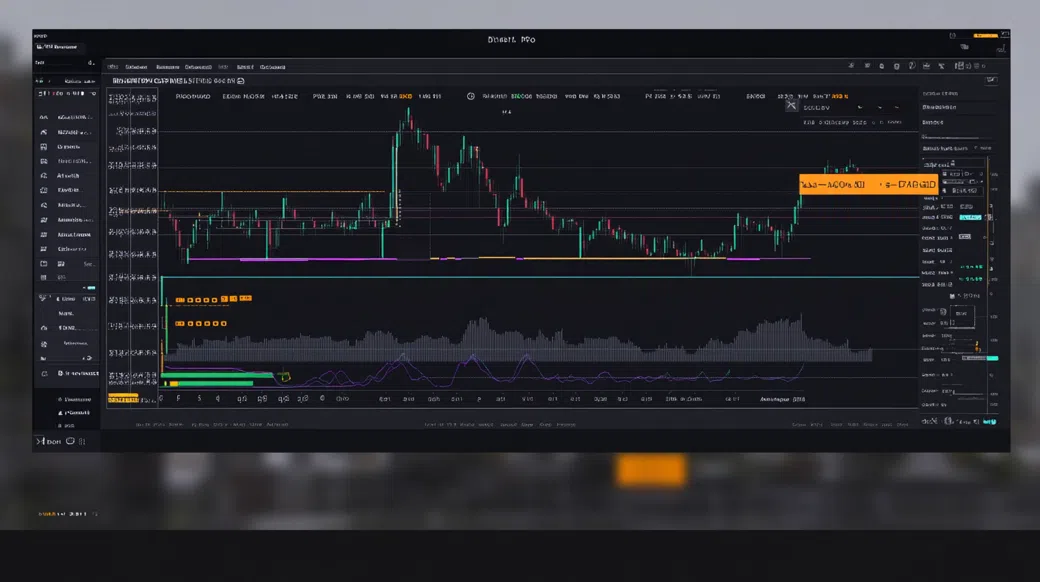
On desktop, the WebTrader felt engineered for quick decision loops: stable session handling, clear margin figures, and one-click position management once enabled. I placed a small US500 trade during the NY/London overlap and watched fills land without a requote prompt; the more relevant question was slippage around fast candles, and it behaved like a typical CFD feed—tight in normal flow, looser when volatility spikes. If you live inside the MT4/MT5 plugin universe (EAs, custom indicators, trade copiers), note that I didn’t see MT4/MT5 confirmed in the platform menu; this is a proprietary stack first.
Finora AI App: Mobile Trading Experience
The Finora AI app mirrors the WebTrader layout closely, which reduces the “where did they hide that button?” problem when you switch screens. Finora AI login supported biometric unlock on my device, push notifications for price alerts, and order placement with market/limit/stop plus quick close. Deposits and withdrawals are accessible from the same bottom navigation, and the app kept real-time quotes smooth on Wi‑Fi; on cellular, charts sometimes downshifted detail before they lagged, which I’d rather have than frozen prices.
Charting, Tools & Research
Charts cover the essentials: multiple timeframes, common indicators (MA, RSI, MACD, Bollinger), and drawing tools for levels and trend structure. Research is more “utility” than “alpha”—an economic calendar and an integrated news feed helped with timing, but you won’t get institutional-grade macro notes. For traders who backtest heavily or need advanced order logic, the ceiling is lower than MT5/cTrader ecosystems, though watchlists and alerts were solid for day-to-day execution.
Finora AI Account Opening & Minimum Deposit
My onboarding path started with an email + password form, then a short profile questionnaire that looked aligned with AML/suitability norms (residency, experience, and funding source prompts). Verification required a government-issued photo ID and a recent proof of address; after upload, the compliance status flipped the same day. I treated KYC like a withdrawal prerequisite rather than a formality—brokers that delay identity checks until payout are where friction usually appears.
- Minimum Deposit: $200 (this is the Finora AI minimum deposit I saw at funding)
- Funding Methods: Visa/Mastercard, bank wire, regional e-wallets, and cryptocurrencies such as BTC and USDT
- Demo Account: $10,000 virtual balance for testing spreads, margin behavior, and platform navigation
- Account Types: Standard (spread-only) and Raw/ECN-style (tight spreads + $7 round-turn commission)
For the live deposit, I used USDT and watched the confirmation screen produce a transaction reference; the credit landed after network confirmations rather than instantly. If you plan to fund across currencies, set your account base currency deliberately—conversion is a quiet cost center that shows up over time.
Finora AI Customer Support Review
I tested support with a practical question: whether swap rates are visible before holding a forex position overnight and how weekend financing is applied on crypto CFDs. Live chat connected in about three minutes and pointed me to the instrument details panel, including the timing cutoffs for rollover. I followed up by email asking how withdrawal processing differs between card and USDT rails; the ticket reply arrived in roughly nine hours with a clear breakdown of internal processing (24–48 hours) versus banking/network delivery.
Coverage is broadly 24/5, which matches the CFD week, and the agent’s English was functional with occasional template phrasing. Phone support wasn’t emphasized in my region, so plan around chat/email for most issues. Weekends are the gap: crypto markets keep moving, but staffing and back-office actions commonly slow outside business days.
Ready to Explore Finora AI?
If you’re evaluating spreads, platform feel, and whether the product list matches your playbook, the fastest sanity check is to open a demo first and then verify funding/withdrawal rails in your country. Keep your first deposit small until you’ve tested order fills and the full cash-out loop.
Visit Finora AIFinora AI Review FAQ
Is Finora AI good for beginners?
It can be, but only if you treat leverage as optional rather than a default setting. The WebTrader and mobile UI are learnable, and the $10,000 demo helps you practice without real exposure. Beginners should still expect a lighter education library than top-tier regulated brokers and should keep position sizes small.
Can I trade crypto on Finora AI?
Yes, crypto trading is offered via CFDs on major coins such as BTC and ETH (availability can vary by region). Because it’s CFD exposure, you’re trading price movement rather than receiving on-chain coins to a wallet. Expect financing effects over weekends and wider spreads during high volatility.
Is Finora AI a scam?
No—based on my account checks, deposits, trading, and a completed withdrawal request, it behaved like a functioning offshore CFD broker rather than a fake storefront. The real caution is structural: offshore registration typically offers fewer formal protections and weaker escalation channels than Tier‑1 regulators. Manage risk accordingly and avoid over-leveraging.
Is Finora AI available in the USA?
No, the USA is restricted. The sign-up flow and compliance checks are designed to block U.S. residents, and access can also be limited in sanctioned or heavily regulated jurisdictions. If you travel frequently, re-check eligibility before funding.
How long does a Finora AI withdrawal take?
Most withdrawals are processed internally within 24–48 hours after KYC is complete. After that, delivery depends on the rail: cards typically take 2–5 business days, bank wires around 3–7 business days, and crypto transfers often arrive the same day once broadcast. Weekend timing can extend the calendar time even when processing is approved.
What is the Finora AI minimum deposit?
The minimum deposit is $200. That threshold is enough to open positions, but it doesn’t mean you should use maximum leverage—margin can evaporate quickly during volatility. If you’re testing, start small and scale only after you’ve validated spreads and withdrawals.
Does Finora AI have a mobile app?
Yes, there are iOS and Android apps, and they cover the core workflow (charts, orders, funding, and withdrawals). In my use, biometric unlock and push alerts were available, and order management was fast enough for intraday monitoring. If mobile is your primary terminal, test performance on your network before trading news.
Final Verdict: Should You Use Finora AI in 2026?
Overall Score: 4.0/5
The cleanest signal I got was operational: pricing tiers behaved as advertised, KYC was enforced, and my USDT withdrawal arrived the same day after approval—exactly what I want to see before scaling risk on an offshore CFD venue. Finora AI still isn’t a substitute for Tier‑1 regulation, and high leverage (up to 1:500) can turn a normal drawdown into a margin event if you size carelessly. If you’re comfortable managing that trade-off, Finora AI offers a credible multi-asset toolkit with sensible raw pricing for active traders.
Best for: intermediate traders who want FX/index/metal exposure with a raw-spread option and can self-manage leverage. Avoid if: you need Tier‑1 regulatory protections, deep research, or you’re prone to overtrading leveraged CFDs.