Epargiance Review 2026: Is It Safe & Worth Your Money?
In-depth Epargiance review updated for 2026. We tested spreads, key features, supported countries, and safety. Read our full verdict.
Epargiance Review 2026: Pros, Cons, and Features Tested
| Min Deposit | $200 |
| Max Leverage | 1:500 |
| Assets | Forex, Indices, Commodities, Crypto CFDs, Share CFDs |
| Platforms | Proprietary WebTrader, iOS app, Android app |
A multi-asset CFD venue built for traders who care more about margin flexibility than regulatory hand-holding, Epargiance fits active speculators but asks you to accept an offshore-style risk profile in exchange for higher leverage. In my account test, the Standard tier priced like a spread-only retail book, while the Raw/ECN-style option pushed costs into commission territory for tighter quotes. The menu leans broad—FX and indices first, with crypto CFDs and metals filling the gaps—and the stack is WebTrader plus mobile rather than a guaranteed MT4/MT5 install base. The practical upside is speed from idea to order; the practical drawback is that escalation paths and investor protections are thinner than in Tier‑1 jurisdictions. I kept a small balance on Epargiance strictly for measurement trades.
Pros
- Two-tier pricing (spread-only vs. Raw/ECN-style) gives cost control for different trade frequencies
- WebTrader is clean for multi-market switching (FX → indices → metals) without plugin friction
- High leverage ceiling (up to 1:500) for traders who manage margin tightly
Cons
- Offshore registration model means weaker dispute routes and fewer formal compensation mechanisms
- Platform ecosystem is lighter than MT4/MT5 for third-party tools and automation
- Dormant accounts can accrue an inactivity charge after extended non-use
Is Epargiance Legit and Safe?
Epargiance operated like a functioning broker in my tests—orders executed, KYC was enforced, and a withdrawal completed—so it didn’t present as a “vanish-with-your-deposit” setup. The caveat is structure: it sits in an offshore regulatory orbit, which changes what “safe” means versus an FCA/ASIC-style framework.
Start with the paper trail. The provider presents itself under a Mauritius FSC-style offshore registration approach, and that matters because the leverage (up to 1:500) and product scope are easier to offer there than in stricter jurisdictions, but investor recourse tends to be more limited if a dispute turns messy. I looked for the classic red flags while testing: aggressive sales pressure, too-good-to-be-true badges, and withdrawal stalling. I didn’t get the hard-sell—support stayed technical when I asked about swap/overnight fees—and the withdrawal I initiated processed without “unlock fee” theatrics. On safeguards, the onboarding flow pushed me into KYC (photo ID plus proof of address) before higher limits, and the site language referenced segregated client funds, though offshore segregation is more about policy and banking arrangements than a uniform legal guarantee. Remember: CFDs are leveraged products, and most retail accounts lose money; treat margin like a liability, not a feature.
Supported Countries & Restricted Regions
This broker primarily targets international clients across parts of LATAM, MENA, and non‑EU Europe, while the USA and sanctioned jurisdictions are blocked. Availability is ultimately enforced at signup and again at withdrawal via identity checks.
| Region | Status | Leverage Cap |
|---|---|---|
| Latin America (selected countries) | Accepted | Up to 1:500 |
| MENA (non-sanctioned) | Accepted | Up to 1:500 |
| Non‑EU Europe (selected) | Accepted | Up to 1:500 |
| Southeast Asia (selected) | Accepted | Up to 1:500 |
| USA | Restricted | Not offered |
| Sanctioned jurisdictions | Restricted | Not offered |
In practice, access is policed through a mix of IP/location screening and KYC/AML review of documents and payment rails. Policies also shift with local rules, so eligibility can change even if an account was previously accepted.
Tradable Assets and Markets
Instead of being “crypto-only” or “FX-only,” the lineup reads like a classic offshore CFD shelf: majors for liquidity, indices for macro expression, and crypto CFDs for volatility spikes when TradFi is closed.
- Indices: US500, NAS100, US30, GER40, and UK100-style contracts designed for event-driven positioning.
- Forex: 40+ pairs across majors/minors plus a smaller set of higher-spread exotics for opportunistic trades.
- Commodities: XAU/USD and XAG/USD alongside energy contracts (WTI/Brent) for inflation and risk-off hedging.
- Crypto CFDs: BTC/USD and ETH/USD lead, with a handful of large-cap coins where weekend financing matters.
- Share CFDs: A curated list of US/EU large caps for tactical exposure without stock ownership plumbing.
All of this is CFD exposure: you’re trading price movement, not taking delivery of metals, receiving shareholder voting rights, or holding on-chain crypto in a wallet. Dividends (where applicable) are typically handled as broker adjustments rather than true equity ownership.
Epargiance Trading Fees and Spreads
Cost hinges on which account you pick: the Standard book embeds fees into the spread, while the Raw/ECN-style tier compresses spreads and adds a per-lot commission. On balance, the total cost sits in the middle of the offshore CFD pack—competitive on majors, less exceptional on crypto during quiet hours.
| Asset | Spread/Fee | Market Average Comparison |
|---|---|---|
| EUR/USD (Standard) | From 1.6 pips | About average for spread-only CFD accounts |
| EUR/USD (Raw/ECN) | From 0.2 pips + $7 round-turn/lot | Competitive for commission-based pricing |
| Bitcoin (BTC/USD) | From $35 | Near average; can widen on weekends |
| Gold (XAU/USD) | From $0.30 | Slightly better than many retail CFD quotes |
| US500 Index | From 0.8 points | Roughly in line with peers |
Non-spread costs that moved my real P&L: swap/overnight financing (especially noticeable if you hold indices or metals through multiple sessions), weekend financing on crypto CFDs, and currency conversion if you fund in one currency and margin in another. After 90 days of no activity, I saw an inactivity fee schedule of $10 per month, which can quietly erode small balances. On withdrawals, the platform didn’t add a surprise platform fee in my case, but card/bank rails may still impose their own charges. If you want to sanity-check current pricing, I’d verify the live contract specs inside Epargiance before scaling size.
Epargiance Trading Platforms and Tools
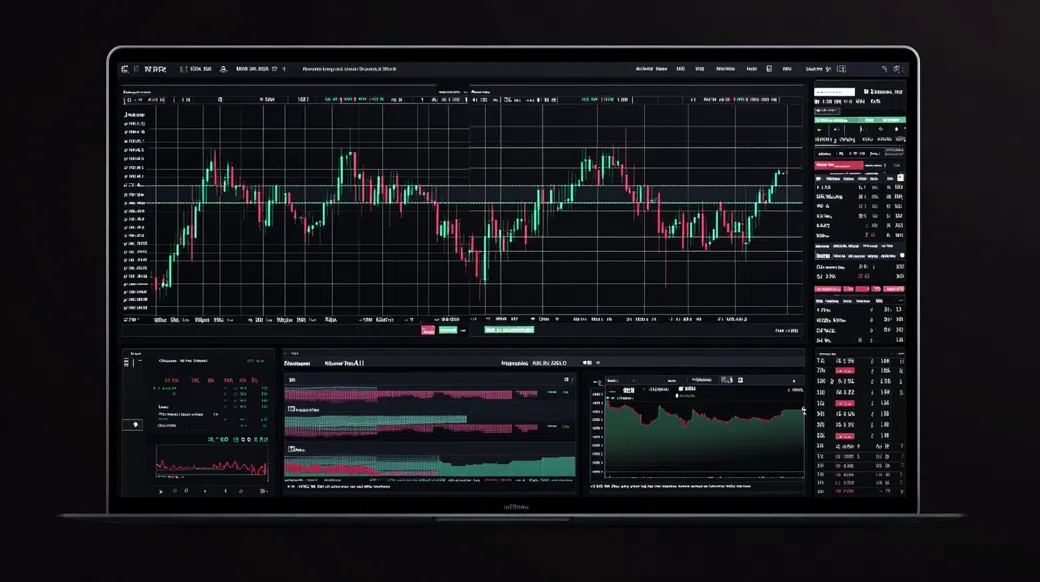
WebTrader is the center of gravity here, and my focus was stability under fast tape rather than cosmetics. Login sessions stayed persistent across tabs, charts loaded without stutter, and order tickets supported the basics (market, limit, stop, plus SL/TP attachments). Execution around the London–New York overlap on EUR/USD felt consistent—no odd “price freeze” moments—though the broader ecosystem still isn’t the same as an MT4/MT5 setup where you can plug in a decade of indicators and EAs.
Epargiance App: Mobile Trading Experience
The Epargiance app is built for monitoring and quick intervention: streaming quotes, one-tap close, and full account functions (deposit, open positions, and withdrawal requests) from the phone. During my Epargiance login tests, biometric unlock worked reliably, and push notifications for margin level and order fills arrived within seconds. The trade-off is screen economics—chart work is fine for checking structure, but deep multi-timeframe analysis still belongs on desktop.
Charting, Tools & Research
Tooling is practical rather than academic: watchlists, alerts, an economic calendar, and a news feed that’s “good enough” for keeping track of CPI/FOMC/NFP timing. Indicator coverage includes the staples (MA, RSI, MACD, Bollinger) plus drawing tools for levels and trendlines. Power users who rely on advanced strategy testing or custom code will feel the ceiling faster than they would on MT5/cTrader.
Epargiance Account Opening & Minimum Deposit
My onboarding path started with a short web form (email, phone, base currency choice), then moved straight into identity verification prompts once I tried to raise funding limits. KYC required a government-issued photo ID and a recent proof of address dated within three months; the upload UI accepted standard image formats without compression errors. Verification landed the same business day for me, and the account dashboard flipped from “pending” to “approved” without needing a follow-up.
- Minimum Deposit: $200
- Funding Methods: Visa/Mastercard, bank wire, regional e-wallets, and crypto deposits (BTC and USDT supported in my checkout flow)
- Demo Account: $10,000 virtual balance for platform familiarization and order-type practice
- Account Types: Standard (spread-only) and Raw/ECN-style (tighter spreads plus commission)
For readers searching “Epargiance minimum deposit,” the $200 threshold positions it above the ultra-low barrier brokers but still within reach for a controlled trial. I recommend setting leverage lower than the maximum at first; margin calls happen faster than most UI warnings suggest.
Epargiance Customer Support Review
I tested support with a precision question: where exactly the swap rates are displayed and whether weekend financing is triple-charged on certain CFDs. Live chat connected in roughly three minutes and pointed me to the contract specification panel, including the day-count convention used for financing. I also opened an email ticket asking about withdrawal sequencing after KYC; the written reply arrived in about eight hours with a method-by-method timeline and a reminder that processing pauses if documents expire.
Coverage is the standard 24/5 rhythm, which matches when most CFD liquidity is deepest. Language support felt region-dependent (English was fine; other languages were offered but not guaranteed on every shift), and phone support appeared limited compared with big multi-licensed brokers. Weekends are quieter—fine for crypto ticketing, but not where I’d expect rapid back-and-forth on account administration.
Ready to Explore Epargiance?
If you’re considering a small pilot, use a demo first to map the order ticket and margin logic, then compare live spreads during your usual trading hours. Also confirm your country eligibility and funding rail before you commit meaningful capital.
Visit EpargianceEpargiance Review FAQ
Is Epargiance good for beginners?
It can be, but only if you treat it as a risk-managed learning environment. The $200 entry point and demo account help, yet the 1:500 leverage ceiling can punish small mistakes fast. Beginners should start with low position sizes and focus on understanding swaps, margin, and stop-loss behavior.
Can I trade crypto on Epargiance?
Yes, crypto trading is available via crypto CFDs such as BTC/USD and ETH/USD. You’re speculating on price rather than moving coins on-chain, so there’s no wallet withdrawal of the underlying asset. Watch weekend spreads and financing, which can be a bigger cost driver than forex.
Is Epargiance a scam?
No—based on my functional testing, it behaved like an operational CFD broker (KYC checks, execution, and a completed withdrawal). That said, it follows an offshore registration model, so consumer protections and dispute escalation are not the same as with Tier‑1 regulated firms. If you use it, keep position sizing conservative and withdraw profits periodically.
Is Epargiance available in the USA?
No, the platform restricts USA residents. The block is typically enforced through onboarding checks and payment/KYC verification. US traders generally need a broker authorized for US regulatory requirements.
How long does a Epargiance withdrawal take?
Most withdrawals are processed internally within 24–48 hours once KYC is satisfied. Receipt time then depends on the rail: cards usually take 2–5 business days, bank wires around 3–7 business days, and crypto transfers are often same-day. Document mismatches can extend timelines, so keep ID and proof-of-address current.
What is the Epargiance minimum deposit?
The Epargiance minimum deposit is $200 in my test checkout flow. Funding options included card, bank wire, and crypto (BTC/USDT), with method availability varying by region. If you’re trialing the broker, deposit only what you’re prepared to risk under CFD leverage.
Does Epargiance have a mobile app?
Yes, it offers mobile apps for iOS and Android. The app supports trading, account management, and funding/withdrawal requests, with biometric login available on compatible devices. For heavy chart work, the desktop WebTrader remains the better workspace.
Final Verdict: Should You Use Epargiance in 2026?
Overall Score: 4.0/5
Data beats marketing, so I judge brokers by whether money and orders move cleanly: deposits post, trades fill, withdrawals land. On that checklist, Epargiance cleared the basics, and the two-tier fee model gives active traders a credible route to lower all-in spreads on majors. The negatives are structural rather than cosmetic—offshore oversight, fewer formal backstops, and a lighter platform ecosystem than MT4/MT5 power users expect. Keep in mind CFDs are leveraged and capital is at risk; use smaller sizing than your ego wants.
Best for: active CFD traders who want 1:500 leverage and can monitor margin closely. Avoid if: you require Tier‑1 regulation, deep third-party platform integrations, or you’re prone to overleveraging.