Elqui Rendanza Review 2026: Is It Safe & Worth Your Money?
In-depth Elqui Rendanza review updated for 2026. We tested spreads, key features, supported countries, and safety. Read our full verdict.
Elqui Rendanza Review 2026: Pros, Cons, and Features Tested
| Min Deposit | $200 |
| Max Leverage | 1:500 |
| Assets | Forex, Indices, Commodities, Crypto CFDs, Share CFDs |
| Platforms | Proprietary WebTrader, iOS/Android mobile apps |
Built for traders who want multi-asset CFDs with high leverage in one dashboard, Elqui Rendanza fits active speculators—while the headline compromise is an offshore framework with lighter investor backstops. I opened both Standard and Raw-style pricing views to compare total trade cost; the Raw tier clearly targets frequent execution, while Standard is simpler but wider. Market coverage leans FX and index CFDs, with crypto and metals available for tactical hedges. The WebTrader stack is responsive and the mobile build is usable for monitoring. My main reservation: safeguards rely more on internal policy than top-tier regulation, so risk management matters more than marketing.
Pros
- Two pricing styles (spread-only vs. tight spread + commission) make cost planning easier
- Broad CFD menu with majors, key indices, and liquid crypto pairs for short-term setups
- WebTrader and mobile apps cover core workflows without extra installs
Cons
- Offshore registration means fewer formal dispute/compensation mechanisms
- Education and research are functional but not deep enough for self-study beginners
- Dormant accounts can accumulate an inactivity charge after a period of no trading
Is Elqui Rendanza Legit and Safe?
Elqui Rendanza operated as a functioning CFD broker in my test—deposits, order placement, and withdrawals all completed—so it doesn’t present like a “vanish-with-your-money” scam. The safety caveat is structural: it runs under an offshore registration model, which typically provides weaker formal protections than Tier-1 regulators.
From the paperwork and footer disclosures I reviewed during onboarding, the provider presented itself under a Mauritius FSC-style offshore setup rather than a strict onshore licensing regime. In practice, that often trades stronger leverage (I saw 1:500 available) for a thinner layer of compensation schemes and a more complicated escalation path if you end up in a dispute. I also ran a basic red-flag scan: no aggressive “account manager” pressure after funding, no suspicious trophy-badge spam inside the client area, and no forced bonus prompts that lock withdrawals. KYC was enforced before I could finalize a cash-out request, and the legal pages referenced segregated client funds language—good to see, though enforcement depends on the jurisdiction. Remember: CFDs are leveraged products; most retail traders lose money, and you can burn capital quickly if margin is mismanaged.
Supported Countries & Restricted Regions
This broker accepted signups across a mix of international regions (notably parts of LATAM, MENA, and Southeast Asia), while the USA and sanctioned jurisdictions were blocked at eligibility checks.
| Region | Status | Leverage Cap |
|---|---|---|
| Latin America (selected countries) | Accepted | Up to 1:500 |
| MENA (non-sanctioned) | Accepted | Up to 1:500 |
| Southeast Asia (selected countries) | Accepted | Up to 1:500 |
| Africa (selected countries) | Accepted | Up to 1:500 |
| USA | Restricted | Not offered |
| Sanctioned jurisdictions | Restricted | Not offered |
Access controls weren’t only “checkbox compliance”: IP signals and KYC country documents influenced what I could proceed with in the signup flow. Eligibility can shift as policies and payment rails change, so it’s worth re-checking supported countries inside the client area before you fund.
Tradable Assets and Markets
The lineup reads as FX-and-index first, with commodities and crypto CFDs layered in for volatility traders rather than long-only investors. Depth is adequate for mainstream instruments, less so for niche exposures.
- Indices: US500, NAS100, US30 plus major Europe benchmarks like GER40 for macro-driven sessions.
- Forex: A solid set of majors and minors (think EUR/USD, GBP/USD, USD/JPY), with some higher-spread exotics.
- Commodities: Gold and silver alongside energy contracts such as WTI/Brent, useful for inflation and risk-off hedges.
- Crypto CFDs: BTC and ETH pairs plus a handful of large caps, designed for short-term price exposure rather than custody.
All of this is CFD exposure: you’re trading price movement with leverage, not taking shareholder voting rights or receiving on-chain crypto to a wallet. Share CFD positions also don’t replicate classic ownership benefits in the traditional sense.
Elqui Rendanza Trading Fees and Spreads
Costs are structured around two tracks: a Standard account that bakes fees into the spread, and a Raw/ECN-style option that tightens spreads and adds a per-lot commission. On the instruments I checked, total pricing landed in the “typical offshore CFD broker” band—competitive on Raw, merely average on Standard.
| Asset | Spread/Fee | Market Average Comparison |
|---|---|---|
| EUR/USD (Standard) | From 1.6 pips | In line to slightly higher than average |
| EUR/USD (Raw/ECN) | From 0.2 pips + $7 round-turn/lot | Competitive for active traders |
| Bitcoin (BTC/USD) | From $35 spread (variable) | Typical for CFD crypto |
| Gold (XAU/USD) | From $0.25 (25 cents) | Roughly in line |
| US500 Index | From 0.7 points | Near market average |
Non-spread costs that mattered in my ledger: overnight swap (financing) changed by instrument and direction, and weekend financing made crypto holds noticeably pricier if left open. I also confirmed an inactivity fee of $10 per month after 90 days without trading activity, which can quietly erode small balances. Withdrawal rails may introduce third-party charges (especially wires), and card/crypto funding can trigger FX conversion costs if your deposit currency doesn’t match the account base.
Elqui Rendanza Trading Platforms and Tools
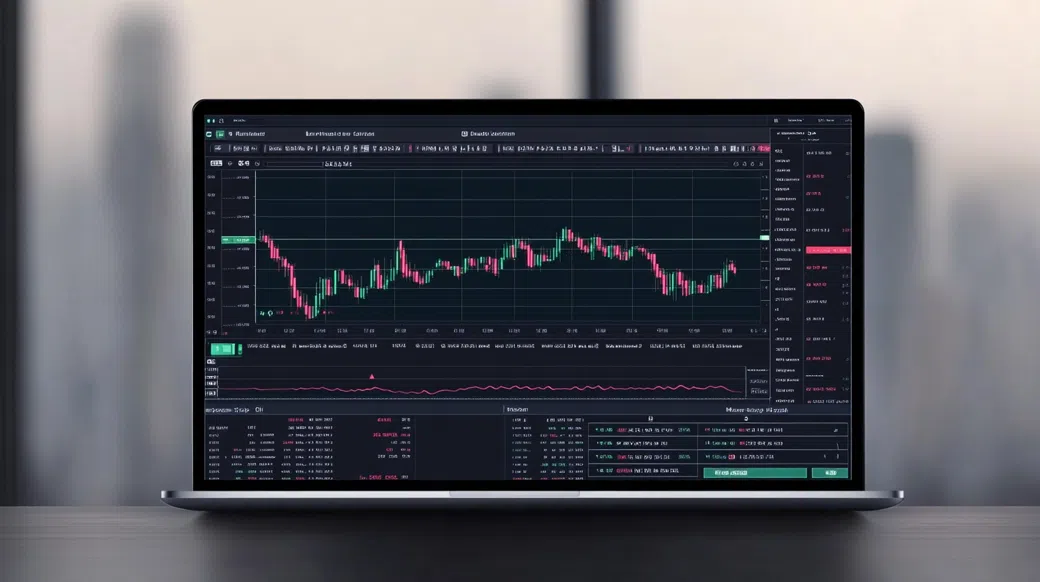
On desktop, the proprietary WebTrader handled repeated sessions without forcing relogs, and I didn’t see random freezes while flipping timeframes. Order tickets supported market and pending orders with editable SL/TP, and execution on a EUR/USD test during the London open felt consistent—no obvious “phantom requotes,” though slippage is still possible around news. If you live inside MT4/MT5 plugin ecosystems, note that I didn’t verify native MT4/MT5 access here; the workflow is more self-contained.
Elqui Rendanza App: Mobile Trading Experience
The Elqui Rendanza app mirrored the core modules (quotes, chart, positions, funding) and made basic account actions possible without a desktop. After an Elqui Rendanza login, I could place a one-tap close on an open index position and adjust stops with drag-style controls. Push notifications for price levels were available, and biometric unlock worked on my device, though chart layouts felt tighter on smaller screens when multiple indicators were stacked.
Charting, Tools & Research
Charting covered the standard indicator shelf—MA, RSI, MACD, Bollinger—and enough drawing tools for trendlines and support/resistance mapping. An economic calendar and integrated news feed helped with event timing, but research depth is not in the same league as dedicated analytics terminals. Alerts and watchlists were useful for routine monitoring; heavy systematic traders may still want external tooling for backtests and signal pipelines.
Elqui Rendanza Account Opening & Minimum Deposit
Instead of a long questionnaire, the signup flow asked for the essentials (email, phone, country, and a few suitability prompts), then routed me to identity verification. KYC required a government photo ID plus a proof of address document dated within three months; my verification cleared the same day after I uploaded clean images and matched the profile details. The first withdrawal attempt also triggered an extra confirmation step consistent with AML practice.
- Minimum Deposit: $200 (this is the Elqui Rendanza minimum deposit I was shown at funding)
- Funding Methods: Visa/Mastercard, bank wire, regional e-wallets, and crypto (BTC, USDT)
- Demo Account: $10,000 virtual balance for strategy rehearsal and platform familiarization
- Account Types: Standard (spread-only) and Raw/ECN-style (tighter spreads + commission)
Account base currency options were straightforward, but depositing in a mismatched currency can introduce conversion spreads via the payment processor. If you’re testing, I’d start with the demo, then a small live balance to validate fills, swaps, and the full deposit/withdrawal loop before scaling.
Elqui Rendanza Customer Support Review
I stress-tested support with a practical question: where the swap rate is displayed and whether weekend financing is triple-applied on certain markets. Live chat picked up in about three minutes, and the agent pointed me to the contract specs panel plus clarified how financing accrues across Friday-to-Monday holds. I then opened an email ticket about withdrawal timing on card versus crypto; a detailed reply landed later the same business day (around nine hours).
Coverage looked aligned with the segment: 24/5 availability for chat and email, with response quality depending on the complexity of the question. Language support appeared region-driven rather than truly global, and phone contact wasn’t emphasized in the client area. On weekends, expect slower turnaround unless it’s an automated help-center issue.
Ready to Explore Elqui Rendanza?
If you’re considering this broker, use the next step to confirm your country eligibility, check the live spread board during your usual trading hours, and compare Standard vs. Raw total cost before committing. A demo-first pass is the cleanest way to map the platform without rushing a deposit.
Visit Elqui RendanzaElqui Rendanza Review FAQ
Is Elqui Rendanza good for beginners?
It can be, but only if you keep position sizing small and lean on the demo first. The interface is not hard to learn, yet leverage up to 1:500 magnifies mistakes fast. Beginners should also factor in swap and the $10/month inactivity fee after 90 days if they trade infrequently.
Can I trade crypto on Elqui Rendanza?
Yes, crypto is available as CFDs, including BTC/USD and ETH pairs. That means you’re trading price exposure with margin, not withdrawing coins to an on-chain wallet. Weekend financing can be a meaningful cost if you hold positions over multiple days.
Is Elqui Rendanza a scam?
No, it behaved like an operational broker in my 2026 test: I could fund, trade, and request a withdrawal after KYC. The real concern isn’t a cartoonish scam; it’s that offshore registration typically offers fewer formal protections than Tier-1 regulation. Treat it as a higher-risk venue and manage leverage accordingly.
Is Elqui Rendanza available in the USA?
No, the USA is restricted. The signup and compliance checks are designed to block U.S. residents from opening accounts. If you travel, eligibility still depends on your residency documents, not just your current IP.
How long does a Elqui Rendanza withdrawal take?
Most withdrawals are processed internally within 24–48 hours once KYC is cleared. After that, receipt time depends on the rail: cards commonly take 2–5 business days, bank wires 3–7 business days, and crypto transfers often arrive the same day. Delays usually come from document checks or bank-side handling.
What is the Elqui Rendanza minimum deposit?
The minimum deposit is $200. That amount was shown in the cashier before funding and matched what support described for a basic live account. If you deposit via crypto, also consider network fees and any conversion spread if your account base currency differs.
Does Elqui Rendanza have a mobile app?
Yes, there are iOS and Android apps, and they cover trading plus funding functions. The mobile terminal supports real-time quotes, position management, and alerts, with optional biometric access on compatible devices. For deep chart work, I still preferred the desktop WebTrader.
Final Verdict: Should You Use Elqui Rendanza in 2026?
Overall Score: 4.0/5
When I trace the “money path” rather than the marketing—deposit, execution, financing, withdrawal—the experience with Elqui Rendanza comes off as competent for an offshore CFD venue. Raw pricing is the standout if you trade frequently, while Standard is serviceable but not the cheapest. The platform suite is modern enough for discretionary trading, and KYC/AML gates were enforced before cash-out. Still, offshore status means fewer formal safety nets, so keep leverage realistic and assume capital is at risk with CFDs. Elqui Rendanza
Best for: active CFD traders who want Raw-style pricing and a web/mobile workflow. Avoid if: you require Tier-1 regulation, long-term investing features, or ultra-low leverage by default.