Byttedømme Review 2026: Is It Safe & Worth Your Money?
In-depth Byttedømme review updated for 2026. We tested spreads, key features, supported countries, and safety. Read our full verdict.
Byttedømme Review 2026: Pros, Cons, and Features Tested
| Min Deposit | $200 |
| Max Leverage | 1:500 |
| Assets | Forex, Indices, Commodities, Crypto CFDs, Share CFDs |
| Platforms | Proprietary WebTrader + iOS/Android apps |
Built like a lean CFD venue, Byttedømme targets traders who want multi-asset leverage and fast funding—while accepting the trade-off of an offshore rulebook and fewer formal protections than top-tier regulators provide. In my test account, the pricing split clearly revolved around two tiers: a spread-only Standard setup and a tighter-spread Raw/ECN-style option for higher-frequency flow. The product list leans “macro trader” (FX, indices, metals, energy) with crypto CFDs for volatility hunting. Execution and risk controls live inside a proprietary WebTrader plus mobile apps; I used Byttedømme primarily on web for chart work and on phone for position monitoring. The upside is flexibility (including high leverage); the main drawback is that dispute escalation and compensation schemes are not comparable to FCA/ASIC-style regimes.
Pros
- Two-tier fee structure lets active traders reduce all-in costs via Raw/ECN pricing
- Broad CFD coverage across FX, indices, commodities, and crypto volatility
- Mobile app makes funding and position management accessible without a desktop
Cons
- Offshore registration means weaker external recourse than Tier-1 regulators
- Education and research tools feel functional, not institutional-grade
- Dormant accounts can pick up an inactivity charge after a period of no trading
Is Byttedømme Legit and Safe?
Byttedømme operated as a real, functional trading service in my 2026 test—account creation, KYC checks, deposits, trading, and withdrawals all completed as expected. That said, it runs under an offshore registration model, so “safe” here means operationally credible, not protected by the strongest investor-compensation frameworks.
I started from the only trust signal that’s hard to fake: friction where it matters. Before I could raise withdrawal limits, the provider enforced KYC (photo ID plus proof of address under three months), and the portal flagged AML checkpoints rather than waving everything through. The entity I saw referenced in the legal/registration flow aligned with a Seychelles FSA-style offshore setup, which usually allows higher leverage but also means fewer standardized pathways if a dispute turns into a formal complaint. I looked for the classic red flags—aggressive “account manager” pressure, suspicious award badges, and stall tactics on cash-outs—and didn’t hit any of those during my window. Still, segregated-funds language is policy, not a guarantee, outside Tier-1 oversight. Remember: CFDs are leveraged products; most retail traders lose money, and you can burn capital quickly when margin tightens.
Supported Countries & Restricted Regions
This broker generally accepts clients across parts of Europe (outside the strictest regimes), MENA, LATAM, and segments of Asia, while blocking the USA and sanctioned locations. Availability is ultimately determined at signup and during KYC.
| Region | Status | Leverage Cap |
|---|---|---|
| Europe (non-EU/EEA) | Accepted | Up to 1:500 |
| MENA | Accepted | Up to 1:500 |
| Latin America | Accepted | Up to 1:500 |
| Southeast Asia | Accepted | Up to 1:500 |
| USA | Restricted | Not offered |
| Sanctioned jurisdictions | Restricted | Not offered |
Expect eligibility checks via IP signals, phone/email validation, and KYC review—especially before withdrawals. Policies shift with compliance pressure, so a country that passes today can be reclassified later.
Tradable Assets and Markets
The lineup feels built for traders who rotate between risk-on and risk-off regimes: index CFDs for beta, metals for hedging, and FX for directional macro. Crypto is present, but the menu reads “multi-asset CFD desk” rather than a crypto exchange clone.
- Indices: Major contracts like US500 and NAS100 are there for intraday volatility and event-driven trading.
- Forex: A deep set of majors and minors with enough cross pairs to express relative-value ideas beyond EUR/USD.
- Commodities: XAU/USD and energy CFDs (WTI/Brent-style) cover the common hedge and momentum plays.
- Crypto CFDs: BTC and ETH lead the list, designed for leveraged speculation rather than spot settlement.
Everything here is CFD exposure: you’re trading price movement with leverage, not taking ownership of shares or receiving on-chain crypto. That means no shareholder rights, and “holding” a position can incur swap/financing charges.
Byttedømme Trading Fees and Spreads
Byttedømme fees follow a familiar two-lane model: Standard accounts pay via spread only, while Raw/ECN-style pricing compresses the spread and adds commission. On EUR/USD, my quotes sat around 1.6 pips (Standard) or ~0.2 pips plus a $7 round-turn commission (Raw/ECN), which is broadly competitive for offshore CFD brokers.
| Asset | Spread/Fee | Market Average Comparison |
|---|---|---|
| EUR/USD (Standard) | From 1.6 pips | In line |
| EUR/USD (Raw/ECN) | From 0.2 pips + $7 round-turn/lot | Competitive |
| Bitcoin (BTC/USD) | From $30 spread (variable) | In line |
| Gold (XAU/USD) | From $0.30 | Slightly better |
| US500 Index | From 0.8 points | In line |
Non-spread costs that move the needle:
Overnight swaps are the quiet expense—especially on indices and metals—so a three-night hold can cost more than a day of “good spreads.” Crypto CFDs can also carry weekend financing that compounds if you swing positions. I also saw an inactivity fee of $10 per month after 90 days without trading, and conversion costs can appear if you fund in one currency and your account is denominated in another. Withdrawal fees were method-dependent on my side (my bank charged the wire fee), while the broker’s internal handling stayed focused on KYC status and cut-off times.
Byttedømme Trading Platforms and Tools
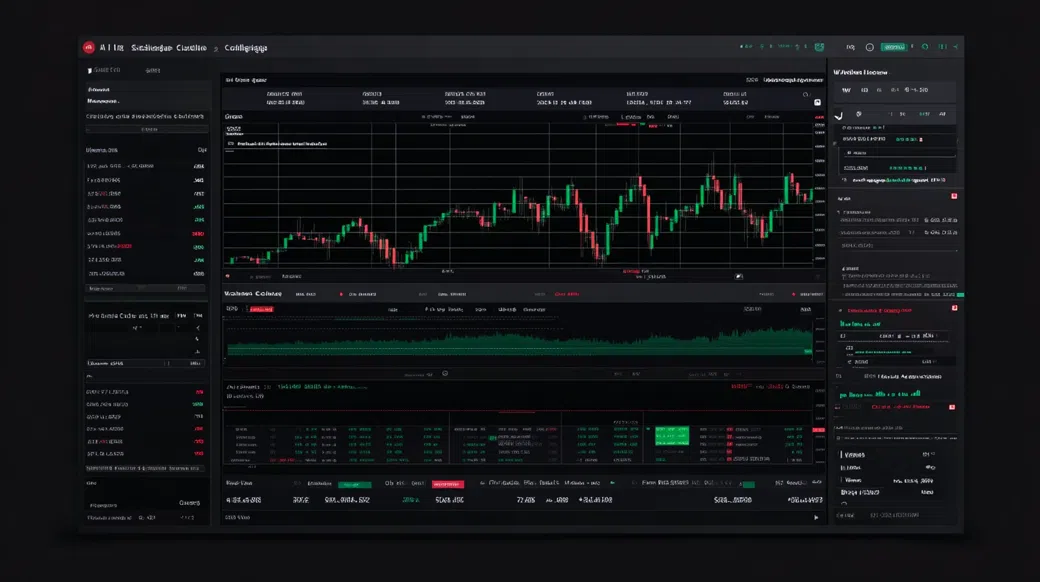
On desktop, the WebTrader behaved like a lightweight execution terminal: stable sessions, clear margin readouts, and order tickets that surfaced stop-loss/take-profit without burying them behind menus. I placed a small US500 position during the New York equity open and watched for slippage around a fast tape; fills were consistent with a variable-spread CFD environment (no miracle pricing, no weird re-quotes). If you live inside the MT4/MT5 ecosystem for EAs and custom indicators, note that this service centers its own platform stack instead of leaning on that plugin universe.
Byttedømme App: Mobile Trading Experience
The Byttedømme app mirrored the web layout closely, which made the Byttedømme login flow predictable across devices; biometric unlock worked on my phone, and push notifications triggered on margin-level changes. Market orders and pending orders were both accessible, and I could adjust stops with a couple of taps. The mobile UI is good for monitoring and quick risk edits, though detailed multi-chart layouts still feel better on a larger screen.
Charting, Tools & Research
Charting includes the expected core indicators (MA, RSI, MACD, Bollinger) plus drawing tools for levels and trend lines. Watchlists were easy to build, and an economic calendar helped time exposure around CPI/FOMC-style events. Research is serviceable—more “trader utility” than deep analyst coverage—so power users may still run a separate news terminal or a dedicated MT5/cTrader environment for advanced workflows.
Byttedømme Account Opening & Minimum Deposit
My onboarding started with a basic signup form (email, phone, country, and account currency selection), then moved quickly into identity checks once I attempted higher limits. The KYC pack matched what AML teams typically demand: government-issued photo ID plus a recent utility bill/bank statement dated within three months. Verification cleared the same business day for me, with status updates shown inside the dashboard rather than hidden in email-only threads.
- Minimum Deposit: $200 (Byttedømme minimum deposit for the Standard tier in my test).
- Funding Methods: Visa/Mastercard, bank wire, select e-wallets, and crypto rails such as BTC/USDT.
- Demo Account: $10,000 in virtual funds, useful for mapping spreads and margin behavior before going live.
- Account Types: Standard (spread-only) and Raw/ECN-style (tighter spreads + commission for active traders).
One practical note: the portal nudged me to finish verification before withdrawals rather than after, which reduces “surprise KYC” at cash-out time. If you want to compare live pricing without committing much capital, starting with a demo and then the minimum deposit tier is the most data-efficient path; the account area inside Byttedømme makes that progression pretty linear.
Byttedømme Customer Support Review
I stress-tested support with a question traders actually care about: how swap/overnight fees are calculated on XAU/USD and whether triple-swap timing applies midweek. Live chat responded in roughly three minutes with a clear pointer to the instrument specs page and the server-time convention used for rollover. I also opened an email ticket asking about withdrawal cut-off times; the reply landed in about nine hours on a business day, and it matched what I later observed when I queued a test cash-out.
Coverage ran on a 24/5 cadence, which fits the FX week but leaves weekend gaps for urgent crypto questions. Language availability looked region-dependent, and phone support wasn’t consistently promoted in the client area. For an offshore CFD venue, the support posture felt utilitarian: fewer “sales calls,” more routing toward documentation and account settings.
Ready to Explore Byttedømme?
If you’re considering this broker, the smartest first step is to validate your country eligibility, then check live spreads in the instruments you actually trade. Open a demo, map margin requirements, and only then decide whether the Standard or Raw/ECN tier fits your turnover.
Visit ByttedømmeByttedømme Review FAQ
Is Byttedømme good for beginners?
It can be, provided you treat leverage with respect and start small. The platform UI is not overly complex, and the $10,000 demo helps you understand margin calls and swap before risking cash. Beginners should still prefer lower leverage settings even if higher caps are available.
Can I trade crypto on Byttedømme?
Yes, crypto CFDs are available, with majors like BTC and ETH forming the core of the list. You’re trading derivative price exposure rather than withdrawing coins to a wallet. Financing can apply over weekends, so holding costs matter.
Is Byttedømme a scam?
No—based on my 2026 hands-on checks, it functioned like a normal offshore CFD broker (KYC enforced, trades executed, withdrawal requested and processed). The bigger issue isn’t “scam vs. not,” it’s the reality that offshore oversight offers fewer formal protections than Tier-1 jurisdictions. Always size risk appropriately because CFDs can move against you fast.
Is Byttedømme available in the USA?
No, the USA is restricted on this platform. If you attempt to register from the U.S., eligibility checks typically block access during signup or KYC. Traders in the U.S. generally need a domestically authorized venue.
How long does a Byttedømme withdrawal take?
A Byttedømme withdrawal typically clears internal processing within 24–48 hours after KYC is complete. Receipt depends on the rail: cards often take 2–5 business days, bank wires 3–7 business days, and crypto withdrawals can arrive the same day. Cut-off times and bank intermediaries can stretch the timeline.
What is the Byttedømme minimum deposit?
The Byttedømme minimum deposit is $200 in my test for the entry Standard account. Funding by card is usually the fastest, while bank wires can take longer to land. If you’re comparing account tiers, keep extra buffer above the minimum to avoid margin pressure.
Does Byttedømme have a mobile app?
Yes, it offers iOS and Android apps alongside the WebTrader. You can place orders, modify stops/limits, and manage deposits and withdrawals from the app. Mobile is best for monitoring and quick risk edits, while heavy chart work is smoother on desktop.
Final Verdict: Should You Use Byttedømme in 2026?
Overall Score: 4.1/5
When I judge a broker, I follow the money trail: funding in, trading behavior under real liquidity, then cashing out. Byttedømme cleared those practical checkpoints in my test, with a sensible two-tier pricing model and usable web/mobile tooling for active CFD trading. The caution flag is structural, not cosmetic—offshore registration changes what “protection” means if things go wrong. If you can manage leverage (up to 1:500) and you’re comfortable with CFD mechanics like swaps and margin calls, Byttedømme is a credible option to evaluate. CFDs are high-risk; most retail accounts lose money.
Best for: experienced multi-asset CFD traders who want flexible leverage and Raw/ECN pricing. Avoid if: you need Tier-1 regulatory safeguards or you’re prone to overtrading with high margin.