Bridgewater AI Review 2026: Is It Safe & Worth Your Money?
In-depth Bridgewater AI review updated for 2026. We tested spreads, key features, supported countries, and safety. Read our full verdict.
Bridgewater AI Review 2026: Pros, Cons, and Features Tested
| Min Deposit | $200 |
| Max Leverage | 1:500 |
| Assets | Forex, Indices, Commodities, Crypto CFDs, Share CFDs |
| Platforms | WebTrader + iOS/Android apps |
Think of Bridgewater AI as a multi-asset CFD venue for traders who care about quick execution and flexible leverage, but can live with an offshore framework as the price of admission. In this Bridgewater AI test, I used both the spread-only Standard tier and the tighter Raw/ECN-style pricing to compare total trade costs on FX and indices. The lineup leans practical: majors/minors, headline indices, metals, and liquid crypto CFDs rather than obscure tokens. The WebTrader is the center of gravity, with mobile mirroring most functions. The upside is cost control via account tiers; the downside is that dispute escalation and investor protections are thinner than in Tier‑1 jurisdictions.
Pros
- Two pricing tiers let you choose spread-only or commission-based trading
- WebTrader and mobile apps cover the core workflow (quotes, orders, funding, withdrawals)
- Broad CFD menu across FX, indices, metals, and large-cap crypto
Cons
- Operates under an offshore registration model, which usually means weaker formal protections
- Education and research are functional, not deep
- Dormant accounts can face a monthly inactivity charge
Is Bridgewater AI Legit and Safe?
Bridgewater AI looked operational and coherent in my checks, not like a “disappears-after-deposit” setup. That said, it runs under offshore oversight, so “safe” here means process controls and behavior (KYC, withdrawals, disclosures), not the same safety net you’d expect from FCA/ASIC-style regimes.
Seychelles FSA registration was the key reference point I found during onboarding, and the legal language reads like what you see across international CFD brokers: high leverage availability paired with fewer statutory backstops. Offshore status matters in practice—complaints routes tend to be narrower, compensation schemes are limited, and chargeback/dispute outcomes can lean on your payment rail rather than a regulator’s arbitration muscle. I scanned for common red flags while testing: aggressive “account manager” pressure, trophy-badge marketing, and withdrawal friction. Sales messaging stayed muted, and the withdrawal path was predictable once KYC was completed. Safeguards weren’t perfect, but they were present: ID plus proof-of-address checks, and clear references to segregated client funds in the client agreement area. Final reminder: CFDs are leveraged products; most retail accounts lose money, and your capital is at risk.
Supported Countries & Restricted Regions
The broker is broadly accessible across many international markets, particularly parts of LATAM, MENA, and Southeast Asia, with leverage terms varying by location. The USA is blocked, along with sanctioned jurisdictions and other heavily restricted regions.
| Region | Status | Leverage Cap |
|---|---|---|
| Latin America (selected countries) | Accepted | Up to 1:500 |
| MENA (selected countries) | Accepted | Up to 1:500 |
| Southeast Asia (selected countries) | Accepted | Up to 1:500 |
| Non-EU Europe (selected countries) | Accepted | Up to 1:200 |
| USA | Restricted | Not offered |
| Sanctioned jurisdictions | Restricted | Not offered |
Eligibility isn’t just a dropdown choice—IP checks and KYC address verification can override what a landing page suggests. If your residency or document set changes, access can change with it, so confirm before funding.
Tradable Assets and Markets
Asset coverage is built for “liquid-first” traders: the kind of instruments where spreads and execution matter more than novelty. I focused my test orders on FX and US indices, then cross-checked pricing on metals and BTC to see if costs stayed consistent.
- Indices: Major benchmarks like US500, NAS100, and GER40 are available as CFDs, useful for macro-driven sessions and hedging.
- Forex: Roughly 40+ pairs spanning majors and a slice of minors; exotics exist but aren’t the platform’s main story.
- Commodities: XAU/USD and crude oil (WTI/Brent) are the practical staples; spreads looked tighter during London/NY overlap.
- Crypto CFDs: BTC and ETH lead the list, with other large-caps rotating in; weekend pricing includes financing effects.
- Share CFDs: A curated list of US/EU blue chips for directional exposure without owning the underlying stock.
All of this is CFD exposure: you’re trading price movement, not taking delivery, getting shareholder voting rights, or holding on-chain crypto. Dividends (where applicable) are typically reflected as adjustments rather than ownership income.
Bridgewater AI Trading Fees and Spreads
Pricing is split into a spread-only Standard account and a Raw/ECN-style option that compresses spreads and adds a per-lot commission. On EUR/USD, I saw the cost difference clearly: Standard is designed for simplicity, while Raw/ECN targets frequent traders watching pips.
| Asset | Spread/Fee | Market Average Comparison |
|---|---|---|
| EUR/USD (Standard) | From 1.6 pips | In line for offshore CFD brokers |
| EUR/USD (Raw/ECN) | From 0.2 pips + $7 round-turn/lot | Competitive for commission pricing |
| Bitcoin (BTC/USD) | From $28 (variable) | Typical; widens on volatility spikes |
| Gold (XAU/USD) | From $0.30 | Slightly better than average in peak hours |
| US500 Index | From 0.8 points | Generally in the expected range |
Non-spread costs that move your long-run P&L: swaps/overnight financing apply on leveraged CFD positions, and the rate differs by instrument and direction (I asked support to confirm where to find it on-platform). Dormancy is priced too—after 90 days without activity, I saw a $10 monthly inactivity fee in the fee schedule. Withdrawal charges depend on rail; cards can be fee-free on the broker side but still pick up issuer fees, while wires often inherit bank handling charges. If you fund in one currency and trade/withdraw in another, conversion spreads can quietly outweigh a “good” headline spread.
Bridgewater AI Trading Platforms and Tools
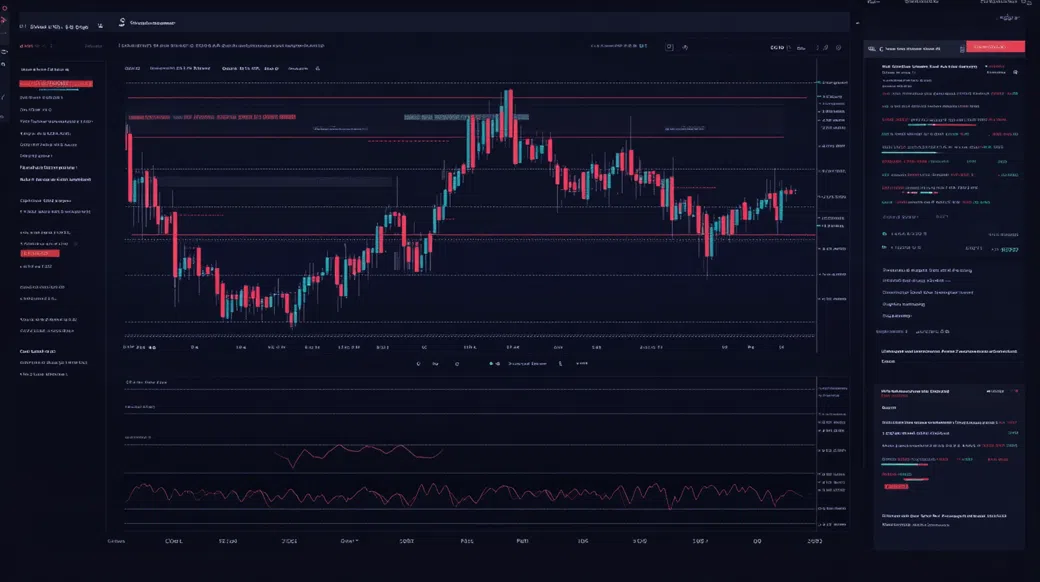
On desktop, the WebTrader behaved like a modern, broker-built terminal: stable session handling, quick symbol search, and enough order controls to run basic risk. I placed a small US500 position into the NY cash open to probe slippage; fills were consistent with the spread environment, with no odd “price jumps” beyond what the tape was already doing. You won’t get the plug-in ecosystem that comes with MT4/MT5, but for discretionary CFD trading the toolset is serviceable.
Bridgewater AI App: Mobile Trading Experience
The Bridgewater AI app mirrors the WebTrader layout with real-time quotes, chart view, and fast order tickets for market and pending orders. Bridgewater AI login supported biometric unlock on my device, and I could deposit and request withdrawals without switching to desktop. Push notifications for price alerts worked reliably, though I did notice charts can feel cramped when layering multiple indicators. One-tap close is handy, but I still prefer setting stops/limits deliberately on a larger screen.
Charting, Tools & Research
Charts include the common indicator library (MA, RSI, MACD, Bollinger) plus basic drawing tools, watchlists, and price alerts. An economic calendar and a short news feed are integrated, which helps avoid trading blind into CPI/FOMC-style volatility. The ceiling is obvious if you’re used to cTrader/MT5 depth—fewer advanced analytics and less third-party automation—but for manual execution it covers the essentials.
Bridgewater AI Account Opening & Minimum Deposit
My signup started with the usual identifiers (email, phone, residency), then routed me into an AML/KYC checklist before I could move meaningful size. Verification required a government-issued photo ID and a proof of address dated within three months; my documents cleared the same business day. The dashboard made it clear when trading permissions expanded, which reduced the guesswork around “can I withdraw yet?” moments.
- Minimum Deposit: $200
- Funding Methods: Visa/Mastercard, bank wire, regional e-wallets, and cryptocurrencies (BTC, USDT)
- Demo Account: $10,000 virtual balance for testing spreads, margin, and order behavior
- Account Types: Standard (spread-only) and Raw/ECN-style (tighter spreads + commission)
Bridgewater AI minimum deposit sits at a level that’s reachable, but not “pocket change,” which is probably intentional given the leverage ceiling. I funded via USDT to test the crypto rail, watched the transaction confirm on-chain, and saw the trading balance update after network confirmations—clean and traceable. If you prefer cards, expect the smoothest path but keep an eye on issuer-side fees.
Bridgewater AI Customer Support Review
I tested live chat with a precise question: where the platform displays swap/overnight rates per symbol and whether weekend financing is triple-charged on FX. A human agent joined in about three minutes, pointed me to the instrument details panel, and clarified that swap timing follows server day conventions. For a paper trail, I also sent an email asking about withdrawal cut-off times; the reply landed in roughly eight hours with method-specific processing windows. When I asked the agent to re-check one detail, they did, rather than pushing a canned script.
Support coverage is positioned as 24/5, which matches the CFD week, and the quality felt consistent with mid-tier offshore providers. Language availability can shift by region, and phone support isn’t something I’d rely on as a primary channel here. Over weekends, chat remained accessible but slower, which matters if you’re holding crypto CFDs through Saturday volatility.
Ready to Explore Bridgewater AI?
If you’re considering this broker, start by checking your region’s eligibility, then compare Standard vs Raw/ECN pricing on the same instruments you actually trade. A demo run is useful for measuring spreads around your preferred session before you commit real margin.
Visit Bridgewater AIBridgewater AI Review FAQ
Is Bridgewater AI good for beginners?
It can be, as long as you treat leverage with respect and start small. The WebTrader is readable, and the $10,000 demo helps you learn margin and stops without paying swap. Beginners should still assume CFDs are high-risk and build rules before scaling.
Can I trade crypto on Bridgewater AI?
Yes, crypto is offered as CFDs, with BTC and ETH as the main liquid pairs. You’re trading price exposure rather than withdrawing coins to an on-chain wallet. Keep in mind weekend financing and volatility-driven spread widening.
Is Bridgewater AI a scam?
No, it didn’t present scam-like behavior in my 2026 test—KYC was enforced and my withdrawal request followed a normal workflow. The more accurate caution is that it’s an offshore-regulated CFD provider, which can mean fewer formal protections than Tier‑1 brokers. Evaluate risk controls, not marketing.
Is Bridgewater AI available in the USA?
No, the USA is restricted. If you attempt to register from a blocked jurisdiction, IP and KYC checks typically stop funding and trading access. Use a compliant, locally regulated alternative if you’re US-based.
How long does a Bridgewater AI withdrawal take?
Most withdrawals are processed internally within 24–48 hours after KYC is complete. Receipt time depends on method: cards commonly take 2–5 business days, bank wires 3–7 business days, and crypto payouts can arrive the same day. Network congestion and banking cut-offs can stretch timelines.
What is the Bridgewater AI minimum deposit?
The Bridgewater AI minimum deposit is $200. That’s enough to open and test a small position, but it’s still easy to over-leverage if you don’t cap risk per trade. If you’re new, consider using the demo first and then funding gradually.
Does Bridgewater AI have a mobile app?
Yes, there are iOS and Android apps that cover charts, order placement, and account management. I was able to manage alerts and submit a withdrawal request from mobile without needing the desktop terminal. Screen size is the main limitation for multi-indicator setups.
Final Verdict: Should You Use Bridgewater AI in 2026?
Overall Score: 4.0/5
On-chain deposits, predictable KYC gates, and a clear Standard vs Raw/ECN split make Bridgewater AI feel engineered rather than improvised, which matters more than glossy branding. Execution on liquid indices and FX was consistent with what the spread environment implied, and the WebTrader/mobile pairing covers most real-world workflows. The main compromise is jurisdictional: offshore oversight can limit your escalation options if something goes wrong, so position sizing and withdrawal discipline matter. If you plan to use higher leverage, treat it like a power tool, not a feature. For more details, see Bridgewater AI.
Best for: active CFD traders who want tiered pricing and can self-manage risk. Avoid if: you require Tier‑1 regulation, deep research, or US availability.