BoundMerit Review 2026: Is It Safe & Worth Your Money?
In-depth BoundMerit review updated for 2026. We tested spreads, key features, supported countries, and safety. Read our full verdict.
BoundMerit Review 2026: Pros, Cons, and Features Tested
| Min Deposit | $200 |
| Max Leverage | 1:500 |
| Assets | Forex, Indices, Commodities, Crypto CFDs, Share CFDs |
| Platforms | Proprietary WebTrader, iOS/Android mobile apps |
The cleanest way to describe BoundMerit: a high-leverage, multi-asset CFD venue built for traders who care more about execution and instrument coverage than about Tier‑1 rulebooks. In this BoundMerit review, I found two account tiers that behave as you’d expect—spread-only on the entry tier, and a tighter-spread mode that shifts cost into commission for active flow. The lineup leans FX and indices first, with crypto CFDs available for directional traders who don’t need on-chain settlement. WebTrader is the core, with mobile apps that mirror the same order ticket. The headline trade-off is structural: offshore-style protections and dispute pathways are thinner, even when day-to-day operations feel functional.
Pros
- Two pricing styles (spread-only vs. low-spread + commission) make costs easier to tune to strategy
- Broad CFD menu across FX, major indices, metals, and large-cap crypto pairs
- Mobile and WebTrader interface kept positions, margin, and history in sync in my tests
Cons
- Offshore registration model means fewer formal safety nets than top-tier regulated brokers
- Education and research are serviceable, not deep enough for serious fundamentals work
- Dormant accounts can incur an inactivity charge after a period without trading
Is BoundMerit Legit and Safe?
BoundMerit looked operational and tradeable in my hands-on checks, not like a “vanish-with-your-deposit” setup. That said, it runs under an offshore framework, so “safe” here means practical reliability, not the kind of investor-protection stack you’d expect under FCA/ASIC-style regimes.
From the legal footprint shown in the account area, the provider presents itself under a Mauritius FSC-style registration. In practice, that offshore regulation angle is a double-edged dataset: you often get higher leverage and looser product access, but you also lose the thick layer of compensation schemes and simple escalation routes when a dispute appears. I ran a red-flag scan the way I would on-chain: check for pressure tactics, inconsistent fees, and withdrawal friction. Sales outreach stayed limited (no persistent “account manager” pushing deposits), KYC was enforced before I could finalize withdrawal, and the terms repeatedly referenced segregated client funds language. The key caveat remains the product: CFDs are leveraged instruments; most retail accounts lose money, and a margin call can arrive faster than your thesis.
Supported Countries & Restricted Regions
This broker accepted my non‑US registration flow and appears open to a wide set of international clients across parts of Europe, MENA, and emerging markets, while the USA and sanctioned jurisdictions are blocked.
| Region | Status | Leverage Cap |
|---|---|---|
| Europe (non‑EU/EEA) | Accepted | Up to 1:500 |
| Latin America | Accepted | Up to 1:500 |
| MENA (non‑sanctioned) | Accepted | Up to 1:500 |
| Southeast Asia | Accepted | Up to 1:500 |
| USA | Restricted | Not offered |
| Sanctioned jurisdictions | Restricted | Not offered |
Eligibility is enforced through a mix of signup declarations, IP/location signals, and KYC document checks, so the “accepted” list can tighten quickly when policy changes. If you’re traveling, expect the platform to ask extra questions before funding or withdrawal.
Tradable Assets and Markets
Rather than being a single-market shop, the platform is constructed like a classic multi-asset CFD rack: majors for liquidity, indices for macro beta, and crypto CFDs for weekend volatility.
- Indices: The usual macro benchmarks showed up (US500, NAS100, US30, GER40, UK100), which makes it easy to express risk-on/risk-off views.
- Forex: I counted a deep core of majors and minors with a smaller set of higher-volatility crosses, enough for most technical FX playbooks.
- Commodities: Metals (gold/silver) and energy (WTI/Brent) are there for inflation and geopolitics trades, with pricing that tracks liquid reference markets.
- Crypto CFDs: BTC and ETH led the list, alongside several large-cap names; these are suited to directional trades, not custody.
- Share CFDs: Selected US/EU blue chips appeared for single-name exposure without buying the underlying equity.
All of this is CFD exposure: you’re trading price movement with leverage, not acquiring shareholder voting rights or holding coins on-chain. Dividend effects, where applicable, are handled as cash adjustments rather than “ownership” in the traditional sense.
BoundMerit Trading Fees and Spreads
BoundMerit fees follow a two-lane model: a Standard account that bakes costs into the spread, and a Raw/ECN-style tier that tightens the spread and adds a per-lot commission. For active traders, the second lane can reduce all-in cost on liquid pairs, while casual traders may prefer the simplicity of spread-only pricing.
| Asset | Spread/Fee | Market Average Comparison |
|---|---|---|
| EUR/USD (Standard) | From 1.6 pips | Roughly in line for offshore CFD brokers |
| EUR/USD (Raw/ECN) | From 0.2 pips + $7 round-turn commission per lot | Competitive for higher-frequency FX styles |
| Bitcoin (BTC/USD) | From $35 spread (variable) | Typical vs. CFD crypto peers; widens on volatility |
| Gold (XAU/USD) | From $0.35 | Generally comparable, sensitive around data releases |
| US500 Index | From 0.9 points | Near the segment midpoint |
Non-spread costs that mattered in my ledger math: overnight swap/financing can outweigh the entry spread if you hold positions for days, and weekend financing hits harder on crypto CFDs. I also logged an inactivity fee of $10 per month after 90 days of no trading, which quietly penalizes “set-and-forget” accounts. Finally, withdrawals can pick up third-party charges (bank rails in particular), and conversion costs apply if you fund in one currency but your account is denominated in another.
BoundMerit Trading Platforms and Tools
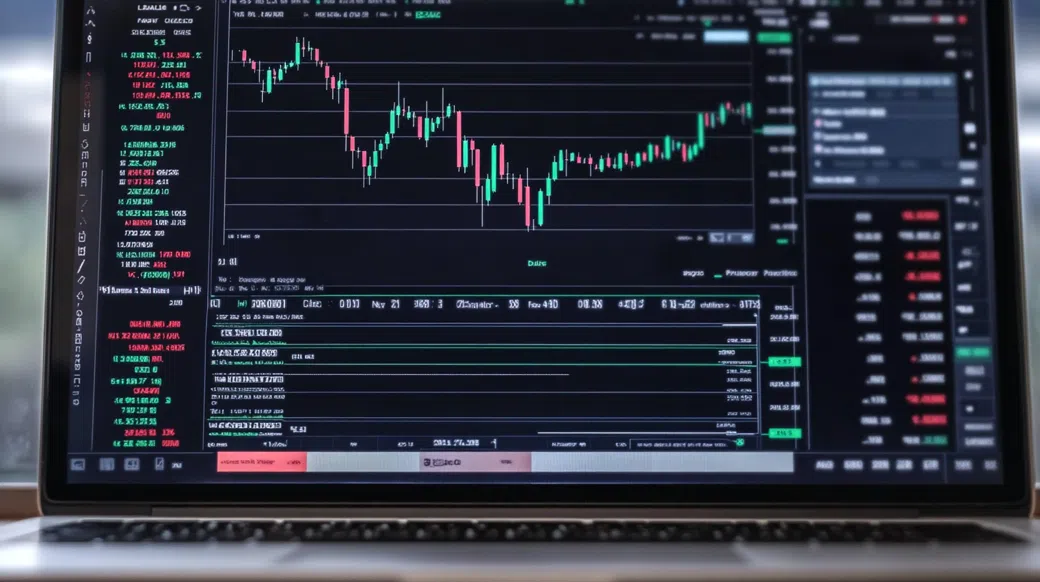
On desktop, the proprietary WebTrader behaved like a modern wrapper around standard CFD plumbing: stable session persistence, clear margin metrics, and an order ticket that supports market, limit, and stop orders with editable SL/TP. I stress-tested execution during the NY open by placing a small NAS100 position and then modifying the stop twice as spreads moved; updates applied cleanly without the platform freezing. If you live inside MT4/MT5 custom indicators or EAs, note the ecosystem gap—this stack is functional, but it’s not a plug-in marketplace.
BoundMerit App: Mobile Trading Experience
The BoundMerit app mirrored the web layout closely, which reduced “where did they hide that button?” friction. BoundMerit login supported biometric unlock on my device, and the app let me manage deposits, open/close trades, and review account history without jumping back to desktop. Push notifications for order status were reliable, though charts felt cramped in multi-indicator setups. One-tap close is available, so double-check position size when volatility spikes.
Charting, Tools & Research
Charting covers the core indicators (MA, RSI, MACD, Bollinger) plus basic drawing tools and multi-timeframe views. An economic calendar and integrated news feed are present, useful for timing rather than deep research. Compared with MT5/cTrader-style environments, the ceiling shows up when you want advanced alert logic, custom scripts, or institutional-grade market depth.
BoundMerit Account Opening & Minimum Deposit
Instead of burying onboarding behind endless forms, the signup flow asked for the essentials (email, phone, basic identity fields) and then pushed me into KYC before I could unlock full funding/withdrawal features. Verification required a government-issued photo ID plus proof of address dated within three months, consistent with AML expectations. My documents cleared the same business day, and the dashboard immediately showed leverage settings and account tier selection.
- Minimum Deposit: $200 (this is the BoundMerit minimum deposit I saw at funding)
- Funding Methods: Visa/Mastercard, bank wire, regional e-wallets, and crypto deposits (BTC, USDT)
- Demo Account: $10,000 virtual balance for platform testing and strategy rehearsal
- Account Types: Standard (spread-only) and Raw/ECN-style (tighter spreads + $7 round-turn commission)
One detail traders often miss: account currency choice affects long-run friction, because conversion costs can recur on every deposit/withdrawal cycle. I also recommend completing KYC early—waiting until the first cash-out tends to create avoidable delays when timing matters.
BoundMerit Customer Support Review
To test support, I asked live chat a very specific question: how swap rates are displayed for Gold and whether triple-swap applies on a particular weekday in my timezone. A human reply arrived in about three minutes, with a clear pointer to the instrument specs page and an explanation of the rollover schedule. I then opened an email ticket about withdrawal sequencing (card first vs. crypto first), and received a structured response roughly eight hours later.
Coverage looked like the usual 24/5 model—strongest during weekdays, thinner on weekends when only crypto markets stay lively. Language availability depends on region, and I didn’t see consistent phone support in my account area, which is common for offshore brokers trying to keep operations lean. If you’re running size, get key answers (fees, swap, leverage changes) in writing before scaling up.
Ready to Explore BoundMerit?
If you want to sanity-check the spreads, order ticket, and withdrawal rails for your region, start with a demo and then fund small. Treat it like a data exercise: confirm the instruments you need, map financing costs, and verify KYC readiness before you move meaningful capital.
Visit BoundMeritBoundMerit Review FAQ
Is BoundMerit good for beginners?
Yes, it can work for beginners who keep position size small and use the demo first. The WebTrader is readable, and the Standard account keeps pricing simple. The main beginner risk is leverage (up to 1:500), which can turn small mistakes into fast drawdowns.
Can I trade crypto on BoundMerit?
Yes, crypto CFDs are available, including majors like BTC/USD and ETH/USD. You’re trading price exposure via CFD, not receiving coins to an on-chain wallet. Because crypto trades 24/7, expect wider spreads and higher weekend financing at times.
Is BoundMerit a scam?
No, my test account funding, trading, and withdrawal workflow behaved like a functioning brokerage service. The “BoundMerit scam” concern is better framed as an offshore-risk question: client protections and dispute escalation may be lighter than under Tier‑1 regulators. Use strict risk controls and withdraw early when testing any new provider.
Is BoundMerit available in the USA?
No, the USA is restricted, and the platform blocks US residents during eligibility checks. If you attempt to sign up from a restricted jurisdiction, KYC review is likely to stop funding and trading access. Policies can shift, so confirm your country status before depositing.
How long does a BoundMerit withdrawal take?
A BoundMerit withdrawal typically clears internal processing in 24–48 hours after KYC is complete. After that, receipt depends on the rail: cards often land in 2–5 business days, wires can take 3–7 business days, and crypto is often the same day. Bank-side and network conditions can add delay during busy periods.
What is the BoundMerit minimum deposit?
The BoundMerit minimum deposit is $200 in the funding screen I used. That amount is enough to test fills and financing, but it doesn’t make 1:500 leverage “safe.” Beginners should treat the first deposit as a diagnostics budget, not trading capital.
Does BoundMerit have a mobile app?
Yes, the BoundMerit app is available on iOS and Android and supports trading, account monitoring, and funding actions. Mobile login can use biometrics depending on device settings. Charting is solid for quick decisions, though heavy indicator stacks still feel better on desktop.
Final Verdict: Should You Use BoundMerit in 2026?
Overall Score: 4.0/5
Numbers told a consistent story: spreads on the Standard tier were ordinary for offshore CFDs, while the Raw/ECN-style pricing made more sense once I modeled all-in cost on EUR/USD including commission. Add a stable WebTrader, usable mobile execution, and a withdrawal flow that completed on schedule, and BoundMerit earns a cautious “yes” for experienced traders who understand leverage. The missing piece is top-tier regulatory comfort—so keep risk tight, withdraw periodically, and remember CFDs are leveraged products where most retail traders lose money.
Best for: active CFD traders who want 1:500 leverage, a WebTrader workflow, and a broad FX/index menu. Avoid if: you require Tier‑1 regulation, guaranteed compensation schemes, or you’re prone to over-leveraging small accounts.