Boldequitor Trading Platform Alternatives 2026 (US/EU)
Boldequitor alternatives for 2026: compare regulated brokers, platforms, fees, execution quality, and safety steps to switch with lower risk.
Boldequitor Trading Platform Alternatives 2026: Reliable Options for Online Traders
Price tells stories. Flows tell the truth. When I’m modeling trader behavior from transaction trails—fiat rails, stablecoin on-ramps, and withdrawal timing—the same pattern repeats: friction shows up before a blow-up. That’s the lens many people bring to Boldequitor in 2026. It sits in a familiar corner of the market: an offshore CFD-focused broker setup (often seen under jurisdictions such as Seychelles FSA), a proprietary WebTrader, and a mobile app that covers the basics. Typical conditions in this segment include a minimum deposit around $250, leverage that can reach 1:500, and “standard” EUR/USD spreads that commonly print near 2.0 pips. Those numbers don’t automatically make a platform good or bad—but they do define the risk surface.
For US traders, the constraints are immediate: CFD brokers of this type usually don’t onboard US residents, and the regulatory perimeter looks nothing like CFTC/NFA requirements. For EU/UK traders, the bigger issue is consumer protection—segregated client funds, negative balance protection, and what happens if the broker fails. That’s where Boldequitor alternatives become less about “features” and more about enforceable rules, execution quality, and the boring mechanics of withdrawals.
This guide to Boldequitor trading platform alternatives 2026 compares regulated substitutes through a trader’s lens: total cost of trade (spread + commission), execution model, platform stack (MT4/MT5/cTrader vs WebTrader), and the operational details that matter when volatility spikes.
Disclaimer: This article is for informational purposes only and does not constitute investment advice. CFDs and other leveraged products carry a high risk of loss and may not be suitable for all investors.
Key Takeaways (TL;DR)
- Offshore-style CFD brokers may quote high leverage (e.g., 1:500), but regulated alternatives often trade that leverage for stronger client protections and clearer dispute pathways.
- Compare brokers using round-turn cost (spread + commission) on your typical position size—headline “from 0.0” spreads can be misleading without commission context.
- Stock/ETF access is often “CFDs only” on platforms like Boldequitor; multi-asset brokers can offer real shares/ETFs with DMA-style routing.
- Migrate safely by verifying the new broker on the regulator’s public register, completing KYC first, and testing execution with a small deposit before scaling.
What Is Boldequitor and How Does Its Trading Platform Work?
Rather than a full multi-asset brokerage (where you can hold real equities, bonds, and exchange-traded futures), Boldequitor reads like a CFD-first venue aimed at retail traders who want quick account setup and broad access to Forex and index/commodity CFDs. The public footprint for brokers similar to Boldequitor is typically offshore, commonly associated with Seychelles FSA-style oversight, and that matters because the enforcement toolkit and investor safeguards differ sharply from FCA/ASIC/CySEC regimes. The product mix tends to emphasize leverage, short-term speculation, and a simplified trading workflow over institutional-grade market access.
Boldequitor Web Trading Platform: Core Features and Tools
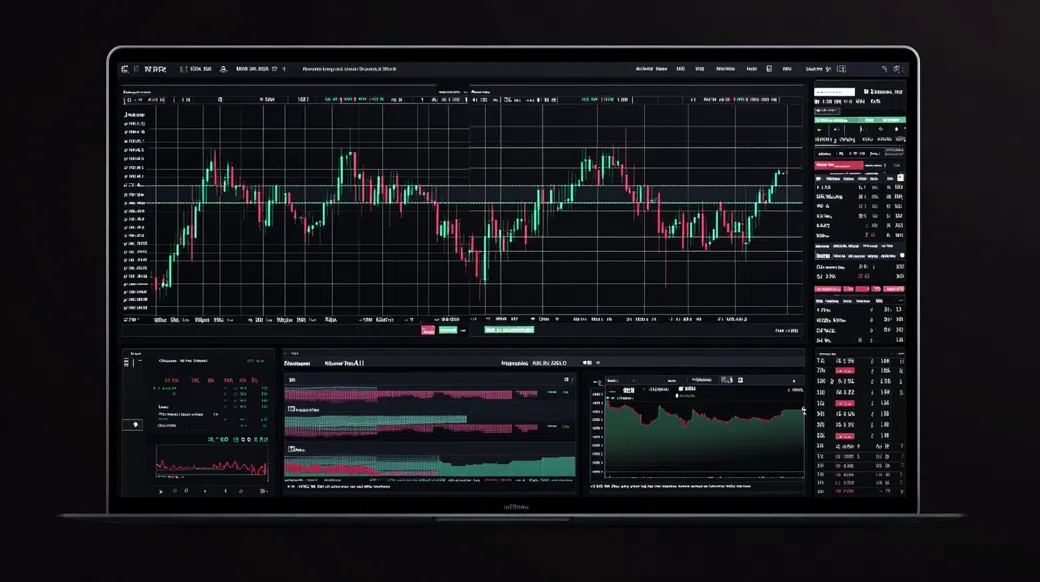
Start with the interface: a proprietary WebTrader is usually designed for immediacy—watchlists, one-click trading, and compact charts that load fast in a browser. Expect mid-depth charting (enough indicators for basic trend/mean-reversion work), standard drawing tools, and the usual market/limit/stop order set, with fewer advanced order types than DMA-oriented platforms. Mobile apps generally mirror the core functions—position management, margin snapshot, and basic alerts—though chart layouts and multi-window analysis are often tighter on screen. The account dashboard typically centralizes deposits/withdrawals, open positions, and swap/overnight charges, which is useful—but it’s not a substitute for detailed execution reports when you’re auditing slippage.
Trading Fees, Spreads, and Account Types at Boldequitor
For costs, brokers in this category commonly present a Standard-style pricing layer where EUR/USD is around 2.0 pips in typical conditions, with fees baked into the spread. Some providers also advertise lower “raw” spreads paired with commission—think ~0.0–0.4 pips plus roughly $6 round-turn per standard lot—yet the practical result depends on fill quality and volatility behavior. Add the non-obvious line items: swap/overnight financing (critical for multi-day holds), potential inactivity charges, and withdrawal fees or processing thresholds. If you’re comparing competitors to Boldequitor, model the monthly all-in cost on your volume, not on the best-case screenshot.
When Do Traders Start Looking for Boldequitor Alternatives?
Data doesn’t lie: when users start splitting withdrawals into smaller chunks or delaying deposits after a drawdown, confidence is usually eroding. That’s the moment most people search for Boldequitor alternatives—not because they crave a new logo, but because they want cleaner execution, clearer legal protections, or simply a platform that fits their workflow. Offshore CFD setups can be functional, yet they often leave traders with fewer levers when a dispute shows up (pricing, slippage, withdrawal timing, or account restrictions). If your strategy depends on predictable order handling, those operational edges are not cosmetic.
- Needing MT4/MT5 or cTrader to run an EA/automation stack that a proprietary WebTrader can’t support reliably.
- Seeing repeated negative slippage during high-impact news and lacking detailed execution reporting to audit fills.
- Wanting real share/ETF investing (ownership) instead of stock CFDs that carry overnight financing and no shareholder rights.
- Hitting funding/withdrawal friction—extra verification loops, long processing times, or fees that make small withdrawals uneconomical.
How to Choose a Reliable Alternative to the Boldequitor Trading Platform
Think like a risk manager, not a shopper. The right substitute is the broker that matches your strategy’s failure modes: platform downtime, gap risk on leverage, execution during volatility, and what recourse you have if something breaks. Traders evaluating alternatives to the Boldequitor trading platform should treat regulation and execution model as “first principles,” then compare costs and tools only after those foundations check out.
Regulation, Safety, and Investor Protection
Regulation is an enforcement contract. FCA (UK), ASIC (Australia), CySEC (Cyprus/EU), and NFA/CFTC (US) frameworks typically require client-money rules and ongoing reporting; some also connect to compensation schemes such as FSCS (UK) up to £85,000 or the ICF (Cyprus) up to €20,000 (eligibility rules apply). Segregated client funds and negative balance protection are not marketing bullet points—they change outcomes in tail events. If you currently use Boldequitor, validate what entity you’re actually onboarded to and what protections realistically exist.
Available Markets and Instruments
Map instruments to intent. If you’re hedging an equity portfolio, CFDs on indices might be enough; if you’re building wealth, you probably want real stocks and ETFs. Multi-asset brokers can add options, futures, and bonds—useful for risk-defined structures and macro hedges. FX-focused brokers can still be ideal for currency traders, but check whether “stocks” means CFDs only. Platforms like Boldequitor are often strong on FX/indices/commodities CFDs and lighter on exchange-traded access.
Trading Costs: Spreads, Commissions, and Other Fees
Cost is a system, not a number. Spreads hit every entry and exit; commissions add a predictable layer; swaps quietly tax (or pay) you for holding. For apples-to-apples, compute round-turn cost on a standard lot: a 2.0-pip spread is ~20 USD per lot on EUR/USD before slippage, while a raw model might be ~0.2 pips plus ~$6 round-turn—often cheaper for active traders. Also scan for inactivity fees and withdrawal charges that penalize low-frequency users.
Platforms, Tools, and Execution Quality
Platform choice is really a tooling choice. MT4/MT5 and cTrader enable broader automation, custom indicators, and a more mature ecosystem than many proprietary WebTrader builds. Execution model matters too: market maker setups internalize flow, while STP/ECN/DMA-style routing aims to pass orders through to liquidity providers or venues (implementation varies by broker). Slippage, re-quotes, and latency show up in your P&L distribution—especially under leverage—so test during normal hours and during event risk before committing size.
Support, Education, and Overall User Experience
Good support reduces operational risk. Look for multilingual coverage aligned with your trading hours, clear ticketing history, and transparent escalation paths. Education can be fluff, but solid brokers publish margin policy explanations, platform guides, and risk tools that prevent avoidable blowups. Mobile parity also matters: if you manage risk from a phone, you need stable charting, fast position close, and clean margin-call notifications—not just a pretty dashboard.
Boldequitor and Different Asset Classes: When Alternatives May Be Better
Boldequitor Forex and CFD Trading
Forex and CFDs are where Boldequitor-like setups usually concentrate: roughly a few dozen FX pairs (often ~30–50), plus a modest menu of indices and commodities. The trade-off is that headline leverage (commonly up to 1:500) can amplify small execution defects into real drawdowns—slippage of a fraction of a pip matters when you’re sizing aggressively. Regulated FX/CFD specialists such as Pepperstone or IC Markets tend to compete on execution tooling (MT4/MT5/cTrader), tighter pricing on raw accounts, and a clearer framework around margin policy. If your edge is short-horizon—scalping, news fades, or systematic mean reversion—your broker choice becomes part of your strategy, because the spread and fill quality directly shape expectancy.
Boldequitor Stock and ETF Trading
Here’s the gap that shows up most in portfolio analytics: “stock trading” can mean CFDs, not ownership. Stock CFDs can be fine for short-term directional bets, but they introduce overnight financing and don’t give shareholder rights. If your goal is building exposure across sectors, factors, or dividends, consider multi-asset brokers built for exchange-traded access. Interactive Brokers (IBKR) is strong for broad global equities/ETFs with professional-grade routing and reporting, while Saxo Bank offers a curated, multi-asset environment that can bridge investing and trading. That difference becomes measurable at tax time and during corporate actions—splits, dividends, and voting—where CFD wrappers behave differently than holding the underlying security.
Boldequitor Crypto Trading
Crypto access on offshore CFD venues is usually synthetic: you’re trading a crypto CFD, not receiving on-chain coins you can withdraw to a wallet. That distinction matters if you care about custody, transferability, or verifying holdings via blockchain data. For traders who simply want price exposure, regulated CFD providers like IG or Plus500 can offer crypto CFDs in certain jurisdictions, with clearer consumer protections than many offshore venues (availability depends on region and regulatory limits). The cost lens changes too: spreads can widen sharply during crypto volatility, and weekend liquidity can behave differently than FX. If you’re optimizing risk, treat crypto CFDs as a leveraged derivative with gap risk—because that’s what they are.
Best Boldequitor Alternatives for 2026: Comparison of Top Trading Platforms
Interactive Brokers (IBKR): Key Facts and How It Compares to Boldequitor
Regulation: SEC/FINRA (US), FCA (UK), IIROC (Canada) (entity depends on residence)
Markets: Stocks, ETFs, options, futures, bonds, FX (spot), some CFDs (region-dependent)
Fees: FX typically low all-in vs retail CFD models; commissions vary by market/venue; pricing is schedule-based rather than “spread-only” marketing
Platform: Trader Workstation (TWS), IBKR mobile, web portal, APIs
Best For: Data-driven multi-asset traders who want deep reporting
Pepperstone: Key Facts and How It Compares to Boldequitor
Regulation: FCA, ASIC, CySEC, DFSA (entity depends on region)
Markets: FX and CFDs (indices, commodities, some shares as CFDs depending on entity)
Fees: Standard accounts often ~1.0+ pip typical on EUR/USD; Raw-style pricing often ~0.0–0.3 pips plus commission (approx. $6–$8 round-turn)
Platform: MT4, MT5, cTrader, TradingView integration (where available)
Best For: Execution-sensitive FX traders running MT4/MT5 or cTrader
IG: Key Facts and How It Compares to Boldequitor
Regulation: FCA, ASIC, MAS
Markets: CFDs (broad index/FX/commodity/share CFD coverage), some investing access in certain regions
Fees: Spread-based CFD pricing; major FX spreads often competitive in normal liquidity, with costs varying by instrument and market hours
Platform: Proprietary web platform, mobile app; MT4 available in some regions
Best For: Broad-market CFD coverage with strong regulatory footprint
IC Markets: Key Facts and How It Compares to Boldequitor
Regulation: ASIC, CySEC, FSA Seychelles (group-level; entity varies)
Markets: FX and CFDs (indices, commodities, some shares as CFDs)
Fees: Raw accounts commonly ~0.0–0.3 pips on EUR/USD plus commission (often around $6–$7 round-turn); Standard accounts typically wider
Platform: MT4, MT5, cTrader
Best For: Algorithmic and scalping setups focused on low spreads
Saxo Bank: Key Facts and How It Compares to Boldequitor
Regulation: FCA, MAS, DFSA (and other local entities depending on country)
Markets: Stocks, ETFs, options, futures, FX, bonds, CFDs (product set varies by entity)
Fees: Pricing varies by tier; FX spreads can be competitive for active traders; exchange-traded products use commission schedules
Platform: SaxoTraderGO, SaxoTraderPRO
Best For: Cross-asset portfolio traders who want one account for investing + hedging
Plus500: Key Facts and How It Compares to Boldequitor
Regulation: FCA, CySEC, ASIC, MAS
Markets: CFDs on FX, indices, commodities, shares, and crypto CFDs (availability varies by region)
Fees: Primarily spread-based; costs depend on instrument and volatility, with overnight funding applying to held CFD positions
Platform: Proprietary web platform and mobile app
Best For: Simple, app-first CFD trading with a clean interface
Comparison Summary
| Platform | Regulation | Main Markets | Typical Costs | Best For |
|---|---|---|---|---|
| Interactive Brokers (IBKR) | SEC/FINRA, FCA, IIROC | Real stocks/ETFs, options, futures, bonds, FX | Schedule-based commissions; FX typically low all-in vs spread-only CFD pricing | Data-driven multi-asset traders who want deep reporting |
| Pepperstone | FCA, ASIC, CySEC, DFSA | FX + CFDs | Raw ~0.0–0.3 pips + ~$6–$8 round-turn; Standard ~1.0+ pip typical | Execution-sensitive FX traders running MT4/MT5 or cTrader |
| IG | FCA, ASIC, MAS | Broad CFDs (FX/indices/commodities/share CFDs) | Spread-based; varies by instrument and market hours | Broad-market CFD coverage with strong regulatory footprint |
| IC Markets | ASIC, CySEC, FSA Seychelles | FX + CFDs | Raw ~0.0–0.3 pips + ~$6–$7 round-turn; Standard wider | Algorithmic and scalping setups focused on low spreads |
| Saxo Bank | FCA, MAS, DFSA | Stocks/ETFs, options, futures, FX, bonds, CFDs | Tiered pricing; commissions for exchanges; FX spreads vary by account tier | Cross-asset portfolio traders who want one account for investing + hedging |
| Plus500 | FCA, CySEC, ASIC, MAS | CFDs (FX/indices/commodities/share CFDs/crypto CFDs where permitted) | Spread-based + overnight funding on held CFDs | Simple, app-first CFD trading with a clean interface |
How to Safely Move from Boldequitor to Another Broker
Switching brokers is an operational trade: you’re exchanging counterparty risk, platform behavior, and legal jurisdiction—not just swapping spreads. I treat migrations the same way I treat system changes in production: verify first, parallel-run briefly, then cut over. That approach reduces the chance you’re forced into decisions during a margin event. If you’re moving off Boldequitor, remember that leveraged CFD exposure can unwind fast, so prioritize risk reduction over speed.
- Confirm the new broker’s exact legal entity on the regulator’s public register (FCA Register, ASIC Connect, CySEC database, or NFA BASIC) and match it to the name on the account-opening documents.
- Create the new account and complete KYC/AML checks (ID + proof of address) before you initiate major withdrawals elsewhere; approvals often clear within a business day, but not always.
- Flatten or reduce open positions on the old account rather than assuming you can “transfer” trades—most retail CFD/FX positions don’t port between brokers.
- Withdraw using the same funding route you used to deposit (card, bank transfer, e-wallet) because many brokers enforce source-of-funds rules for AML compliance.
- Export statements: trade history, deposits/withdrawals, and any tax reports. Keep local copies in case access changes later.
- Fund the new broker with a small test amount, then execute a handful of low-size trades to observe spreads, slippage, and platform stability across your usual trading hours.
Ready to Explore Boldequitor?
If you’re still evaluating fit, review current onboarding terms, regional eligibility, and the platform stack side-by-side with the regulated options above. Run the numbers on your own trade size and holding time; swaps and execution quality can outweigh headline spreads.
Visit BoldequitorFAQ: Boldequitor Alternatives and Trading Platforms
What is the best alternative to Boldequitor in 2026?
The best option depends on what you’re optimizing for: execution, multi-asset access, or a simple CFD workflow. For broad investing plus hedging, Interactive Brokers (IBKR) or Saxo Bank are strong substitutes; for FX/CFD execution with MT4/MT5/cTrader, Pepperstone or IC Markets are common picks. If you want a streamlined CFD app with a heavy regulatory footprint, Plus500 is often the simplest of the regulated options.
Is Boldequitor a safe broker/platform?
Boldequitor appears consistent with an offshore/unregulated-style CFD broker setup (often associated with jurisdictions such as Seychelles FSA), which usually provides fewer investor protections than FCA/ASIC/CySEC regimes. “Safe” depends on what you mean: you may be able to trade and withdraw, but the legal safeguards, compensation schemes, and enforcement mechanisms are typically thinner than top-tier regulated brokers. If safety is your priority, focus on segregated client funds, negative balance protection, and the regulator’s complaint and compensation framework.
Can I trade stocks, futures, or crypto with Boldequitor?
Boldequitor is most closely associated with Forex and CFDs, and any “stocks” are commonly offered as CFDs rather than real share ownership. Exchange-traded futures are typically a feature of multi-asset brokers (for example, IBKR or Saxo Bank) rather than offshore CFD-first platforms. Crypto exposure, when offered, is usually via crypto CFDs—price exposure without on-chain ownership or wallet withdrawal.
What should I check before switching from Boldequitor to another platform?
Before switching, verify the new broker’s legal entity on the regulator’s public register and confirm your account will be under that regulated entity (not an offshore affiliate). Next, compare round-turn trading costs (spread + commission), margin policy, and whether your strategy requires MT4/MT5/cTrader or APIs. Finally, complete KYC first and test with a small deposit to observe slippage and funding/withdrawal behavior under real conditions.
About the Author: Alice Wu is a data scientist and financial journalist who studies markets through transaction data, execution reports, and the real-world mechanics of funding and withdrawals. Her trading analysis focuses on measurable edges—cost of trade, slippage, and counterparty risk—because narratives change, but datasets keep receipts.