Bold Accrudency Trading Platform Alternatives 2026
Compare Bold Accrudency alternatives for 2026: regulated brokers, costs, platforms, execution quality, and migration steps for safer online trading.
Bold Accrudency Trading Platform Alternatives 2026: Reliable Options for Online Traders
Price can be theatrical; settlement is not. When I’m sanity-checking a broker story, I look for the unglamorous stuff: how money moves, how fast withdrawals clear, and whether the risk controls behave the same way at 2 a.m. as they do in a demo. In that context, Bold Accrudency looks like many offshore CFD-first providers aimed at active retail traders: a proprietary WebTrader, a mobile app, and a menu centered on forex and CFDs (often including crypto CFDs). The typical pitch is speed and leverage; the typical trade-off is less formal oversight and thinner investor-protection scaffolding than you’d see under FCA, ASIC, or NFA rules.
Based on what is commonly observable for this category, traders may see a minimum deposit around $250, leverage up to 1:500, and EUR/USD spreads that are roughly “from ~2.0 pips” on a standard-style account. Those numbers aren’t automatically “bad,” but they shape outcomes: high leverage increases margin-call frequency, and a wider spread taxes every entry and exit. Add in the reality that the U.S. is typically restricted and that position-transfer between brokers is rarely supported, and the case for comparing Bold Accrudency alternatives becomes practical rather than philosophical.
Disclaimer: This article is for informational purposes only and does not constitute investment advice. CFDs and other leveraged products carry a high risk of loss and may not be suitable for all investors.
Key Takeaways (TL;DR)
- Use regulation as a first filter: FCA/ASIC/CySEC/NFA oversight usually comes with segregated client funds and clearer complaint pathways than offshore frameworks.
- Compare total “round-turn” trading cost (spread + commission + swaps), not headline leverage—2.0 pips on EUR/USD can dominate results for frequent traders.
- If you want real stocks/ETFs (ownership, voting rights, transparent routing), you’ll likely need a multi-asset broker; many offshore platforms offer equities only as CFDs.
- Migrate safely: open and verify the new account first, then withdraw using the same payment rail where possible to avoid AML friction.
What Is Bold Accrudency and How Does Its Trading Platform Work?
On paper, Bold Accrudency presents as a CFD-oriented online trading venue rather than a full multi-asset brokerage. The footprint typically associated with this segment is offshore (for this profile, think Seychelles FSA-style oversight), with a product shelf built around leveraged FX and index/commodity CFDs, plus crypto CFDs in many regions. That setup can fit traders who want quick access and simple instrument lists, but it can be a poor match for investors who care about exchange access, deep reporting, or investor-compensation schemes. In other words, it’s closer to “platforms like Bold Accrudency” than to a broker that routes orders to lit venues for real shares.
Bold Accrudency Web Trading Platform: Core Features and Tools
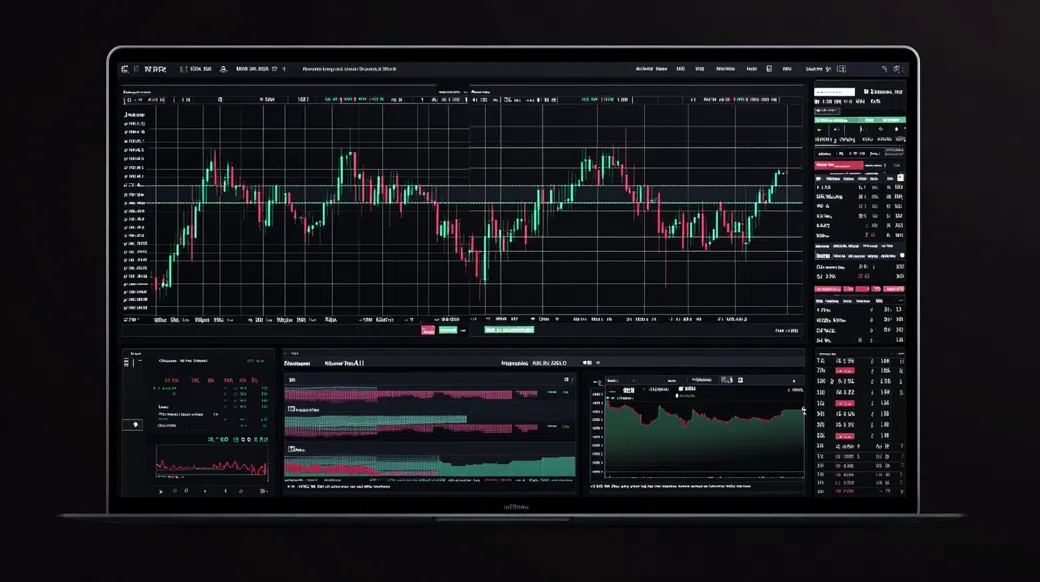
The core experience is usually a proprietary WebTrader designed for browser-first trading, supported by iOS/Android apps for monitoring and execution. Expect functional charting (multiple timeframes, common overlays, a modest indicator library) and the standard retail order set—market, limit, stop, and basic stop-loss/take-profit controls. Where these stacks often diverge from MT4/MT5 or cTrader is workflow depth: fewer automation hooks, fewer institutional-style order types, and less granular execution reporting. Mobile parity is typically “good enough” for managing risk, but serious strategy testing and detailed trade analytics tend to be limited compared with higher-end platforms.
Trading Fees, Spreads, and Account Types at Bold Accrudency
Costs on offshore CFD platforms usually cluster around a spread-led model. For comparison purposes, a typical standard account may show EUR/USD around ~2.0 pips, while “raw/ECN-style” tiers (when offered in this category) often pair near-zero quoted spreads with a commission in the neighborhood of $5–$8 per round-turn. Overnight financing (swap) is the quiet variable that swings P&L for multi-day holds, particularly on indices and crypto CFDs. Traders should also watch for non-trading charges—withdrawal handling fees or inactivity fees can matter more than an extra tenth of a pip for low-frequency accounts.
When Do Traders Start Looking for Bold Accrudency Alternatives?
A switch rarely starts with a single dramatic event; it starts with a mismatch between strategy and plumbing. If your edge depends on predictable execution, clean reporting, and the ability to audit what happened during volatility (slippage, rejects, requotes), an offshore CFD stack can feel opaque. That’s when Bold Accrudency alternatives enter the conversation—not as “better” by default, but as a way to align your risk budget with stronger guardrails, broader markets, or a platform you can instrument and measure.
- You need MT4/MT5 or cTrader for automated trading (EAs, custom indicators) and the current WebTrader workflow can’t replicate it.
- Withdrawals become slower or more friction-heavy than expected, especially when the payment method used for deposit isn’t available for payout.
- Your plan relies on tight spreads for frequent trading; ~2.0 pips on EUR/USD materially drags performance over high monthly ticket counts.
- You want real-share access (stocks/ETFs) rather than equity CFDs, for ownership features and more transparent market structure.
How to Choose a Reliable Alternative to the Bold Accrudency Trading Platform
Think of choosing a replacement as a data problem: define what must be true for your strategy to survive a bad week. Then verify those claims through regulator registers, fee schedules, and platform specs. The best “brokers similar to Bold Accrudency” aren’t necessarily the ones with the highest leverage; they’re the ones where execution quality, custody rules, and cost disclosure stay consistent under stress.
Regulation, Safety, and Investor Protection
Start with the regulator’s public database—FCA, ASIC, CySEC, or NFA—because marketing pages can be edited overnight. FCA-authorized firms may fall under the FSCS (coverage up to £85,000, subject to eligibility), while CySEC firms can be linked to the ICF (up to €20,000, subject to rules). Beyond compensation schemes, look for segregated client funds, negative balance protection (common for EU/UK retail CFDs), and clear complaint procedures that don’t depend on “support tickets” alone.
Available Markets and Instruments
Match the product shelf to your intent. FX and index CFDs cover many short-term strategies, but longer-horizon portfolios often need real stocks, ETFs, bonds, options, or futures. If your thesis involves dividends, shareholder rights, or direct exchange liquidity, CFDs are a different instrument with different mechanics. For “alternatives to the Bold Accrudency trading platform,” multi-asset brokers are usually the cleanest path to genuine market access, while specialist FX brokers can be better for narrow, cost-sensitive currency execution.
Trading Costs: Spreads, Commissions, and Other Fees
Spreads are just the visible layer. The correct comparison metric is the all-in round-turn cost: spread + commission, plus expected slippage during your typical trading hours. Swaps/overnight financing can exceed spread costs for multi-day holds, and inactivity or withdrawal charges can quietly dominate small accounts. If you’re moving from Bold Accrudency, build a simple monthly model: number of trades × average position size × all-in cost per trade, then stress it with wider spreads during news.
Platforms, Tools, and Execution Quality
Platform choice is a capability choice. MT4/MT5 and cTrader enable automation, robust backtesting ecosystems, and a familiar order-management loop; proprietary WebTraders can be streamlined but may limit instrumentation. Execution model matters too: market maker setups can be fine for many retail flows, while STP/ECN/DMA-style routing can reduce conflicts for certain strategies. Either way, demand evidence: execution statistics (where published), order fill policies, and how slippage is handled during volatility.
Support, Education, and Overall User Experience
When things break, you want a human path, not a maze. Check support hours against your trading session (US/EU overlap vs. Asia hours), and test response time with a basic compliance question about KYC/AML or withdrawal rails. Education is secondary to execution, but strong brokers publish clear margin-call rules and product disclosures. Also verify mobile parity: risk events often happen away from a desktop, and an app that can’t modify stops quickly is a liability.
Bold Accrudency and Different Asset Classes: When Alternatives May Be Better
Bold Accrudency Forex and CFD Trading
For FX/CFDs, the main trade is leverage versus transparency. With an offshore profile, Bold Accrudency commonly pairs higher leverage (often up to 1:500) with a spread-led cost structure (around ~2.0 pips EUR/USD on standard-style pricing). If you scalp or trade high frequency, that spread is not a footnote—it’s your first drawdown. Regulated competitors to Bold Accrudency like Pepperstone or IC Markets are often chosen for tighter raw pricing and platform choice (MT4/MT5/cTrader), which matters if you measure execution with logs and need repeatable fills. Another difference is rule clarity: FCA/ASIC/CySEC frameworks tend to spell out negative balance protection (region-dependent) and client money treatment more explicitly than offshore setups.
Bold Accrudency Stock and ETF Trading
Equities expose the biggest structural gap. Offshore CFD platforms frequently offer “stocks” as CFDs—synthetic exposure with financing costs and no shareholder rights—rather than ownership of the underlying shares. If your plan requires real stocks/ETFs (dividends, long holding periods, portfolio reporting, tax documentation), top substitutes for Bold Accrudency like Interactive Brokers (IBKR) or Saxo Bank are built for that job: broad exchange access, deeper order types, and multi-asset reporting. Even if you still trade CFDs, having the option to hold cash equities alongside leveraged products can reduce forced leverage and smooth risk. That flexibility is hard to replicate on CFD-only stacks.
Bold Accrudency Crypto Trading
Crypto on many CFD platforms is exposure, not ownership. Trading crypto CFDs means you’re speculating on price moves with leverage and spreads, without on-chain custody, wallet withdrawals, or the ability to verify reserves through blockchain data. That distinction matters if your conviction includes self-custody or using assets on-chain. If you simply want regulated CFD exposure to major coins, brokers like IG or Plus500 (jurisdiction-dependent) can be more structured routes, with clearer disclosures and retail protections under their regulated entities. For traders comparing regulated options vs Bold Accrudency, the question is: do you need “crypto price beta,” or do you need “crypto assets” you can move and audit?
Best Bold Accrudency Alternatives for 2026: Comparison of Top Trading Platforms
Interactive Brokers (IBKR): Key Facts and How It Compares to Bold Accrudency
Regulation: SEC/FINRA (US), FCA (UK), IIROC (Canada) (entity depends on region)
Markets: Stocks, ETFs, options, futures, bonds, FX, funds (broad global market access)
Fees: FX pricing varies by account and venue; generally competitive for active traders; non-trading fees depend on region and plan
Platform: Trader Workstation (TWS), IBKR Desktop/Mobile, Client Portal, APIs
Best For: Data-driven multi-asset traders who need APIs and exchange access
Pepperstone: Key Facts and How It Compares to Bold Accrudency
Regulation: FCA (UK), ASIC (Australia), CySEC (EU), DFSA (Dubai)
Markets: FX and CFDs (indices, commodities, some shares/crypto CFDs depending on entity)
Fees: EUR/USD from ~0.0–0.3 pips + commission on Razor/Raw-style pricing; from ~1.0+ pip on Standard-style pricing
Platform: MT4, MT5, cTrader, TradingView integration (availability varies)
Best For: Spread-sensitive FX traders running MT4/MT5 or cTrader
Saxo Bank: Key Facts and How It Compares to Bold Accrudency
Regulation: FCA (UK), MAS (Singapore), DFSA (Dubai) (entity depends on region)
Markets: Stocks, ETFs, bonds, options, futures, FX, CFDs
Fees: Pricing is tiered by client level; spreads and commissions vary by product; generally positioned for serious multi-asset trading
Platform: SaxoTraderGO, SaxoTraderPRO
Best For: Portfolio-style traders who want strong reporting and broad instruments
IC Markets: Key Facts and How It Compares to Bold Accrudency
Regulation: ASIC (Australia), CySEC (EU), FSA Seychelles (group-level, entity depends on region)
Markets: FX and CFDs (indices, commodities, some shares/crypto CFDs depending on entity)
Fees: EUR/USD from ~0.0–0.3 pips + commission (raw-style accounts); Standard-style spreads typically ~0.8–1.2+ pips
Platform: MT4, MT5, cTrader
Best For: High-frequency and algorithmic CFD traders optimizing for fills
IG: Key Facts and How It Compares to Bold Accrudency
Regulation: FCA (UK), ASIC (Australia), MAS (Singapore)
Markets: CFDs (FX, indices, commodities, shares), spread betting (UK/IE), limited investing features by region
Fees: FX spreads typically from ~0.6+ pips on major pairs (product and region dependent); financing applies on leveraged positions
Platform: IG Web Platform, mobile apps; MT4 supported in many regions
Best For: Risk-aware retail traders who value regulator oversight and market coverage
eToro: Key Facts and How It Compares to Bold Accrudency
Regulation: FCA (UK), CySEC (EU), ASIC (Australia)
Markets: Stocks and ETFs (real and/or CFD depending on region), CFDs (FX, indices, commodities, crypto CFDs in some regions)
Fees: Costs are often expressed via spreads and overnight fees for CFDs; equity investing terms vary by region
Platform: eToro web and mobile platform
Best For: Social-style trading and simplified multi-asset exposure
Comparison Summary
| Platform | Regulation | Main Markets | Typical Costs | Best For |
|---|---|---|---|---|
| Interactive Brokers (IBKR) | SEC/FINRA, FCA, IIROC | Stocks/ETFs, options, futures, bonds, FX | Competitive, product-dependent; institutional-style pricing structure | Data-driven multi-asset traders who need APIs and exchange access |
| Pepperstone | FCA, ASIC, CySEC, DFSA | FX + CFDs | Raw: ~0.0–0.3 pips + commission; Standard: ~1.0+ pip | Spread-sensitive FX traders running MT4/MT5 or cTrader |
| Saxo Bank | FCA, MAS, DFSA | Multi-asset: stocks/ETFs, options, futures, FX, CFDs | Tiered spreads/commissions; varies by instrument and level | Portfolio-style traders who want strong reporting and broad instruments |
| IC Markets | ASIC, CySEC, FSA Seychelles (group-level) | FX + CFDs | Raw: ~0.0–0.3 pips + commission; Standard: ~0.8–1.2+ pips | High-frequency and algorithmic CFD traders optimizing for fills |
| IG | FCA, ASIC, MAS | CFDs (FX, indices, commodities, shares); spread betting (UK/IE) | FX spreads from ~0.6+ pips; financing on leveraged positions | Risk-aware retail traders who value regulator oversight and market coverage |
| eToro | FCA, CySEC, ASIC | Stocks/ETFs + CFDs (region-dependent) | Spread-led for CFDs; overnight fees apply on leveraged positions | Social-style trading and simplified multi-asset exposure |
How to Safely Move from Bold Accrudency to Another Broker
Migration is less about convenience and more about reducing operational risk. Treat the move like a controlled deployment: verify the destination, stage the cash transfer, and test execution before scaling size. Leverage amplifies small mistakes, so avoid overlapping large exposures during the switch, especially around major macro releases. If you’re exiting Bold Accrudency, keep screenshots and statements—data disappears faster than you think.
- Confirm the new broker’s legal entity on the regulator’s register (FCA Register, ASIC Connect, CySEC database, or NFA BASIC) and match the website domain to the listed firm details.
- Open the new account and complete KYC (ID + proof of address) before touching funds on the old account; many verifications clear within about one business day, but delays happen.
- Flatten your exposure on the old platform by closing open CFD positions; assume you cannot transfer positions broker-to-broker and plan fresh entries after the move.
- Export statements, trade history, and funding records for tax and audit purposes; include swaps/financing lines because they affect realized P&L.
- Request a withdrawal using the same payment rail used for deposit when possible, since AML checks often tie payouts to the original funding method.
Ready to Explore Bold Accrudency?
If you’re benchmarking platforms like Bold Accrudency, start by mapping your needs (FX-only vs. multi-asset, MT4/MT5 vs. proprietary, low spreads vs. broad markets) and then verify regional eligibility and legal entity details. A quick platform walk-through can reveal whether the tooling fits your workflow before you commit capital.
Visit Bold AccrudencyFAQ: Bold Accrudency Alternatives and Trading Platforms
What is the best alternative to Bold Accrudency in 2026?
The best option depends on whether you need multi-asset ownership or CFD execution. For real stocks/ETFs plus advanced tooling, Interactive Brokers (IBKR) is hard to beat; for FX/CFDs with MT4/MT5/cTrader and sharp pricing, Pepperstone or IC Markets are common picks. In practice, “best Bold Accrudency alternatives 2026” means choosing the platform whose regulation, costs, and execution model match your strategy’s failure modes.
Is Bold Accrudency a safe broker/platform?
Bold Accrudency appears to fit an offshore/unregulated-style profile (often associated with Seychelles FSA-type oversight), which typically provides fewer investor-protection mechanisms than FCA/ASIC/CySEC/NFA frameworks. That doesn’t automatically mean you will lose money, but it does mean the safety net (compensation schemes, enforcement reach, dispute resolution) is usually thinner. If safety is your priority, prioritize regulated options vs Bold Accrudency and verify the exact legal entity on the regulator register.
Can I trade stocks, futures, or crypto with Bold Accrudency?
Most offshore CFD platforms focus on FX and CFDs; stocks/ETFs are often offered as CFDs rather than real ownership, and futures access is commonly limited or not offered. Crypto exposure is typically via crypto CFDs—price tracking, not on-chain coins you can withdraw. If you need exchange-traded futures or broad equity markets, consider competitors to Bold Accrudency like IBKR or Saxo Bank.
What should I check before switching from Bold Accrudency to another platform?
Check regulation on the official register (FCA/ASIC/CySEC/NFA), then read the fee schedule for spreads, commissions, swaps, and withdrawal rules. Test the platform with a small deposit to observe spreads, slippage, and order handling during your normal trading hours. Finally, export your statements from the old account before you withdraw—records matter for taxes and disputes, and this is a common blind spot when traders move between Bold Accrudency alternatives.
About the Author: Alice Wu is a data scientist and market analyst who audits trading narratives using transaction traces, execution data, and the incentives embedded in market structure. She writes for traders who prefer measurable risk controls over marketing promises—because the market can posture, but the data keeps receipts.