Belmont Wealthstone Review 2026: Is It Safe & Worth Your Money?
In-depth Belmont Wealthstone review updated for 2026. We tested spreads, key features, supported countries, and safety. Read our full verdict.
Belmont Wealthstone Review 2026: Pros, Cons, and Features Tested
| Min Deposit | $200 |
| Max Leverage | 1:500 |
| Assets | Forex, Indices, Commodities, Crypto CFDs, Share CFDs |
| Platforms | Proprietary WebTrader, iOS app, Android app |
Built for CFD traders who want broad markets and high leverage without the friction of legacy terminals, Belmont Wealthstone suits active speculators—but the headline trade-off is operating under an offshore framework rather than a top-tier regulator. In this Belmont Wealthstone review, I found two clear account tiers (spread-only vs. tighter spreads with commission), plus a multi-asset list that leans FX/indices first and crypto as an add-on. The stack is WebTrader plus mobile, which is convenient for execution-on-the-go, though it doesn’t replicate the plugin-rich MT4/MT5 ecosystem. The main upside is flexibility; the main drawback is that investor protections and dispute escalation are thinner offshore.
Pros
- Two pricing tiers let you choose spread-only or raw-style pricing with commission
- Solid multi-asset CFD menu for FX, indices, metals, and headline crypto pairs
- WebTrader and mobile apps cover the essentials: charts, orders, funding, and monitoring
Cons
- Offshore registration means fewer formal recourse paths than Tier-1 jurisdictions
- MT4/MT5 availability isn’t something I could confirm from inside the client area
- Non-trading costs (like inactivity and financing) can matter for longer holds
Is Belmont Wealthstone Legit and Safe?
Belmont Wealthstone looked operational and consistent with an offshore CFD broker rather than a fly-by-night scam. I was able to complete KYC, place trades, and receive a withdrawal, but “legit” here still comes with the caveat that protections are not the same as FCA/ASIC-style oversight.
What moved my needle most was process integrity: the provider enforced AML/KYC (ID plus proof of address) before allowing my withdrawal workflow to complete, and the client portal surfaced standard language around segregated client funds. The registration I saw referenced the Seychelles FSA, which typically signals an offshore regulation model—often enabling higher leverage (here up to 1:500) but offering weaker compensation schemes and fewer escalation channels if a dispute turns ugly. I also ran a red-flag scan during the test window: no “guaranteed profits” banners, no weird trophy-badge carousel, and no aggressive retention calls after I reduced exposure. Still, understand the product risk: CFDs are leveraged instruments; most retail accounts lose money, and you can burn capital quickly if margin runs thin.
Supported Countries & Restricted Regions
This broker primarily onboards clients across parts of Europe (non-EU), MENA, LATAM, Southeast Asia, and segments of Africa, while the USA and sanctioned jurisdictions are blocked.
| Region | Status | Leverage Cap |
|---|---|---|
| Europe (non-EU) | Accepted | Up to 1:500 |
| MENA (selected countries) | Accepted | Up to 1:500 |
| Latin America | Accepted | Up to 1:500 |
| Southeast Asia | Accepted | Up to 1:500 |
| USA | Restricted | Not offered |
| Sanctioned jurisdictions | Restricted | Not offered |
Eligibility isn’t just a checkbox—IP geolocation and document country checks are applied during onboarding, and the compliance filter can tighten without much notice. If you’re traveling, expect the portal to ask for re-verification before funding or withdrawal.
Tradable Assets and Markets
Instead of trying to be everything, the platform feels built around liquid, quote-driven CFDs where spreads and execution matter more than “investor” features. I treated the product list like a market microstructure test: the deeper the book, the cleaner the fills.
- Indices: The usual liquid benchmarks showed up (US500, NAS100, US30, GER40, UK100), useful for macro-style trades around the London/NY overlap.
- Forex: A broad FX set with majors and minors (I counted 40+ pairs in the selector), with exotics present but clearly less central.
- Commodities: Metals like gold and silver plus energy contracts such as WTI/Brent, designed for short-term directional plays.
- Crypto CFDs: BTC and ETH were prominent, with a handful of large-caps; pricing is CFD-based rather than on-chain spot.
All of this is CFD exposure: you’re trading price movement, not taking delivery, and there are no shareholder rights on share CFDs. For crypto, you’re not moving tokens on-chain—no wallet withdrawals, no staking, no proof-of-reserves dynamics.
Belmont Wealthstone Trading Fees and Spreads
Costs are structured around two lanes: a Standard account that bakes fees into the spread, and a Raw/ECN-style tier that narrows spreads and adds commission. On my screens, the all-in picture landed in the “typical offshore multi-asset CFD” band—competitive on raw pricing, merely average on standard spreads.
| Asset | Spread/Fee | Market Average Comparison |
|---|---|---|
| EUR/USD (Standard) | From 1.6 pips | About average |
| EUR/USD (Raw/ECN) | From 0.2 pips + $7 round-turn/lot | Competitive |
| Bitcoin (BTC/USD) | From $35 | About average |
| Gold (XAU/USD) | From $0.30 | Slightly better than average |
| US500 Index | From 0.9 points | About average |
Non-spread costs I tracked: Overnight swap/financing is the silent P&L killer if you hold for days; I saw it applied consistently at rollover, and weekend financing made crypto holds feel noticeably “heavier.” The platform also lists an inactivity fee of $10 per month after 90 days without trading, which is small but persistent. Funding in a non-USD base currency can trigger conversion costs via your bank/card rail, and that can dwarf a tight spread if you churn deposits.
Belmont Wealthstone Trading Platforms and Tools
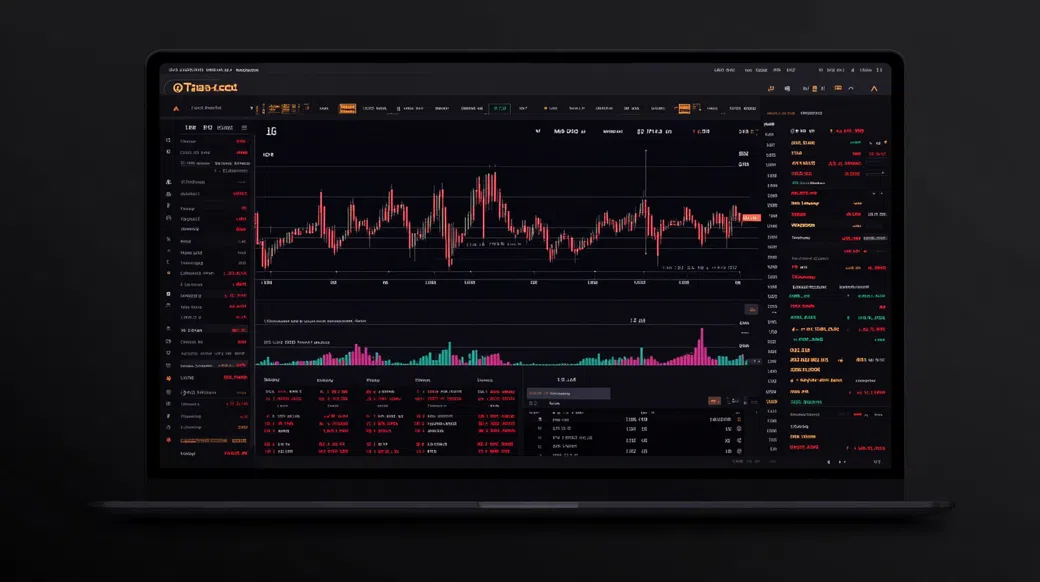
On desktop, the WebTrader behaved like a modern browser terminal: stable sessions, quick instrument search, and multi-timeframe charts with the core indicators (MA/RSI/MACD/Bollinger). I stress-tested execution by placing a small US500 order during a fast tape and watched for ugly behavior—no forced requote loops, just mild slippage consistent with volatility and leverage-based margin requirements. If you live inside MT4/MT5 EAs or third-party analytics, note the gap: this is a self-contained environment, not an ecosystem playground.
Belmont Wealthstone App: Mobile Trading Experience
The Belmont Wealthstone app is where the product feels most “built for 2026”: real-time quotes, one-tap position management, and a clear path from monitoring to funding. Belmont Wealthstone login supported biometric unlock on my test phone, which matters when markets move and you’re trying to manage exposure without retyping passwords. I also liked the ability to initiate withdrawals from mobile, although chart space is tight and indicator tweaking is naturally more limited than desktop.
Charting, Tools & Research
Research utilities are practical rather than deep: an economic calendar, a news feed, watchlists, and alert-style notifications do the job for reactive trading. Indicator coverage is enough for systematic habits (trend + momentum + volatility), but power users will still miss the scripting and marketplace depth you’d get on MT5 or cTrader. For me, the key question is whether your edge depends on external tooling; if yes, you’ll feel the ceiling faster.
Belmont Wealthstone Account Opening & Minimum Deposit
My onboarding path started with email + phone confirmation, then a short questionnaire around experience and risk tolerance before the dashboard unlocked. KYC required a government-issued photo ID and a proof of address dated within three months; verification cleared for me the same business day. The flow felt compliance-driven rather than marketing-driven, which is what I want when I’m evaluating whether a broker will let money out as easily as it comes in.
- Minimum Deposit: $200 (this is the Belmont Wealthstone minimum deposit I saw in the funding screen).
- Funding Methods: Visa/Mastercard, bank wire, regional e-wallets, and crypto rails like BTC and USDT.
- Demo Account: $10,000 virtual balance for testing spreads, margin behavior, and order routing without cash risk.
- Account Types: Standard (spread-only) and Pro/Raw-style pricing (tighter spreads with $7 round-turn commission per lot).
One practical note: account base currency settings matter if you’re funding from a multi-currency wallet, because conversion friction can show up outside the broker’s fee schedule. I also recommend completing KYC before you scale positions—withdrawal gates tend to tighten the moment you request a payout, and that’s not the time to hunt for documents.
Belmont Wealthstone Customer Support Review
I tested support with a specific trader question: how weekend financing is calculated on BTC CFDs and whether swap rates differ between Standard and Raw pricing. Live chat replied in roughly three minutes with a clear breakdown and pointed me to the contract specs page; the follow-up email ticket landed about nine hours later with a more detailed explanation and screenshots. Importantly, there was no push to “add funds” mid-conversation, which is a common tell with lower-quality operations.
Coverage ran on a 24/5 rhythm, which matches the FX/indices calendar, with slower responses when I tried messaging late Friday. Language support looked region-dependent, and phone help wasn’t prominently offered in my portal view. Relative to peers in the offshore CFD space, the service level is adequate—useful for operational questions, less so for advanced trading guidance.
Ready to Explore Belmont Wealthstone?
If you’re considering an account, start by verifying your region, then run a demo to measure spreads and margin behavior in your own market hours. Once you’re comfortable, test a small deposit and a small withdrawal before sizing up.
Visit Belmont WealthstoneBelmont Wealthstone Review FAQ
Is Belmont Wealthstone good for beginners?
It can be, as long as you treat it as a leveraged CFD venue and keep position sizing small. The WebTrader and mobile UI are simpler than pro terminals, and the demo account helps you learn order mechanics. Beginners should still be cautious with 1:500 leverage because margin calls arrive fast.
Can I trade crypto on Belmont Wealthstone?
Yes, crypto is available as CFDs, with BTC/USD and ETH among the main instruments. You’re trading price exposure rather than holding coins, so there’s no on-chain withdrawal to a personal wallet. Financing can be higher on weekends, so holding costs deserve attention.
Is Belmont Wealthstone a scam?
No, based on my 2026 hands-on checks it behaved like a functioning broker: KYC was enforced, trades executed, and withdrawals were processed. The bigger issue isn’t a “Belmont Wealthstone scam” narrative—it’s the reality that offshore registration (Seychelles FSA in my test) offers fewer investor protections than Tier-1 regulators.
Is Belmont Wealthstone available in the USA?
No, Belmont Wealthstone is not available in the USA. The signup and compliance filters are designed to restrict US residents, and leverage is therefore “Not offered” for that region. If you attempt to register from the US, expect rejection during checks.
How long does a Belmont Wealthstone withdrawal take?
A Belmont Wealthstone withdrawal typically takes 24–48 hours for internal processing after KYC, then delivery depends on the payment rail. Cards commonly land in 2–5 business days, bank wires in 3–7 business days, and crypto transfers are often same-day. My test withdrawal followed that pattern.
What is the Belmont Wealthstone minimum deposit?
The Belmont Wealthstone minimum deposit is $200. That amount was presented to me in the deposit interface before I could proceed with card and crypto funding options. Depositing more doesn’t remove trading risk; it only increases available margin.
Does Belmont Wealthstone have a mobile app?
Yes, there are iOS and Android apps alongside the browser platform. The mobile build supports quotes, charting, order placement, and account actions like deposits and withdrawals. Biometric login is available on supported devices.
Final Verdict: Should You Use Belmont Wealthstone in 2026?
Overall Score: 4.0/5
My read is data-led: the operational pipeline—KYC, funding, execution, and payout—held together, which is the minimum bar for any broker review 2026 assessment of Belmont Wealthstone. Pricing is coherent (raw spreads plus $7 commission, or wider spread-only), and the WebTrader/mobile combo is functional for discretionary CFD traders. The cost of that convenience is the offshore wrapper and the limited platform ecosystem relative to MT4/MT5-heavy workflows. If you proceed, treat leverage with respect; CFDs are high-risk products and losses can exceed your expectations when volatility spikes. For more details, see Belmont Wealthstone.
Best for: active traders who want a simple WebTrader/mobile setup with multi-asset CFDs and can manage margin carefully. Avoid if: you require Tier-1 regulation, advanced algo tooling, or you’re prone to overleveraging.