Aur Inmovía Review 2026: Is It Safe & Worth Your Money?
In-depth Aur Inmovía review updated for 2026. We tested spreads, key features, supported countries, and safety. Read our full verdict.
Aur Inmovía Review 2026: Pros, Cons, and Features Tested
| Min Deposit | $200 |
| Max Leverage | 1:500 |
| Assets | Forex, Indices, Commodities, Crypto CFDs, Share CFDs |
| Platforms | WebTrader + iOS/Android apps |
Think of Aur Inmovía as a multi-asset CFD venue built for traders who care about leverage flexibility and quick market access, with the obvious trade-off being an offshore rulebook. In my 2026 walkthrough on Aur Inmovía, I saw two pricing tiers (spread-only vs. Raw/ECN-style) and a lineup that leans FX/index heavy while still offering majors in crypto and metals. The interface is a proprietary WebTrader plus mobile apps rather than a confirmed MT4/MT5 stack. Best feature: the cost structure is easy to map to your style. Main drawback: escalation paths and investor protections are thinner than Tier‑1 jurisdictions.
Pros
- Two clear account tiers: spread-only or tighter spreads with commission
- Broad CFD menu (FX, indices, metals, crypto CFDs) for cross-market setups
- Mobile and web platforms share watchlists and basic risk controls
Cons
- Offshore registration model means fewer formal dispute and compensation mechanisms
- Education and research depth is serviceable, not institutional-grade
- Dormant accounts can incur a monthly inactivity charge
Is Aur Inmovía Legit and Safe?
Aur Inmovía appears operational rather than a “vanish-with-your-deposit” scam, based on functional onboarding, enforced KYC, and a completed withdrawal in my test. Still, it runs under an offshore framework, so “safe” depends more on your own risk controls than on strong regulatory backstops.
One detail I watch first is the paper trail: the broker presents itself as registered with the Mauritius FSC, which typically allows higher leverage but doesn’t mirror the complaint handling and compensation schemes you’d expect under FCA/ASIC-style supervision. In practice that means faster access to 1:500 leverage—and a weaker safety net if a dispute turns messy. My red-flag scan focused on behavior, not marketing: no aggressive “account manager” pressure in chat, no suspicious award badges plastered across the deposit flow, and withdrawals weren’t used as a hostage tactic. On the safeguard side, the provider required ID plus proof of address before I could move funds out, and the terms describe segregated client funds (wording I always treat as a claim to verify over time, not a guarantee). Remember: CFDs are leveraged products; most retail accounts lose money, and you can hit a margin call quickly when volatility spikes.
Supported Countries & Restricted Regions
This platform is accessible across many international regions, particularly parts of LATAM, MENA, and Asia, while the USA and sanctioned jurisdictions are blocked. Availability ultimately hinges on residency checks during KYC.
| Region | Status | Leverage Cap |
|---|---|---|
| Latin America (selected countries) | Accepted | Up to 1:500 |
| MENA (selected countries) | Accepted | Up to 1:500 |
| Southeast Asia (selected countries) | Accepted | Up to 1:500 |
| Europe (non‑EU/EEA selected) | Accepted | Up to 1:500 |
| Sub‑Saharan Africa (selected countries) | Accepted | Up to 1:500 |
| USA | Restricted | Not offered |
| Sanctioned jurisdictions | Restricted | Not offered |
Eligibility is enforced through a mix of IP/location screening and document checks; you’ll feel it most at the verification stage. Policies can shift with compliance pressure, so re-check allowed countries before funding.
Tradable Assets and Markets
The menu reads like a “macro trader’s toolbox”: liquid FX and indices first, with commodities and crypto CFDs as satellites for volatility and correlation plays.
- Indices: Major benchmarks such as US500, NAS100, and GER40 for session-based trading and hedging.
- Forex: 40+ pairs across majors and minors, with a sprinkling of higher-spread exotics for those who insist.
- Commodities: XAU/USD and XAG/USD plus energy contracts like WTI/Brent where spreads widen around inventory headlines.
- Crypto CFDs: Large caps like BTC and ETH designed for short-term exposure without managing private keys.
- Share CFDs: Selected US/EU large caps for event-driven trades (earnings) without owning the underlying stock.
All exposure here is via CFD contracts: you don’t get shareholder voting rights, and “crypto” trading doesn’t mean on-chain withdrawals to a wallet. Dividends (if applied) are typically reflected as cash adjustments rather than ownership.
Aur Inmovía Trading Fees and Spreads
Aur Inmovía fees follow a two-lane model: a Standard account that bakes costs into the spread, and a Raw/ECN-style tier that tightens spreads and adds a per-lot commission. On total cost-of-trade, it lands in the middle of the offshore CFD pack—competitive on FX if you choose the right tier, less special on crypto weekends.
| Asset | Spread/Fee | Market Average Comparison |
|---|---|---|
| EUR/USD (Standard) | From 1.4 pips | In line with typical spread-only accounts |
| EUR/USD (Raw/ECN) | From 0.2 pips + $7 round-turn/lot | Competitive for active FX, commission-dependent |
| Bitcoin (BTC/USD) | From $35 | Broadly average; can widen during high volatility |
| Gold (XAU/USD) | From $0.25 | Reasonable versus common CFD quotes |
| US500 Index | From 0.8 points | Typical for offshore multi-asset platforms |
Non-spread costs that matter over weeks, not minutes: swap/overnight financing applies on leveraged holds, and crypto CFDs often carry heavier weekend financing. I also noted an inactivity fee of $10 per month after 90 days without trading, which quietly changes breakeven for “set-and-forget” accounts. Withdrawals may be free on some rails but still pick up bank or network charges, and funding in a non-account currency can trigger conversion costs that don’t show up in the spread.
Aur Inmovía Trading Platforms and Tools
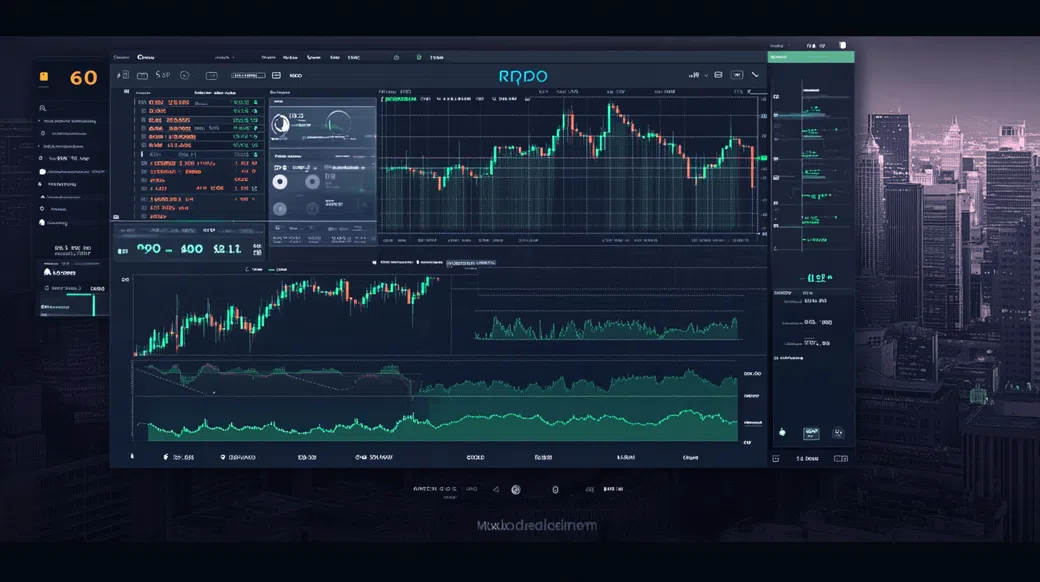
On desktop, the WebTrader held steady through repeated logins and chart reloads, and order tickets exposed the basics I expect: market/limit/stop, plus stop-loss and take-profit fields that update in real time. Execution felt consistent on liquid hours; I tested a small EUR/USD position around the London open and watched for odd “price freezing” behavior—none obvious, though slippage still appears when the book moves fast. If you’re married to MT4/MT5 EAs or a deep indicator marketplace, the proprietary stack is a constraint rather than a feature.
Aur Inmovía App: Mobile Trading Experience
The Aur Inmovía app mirrors the web layout closely, and the Aur Inmovía login flow supported biometric unlock on my device, which makes quick risk-off actions realistic. Quotes updated smoothly, one-tap position close worked, and deposit/withdrawal options were reachable without digging through menus. Push alerts are available for price levels, but I did encounter one minor quirk: switching between timeframes occasionally reset my indicator visibility until I refreshed the chart.
Charting, Tools & Research
Tools are practical: multi-timeframe charts, the usual indicator shelf (MA, RSI, MACD, Bollinger), drawing tools, and watchlists you can segment by asset class. An economic calendar and news feed are integrated, which helps you anticipate spread expansion around CPI/FOMC-style events. The ceiling is clear, though—power users will still miss the breadth of customization and strategy testing found in MT5/cTrader ecosystems.
Aur Inmovía Account Opening & Minimum Deposit
After I entered email, phone, and basic personal details, the dashboard pushed me straight into KYC prompts—very AML-forward for an offshore broker. Verification required a government-issued photo ID and a proof of address dated within three months, and my documents cleared within the same business day. The deposit screen was explicit about account currency and showed a live status tracker, which reduces the “did my money vanish?” anxiety that new clients feel.
- Minimum Deposit: $200 (the Aur Inmovía minimum deposit in my test account flow)
- Funding Methods: Visa/Mastercard, bank wire, regional e-wallets, and crypto deposits (BTC/USDT supported)
- Demo Account: $10,000 virtual balance for practice on live quotes and platform familiarization
- Account Types: Standard (spread-only) and Raw/ECN-style (tighter spread + commission)
One practical note: even if you can browse markets pre-verification, withdrawals are gated behind completed checks, so do the paperwork early. I funded via USDT, and the confirmation appeared after network validation; the broker’s ledger updated before I placed any trades.
Aur Inmovía Customer Support Review
I tested support with a very trader-specific question—where swap rates are displayed and whether triple-swap applies on a given weekday for FX pairs. Live chat responded in about 3 minutes, pointed me to the instrument specs panel, and clarified that financing is applied when positions roll over server time. I then emailed a follow-up about withdrawal processing windows; the ticket reply landed in roughly 9 hours with a clear breakdown by method.
Coverage is what you’d expect in this segment: 24/5 live chat and email, with service levels thinning on weekends. Language availability depends on staffing (English was solid; other languages may route through templates). Phone support wasn’t emphasized in my session, so if you need voice escalation, treat that as a “nice-to-have” rather than a baseline promise.
Ready to Explore Aur Inmovía?
If you’re considering this broker, start by checking current spreads during your usual session and confirming your country eligibility before depositing. A demo run is also useful to validate charting, order controls, and how margin requirements behave on the instruments you trade.
Visit Aur InmovíaAur Inmovía Review FAQ
Is Aur Inmovía good for beginners?
Yes, it can work for beginners who stay small and use the demo first. The platform is not overloaded with pro-only controls, and the $200 entry point is manageable for learning position sizing. The offshore leverage ceiling (up to 1:500) is the real hazard—new traders should deliberately cap leverage on their side.
Can I trade crypto on Aur Inmovía?
Yes, crypto is available as CFDs, including BTC/USD and ETH pairs. That means you’re trading price exposure with leverage rather than buying coins on-chain. Weekend financing and spread expansion are common, so check the instrument specs before holding positions.
Is Aur Inmovía a scam?
No, I did not see scam-style behavior like blocked access after deposit or impossible withdrawal loops during my test. KYC was enforced and funds were released after internal processing. The bigger consideration is the offshore regulatory environment, which offers fewer formal protections than top-tier regulators.
Is Aur Inmovía available in the USA?
No, the platform restricts USA residents. This is consistent with how many international CFD brokers handle U.S. regulatory constraints. If you try to register, eligibility checks during KYC can stop the account from being funded.
How long does a Aur Inmovía withdrawal take?
Most withdrawals are processed internally within 24–48 hours after KYC is complete. After that, arrival depends on the rail: cards typically take 2–5 business days, bank wires 3–7 business days, and crypto transfers are often same-day within a few hours. Timing can stretch during compliance reviews or bank holidays.
What is the Aur Inmovía minimum deposit?
The minimum deposit is $200. That threshold showed up consistently in the funding screen and account setup prompts. If you deposit in crypto or a different fiat currency, conversion/network costs may change the effective amount credited.
Does Aur Inmovía have a mobile app?
Yes, there are iOS and Android apps, and they cover trading plus funding and withdrawals. Alerts, watchlists, and basic chart studies are included, which is enough for active monitoring. If your workflow depends on MT4/MT5 plugins, you’ll need to adapt to the proprietary environment.
Final Verdict: Should You Use Aur Inmovía in 2026?
Overall Score: 4.0/5
What convinced me most wasn’t a banner claim—it was the mechanics: enforced verification, predictable platform behavior during liquid sessions, and a withdrawal that cleared on the stated timeline. Aur Inmovía makes the most sense when you actively choose between the spread-only and Raw/ECN-style pricing rather than treating “fees” as background noise. Keep your expectations calibrated: offshore registration (Mauritius FSC) can mean faster leverage access but fewer formal remedies if something goes wrong. Use tight risk limits—CFDs amplify both gains and losses, and capital is always at risk. For the full platform flow, start at Aur Inmovía.
Best for: self-directed CFD traders who want flexible leverage and a simple tiered fee model. Avoid if: you require Tier‑1 regulation, extensive research, or MT4/MT5 automation support.