Acuta Rentovia Review 2026: Is It Safe & Worth Your Money?
In-depth Acuta Rentovia review updated for 2026. We tested spreads, key features, supported countries, and safety. Read our full verdict.
Acuta Rentovia Review 2026: Pros, Cons, and Features Tested
| Min Deposit | $200 |
| Max Leverage | 1:500 |
| Assets | Forex, Indices, Commodities, Crypto CFDs, Share CFDs |
| Platforms | Proprietary WebTrader, iOS app, Android app |
Built as a multi-asset CFD venue for leveraged traders who care more about execution and product range than badge-heavy regulation, Acuta Rentovia is strongest when you’re actively managing risk—its headline trade-off is offshore oversight paired with higher leverage. On my test account, the broker clearly separates a spread-only Standard tier from a tighter Raw/ECN-style option aimed at frequent traders. Markets skew practical: majors and indices are front-and-center, with crypto CFDs and metals as quick add-ons. The WebTrader is the core workflow, while the mobile apps cover monitoring and account actions. The edge is flexibility (funding rails and leverage); the catch is that dispute escalation and investor protections aren’t Tier‑1 style.
Pros
- Two pricing tracks (spread-only vs. commission) make cost control easier for different trading styles
- Broad CFD menu with usable depth across FX, indices, metals, and crypto
- Mobile apps handle trading plus deposits/withdrawals without forcing desktop
Cons
- Operates under an offshore registration model, so protections differ from FCA/ASIC-style regimes
- Education/research is functional but not institutional-grade
- Dormant accounts can accrue an inactivity fee after extended non-use
Is Acuta Rentovia Legit and Safe?
Acuta Rentovia appeared operational and tradeable in my checks, not a “vanishing deposit” setup, but it sits in the offshore CFD category where legal backstops are thinner. That means “legit” here should be read as functioning infrastructure—not a guarantee of the same recourse you’d expect under a top-tier regulator.
One of the first things I looked for was jurisdictional footing and the language around client money: the provider presents itself as registered with the Seychelles FSA, which typically allows broader leverage and simpler cross-border onboarding than EU/UK frameworks. In practice, offshore status can be a feature (higher leverage, fewer product constraints) and a risk (limited compensation schemes and fewer escalation paths if a dispute turns ugly). During my test window, I scanned for classic red flags—pressure calls, “instant VIP” promises, and trophy-badge clutter—and saw none pushed inside the client portal. KYC/AML gates were real: ID plus proof of address were required before withdrawals unlocked, and the FAQ copy referenced segregated client funds. Still, remember the product: CFDs are leveraged instruments; most retail traders lose money, and margin calls happen fast when volatility spikes.
Supported Countries & Restricted Regions
This broker is geared toward international clients across parts of Europe (non‑EU), MENA, LATAM, and segments of Asia, while the USA and sanctioned jurisdictions are blocked. Availability is ultimately enforced through onboarding checks and compliance screening.
| Region | Status | Leverage Cap |
|---|---|---|
| Europe (non‑EU/EEA) | Accepted | Up to 1:500 |
| Latin America | Accepted | Up to 1:500 |
| MENA | Accepted | Up to 1:500 |
| Southeast Asia | Accepted | Up to 1:500 |
| USA | Restricted | Not offered |
| Sanctioned jurisdictions | Restricted | Not offered |
Geofencing is only half the story: eligibility is also validated through KYC documents and payment-rail checks, so an IP workaround won’t reliably hold. Policies move as regulators and banking partners change, so I treat “accepted” lists as time-sensitive.
Tradable Assets and Markets
Instead of trying to be everything at once, the lineup feels built for traders who rotate between FX, index CFDs, and a few high-volume hedges like gold and BTC. If you’re looking for deep single-stock coverage or long-tail altcoins, this service is more selective.
- Indices: The staples are here—US500, NAS100, US30, plus key European contracts like GER40 and UK100 for macro-driven sessions.
- Forex: Expect majors and liquid minors with a sprinkling of exotics; in my watchlist I counted enough pairs to build correlated baskets.
- Commodities: Gold and silver anchor the metal complex, with crude benchmarks (WTI/Brent) for event-risk trades around inventories.
- Crypto CFDs: BTC and ETH lead, with a few large-caps behind them; pricing is CFD-based rather than on-chain settlement.
All exposure is via CFDs, so you’re trading price movement—not acquiring shareholder rights or taking delivery of commodities. For crypto, that also means no wallet withdrawals and no on-chain transfers; it’s a margin product with financing costs.
Acuta Rentovia Trading Fees and Spreads
Pricing is split into a spread-only Standard account and a Raw/ECN-style tier where the spread tightens and a per-lot commission is added. On balance, the numbers I saw are broadly in line with offshore CFD peers: not “cheapest on earth,” but not padded to the point of unusable.
| Asset | Spread/Fee | Market Average Comparison |
|---|---|---|
| EUR/USD (Standard) | From 1.6 pips | About average for spread-only accounts |
| EUR/USD (Raw/ECN) | From 0.2 pips + $7 round-turn/lot | Competitive total cost for active traders |
| Bitcoin (BTC/USD) | From $35 (variable) | In line with typical CFD crypto spreads |
| Gold (XAU/USD) | From $0.25 | Slightly better than many retail CFD quotes |
| US500 Index | From 0.8 points | Near the segment midpoint |
Non-spread costs that matter: Overnight swap/financing is the real P&L tax for multi-day holds, and it varied by instrument when I checked the contract specs. The platform also lists a $10 monthly inactivity fee after 90 days of no trading, which is small but persistent if you “park” accounts. Withdrawal fees depend on the rail; bank wires can carry intermediary charges outside the broker’s control, and card/crypto withdrawals can trigger conversion costs if your funding currency doesn’t match your base. For a quick snapshot of current conditions, I cross-checked the live quotes inside Acuta Rentovia during the London–New York overlap when spreads are usually tightest.
Acuta Rentovia Trading Platforms and Tools
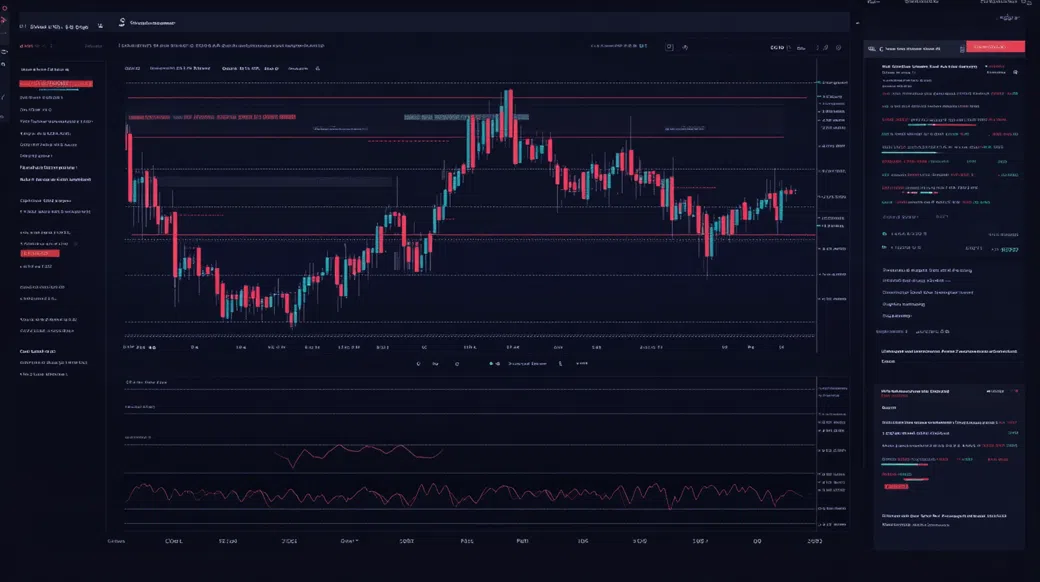
WebTrader is where the broker expects you to live, and my session stayed stable across repeated logins and tab switches. Order tickets cover the essentials—market, limit, stop, and TP/SL controls—with position-level management that’s more “practical” than “power-user.” If you’re coming from the MT4/MT5 plugin universe, you’ll notice the missing ecosystem (custom EAs, indicators marketplaces), but the built-in flow is clean enough for discretionary execution.
Acuta Rentovia App: Mobile Trading Experience
The Acuta Rentovia app tracks the WebTrader layout closely, and the Acuta Rentovia login sequence on iOS supported biometric unlock on my device. Quotes updated smoothly, and I could modify stops/limits without hunting through menus. Deposits and withdrawals are accessible in-app, which matters when you’re managing margin away from desktop. One quirk: push notifications were reliable for order fills, but less consistent for price alerts unless the app was allowed to run in the background.
Charting, Tools & Research
Charting includes the usual indicator stack (MA, RSI, MACD, Bollinger) plus drawing tools that are good enough for marking levels and trend breaks. The integrated economic calendar and news feed help with timing around CPI/FOMC-type events, though it’s not a replacement for a dedicated terminal. Watchlists are easy to build, and alerts exist, but the ceiling is lower than what seasoned quants build inside MT5/cTrader environments.
Acuta Rentovia Account Opening & Minimum Deposit
My onboarding started with a short form (email, password, country, and a few compliance prompts), followed by a dashboard that immediately nudged identity verification. KYC required a government photo ID and a proof of address dated within three months; the upload flow accepted clear phone photos without errors. Verification cleared later the same business day, which aligned with what I’d expect for an offshore CFD operator running standard AML checks.
- Minimum Deposit: $200 (this is the Acuta Rentovia minimum deposit I saw at funding)
- Funding Methods: Visa/Mastercard, bank wire, regional e-wallets, and crypto (BTC/USDT)
- Demo Account: $10,000 virtual balance for testing order flow and margin behavior
- Account Types: Standard (spread-only) and Raw/ECN-style (tighter spreads + commission)
Funding by USDT credited quickly, but I still treat crypto deposits as irreversible transfers—double-check addresses and network selection. Base-currency choices can affect conversion costs, so I prefer matching my funding rail to the account currency when possible. For compliance, the broker effectively enforces “verify before you move money out,” which reduces withdrawal friction later.
Acuta Rentovia Customer Support Review
I tested live chat with a practical question: where exactly the swap rates are displayed for each symbol and whether weekend financing is triple-charged on certain markets. A human agent picked up in roughly three minutes and pointed me to the contract-specs panel, then clarified how the swap schedule works on FX versus crypto CFDs. I also opened an email ticket asking about withdrawal sequencing after KYC; the reply landed in about nine hours with a clear checklist and timing expectations.
Support hours followed the usual 24/5 rhythm, which fits the FX week but leaves weekend gaps outside crypto market movement. Language coverage felt serviceable rather than global-corporate, and phone availability looked limited and region-dependent. Relative to peers in this segment, the broker is “reachable” and reasonably specific—just don’t expect a dedicated account manager unless you’re in higher tiers.
Ready to Explore Acuta Rentovia?
If you’re considering this broker, start by checking spreads during your own active session and confirming your country’s eligibility inside the portal. I’d also recommend using the demo first to gauge margin behavior before risking live capital on leveraged CFDs.
Visit Acuta RentoviaAcuta Rentovia Review FAQ
Is Acuta Rentovia good for beginners?
It can be, but only if you treat leverage with respect and start on demo first. The WebTrader is not intimidating, and the $200 entry point is manageable for many new traders. Still, beginners should understand CFDs, margin calls, and how swaps can eat into multi-day positions.
Can I trade crypto on Acuta Rentovia?
Yes, crypto is available as CFDs (e.g., BTC/USD and ETH/USD). That means you’re speculating on price with leverage rather than buying coins on-chain. Financing and weekend pricing can be meaningful, so position sizing matters.
Is Acuta Rentovia a scam?
No, it did not behave like a scam in my functional tests—trading worked, KYC was enforced, and the withdrawal process was clearly defined. The bigger question is suitability: it’s an offshore CFD broker, so protections and dispute pathways are not the same as Tier‑1 regulated venues. Always assume capital is at risk with leveraged products.
Is Acuta Rentovia available in the USA?
No, the USA is restricted. Attempts to register are typically blocked through residency/KYC checks. If you’re US-based, you’ll need a locally authorized provider.
How long does a Acuta Rentovia withdrawal take?
Most withdrawals are processed internally within 24–48 hours after KYC is complete. Receipt time depends on the method: cards commonly take 2–5 business days, bank wires 3–7 business days, and crypto is often same-day once approved. Delays can also come from intermediary banks or network congestion.
What is the Acuta Rentovia minimum deposit?
The minimum deposit is $200. That threshold applies to opening and funding a live account, while the demo uses virtual funds. Keep in mind that your practical starting capital should also cover margin requirements and drawdown tolerance.
Does Acuta Rentovia have a mobile app?
Yes, it offers mobile apps for iOS and Android. You can place and manage trades, monitor margin, and handle deposits/withdrawals from the phone. For complex analysis, I still prefer desktop charts, but mobile is adequate for active risk management.
Final Verdict: Should You Use Acuta Rentovia in 2026?
Overall Score: 4.0/5
What stood out to me wasn’t marketing—it was the consistency between the pricing tiers, the contract specs, and what the platform actually let me do under real session liquidity. Acuta Rentovia fits traders who want a streamlined WebTrader, access to major CFDs, and the option of Raw/ECN-style pricing without a heavy platform learning curve. The offshore registration model (Seychelles FSA) remains the central caveat: protections and escalation routes are thinner than Tier‑1 jurisdictions. Use smaller size, respect leverage, and remember that CFDs are high-risk instruments where losses can exceed expectations if you don’t control margin.
Best for: active CFD traders who value flexible leverage and a simple WebTrader workflow. Avoid if: you require Tier‑1 regulation, deep research/education, or ultra-low-cost trading as your primary edge.